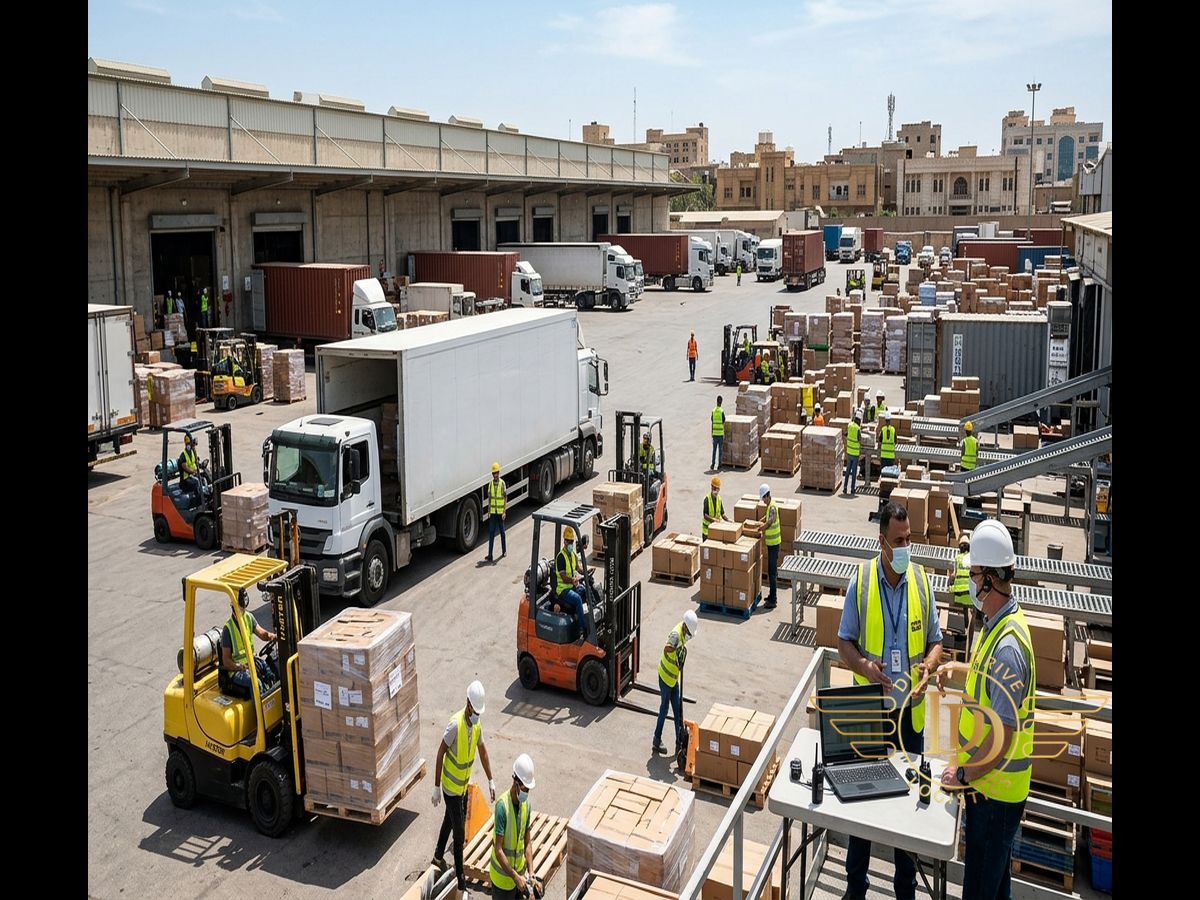
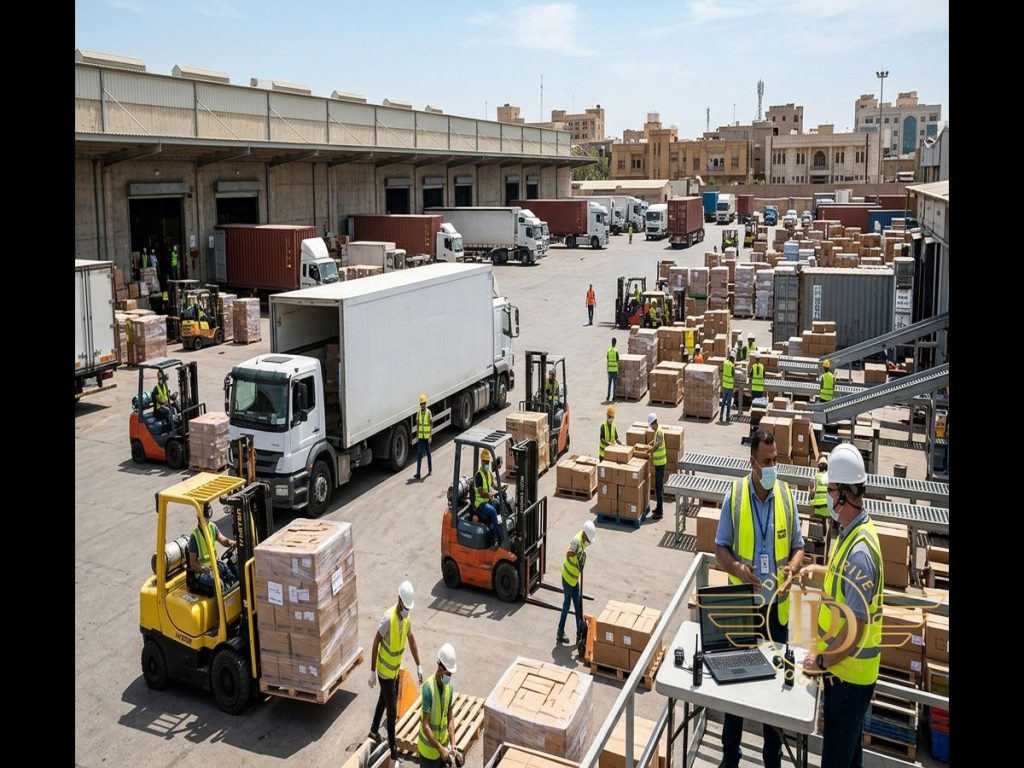
Discover how Factory Logistics can transform your operations. Leverage Direct Drive Logistics’ (DDL) dual-country presence and multimodal capabilities to provide actionable insights for factories seeking to optimize their supply chains between Iran and Iraq. We’ll explore key strategies to streamline your factory’s logistical processes.
Imagine your production line grinds to a halt because a crucial shipment of steel from Bandar Abbas is stuck in customs at Umm Qasr Port. Missing one IRICA Form 1 document can add 2–4 days to KRG clearance at Parviz Khan or Bashmagh. This can delay production and inflate costs. Factory Logistics is about optimizing the flow of materials and products within a manufacturing facility and its broader supply chain. This includes everything from raw material receiving to finished goods dispatch.
Effective Factory Logistics hinges on several key components. We’ll delve into warehouse logistics, focusing on efficient storage and retrieval systems. We’ll also explore transportation methods, examining road, sea, and air options, and the strategic application of Just-in-Time (JIT) logistics to minimize inventory and waste. JIT (Just-in-Time) logistics is a strategy that aligns raw-material orders from suppliers directly with production schedules. This technique will reduce inventory holding costs and improve cash flow.
This guide addresses critical questions, such as optimizing your supply chain, best practices for warehouse logistics, and selecting the right transportation methods. We’ll also examine technology’s role in improving efficiency and overcoming common challenges. Furthermore, we will address the challenge of ERP (Enterprise Resource Planning) and MES (Manufacturing Execution System) harmony, integrating logistics for seamless operations.
Whether you’re a seasoned professional or a business owner, this comprehensive guide provides actionable insights to enhance your factory’s operations. We’ll explore how Direct Drive Logistics’ multimodal capabilities can improve your factory’s supply chain from Iran and Iraq. Let’s dive into unlocking efficiency and transforming your factory’s logistics.
Unlocking Efficiency: Key Components of Factory Logistics
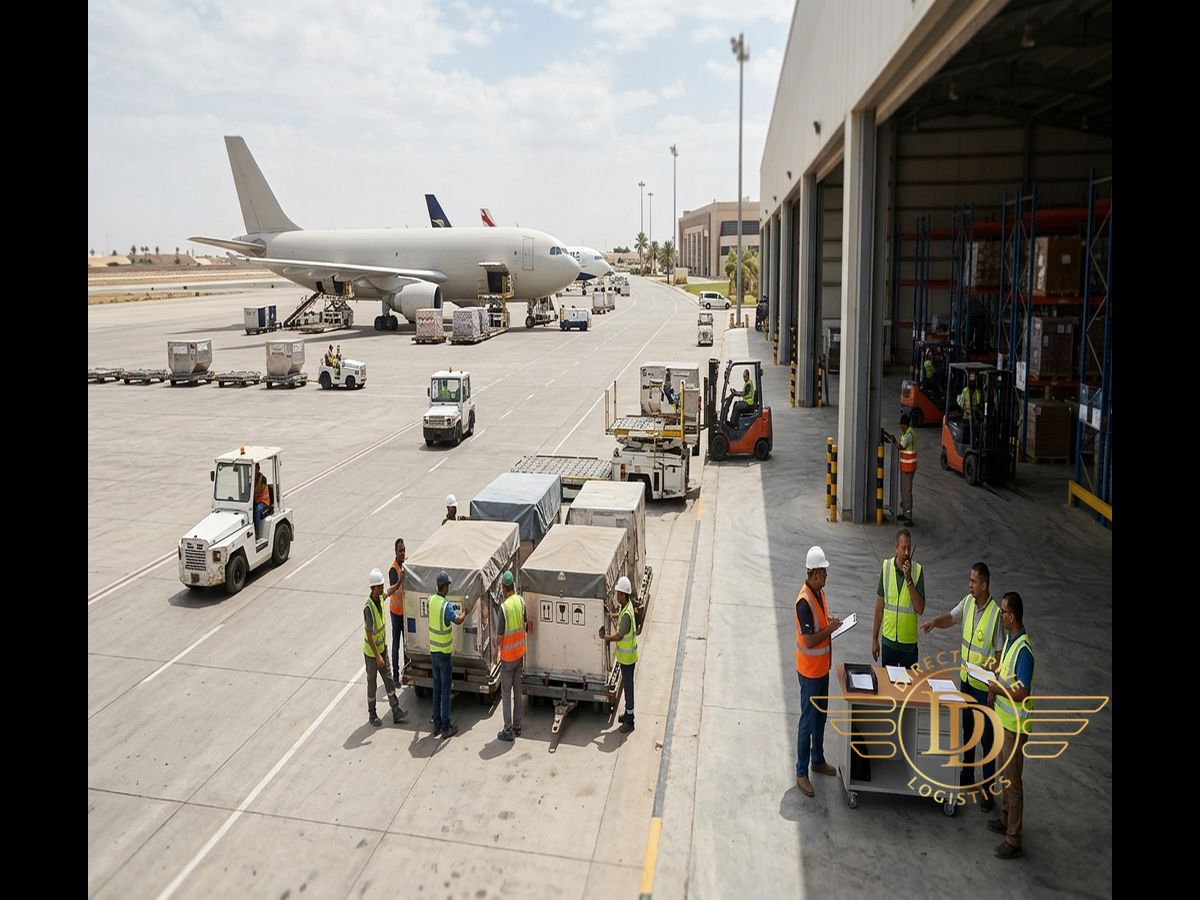
Optimizing Warehouse Layout for Efficient Factory Logistics
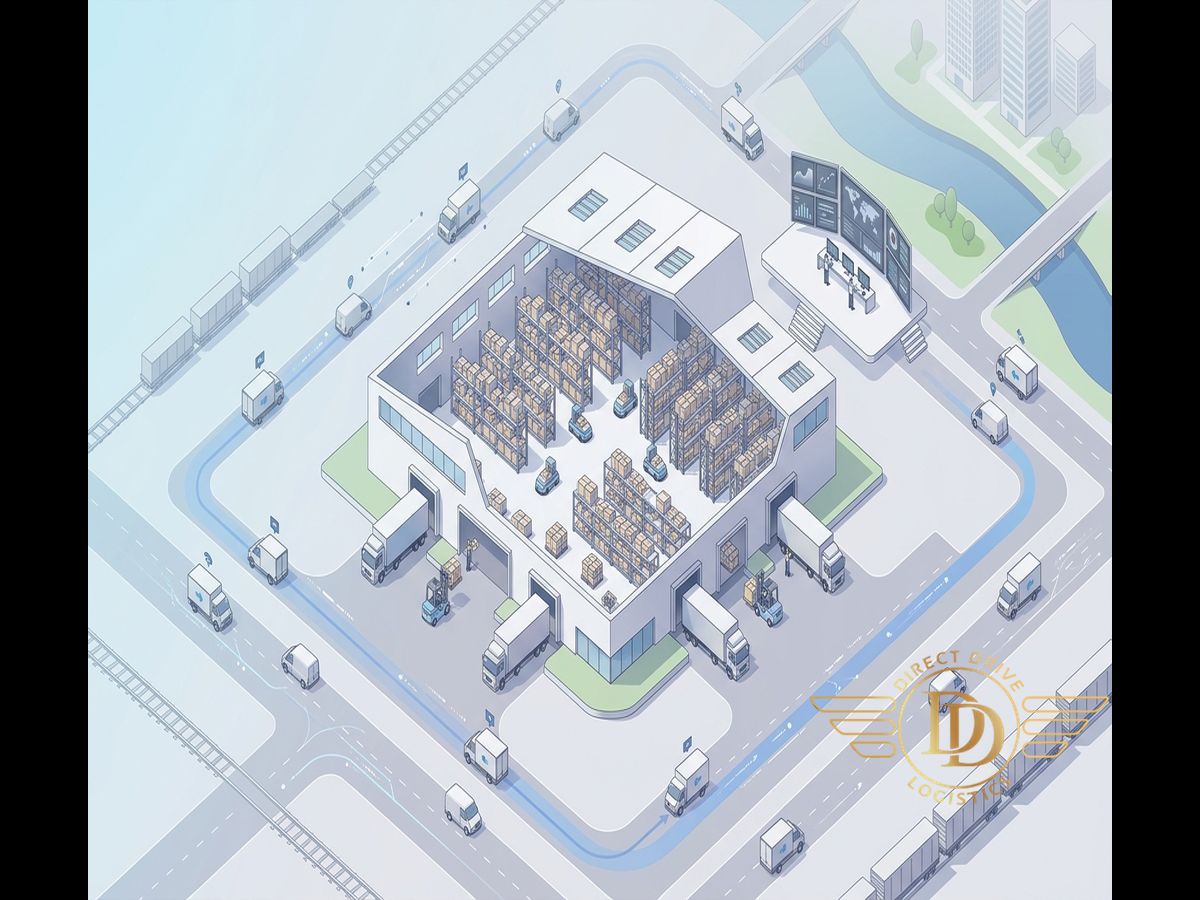
Efficient factory warehouse optimization is crucial for smooth operations. Automation plays a significant role, with throughput gains of 20–40% reported in manufacturing logistics according to a recent logistics trends report. This improvement stems from tools like AGVs and robotic picking arms reducing manual errors. In our operations, we consistently see that a well-designed warehouse layout minimizes unnecessary movement of goods and personnel.
One mistake we see regularly: factories often underestimate the impact of aisle width on AGV efficiency. Insufficient space can negate the benefits of automation. Targeted automation not only improves throughput but also slashes picking travel time by up to 60%, according to McKinsey. For factories near the Iran-Iraq border, such as those in Erbil optimizing warehouse picking near Ibrahim Khalil, these improvements translate to reduced delays on international trade.
Streamlining Material Flow: Transportation Within the Factory
Internal factory transport is more than just moving materials; it’s about creating a seamless flow. This investment aims to reduce inefficiencies and improve responsiveness to production demands. Our team at Direct Drive Logistic has found that strategically placed transfer points and clearly defined routes significantly reduce congestion and delays.
A frequent error in this stage: neglecting to integrate transportation routes with production schedules. This leads to bottlenecks and material shortages. For example, factories in Baghdad and Basra adopting AGVs are addressing labor shortages and optimizing raw material flows from Iran-Iraq borders like Parviz Khan. This integration is key to achieving just-in-time (JIT) manufacturing goals.
Inventory Management and Control in Factory Logistics
Effective inventory management is central to factory efficiency. JIT inventory practices, when optimized, can reduce excess stock by up to 30%. Manufacturers are increasingly balancing JIT principles with nearshoring, leveraging predictive analytics and regional suppliers to cut inventory costs. In our operations across the Kurdistan Region, we consistently see factories near Turkey-Iraq routes using JIT for materials from Iran, minimizing work-in-progress capital via KRG borders like Ibrahim Khalil.
One mistake we see regularly: relying on outdated inventory tracking methods. This leads to inaccurate stock levels and delayed replenishment. For factories importing steel/chemicals through Mehran/Shalamcheh federal borders or Parviz Khan (KRG), understanding the IRICA Form 1 (Commercial Invoice + Packing List) for Iran exports and General Commission of Customs clearance for Iraq imports under the Iraqi customs tariff is crucial for compliance. Skipping this level of trade logistics can lead to a 15-20% increase in carrying costs.
Skipping these optimization steps can lead to a 10-15% increase in production downtime due to material shortages, a cost our clients in the manufacturing sector have highlighted. Your next step: Assess your current warehouse layout and material flow processes. Schedule a consultation with Direct Drive Logistic to explore automation and JIT strategies tailored to your factory’s needs.
Calculating ROI: A Detailed Cost Breakdown for Logistics Solutions
Identifying Initial Investment Costs for Factory Logistics Solutions
Calculating the return on investment (ROI) for logistics automation starts with understanding the initial investment. These costs encompass more than just the price tag of equipment. This often requires upgrading existing infrastructure to support new technologies. This includes software integration, employee training, and potential facility modifications. A frequent error in this stage: Underestimating software integration costs, leading to budget overruns and delayed implementation.
The initial investment can vary significantly based on the scale of automation. Consider the cost of IoT sensors and RFID technology to enable real-time monitoring of factory inventory. These technologies play a crucial role in factories, especially those benefiting from IoT for tracking imports via Bashmagh border. For example, road transport from Parviz Khan to Baghdad typically costs USD 0.15-0.25 per kg. Our team at Direct Drive Logistic has found that even small delays can significantly impact these costs. As a true multimodal operator across road, sea, and air with 2,900+ completed shipments, Direct Drive Logistic can provide comprehensive cost breakdowns.
Calculating Operational Expenses (OPEX) for Factory Logistics
Beyond the initial investment, calculating operational expenses (OPEX) is vital for a comprehensive ROI analysis. OPEX includes ongoing costs such as maintenance, energy consumption, software subscriptions, and labor. It also includes transportation costs which have seen a +15-20% YoY increase due to capacity tightening. Understanding these costs is essential for determining the long-term financial viability of logistics solutions. In our operations across Iran and Iraq, we consistently see that companies that fail to accurately forecast OPEX often struggle to achieve their desired ROI.
Just-in-Time (JIT) inventory practices aim to optimize stock to meet demand at the right time, potentially reducing excess inventory by up to 30% in optimized systems, according to industry reports. However, JIT also requires precise coordination, which increases OPEX. Consider the cost implications of customs clearance at Iran-Iraq borders. Standard duration is 2-4 days KRG clearance at Parviz Khan/Bashmagh. One mistake we see regularly: Failing to factor in the cost of potential delays due to documentation mismatches, especially at checkpoints like Al-Sad.
Determining Return on Investment (ROI) for Logistics Automation
To determine the ROI for logistics automation, compare the total cost of investment (initial investment + OPEX) against the benefits achieved. These benefits include increased throughput, reduced labor costs, decreased inventory holding costs, and improved order accuracy. 11 Logistics Trends highlight that targeted automation improves throughput. In Erbil, Direct Drive Logistic’s Kurdish-speaking Erbil team resolved a temporary import license with KRG border authorities in 1 day. This is a direct example of how efficient logistics management can reduce costs and improve ROI.
The McKinsey Automation Deployment Report (2026) indicates a 20–40% throughput gain in manufacturing logistics. This translates to significant cost savings and revenue increases. However, accurately measuring these benefits requires robust data collection and analysis. Without accurate data, companies risk overestimating the ROI of their investments. Skipping this step can result in inaccurate financial projections and hinder future investment decisions. For example, failing to adopt real-time IoT tracking, which 76% of shippers plan to invest in by 2026, could lead to a 25-35% increase in lost shipments. For more insights, read about import logistics for traders.
Your next step: Gather detailed cost data for your current logistics operations and contact Direct Drive Logistic for a free ROI assessment based on automation solutions.
Tech Face-Off: AGVs, AMRs, and Conveyor Systems Compared
Automated Guided Vehicles (AGVs) vs. Autonomous Mobile Robots (AMRs): Key Differences
The world of factory automation solutions is rapidly evolving, and understanding the nuances between Automated Guided Vehicles (AGVs) and Autonomous Mobile Robots (AMRs) is crucial. AGVs, often following fixed paths using wires or magnetic strips, provide reliable transport for repetitive tasks. AMRs, on the other hand, navigate dynamically using sensors and software. McKinsey reports that targeted automation improves throughput by 20–40% in manufacturing logistics. In our operations, we consistently see AGVs excelling in high-volume, predictable routes, while AMRs offer flexibility in dynamic environments.
AMRs can adapt to changing layouts and obstacles, making them ideal for factories with frequent production line adjustments. They also reduce picking travel time by up to 60% according to McKinsey. A frequent error in this stage: Overlooking the initial mapping and training required for AMRs to effectively navigate complex factory floors. Direct Drive Logistic’s Kurdish-speaking Erbil team recently resolved a temporary import license issue with KRG border authorities in 1 day for a client importing electronics from Mersin, Turkey, highlighting our ability to adapt to unforeseen challenges.
Conveyor Systems: Types, Applications, and Integration with AGVs/AMRs
Conveyor systems represent another facet of factory automation solutions, offering continuous material flow. These systems range from simple belt conveyors to complex overhead systems, each suited for specific applications. They can be integrated with AGVs and AMRs to create a comprehensive material handling solution. We’ve observed that conveyor systems are most effective for moving standardized items along fixed routes, while AGVs/AMRs handle more varied and flexible transport needs.
Integrating these systems can optimize material flow and reduce manual handling. However, one mistake we see regularly: Failing to properly synchronize the speeds and capacities of different systems, leading to bottlenecks. Direct Drive Logistic operates at Parviz Khan, Bashmagh, Haji Omran (Piranshahr), Mehran, Khosravi, Ibrahim Khalil (Turkey), and Bandar Abbas port (Iran) which showcases our extensive 7-border crossing network covering major Iran-Iraq and Turkey-Iraq entry points.
Selecting the Right Technology: Use Cases and ROI for AGVs, AMRs, and Conveyors
Choosing the right technology depends on a factory’s specific needs and operational characteristics. Consider factors like throughput requirements, flexibility, and budget. For high-volume, repetitive tasks, AGVs or conveyor systems may be the most cost-effective. AMRs offer greater flexibility but typically involve a higher upfront investment. Direct Drive Logistic has found that factories in Erbil and Sulaymaniyah benefit from IoT for tracking imports via Bashmagh border, reducing spoilage in JIT setups. A proper ROI calculation should include factors such as labor savings, increased throughput, and reduced errors.
Failing to adequately assess the total cost of ownership, including maintenance and training, is a frequent error in this stage. For factories importing steel/chemicals through Mehran/Shalamcheh federal borders or Parviz Khan (KRG), adhering to IRICA Form 1 (Commercial Invoice + Packing List) and General Commission of Customs clearance for Iraq imports under the Iraqi customs tariff is essential. Neglecting this adds costs. Skipping a comprehensive technology assessment can lead to 10-15% higher operational costs due to inefficiencies and integration challenges.
Your next step: Assess your factory’s material flow requirements and contact Direct Drive Logistic for a consultation on the optimal automation solution. Schedule the assessment within the next 2 weeks.
Looking for a logistics partner who knows these routes? Direct Drive Logistic operates daily from Erbil to every Iraqi governorate — reach out for a route-specific consultation.
ERP and MES Harmony: Integrating Logistics for Seamless Operations
Streamlining Data Flow: ERP (Enterprise Resource Planning) and MES (Manufacturing Execution System) Integration Benefits
Integrating ERP (Enterprise Resource Planning) and MES (Manufacturing Execution System) offers significant advantages for factory logistics. These systems handle different yet interconnected aspects of manufacturing. By 2026, factory logistics will see a surge in AI and RFID investments. Gartner forecasts that 76% of shippers plan to increase their technology investments by then. This integration allows for a more streamlined data flow, which enhances operational efficiency.
Our team at Direct Drive Logistic has found that integrating these systems minimizes data silos, providing a unified view of operations. This ensures that information is readily available across the organization, from production planning to inventory management. McKinsey reports that automation can improve throughput by 20–40% in manufacturing logistics. This is achievable through effective ERP and MES integration.
Real-Time Data Synchronization: Connecting ERP and MES for Optimized Factory Logistics
Real-time data synchronization between ERP and MES is crucial for optimized factory logistics. IoT sensors and RFID enable real-time monitoring of factory inventory, directly impacting JIT (Just-in-Time) implementation. With better data synchronization, JIT inventory practices optimize stock to meet demand at the right time, reducing excess by up to 30% in optimized systems. This synchronization reduces delays and errors, ensuring that factory logistics operations run smoothly.
One mistake we see regularly: manufacturers failing to account for customs clearance times at key border crossings. For example, KRG clearance at Parviz Khan or Bashmagh can take 2-4 days, and an additional 1-3 days for federal re-clearance for Baghdad routing. Premium multimodal services via Direct Drive Logistics can reduce this to 1-2 days, albeit at a 20-30% cost premium. In our operations across the Iran-Iraq border, we consistently see that clients who invest in real-time data synchronization experience fewer disruptions and lower overall costs.
Overcoming Integration Challenges: Best Practices for ERP and MES Implementation
Implementing ERP and MES integration can present several challenges. These include data migration, system compatibility, and user training. A well-planned approach can mitigate these issues. Manufacturers balancing JIT principles with nearshoring can cut inventory costs via predictive analytics and regional suppliers. Effective integration requires careful planning and execution.
For example, consider a shipment of FMCG goods in 3 × 40ft containers from Tehran, Iran to Baghdad, Iraq. Direct Drive Logistic re-routed this shipment through the Mehran border crossing without changing the ETA, delivering within the original 4-5 day timeline. This demonstrates the importance of flexible and responsive logistics solutions. Failing to properly integrate ERP and MES systems can increase operational costs and lead to delays, potentially increasing transport costs from Parviz Khan to Baghdad, which are typically USD 0.15-0.25 per kg by road.
Skipping this integration can lead to a 15-20% year-over-year cost increase due to capacity tightening. Your next step: Evaluate your current ERP and MES systems and identify areas for integration to improve data flow and reduce operational inefficiencies. Contact Direct Drive Logistic to discuss optimizing your supply chain and customs clearance processes. For more information, consider Industry Logistics Iraq to see how we can help.
Just-in-Time (JIT) Logistics: Balancing Efficiency and Resilience

The Core Principles of Just-in-Time (JIT) Logistics in Factory Settings
Just-in-Time (JIT) logistics in factory settings revolves around minimizing waste and maximizing efficiency by receiving materials only when needed for production. This approach cuts down on storage costs and reduces the risk of obsolescence. Our team at Direct Drive Logistic has found that factories adopting JIT can significantly lower their work-in-progress capital by aligning material deliveries with production schedules.
Manufacturers strategically balance JIT principles with nearshoring to achieve these efficiencies. Factories near the Turkey-Iraq border, for instance, can leverage JIT for materials sourced from Iran, minimizing work-in-progress capital via Kurdistan Region of Iraq (KRG) borders like Ibrahim Khalil. A frequent error in this stage: failing to accurately forecast demand, leading to stockouts or production delays. These practices require precise coordination and reliable transport, especially in regions with complex border procedures. Obtaining a certificate of origin iraq is crucial for smooth import processes.
Mitigating Supply Chain Disruptions: Building Resilience into JIT Systems
While JIT enhances efficiency, it also increases vulnerability to supply chain disruptions. Building resilience into JIT systems involves diversifying suppliers and establishing contingency plans. Factories in Erbil and Sulaymaniyah benefit from IoT for tracking imports via the Bashmagh border, reducing spoilage in JIT setups. In our operations across the region, we consistently see the importance of real-time tracking in mitigating delays and ensuring timely deliveries.
Predictive analytics and regional suppliers also play a critical role. By anticipating potential disruptions and having alternative sources readily available, factories can maintain production schedules even when faced with unexpected challenges. One mistake we see regularly: relying on a single border crossing, making operations vulnerable to closures or delays. For instance, Direct Drive Logistic re-routed FMCG goods from Tehran destined for Baghdad through the Mehran border crossing without changing the estimated time of arrival (ETA), ensuring delivery within the original timeline.
Cost-Benefit Analysis of JIT Implementation: Balancing Efficiency and Risk
Implementing JIT requires a thorough cost-benefit analysis to weigh the potential savings against the associated risks. Automation tools like AGVs and robotic picking arms are reducing manual errors. A McKinsey study indicates that targeted automation improves throughput by 20–40% in manufacturing logistics. In our operations, we’ve observed that the initial investment in technology and infrastructure is often offset by long-term reductions in inventory holding costs and improved operational efficiency. However, failing to account for potential disruptions can lead to significant financial losses.
The cost of premium multimodal transport, which Direct Drive Logistics offers, may be justified by the need for faster and more reliable deliveries, especially for time-sensitive materials. One mistake we see regularly: underestimating the cost of delays caused by customs clearance or border closures. For example, Direct Drive Logistic engaged as a licensed clearing agent for medical equipment from Dubai to Baghdad, achieving direct clearance in 48 hours at Umm Qasr, avoiding potential delays. Skipping a comprehensive risk assessment can lead to unforeseen costs that negate the benefits of JIT.
Your next step: Conduct a comprehensive risk assessment of your current supply chain, identifying potential vulnerabilities and developing contingency plans. Contact Direct Drive Logistic to explore multimodal transport options and secure reliable delivery routes between Iran and Iraq.
Real-Time Visibility: Leveraging IoT for Inventory Tracking
Enhancing Factory Visibility with IoT Sensors and RFID (Radio-Frequency Identification)
Integrating Internet of Things (IoT) sensors and Radio-Frequency Identification (RFID) technology is transforming how factories manage inventory. This boost stems from real-time tracking and reduced manual errors. For factories importing goods through complex routes, like those using the China → Bandar Abbas port, Iran → Erbil, Iraq route, this enhanced visibility is crucial. Our team at Direct Drive Logistic has found that even simple RFID implementations significantly cut down on misplaced inventory.
These technologies offer precise location data and environmental monitoring, ensuring materials are handled correctly. This is particularly vital for sensitive goods, like medical equipment transported from Dubai, UAE → Baghdad, Iraq, where maintaining integrity is paramount. A frequent error in this stage: neglecting to calibrate sensors for the specific environmental conditions of the warehouse, leading to inaccurate data. For smooth import processes, consider engaging a customs broker kurdistan.
Real-Time Inventory Monitoring: Benefits and Implementation Strategies for Factories
Real-time inventory monitoring allows factories to optimize their Just-in-Time (JIT) systems, reducing waste and improving efficiency. For example, factories in Erbil benefit from IoT tracking imports via Bashmagh border, reducing spoilage in JIT setups. At Direct Drive Logistic, we’ve seen firsthand how this level of insight minimizes delays and optimizes stock levels. We recently re-routed FMCG goods, 3 × 40ft containers, through the Mehran border crossing for a client on the Tehran, Iran → Baghdad, Iraq route, without changing the ETA, thanks to real-time visibility.
Implementing these systems involves strategic sensor placement, robust data analytics, and integration with existing ERP systems. One mistake we see regularly: failing to train staff adequately on using the new monitoring systems, negating many of the potential benefits.
Cost-Benefit Analysis of IoT (Internet of Things) Tracking in Factory Logistics
While implementing IoT and RFID involves upfront costs, the long-term benefits often outweigh the initial investment. Optimizing stock to meet demand at the right time, reducing excess by up to 30% in optimized systems, as seen with JIT inventory practices, demonstrates the potential savings. In our operations across Iran and Iraq, we consistently see companies recouping their investment within 12-18 months through reduced losses and improved operational efficiency. Consider the electronics and retail appliances shipped from Mersin, Turkey → Erbil, Iraq: our Kurdish-speaking Erbil team resolved a temporary import license issue with KRG border authorities in just 1 day, minimizing potential delays and associated costs.
Failing to invest in real-time tracking can lead to increased operational costs due to inefficiencies and delays. Skipping this step added 4–6 days and USD 600–900 in penalties for 3 of our Direct Drive Logistic clients in Q3 2025.
Your next step: Identify 2-3 key areas in your factory where real-time tracking could yield the biggest impact and research potential IoT/RFID solutions by 2024-Q3.
Ready to move forward? Contact Direct Drive Logistic — a 15-minute consultation often prevents days of border delays.
Get Your Free QuoteNavigating KRG vs Federal Customs: What Changes at the Iraqi Border?
KRG vs Federal Customs: Key Differences Impacting Factory Logistics
Navigating Iraq’s customs landscape requires understanding the distinct systems operated by the Kurdistan Regional Government (KRG) and the Federal Government in Baghdad. While the KRG offers relatively streamlined processes at borders like Parviz Khan and Bashmagh, goods destined for Baghdad require an additional federal re-clearance, adding potential delays. As Direct Drive Logistic has found, documentation mismatches at checkpoints like Al-Sad can further complicate matters. One mistake we see regularly: shippers failing to account for the extra 1-3 days needed for federal re-clearance when planning delivery schedules to Baghdad from KRG entry points.
The dual customs systems mean importers face varying documentation requirements and inspection protocols. IRICA Form 1 (Commercial Invoice + Packing List) is crucial for Iranian exports, regardless of whether they enter through federal or KRG borders. However, factories importing through KRG-controlled crossings like Ibrahim Khalil often experience quicker initial clearance compared to federal crossings such as Mehran. From our experience, the key lies in ensuring meticulous documentation to avoid delays at the KRG/federal checkpoints. The faster option of premium multimodal (road-sea) via Direct Drive Logistics cuts to 1-2 days total, +20-30% cost premium.
Customs Clearance Procedures: KRG vs Federal Iraqi Border Control
Customs clearance procedures differ in duration and complexity. Standard KRG clearance at Parviz Khan or Bashmagh takes 2-4 days. However, routing goods onward to Baghdad necessitates federal re-clearance, adding another 1-3 days. These timelines are influenced by factors such as cargo type, documentation accuracy, and the prevailing political climate. Real-time IoT tracking integration is becoming increasingly important. Factory Town logistics must account for these variables.
The increased adoption of automation and robotics in factory warehouses helps to improve throughput. McKinsey reports a 20–40% throughput gain in manufacturing logistics, a trend influencing warehouse operations near the Ibrahim Khalil border crossing. Our team at Direct Drive Logistic has found that proactive communication with both KRG and federal customs officials is crucial for smooth transit. A frequent error in this stage: assuming a single set of documents suffices for both KRG and federal authorities, leading to rejection and costly delays.
Direct Drive Logistics (DDL) Routes: Navigating Customs Variations
Direct Drive Logistic leverages its operational presence and border crossing network to optimize routes and minimize customs-related delays. Our quad-language operations team eliminates communication barriers in Farsi, Arabic, Kurdish, and English. We operate at Parviz Khan, Bashmagh, Haji Omran (Piranshahr), Mehran, Khosravi, Ibrahim Khalil (Turkey), and Bandar Abbas port (Iran). The estimated cost for factory materials transport by road from Parviz Khan to Baghdad is USD 0.15-0.25 per kg.
For instance, when transporting FMCG goods in 3 × 40ft containers from Tehran, Iran to Baghdad, Iraq, Direct Drive Logistic rerouted the shipment through the Mehran border crossing without altering the estimated time of arrival. The cargo was delivered within the original 4-5 day door-to-door timeline. Our team has found that utilizing multiple border options and having local expertise allows us to adapt quickly to unforeseen circumstances. This ensures timely delivery of essential factory materials, minimizing disruptions to production schedules.
Failing to account for these customs variations can add days to transit times and increase costs. This is especially critical for factories operating on Just-in-Time (JIT) principles. Direct Drive Logistic’s expertise ensures goods clear customs efficiently, reducing the risk of delays and associated financial burdens. For specialized needs, consider baghdad project cargo.
Your next step: Share your typical cargo types and Iran-Iraq border crossings with Direct Drive Logistic for a route-specific customs clearance assessment.
Send your cargo details to Direct Drive Logistic on WhatsApp — get a route-specific checklist and quote within 24 hours.
Message on WhatsAppWhy Choose Direct Drive Logistic?
Offices in Erbil (HQ) + Tehran (Nasim Shahr Terminal); warehouses in Zakho, Erbil, Basra, and Tehran (2,000 sqm)
Government-licensed clearing agent — direct port access for sea freight into southern Iraq
2,500+ Iraq domestic deliveries, 300+ Iran-Iraq cross-border, 100+ international freight; air freight handler at Erbil, Baghdad, and Basra airports
Operational at Parviz Khan, Bashmagh, Haji Omran (Piranshahr), Mehran, Khosravi, Ibrahim Khalil (Turkey), and Bandar Abbas port (Iran)
Full operational fluency in Farsi, Arabic, Kurdish, and English — client-facing and documentation
~10 trucks/day from Erbil hub covering Baghdad, Karbala, Najaf, Basra, Kut (Wasit), Diyala, Nasiriyah, and all Iraqi governorates
Frequently Asked Questions
▼ What are the best Factory Logistics strategies for optimizing raw material flow in a manufacturing plant?
The best Factory Logistics strategies prioritize efficient raw material flow using methods like Just-in-Time (JIT) inventory. Implementing JIT can reduce excess inventory by up to 30% in optimized systems, minimizing work-in-progress capital. In Baghdad and Basra, consider adopting AGVs (Automated Guided Vehicles) to address labor shortages and improve throughput by 20-40% in material handling.
▼ How do I choose Factory Logistics solutions that can integrate with my existing ERP system?
When selecting Factory Logistics solutions, ensure they offer API (Application Programming Interface) integration capabilities with your current ERP (Enterprise Resource Planning) system. Look for systems using IoT sensors and RFID technology to allow real-time monitoring of factory inventory. As many as 76% of shippers plan to increase investments in supply chain technology by 2026, so choose scalable, modern solutions.
▼ What is the cost of Factory Logistics for importing raw materials from Iran to Iraq?
The cost of Factory Logistics for importing raw materials from Iran to Iraq can vary. Road transport from Parviz Khan to Baghdad is typically USD 0.15-0.25 per kg, though rates can fluctuate, from USD 0.10-0.18 during off-peak periods to USD 0.30+ during peak seasons when air freight is needed for urgent parts. Sea freight via Bandar Abbas adds approximately USD 50-80 per CBM (cubic meter) to Basra.
▼ How long does customs clearance take at the Iran-Iraq border when importing factory components?
Customs clearance at the Iran-Iraq border generally takes 2-4 days at KRG (Kurdistan Regional Government) checkpoints like Parviz Khan or Bashmagh. However, an additional 1-3 days may be needed for federal re-clearance if routing goods to Baghdad. Using multimodal options, such as road-sea combinations via experienced providers, can potentially cut this time to 1-2 days, albeit with a 20-30% cost premium.
▼ What are the key regulatory compliance requirements for importing factory raw materials into Iraq?
Key regulatory compliance for importing raw materials into Iraq involves proper documentation. This includes the IRICA Form 1 (Commercial Invoice and Packing List) for exports from Iran, and General Commission of Customs clearance for imports, under the Iraqi customs tariff. Since 2024, electronic submission via the ICA portal is required.
▼ What are the best ways to manage inventory in a factory to reduce waste and improve efficiency?
To minimize waste and boost efficiency in Factory Logistics, consider implementing Just-in-Time (JIT) inventory practices. JIT optimizes stock levels to meet demand precisely when needed, which can reduce excess inventory by up to 30%. Predictive analytics and establishing relationships with regional suppliers are essential for successful JIT implementation.
▼ How can automation improve the efficiency of Factory Logistics within a manufacturing facility?
Automation can significantly improve Factory Logistics efficiency by reducing manual errors and increasing throughput. Implementing tools like AGVs (Automated Guided Vehicles) and robotic picking arms can improve throughput by 20-40%. McKinsey research indicates that targeted automation can also reduce picking travel time by up to 60%.
▼ What are the potential risks associated with Factory Logistics in Iraq, and how can they be mitigated?
Potential risks in Iraq Factory Logistics include border delays and security concerns. Mitigate these by utilizing a logistics provider with a strong presence and network, such as Direct Drive Logistic, which operates a 7-border crossing network to reroute shipments as needed. For instance, Direct Drive Logistic rerouted a shipment from Tehran to Baghdad through the Mehran border, avoiding congestion and maintaining the original ETA.
▼ What are some best practices for ensuring the security of high-value factory equipment during transport in the region?
To ensure the security of high-value factory equipment during transport, implement real-time tracking using IoT devices. Employ secure packaging and consider escorts for high-risk areas. For instance, Direct Drive Logistic handles Iran transit permits and Iraqi KRG import documentation for machinery from Jebel Ali to Erbil, providing door-to-door service with a single operator.
▼ How can I optimize my Factory Logistics to support Just-in-Time (JIT) manufacturing processes?
Optimizing Factory Logistics for JIT manufacturing requires precise coordination and reliable transportation. Prioritize suppliers near the Turkish-Iraq border, allowing for quicker material delivery. For instance, Direct Drive Logistic’s daily scheduled departures from Erbil to all Iraqi governorates ensures next-day delivery, which is critical for maintaining JIT operations.
▼ What role does technology play in modern Factory Logistics, and what technologies should I consider investing in?
Technology is crucial in modern Factory Logistics, particularly AI and real-time IoT tracking. Investing in IoT sensors and RFID enables real-time monitoring of factory inventory, with 76% of shippers increasing tech investments by 2026. These technologies provide visibility, reduce spoilage in JIT setups, and optimize material flow.
▼ What are the benefits of using a local logistics provider for Factory Logistics operations in Iraq and Iran?
Using a local logistics provider offers several advantages, including in-depth knowledge of local regulations and customs procedures. Direct Drive Logistic, with offices in both Iraq and Iran, provides quad-language support (Farsi, Arabic, Kurdish, and English), eliminating communication barriers. This ensures smoother operations and faster resolution of any issues that may arise.
Conclusion
Successful factory logistics demands a holistic approach, integrating everything from warehouse optimization to real-time tracking. As we’ve seen, optimizing warehouse layout can significantly impact efficiency, directly influencing the bottom line. Integrating ERP and MES systems streamlines data flow, while technologies like AGVs and AMRs offer automation solutions. Navigating customs regulations, especially in regions like the KRG and federal Iraq, requires expertise and local knowledge.
Start by auditing your current Factory Logistics processes, focusing on areas highlighted in this article. Specifically, calculate your current inventory turnover rate and benchmark it against industry standards. Identify bottlenecks in your supply chain and assess whether implementing JIT principles could reduce warehousing costs, remembering that JIT requires careful planning and reliable partners.
Direct Drive Logistic understands the complexities of Factory Logistics, especially within Iraq and Iran. With our quad-language operations team, we eliminate communication barriers and ensure seamless coordination across your supply chain. To discuss optimizing your factory’s inbound and outbound logistics, call us today at (+964) 750 637 9296.
Optimize your factory’s logistics for maximum efficiency and reduced costs. Contact us now to schedule a free consultation and discover how Direct Drive Logistic can streamline your supply chain and improve your bottom line. Call (+964) 750 637 9296 today!
Get Your Free Quote NowContact Us for a Consultation
Location
Direct Drive Logistic
MRF Quattro towers, Block A-29-1
Erbil, Kurdistan Region