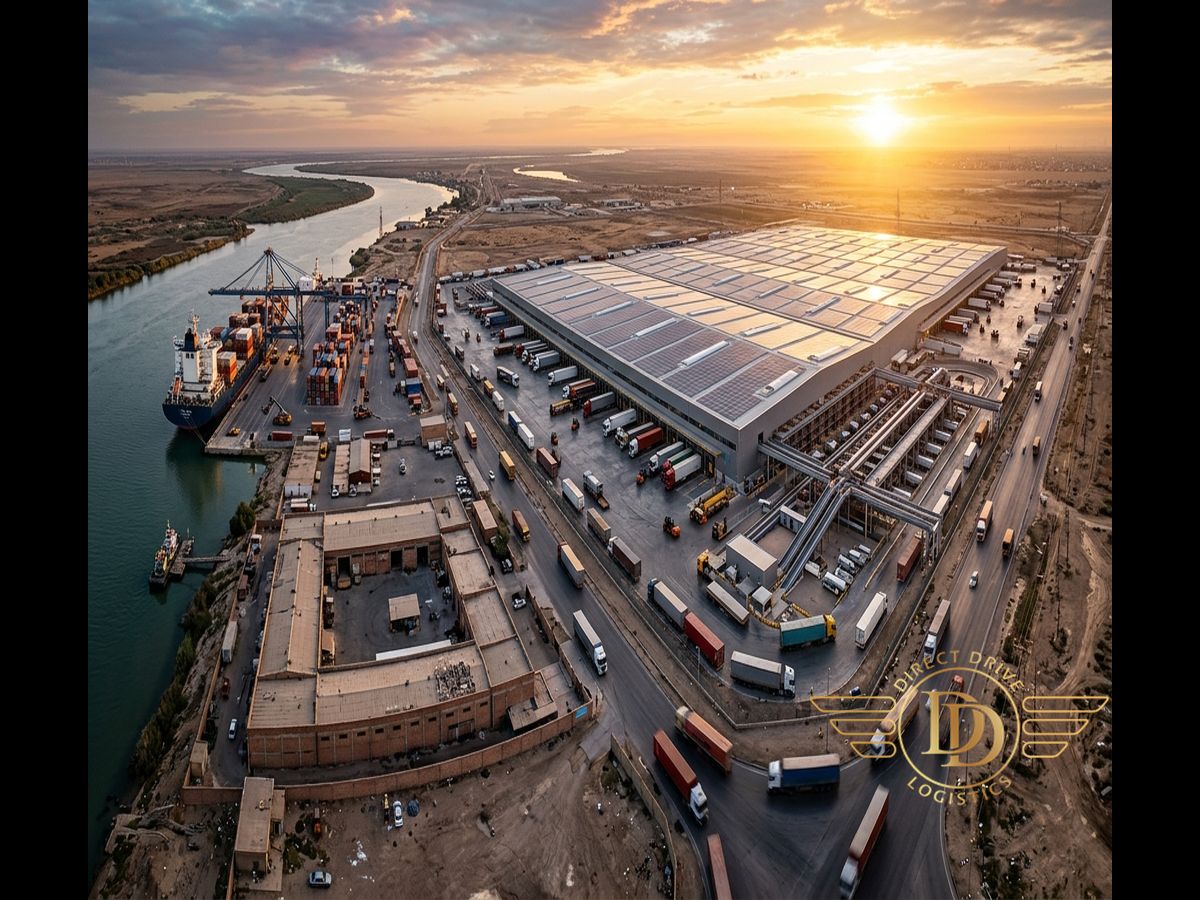
Discover how fulfillment center iraq can transform your operations with this guide moves beyond generic warehousing advice to demonstrate how a strategic fulfillment partner with an official government clearing license at umm qasr port and true multimodal capabilities de-risks your entire iraqi supply chain.
A fulfillment center in Iraq is a strategic logistics hub that manages the entire post-purchase process, from warehousing and inventory management to customs clearance and last-mile delivery, tailored for the Iraqi market. These specialized centers optimize supply chains, reduce transit times, and navigate complex local regulations. They are crucial for businesses seeking efficient and compliant distribution across all 18 Iraqi governorates, especially with the 2026 shift to electronic, HS-code-based customs.
When your cargo is stuck at the border for 5 days due to a single missing document, costing you USD 800+ in demurrage fees, the limitations of standard warehousing become clear. This guide moves beyond generic advice to demonstrate how a strategic fulfillment partner with an official government clearing license at Umm Qasr Port and true multimodal capabilities de-risks your entire Iraqi supply chain. We address the critical content gaps often overlooked by competitors, such as the specific challenges of last-mile delivery across Iraq’s diverse landscape and the nuances of regulatory compliance.
You will discover why a comprehensive fulfillment center Iraq solution, integrating advanced inventory management systems (WMS) and robust customs expertise, is essential for the burgeoning Iraqi e-commerce market, projected to reach USD 21.71 billion by 2029. We’ll explore the importance of partners with verified multimodal operations, not just brokerage relationships, and detail how such capabilities ensure reliable delivery schedules. This article also delves into the critical differences between bonded and standard warehousing in Iraq, offering insights into their respective benefits.
This comprehensive guide explores “fulfillment center Iraq” through multiple perspectives, covering everything from vetting customs clearance and port access capabilities to ensuring reliable last-mile delivery across all 18 Iraqi governorates. Whether you’re a logistics professional or business owner, you’ll gain actionable insights to enhance your operations and overcome common logistical hurdles. Prepare to transform your Iraqi operations with this guide, which provides practical solutions for even the most complex supply chain challenges.
Complete Guide to Fulfillment Center Iraq

Beyond Storage: Defining the Modern Fulfillment Center in the Iraqi Market
Many businesses entering the region equate logistics with simple warehousing, where costs in Basra can average as low as USD 0.50–5 per square meter per month for dry storage. A strategic fulfillment center Iraq, however, is an active operational hub, not a passive storage space. It manages the entire order lifecycle: receiving, inventory management services, picking, packing, and final-mile delivery, acting as the engine for your in-country sales and distribution.
A comprehensive fulfillment package integrates these core services with specialized capabilities demanded by the Iraqi market. This includes handling complex customs clearance, which typically takes 3–7 days at land borders, and providing specialized infrastructure. For industries like pharmaceuticals or FMCG, this means access to temperature-controlled facilities where warehouse rental Iraq costs can range from USD 10–22 per square meter, ensuring product integrity from port to customer.
One mistake we see regularly is businesses contracting for warehousing without verifying if the provider has an in-house, government-licensed customs clearing team. This separation creates delays and adds unaccountable vendors at critical entry points like Umm Qasr Port. In our operations, integrating port clearance directly with our Basra fulfillment services consistently cuts the port-to-warehouse leg from several days down to just 48 hours for prepared clients, demonstrating a complete end-to-end process, as visualized in RAND’s End-to-End supply chain model. This integration is key to understanding total Iraq shipping costs and timelines.
Your next step: Assess your current supply chain. Identify if your provider is merely storing goods or actively managing your entire order lifecycle, including licensed customs clearance.
Introduction to Fulfillment Center Iraq
More Than a Warehouse: Advanced Inventory and Specialized Handling Solutions
A modern fulfillment center in Iraq is a dynamic operational hub, not just a storage space. With Iraq’s freight and logistics market valued at USD 7.7 billion in 2025, businesses need partners who provide comprehensive inventory management, order processing, and strategic distribution. This means real-time visibility into stock levels and capabilities tailored for a rapidly expanding consumer base.
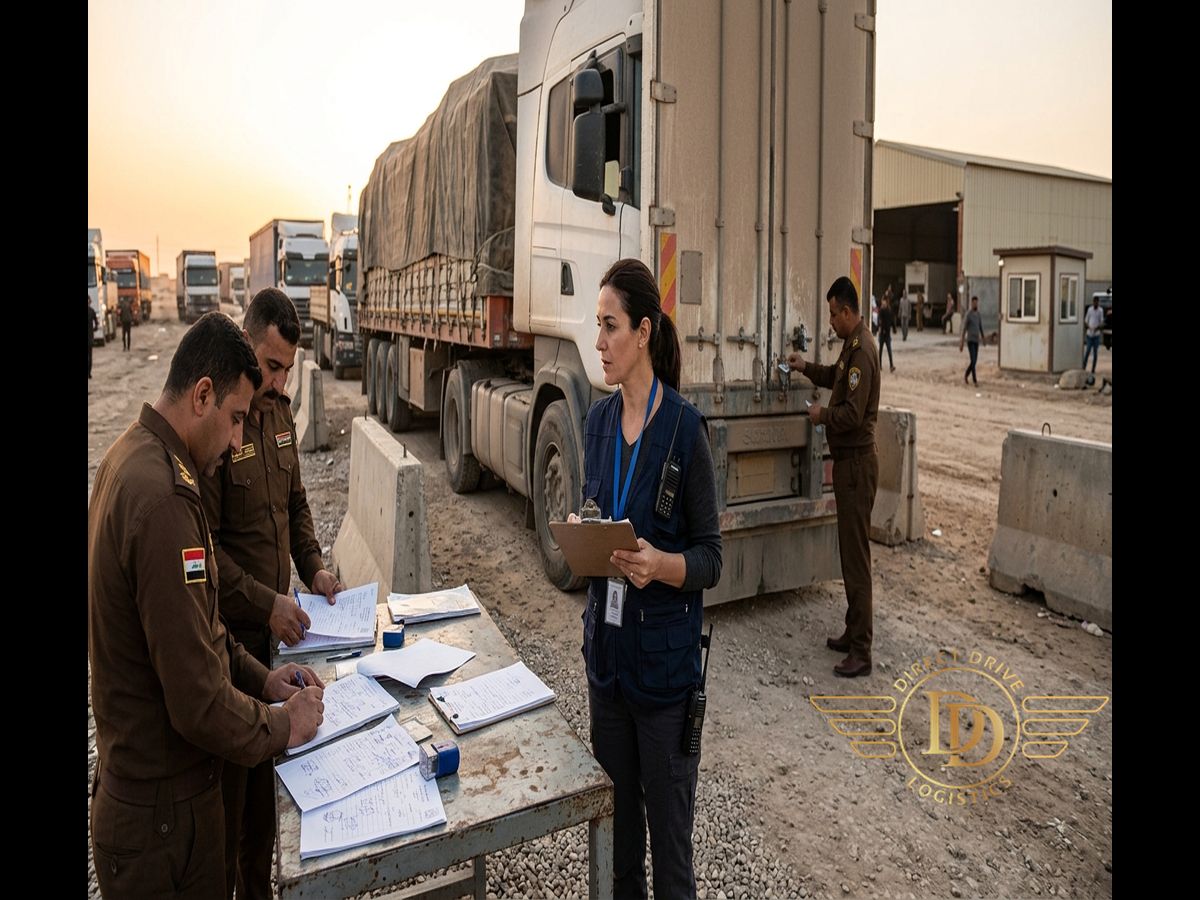
The most critical service is now integrated logistics and customs expertise. As of 1 January 2026, Cabinet Decision No. 957/2025 mandated HS-code-based duties, where incorrect classifications for electronics or FMCG can add 1–4 working days to clearance times. This new ASYCUDA World system, now active at 22 federal border crossings, demands a partner with deep customs clearance Iraq knowledge to avoid costly delays.
In our experience as a government-licensed clearing agent at Umm Qasr, we consistently see that third-party brokers cause these delays. A fulfillment partner with an in-house, licensed team eliminates communication gaps by directly managing electronic declarations at key entry points like the Ibrahim Khalil border crossing.
Advanced solutions also include specialized handling such as secure storage Iraq for pharmaceuticals and food products, kitting, and final assembly. These value-added services ensure products are market-ready upon arrival. For a detailed breakdown of service integration, you can review Fedex’s visual resource: which illustrates complex supply chain flows.
Your next step: Evaluate your current logistics partner’s customs license status. Ask them directly if they are a government-licensed clearing agent or if they subcontract this critical function.
Navigating Complexity: DDL’s Expertise Across KRG & Federal Iraq Customs Systems
Dual Jurisdictions: The Key Differences Between KRG and Federal Customs Procedures
Effectively managing an Iraq supply chain requires navigating two distinct customs authorities: the Kurdistan Regional Government (KRG) and Federal Iraq. Each operates with its own procedures, duty structures, and documentation requirements, a complexity that often leads to costly delays for unprepared businesses. A shipment cleared in Erbil (KRG) does not automatically grant it free passage to Baghdad; it typically requires a second clearance.
In our experience completing over 2,500 domestic deliveries, we consistently see cargo delayed at the KRG-Federal Iraq checkpoints due to improper documentation. Direct Drive Logistic mitigates this risk by operating across all major border crossings in both jurisdictions, including six in the KRG and key federal entry points like Umm Qasr Port, ensuring full Iraq import compliance from the outset.
Mastering Digital Clearance: Navigating Iraq’s Electronic ASYCUDA & HS-Code System
The customs landscape shifted significantly with the full implementation of the ASYCUDA World system. As of 1 January 2026, Cabinet Decision No. 957/2025 mandated electronic declarations and item-based duties based on HS Codes, replacing previous flat-fee structures. This system now covers 22 federal border crossings, including major hubs like Umm Qasr.
Under these new customs rules, duties can range from 5% to 40% of CIF value, making accurate classification critical. A frequent error in this stage is using incorrect HS codes for electronics (Chapter 85) or FMCG, which can add 1–4 working days to clearance times plus penalties. As a government-licensed clearing agent at Umm Qasr, our team handles precise HS classification and digital submission directly, preventing these common setbacks. For sensitive goods, we also offer specialized temperature controlled storage Iraq solutions.
Your next step: Provide our team with your top 5 imported products for a complimentary HS code review to pre-emptively identify potential customs challenges under the 2026 regulations.
Beyond the Broker: DDL’s Verified Multi-Modal Freight Operations in Iraq (Sea, Air, Road)
Direct Asset Control vs. Freight Forwarding: Ensuring Reliability Across Iraq
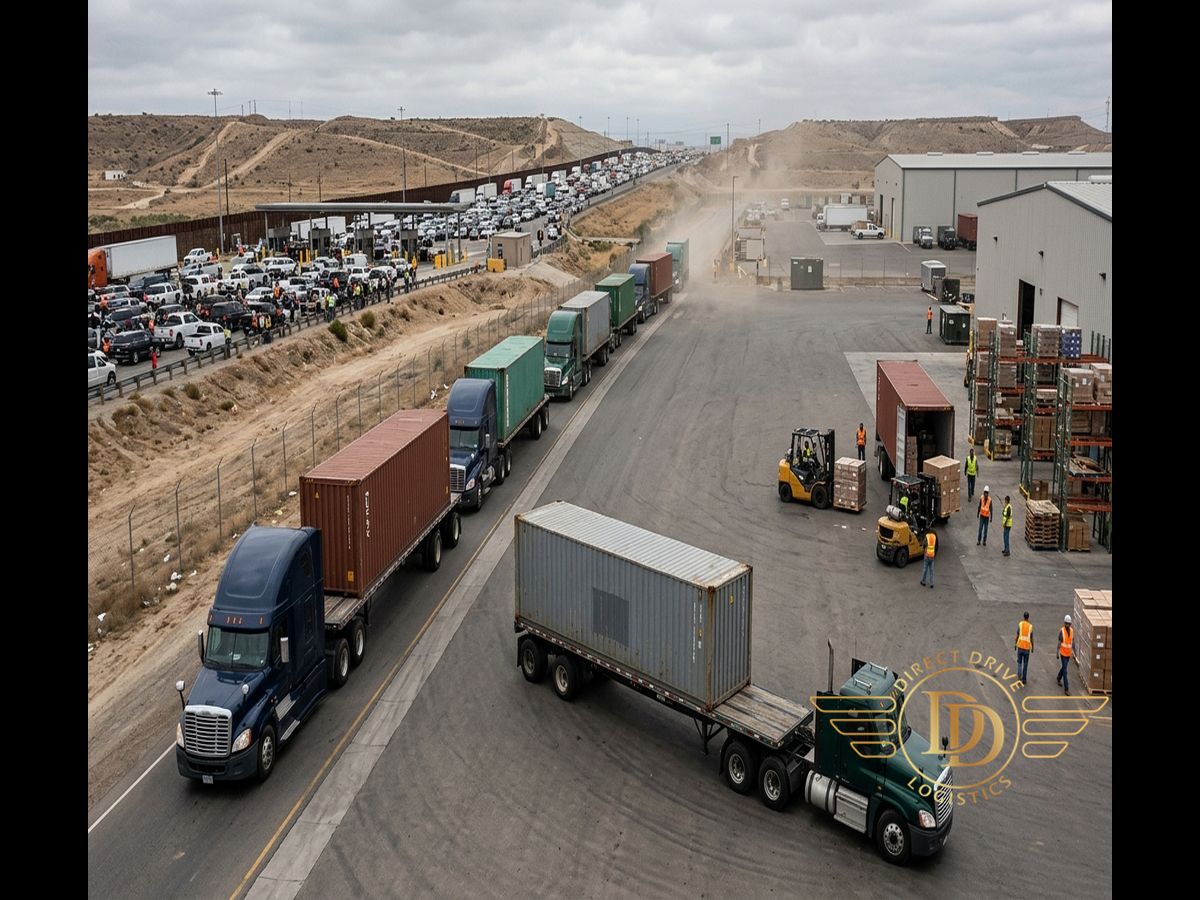
Choosing a logistics partner in Iraq requires looking beyond brokers to providers with direct operational control. A standard freight forwarder often subcontracts key stages, creating communication gaps and delays. An asset-based partner, by contrast, manages the entire process with in-house resources, which is critical at border crossings where standard customs clearance can take 3–7 days. With direct control and a well-prepared customs dossier, this timeline can be reduced to just 1–4 working days.
One mistake we see regularly is businesses underestimating the impact of subcontracted customs clearance. A third-party broker adds another layer of communication and potential failure, turning a simple documentation issue into a week-long delay. In our experience managing over 300 Iran-Iraq cross-border shipments, having our own licensed agents on the ground is the single biggest factor in achieving consistent, rapid clearance.
| Capability | Standard Freight Broker | Direct Drive Logistic (Asset-Based Partner) |
|---|---|---|
| Customs Clearance Speed | Relies on 3rd parties; 3-7 day average | In-house licensed agents; 1-4 day target |
| Problem Resolution | Delayed escalation through subcontractors | Direct control; re-route/resolve in hours |
| Cost Transparency | Multiple, layered markups | Single, consolidated, transparent invoice |
| Umm Qasr Port Access | Indirect; reliant on external agents | Direct; official government clearing license |
Integrated Multi-Modal Freight Solutions: Seamlessly Connecting Sea, Air, and Road
For businesses asking, “Can I ship from the USA to Iraq?” the answer is yes, but the efficiency depends entirely on your partner’s capabilities. True multi-modal shipping in Iraq means one provider seamlessly manages sea freight into Umm Qasr Port, air freight into Baghdad, and the final road transport to your destination. Direct Drive Logistic is one of the few providers with an official government clearing license at Umm Qasr, eliminating the need for third-party customs brokers and giving us direct portside control. This integrated approach is key to logistics company Iraq operations.
This integrated approach provides critical flexibility. When a primary border crossing faced congestion, we re-routed three 40ft containers from Tehran to Baghdad via the Mehran border, delivering the FMCG goods with zero delay to the original ETA. This agility is impossible when dealing with separate brokers for each leg of the journey. Once cleared, cargo moves to secure facilities where logistics and warehousing costs in key hubs like Erbil average USD 5–12 per m²/month for dry storage.
Your next step: Request a multi-modal quote from Direct Drive Logistic for your specific USA-to-Iraq or Turkey-to-Iraq route to see a consolidated cost breakdown that a standard broker cannot provide.
Real-World Results: DDL Case Study – Zero Delay Border Congestion Re-Route (Tehran to Baghdad)
The Challenge: Critical Shipment Halted by Severe Iran-Iraq Border Congestion
A client’s time-sensitive shipment of three 40-foot containers with Fast-Moving Consumer Goods (FMCG) was en route from Tehran to Baghdad. The entire delivery, critical for retail stocking, was jeopardized by sudden, severe congestion at the planned Iran-Iraq border crossing, a frequent cause of supply chain disruption.
With a standard 4-5 day door-to-door timeline, any delay meant significant commercial risk and potential stock-outs. A frequent error in this stage is logistics planning that treats border crossings as static checkpoints, failing to build in real-time monitoring or pre-vetted alternative routes for avoiding shipping delays in Iraq.
DDL’s Agile Solution: Real-Time Monitoring and a Strategic Border Re-Route
Our on-the-ground teams in both Iran and Iraq immediately identified the bottleneck. In our experience managing over 300 Iran-Iraq cross-border shipments, having operational capacity across multiple frontiers is non-negotiable. We leveraged our network spanning 17 border crossings to make an instant decision to divert the convoy.
The cargo was strategically re-routed through the Mehran border crossing, a route where we have established clearance protocols. This level of logistics contingency planning is vital as regional commerce expands, reflected in the growing demand for new commercial office space in key hubs. The shipment cleared customs without incident and continued to its destination.
The result was a seamless transit. All three containers arrived at the Baghdad fulfillment center in Iraq within the original timeline, experiencing zero days of delay. This demonstrates the tangible value of a partner with deep, multi-border operational control, especially when considering a reliable distribution warehouse Iraq needs.
Your next step: Challenge our team with your most complex Iran-to-Iraq shipment route. We will provide a contingency-planned quote within 24 hours.
Send your cargo details to Direct Drive Logistic on WhatsApp — get a route-specific checklist and quote within 24 hours.
Message on WhatsAppWhy Choose Direct Drive Logistic?
Offices in Erbil (HQ) + Tehran (Nasim Shahr Terminal); warehouses in Zakho, Erbil, Basra, and Tehran (2,000 sqm)
Government-licensed clearing agent — direct port access for sea freight into southern Iraq
2,500+ Iraq domestic deliveries, 300+ Iran-Iraq cross-border, 100+ international freight; air freight handler at Erbil, Baghdad, and Basra airports
Operational at 6 KRG borders (Parviz Khan, Bashmagh, Haji Omran, Ibrahim Khalil, Sheikh Saleh, Shoshmi), 5 federal Iran-Iraq borders (Khosravi, Sumar, Mehran, Shalamcheh, Chazzabeh) and 6 further federal crossings (Trebil, Arar, Safwan, Al-Qaim, Al-Rabia, Al-Waleed), plus Bandar Abbas port
Full operational fluency in Farsi, Arabic, Kurdish, and English — client-facing and documentation
~10 trucks/day from Erbil hub covering Baghdad, Karbala, Najaf, Basra, Kut (Wasit), Diyala, Nasiriyah, and all Iraqi governorates
Frequently Asked Questions
Setting up a fulfillment center in Iraq involves navigating complex customs regulations, ensuring robust security, and establishing reliable infrastructure. A key requirement is compliance with Iraq’s electronic customs declarations via ASYCUDA World, which became mandatory in late 2025–early 2026. This system, coupled with item-based duties by HS Code (ranging from 5% to 40% of CIF value as of 2026), necessitates precise HS classification and embedded customs expertise within the fulfillment operation to avoid delays and reassessed duties. Reliable last-mile delivery networks, especially across all 18 governorates, are also crucial for the burgeoning e-commerce market, projected to reach USD 21.71 billion by 2029.
A top-tier fulfillment center in Iraq must offer a comprehensive suite of services beyond basic storage to meet current market demands. This includes advanced warehouse management systems (WMS) for real-time inventory tracking, value-added services like kitting and light assembly, and robust reverse logistics capabilities. Critically, it should provide integrated customs clearance, acting as a licensed clearing agent, especially at key entry points like Umm Qasr Port, which saw 1.92 million TEUs in 2025. Furthermore, a strong fulfillment partner will offer multi-modal solutions, including road, sea, and air freight, with a wide network of border crossings (such as Direct Drive Logistic’s 17-border network) to ensure flexibility and mitigate transit risks.
To assess a fulfillment partner’s reliability in Iraq, businesses should look for verifiable operational credentials and a proven track record. Key indicators include direct licensing as a clearing agent at major ports like Umm Qasr, as this eliminates reliance on third-party brokers and significantly speeds up clearance. For instance, Direct Drive Logistic, as a licensed clearing agent, has demonstrated 48-hour direct clearance for medical equipment from Dubai to Baghdad via Umm Qasr. Evaluate their ability to manage the shift to HS-code-based customs, which adds 1-4 days for misdeclared goods. Furthermore, inquire about their network of border crossings (e.g., across Iran, Turkey, Jordan) and their capacity to reroute shipments, as demonstrated by successful re-routes of FMCG goods from Tehran to Baghdad through alternative borders without changing the 4-5 day ETA.
A strategic fulfillment partner in Iraq can mitigate risks and delays through several unique advantages. Firstly, having a quad-language operations team (Farsi, Arabic, Kurdish, English) is essential for seamless communication and navigating local regulations, especially in regions like the Kurdistan Region, where local teams have resolved temporary import licenses with KRG authorities in just one day. Secondly, a partner with a vast, integrated border network (like Direct Drive Logistic’s 17 crossings) ensures flexibility and redundancy, preventing delays from congestion or political shifts at specific borders. Finally, established daily scheduled departures from key hubs like Erbil to all Iraqi governorates, with approximately 10 trucks per day, offers predictable next-day delivery, eliminating the uncertainty of call-and-wait services and supporting the rapid growth of e-commerce.
While Amazon does not have a direct fulfillment center or dedicated delivery service within Iraq, consumers in Iraq can order from Amazon through third-party freight forwarders or specialized services. This is where a robust fulfillment center in Iraq becomes crucial. It acts as the final distribution hub for goods imported from international e-commerce platforms. For instance, a fulfillment center would receive consolidated shipments from global logistics partners, then process, sort, and dispatch these orders for last-mile delivery across Iraq’s 18 governorates. This infrastructure supports the country’s booming e-commerce revenue, which was approximately USD 5.1 billion in 2025 and is projected to reach USD 21.71 billion by 2029, demanding efficient urban hubs in cities like Baghdad, Erbil, and Basra.
Engaging with Direct Drive Logistic for fulfillment center Iraq services begins with a comprehensive needs assessment to understand your specific operational requirements and challenges. Our 10 years of experience in the region allow us to tailor solutions for diverse cargo, from FMCG to industrial machinery. The next steps typically involve a detailed consultation where we analyze your supply chain, clarify customs documentation needs (especially regarding the 2026 HS-code-based tariffs), and propose a customized logistics plan. We leverage our dual-country presence in Iraq and Iran, along with our licensed clearing agent status at Umm Qasr and our 17-border network, to ensure seamless integration. We focus on providing a single-operator solution, eliminating the complexities of multi-party coordination, as demonstrated by our full corridor management for goods from China or Dubai to Erbil via Bandar Abbas.
Conclusion
Optimizing a fulfillment center in Iraq demands more than just warehousing; it requires a deep understanding of dual customs jurisdictions, direct asset control for multi-modal operations, and proven agility in navigating border complexities, as demonstrated by our zero-delay re-route case study from Tehran to Baghdad. The modern fulfillment center in Iraq acts as a strategic hub, ensuring seamless inventory management and specialized handling solutions crucial for market penetration and sustained growth.
To immediately enhance your supply chain efficiency, first, audit your current Incoterms to ensure they align with your operational capabilities within Iraq. Second, ask your current logistics provider for their specific contingency plans for border congestion or unforeseen delays, requesting examples of successful re-routes or expedited clearances. Finally, consider how Direct Drive Logistic’s expertise in navigating the intricacies of both KRG and Federal Iraq customs systems, coupled with our verified multi-modal freight operations, can directly address your most pressing fulfillment challenges.
Direct Drive Logistic offers unparalleled expertise in establishing and managing a robust fulfillment center in Iraq. With our official license as a clearing agent at the Port of Umm Qasr, we provide direct port access for sea freight into southern Iraq, eliminating unnecessary intermediaries and ensuring swift processing. Leverage our deep local presence and years of operational experience to secure your supply chain. Contact Direct Drive Logistic today at (+964) 750 637 9296 to discuss a tailored fulfillment strategy.
Need Logistics Consultation?
The Direct Drive team is ready to assist. Message us now.
Optimize your supply chain and ensure seamless operations in Iraq. Contact Direct Drive Logistic today to discuss tailored fulfillment solutions that drive efficiency and profitability for your business. Call us now at (+964) 750 637 9296.
Get Your Free Quote NowContact Us for a Consultation
Location
Direct Drive Logistic
Gulan Street, MRF Quattro Block A 13-9
Erbil, Kurdistan Region