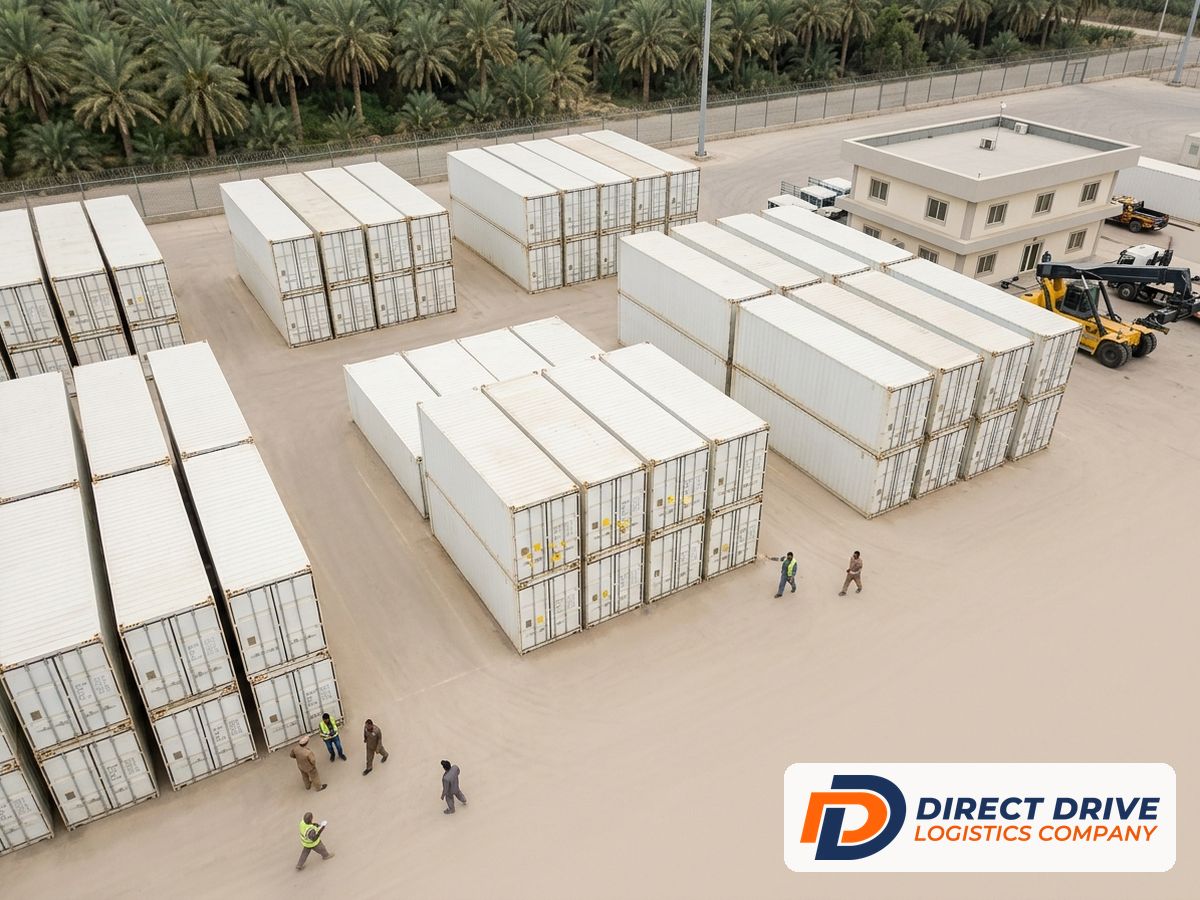
Discover how inventory management services iraq can transform your operations with show how inventory management in iraq only works when storage is tied to the transport schedule, using direct drive logistic’s rentable warehouse space in six iraqi cities plus tehran. explain how pairing that storage with ~10 daily scheduled trucks from erbil to all governorates lets businesses hold leaner safety stock instead of overstocking against unpredictable delivery.
Inventory management services in Iraq combine warehousing, stock control software and dispatch so importers hold the right quantity in the right city. Effective providers tie storage to a transport schedule, track HS codes and customs status, and plan buffers for border delays, power cuts and port dwell. This lets businesses carry leaner safety stock.
In 2026, Umm Qasr’s backlog passed 50,000 containers, and one held shipment could leave shelves empty while demurrage built up. Most importers respond by overstocking, tying up cash. Safety stock (buffer stock) is extra quantity held to cover delays, sized by lead time, the gap between order and arrival.
Below, we explain why stock control breaks down in Iraq, what inventory management services Iraq providers include, which warehouse hub fits your import corridor, how to survive KRG and federal customs holds, and how to vet a 2026 partner.
Why Stock Control Breaks Down in Iraq: Customs Holds, Power Cuts, and Import Dependence
Customs Holds and Item-Level Valuation (HS Code): Why ASYCUDA Delays Distort Stock Records
Reorder formulas built for Dubai or Mersin assume a predictable inbound date. Iraq breaks that assumption at the border. Since the 2026 Umm Qasr reform, federal entry points assess goods item by item under their HS code through ASYCUDA, so one misclassified line can hold an entire container.
The effect became visible in early 2026, when Umm Qasr’s container backlog passed 50,000 units after the item-based tariff rollout. Most stock systems still show held cargo as “in transit.” Planners count inventory they cannot sell, while demurrage, port storage and document corrections build up.
Any serious offer of inventory management services in Iraq starts by closing that gap between paper stock and usable stock. Score your own operation against these 5 Iraq-specific risk factors:
- Customs status visibility: Does your system separate cleared stock from goods held at Umm Qasr or a KRG crossing? If it does not, reorder points fire late and customs clearance delays in Iraq turn into empty shelves.
- Two parallel customs systems: Cargo entering through Kurdistan Region crossings and moving into federal Iraq faces a second settlement step. Lead times that ignore this route split will be wrong.
- Import dependence: Iran–Iraq trade alone exceeded USD 10 billion in 2025. Iraq’s import dependence means local substitutes are rarely on hand, so one delayed supplier can empty a whole category.
- Power and connectivity: Grid cuts and generator fuel shortages interrupt scanners, reefer monitoring and cloud sync. Counts drift until someone runs a manual stock reconciliation.
- Security exposure on trucking routes: Moving goods between Basra, Baghdad, Erbil, Sulaymaniyah and the final governorates adds uneven risk. Replenishment times stretch differently on each lane, and a single average hides that supply chain disruption.
Two or more weak scores mean your safety stock is compensating for visibility you do not have. In Iraq, that excess buffer is what each customs hold, outage and slow lane quietly costs you.
Scope of inventory management services iraq: Receiving, Storage, Software, and Dispatch

Inventory management services in Iraq should cover far more than rented floor space. A complete scope runs from the truck bay to the customer’s door, with 8 functions: receiving, quality checks, putaway, cycle counting, software, customs-document tracking, picking and dispatch. If a quote lists only square metres, the remaining work falls back on your own team.
Customs data belongs in the core scope. Decision No. 957 moved federal Iraq to item-by-item duty assessment by HS code, with ASYCUDA running the calculations. The new Umm Qasr customs rules turned the link between each lot and its invoice, packing list and declaration into a stock-control task, not just a broker’s job.
Inbound Receiving, Quality Checks, Putaway, and Bin Location Control in Iraqi Warehouses
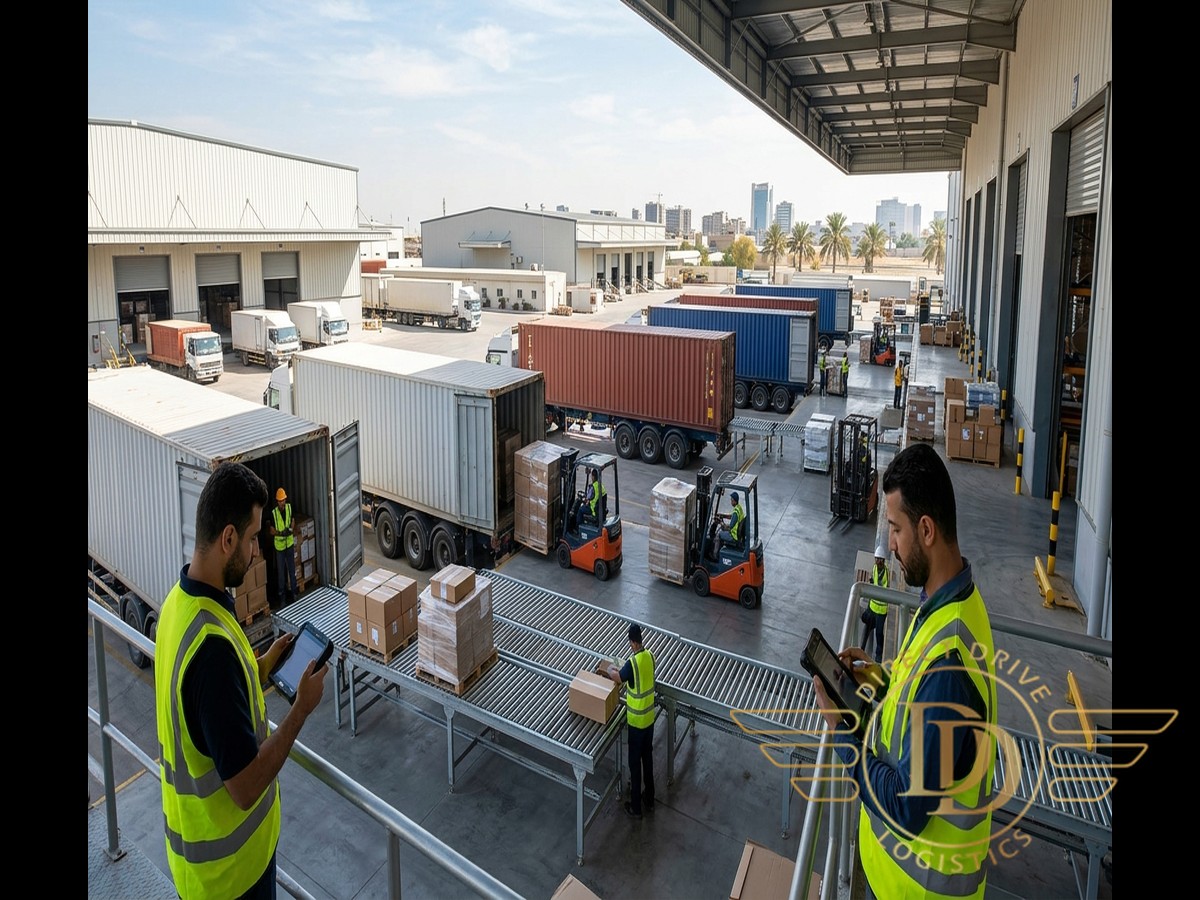
Receiving starts with a count against the packing list and a damage check before the carrier leaves. Discrepancies logged at the bay can be claimed. Those found a week later rarely can. With Umm Qasr throughput reported at roughly 2,500 containers per day in 2026, unchecked lots can pile up quickly at a Basra receiving dock.
Warehouse receiving and putaway then assigns each pallet a bin location recorded in the warehouse management software. In Iraq, that system needs an offline mode and backup power so a grid outage does not erase a shift’s scans. Cycle counting services should then reconcile those bins on an agreed rota, not in one annual stocktake.
Use this checklist before signing. A provider should deliver, or clearly exclude, each of these 8 items:
- Inbound receiving with a count and damage report
- Quality checks and quarantine for disputed goods
- Putaway with recorded bin locations
- Cycle counting on a written schedule
- Warehouse management software for Iraq, with offline mode, backup power and stock reports
- HS-code master data and customs-document tracking per lot
- Order picking and packing
- Last-mile dispatch tied to a fixed truck schedule
Labelling, kitting, returns handling and cargo insurance are optional add-ons. Price them separately so they do not inflate the core quote. Direct Drive Logistic offers rentable warehouse space in 6 Iraqi cities: Baghdad, Karbala, Najaf, Erbil, Duhok and Basra, backed by its warehouse logistics services Basra team in the south. It also has a warehouse in Tehran, so you can position stock on both sides of the border under one scope.
Baghdad, Basra, Erbil, or Karbala? Matching Warehouse Hubs to Import Corridors and Lead Times
| Feature | Basra | Baghdad | Karbala / Najaf | Erbil / Duhok |
|---|---|---|---|---|
| Feeding crossings | Safwan, Shalamcheh, Umm Qasr port | Arar, Mehran | Mehran | Ibrahim Khalil |
| Customs system | Federal | Federal | Federal | KRG |
| Published road transit | Kuwait City 2-3 d; Tehran 4-5 d | Riyadh 2-3 d | Tehran 5-7 d | Istanbul 5-7 d; Mersin 5-7 d (from port, sea voyage excluded) |
| Onward reach | Deep south | Central demand hub | Southern-central cities | Baghdad in 1-2 d |
Basra Warehousing via Safwan, Shalamcheh, and Umm Qasr: Lead Times and Port Storage Charges (Demurrage)
Basra suits importers whose goods arrive through Gulf supply lines. Trucks from Kuwait City reach Basra via Safwan in 2-3 days. Tehran loads via Shalamcheh take 4-5 days, so reorder points for Iranian goods need a longer cover window.
Sea cargo through Umm Qasr adds a different risk. Containers that stay past free time accrue port storage charges (demurrage), and the post-rollout Umm Qasr container backlog showed how quickly dwell time can stretch. Charges depend on the line and the cargo, so request a quote before you plan around them.
A common mistake is treating the port as a free warehouse. Importers leave containers at Umm Qasr until buyers order, and demurrage then eats the margin. Moving cleared stock into Basra warehousing services keeps the clock off the container, and secure storage Iraq options add protection for high-value lines.
Baghdad, Karbala, and Najaf Stockholding: Arar and Mehran Corridors Under Federal Customs
Baghdad draws Saudi supply via Arar in 2-3 days, and Iranian freight enters through Mehran. Tehran to Karbala or Najaf runs 5-7 days, so those hubs need deeper buffers for Iranian lines. One Tehran-to-Baghdad FMCG move via Mehran ran 4-5 days door-to-door.
All three cities sit under federal customs, where the 2026 ASYCUDA customs reset rewards clean HS-code mapping and invoice matching. For inventory management services iraq buyers, that means release status belongs in the stock record. Erbil warehouse storage works differently. It clears under KRG rules and still reaches Baghdad in 1-2 days, so northern buffers can feed central demand without a second import process.
Building Inventory Control That Survives Border Delays: KRG vs Federal Entry, Buffer Stock, and Backup Crossings
Mapping Every SKU to Its Tariff Classification (HS Code) and KRG or Federal Entry Point
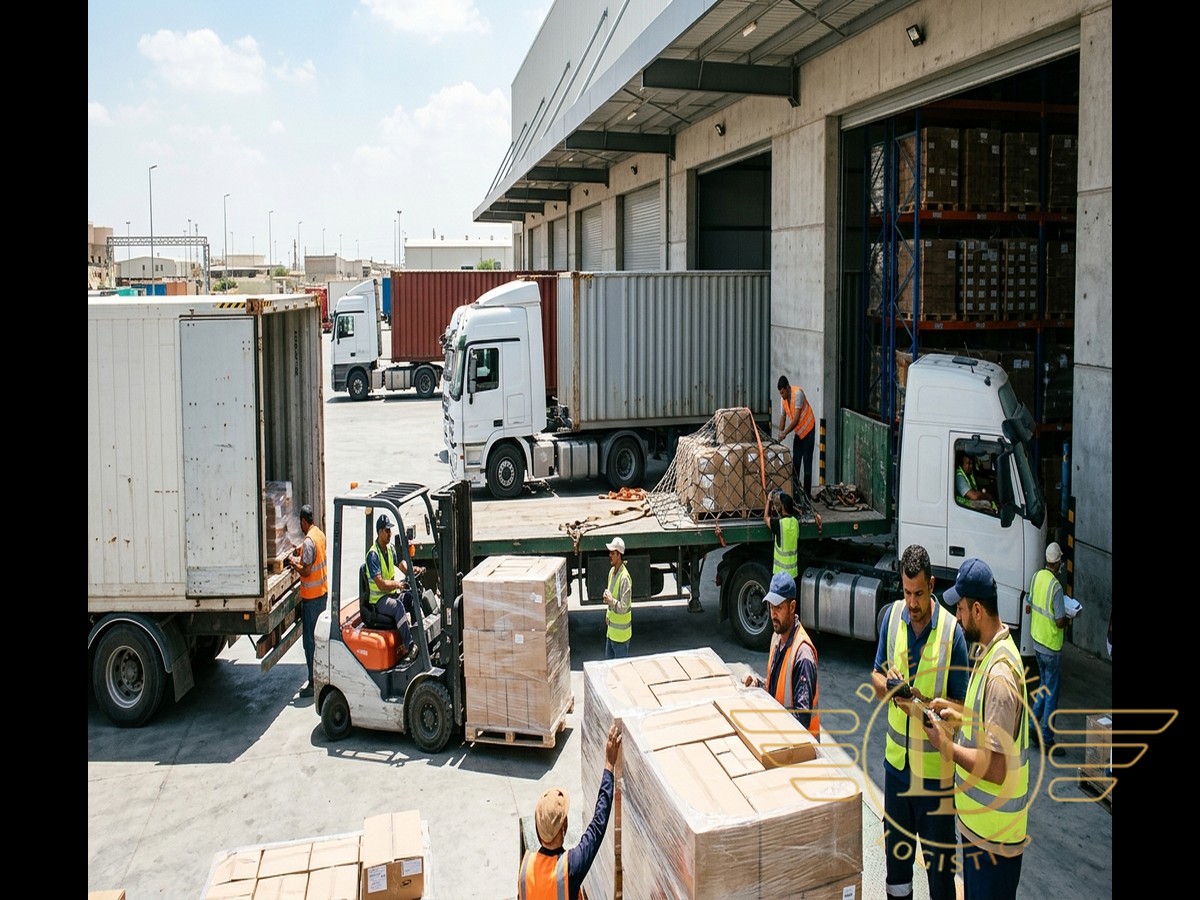
Inventory management services in Iraq start at the item master, not on the warehouse floor. Iraq’s federal customs now uses ASYCUDA for automated, item-level classification and valuation. A mismatch between your SKU record and the declared HS code can stop a whole container.
- Step 1: Build an HS code SKU mapping: Link every SKU to one verified HS code and one invoice description. Customs duty depends on your goods and their HS code. Estimate it with our tariff calculator, or request a quote and our team will confirm the full cost.
- Step 2: Tag the entry system: Mark each SKU as KRG-cleared or federally cleared. The KRG and federal customs systems keep separate documentation.
- Step 3: Flag KRG-to-federal movers: Identify stock cleared in Erbil or Duhok that will be sold in Baghdad, Basra or Karbala.
Sizing Buffer Stock (Safety Stock) Around Route Lead Times and KRG-to-Federal Tariff-Difference Settlements
Your safety stock lead time should come from real corridor data, not supplier promises. Size the buffer only after you know which crossing and which customs system each SKU uses.
- Step 4: Add the settlement window: Plan 1-2 days for tariff-difference settlement at Al-Sad, Dareman, Chiman or Bawa Mahmoud when KRG stock enters federal Iraq.
- Step 5: Apply the safety-stock rule: Hold daily demand multiplied by the gap between your normal and worst-case route lead time, plus the settlement days.
- Step 6: Pre-assign a backup crossing: Back KRG with KRG and federal with federal. A Tehran → Baghdad FMCG load of 3 × 40ft containers was re-routed through Mehran and still arrived within its 4-5 day window.
- Step 7: Set customs-hold alerts: Trigger a reorder review once a declaration sits unreleased past its planned date.
Step 7 also covers policy shocks. US pressure on Iran trade can affect Iranian-origin SKUs, so give them their own alert threshold. Port recovery speed matters as well. Umm Qasr cleared roughly 2,500 containers per day while it worked through its backlog. Treat that rate as your recovery benchmark, not as your planning baseline.
Vetting a 2026 Stock Management Partner: KPIs, Technology Checks, and Questions to Ask
KPIs to Demand: Stock Accuracy, Order Fill Rate, and Reporting Cadence
A capable provider of inventory management services in Iraq reports measured performance. A storage landlord only invoices for space. Before signing, ask for 12 months of KPI history rather than a sample week, and compare it against current warehouse storage Iraq pricing so you know what each service level costs.
- Inventory accuracy KPI: system count against physical count, by SKU and by city, with the cycle-count frequency stated.
- Order fill rate benchmark: the share of orders shipped complete from stock on the first dispatch.
- Dock-to-stock time: the number of hours from truck arrival until goods are pickable.
- Reporting cadence: daily stock-on-hand, weekly ageing and monthly reconciliation.
- Customs visibility: HS code and clearance stage shown on every inbound line.
In 2026, Umm Qasr North Port reportedly processed about 2,500 containers per day, so inbound volumes can surge without warning. Ask how quickly each KPI recovers after a peak week.
Technology and Facility Checks: Genset Backup, Connectivity Resilience, and ASYCUDA and KRG Documentation
Since 2025, ASYCUDA has assessed federal imports item by item, using HS codes and declared values. Your partner’s stock master data must hold those fields. Cargo entering through KRG crossings needs separate KRG paperwork and may require settlement at a federal customs office.
Iran-sourced stock adds a further layer of risk. The August 2026 US moves on Iran secondary sanctions show how quickly supplier lead times can shift. Use this 10-question warehouse SLA checklist in provider meetings:
- How many hours can your generator (genset) run the facility and its systems without grid power?
- What is your backup internet link if the primary line fails?
- Can I view live stock online, or only through emailed spreadsheets?
- Who maintains HS-code master data for my SKUs?
- How many ASYCUDA declarations has your team handled since 2025?
- Who prepares KRG documents and federal settlement paperwork?
- What insurance covers stock in storage, and what are its limits?
- Who holds keys, CCTV footage and access logs?
- Is your dispatch schedule written into the SLA?
- What penalty applies if accuracy or fill-rate targets are missed?
Next step: Print these 10 questions and the five KPIs as one scorecard. Score every shortlisted provider on the same sheet before you commit any stock.
Send your cargo details to Direct Drive Logistic on WhatsApp and our team will send you a route-specific checklist and quote.
Message on WhatsAppWhy Choose Direct Drive Logistic?
Offices in Erbil (HQ) + Tehran (Nasim Shahr Terminal); rentable warehouse space in Baghdad, Karbala, Najaf, Erbil, Duhok and Basra, plus a warehouse in Tehran
Government-licensed clearing agent — direct port access for sea freight into southern Iraq
2,500+ Iraq domestic deliveries, 300+ Iran-Iraq cross-border, 100+ international freight; air freight handler at Erbil, Baghdad, and Sulaymaniyah airports
Operational at 4 KRG borders (Parviz Khan, Bashmagh, Haji Omran, Ibrahim Khalil) plus the Sheikh Saleh border market, 5 federal Iran-Iraq borders (Khosravi, Sumar, Mehran, Shalamcheh, Chazzabeh) and 6 further federal crossings (Trebil, Arar, Safwan, Al-Qaim, Al-Rabia, Al-Waleed), plus Bandar Abbas port
Full operational fluency in Farsi, Arabic, Kurdish, and English — client-facing and documentation
~10 trucks/day from Erbil hub covering Baghdad, Karbala, Najaf, Basra, Kut (Wasit), Diyala, Nasiriyah, and all Iraqi governorates
Frequently Asked Questions
ASYCUDA moved Iraqi customs at major federal entry points to item-level assessment based on HS codes and shipment values, so inventory records must now match customs data line by line. In 2026, Umm Qasr North Port reportedly processed about 2,500 containers per day while clearing a backlog that had exceeded 50,000 containers. For inventory management services iraq, a provider should therefore keep HS-code master data for every SKU, track pre-clearance status, and flag exceptions before goods reach the warehouse. Cargo entering through KRG crossings still needs separate KRG documentation. It may also require a tariff-difference settlement at a federal customs office before it moves into federal governorates. Next step: audit your SKU list for HS-code accuracy before your next inbound shipment.
Pricing for inventory management services in Iraq follows your storage profile rather than a flat rate. The main drivers are warehouse location, SKU count, batch and serial tracking, temperature control, handling frequency and security exposure. Hidden costs often matter more: demurrage, port storage, customs-document corrections, inspection handling, generator fuel, re-palletization and stock reconciliation. Since the 2026 customs reforms at Umm Qasr, HS classification and customs valuation also affect your landed cost directly. Customs duty depends on your goods and their HS code — estimate it with our tariff calculator, or request a quote and our team will confirm the full cost. For an accurate proposal, prepare three items: your SKU list with HS codes, your monthly inbound volumes and your target delivery governorates.
No single business is the most profitable in Iraq, but import-led distribution of food, FMCG and consumer goods consistently attracts investors because domestic demand relies heavily on imports. Trade with Iran alone exceeded USD 10 billion in 2025, covering food, consumer goods and energy products, alongside large flows from Turkey and the Gulf. Margins in these sectors depend on stock control, because dead stock, expired batches and port dwell erode profit quickly. Before entering the market, take four steps:
- Validate demand by governorate.
- Map your entry corridor, such as Umm Qasr, Ibrahim Khalil or an Iranian crossing.
- Set clearance buffers for that corridor.
- Choose inventory management services iraq that provide batch and expiry tracking.
The research behind this guide does not verify a current list of US companies operating in Iraq. To find one, check two official sources: the commercial section of the U.S. Embassy in Baghdad and the company registration records held by Iraq’s Ministry of Trade. Any foreign firm, American or otherwise, needs compliance-grade inventory control. US-linked businesses face added scrutiny over sanctions exposure, particularly for Iran-origin goods, so stock records should document the country of origin, supplier and HS code for every batch. Follow four practical steps:
- Tag origin data at receiving.
- Record serial numbers for regulated items.
- Link customs documents to each SKU.
- Confirm the applicable sanctions rules with legal counsel before shipping.
Inventory and logistics roles in demand across Iraq in 2026 include: – warehouse supervisors – stock controllers – customs documentation clerks – HS-code classification specialists – WMS and barcode system operators ASYCUDA’s item-level customs assessment has increased demand for staff who can reconcile customs declarations with physical stock. Hiring is concentrated in Basra for Umm Qasr flows, in Baghdad for national redistribution, and in Erbil and Sulaymaniyah for the northern corridors. Arabic is essential, while Kurdish, English and Farsi add value for cross-border stock management. To find open vacancies, check company career pages, regional job boards and LinkedIn. Strengthen your application by showing cycle-counting experience, Excel or WMS skills, and familiarity with both KRG and federal customs documentation.
Replenishment lead times in Iraq depend on the corridor, and real shipments provide useful benchmarks: – A Dubai-origin medical equipment shipment was cleared at Umm Qasr within 48 hours of engaging a licensed clearing agent. – FMCG containers from Tehran reached Baghdad door-to-door in 4-5 days, even after being re-routed through the Mehran crossing to avoid congestion. – Mersin to Erbil takes 5-7 days door-to-door. – An Erbil-to-Baghdad B2B restock was delivered in 6 hours, and most Iraqi cities can receive next-day delivery from Erbil. These shipments, handled by Direct Drive Logistic, show that reorder points should include a clearance buffer for each corridor. Next step: calculate safety stock using your slowest realistic corridor, not your fastest one.
Conclusion
Inventory management services Iraq importers can rely on treat customs data as part of the stock record. Federal customs now calculates item-level valuation through ASYCUDA, and during backlog reduction port authorities reported throughput of roughly 2,500 containers per day. The opportunity therefore lies with providers that combine warehouse management system (WMS) functions with customs-document control across Umm Qasr, Basra, Baghdad, Erbil and Sulaymaniyah. That combination keeps customs release status and the stock record aligned.
Start this week by exporting your SKU master list and adding three columns to every line: HS code, entry point (KRG crossing or federal crossing), and pre-clearance status. Any SKU without a confirmed classification is a likely customs hold and a source of phantom stock. Introduce barcode receiving and cycle counts on those items first. Then set a buffer stock level for every SKU that depends on a single crossing.
Direct Drive Logistic runs storage, clearance and dispatch as one connected workflow, with local teams who understand how KRG and federal entry rules affect what is truly available to sell. When your containers arrive at Umm Qasr, our licensed clearing agents can pass release status directly into your stock records. Your reported inventory then matches what is physically on the shelf. Send us your completed SKU audit for a gap review of your inventory management services iraq setup by calling (+964) 750 637 9296.
Need Logistics Consultation?
The Direct Drive team is ready to assist. Message us now.
Take control of your stock with Direct Drive Logistic’s inventory management services in Iraq, which give you real-time visibility, accurate tracking, and fewer costly stockouts and overstocks across your supply chain. Call us today at (+964) 750 637 9296 for a free consultation and see how we can streamline your operations.
Get Your Free Quote NowContact Us for a Consultation
Location
Direct Drive Logistic
Gulan Street, MRF Quattro Block A 13-9
Erbil, Kurdistan Region