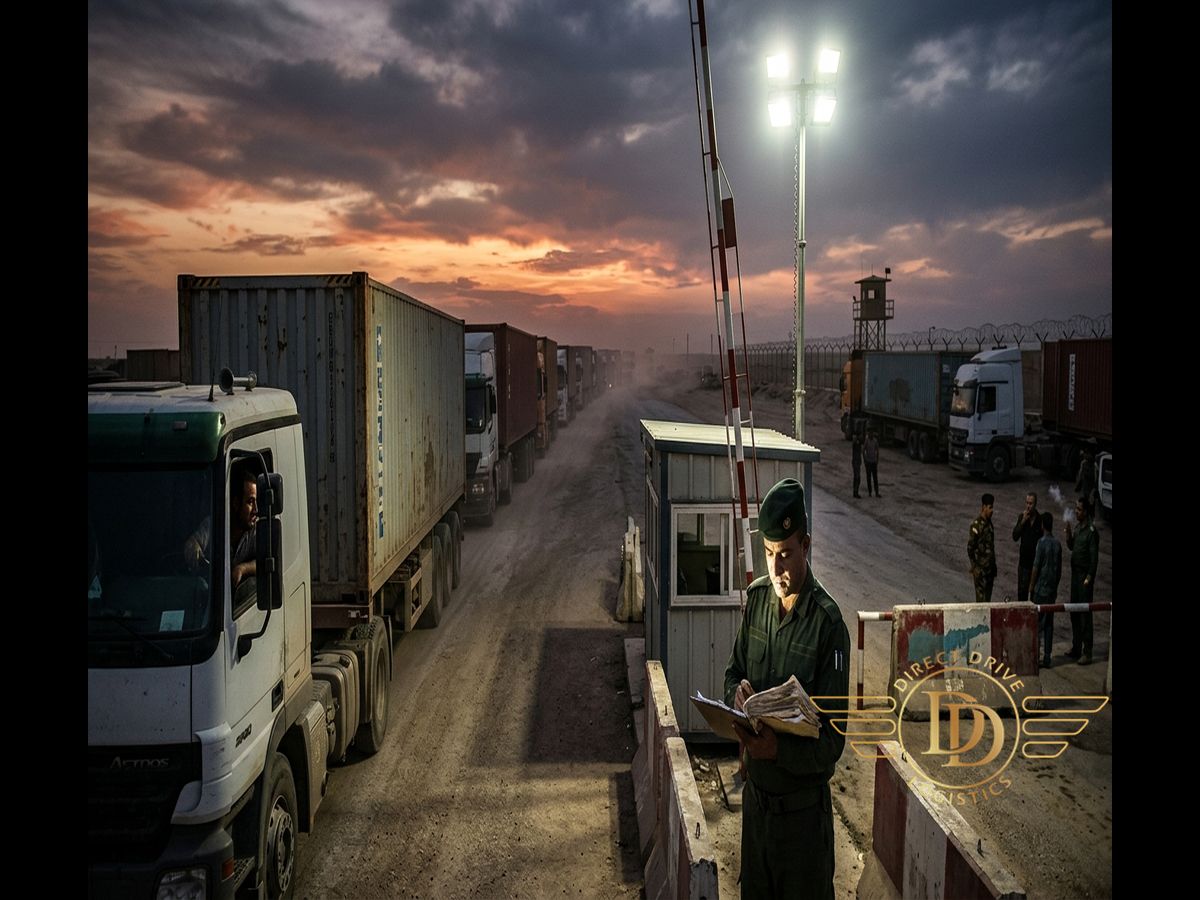
Discover how Factory Output Distribution Iraq can transform your operations with this guide moves beyond generic logistics advice to focus specifically on the critical post-production phase, demonstrating how a true multimodal operator, unlike a broker, provides the control and flexibility needed to navigate iraq’s complex domestic and export distribution challenges, proven by our ability to reroute shipments and avoid delays at congested borders.
Factory Output Distribution Iraq involves the strategic planning and execution of moving finished goods from Iraqi manufacturing facilities to domestic markets and international destinations. This complex process encompasses multimodal transport, efficient customs clearance, and robust last-mile delivery. Effective distribution ensures timely market access, reduces logistics costs, and supports the growth of Iraq’s expanding non-oil manufacturing sector, which saw non-oil commodity exports reach approximately USD 4.5 billion in 2024.
You just received an invoice with unexpected demurrage charges because your finished goods shipment was stuck at the Port of Umm Qasr for seven days, costing you thousands. Many logistics managers struggle to find a reliable partner for Factory Output Distribution Iraq, especially when navigating the country’s evolving customs landscape and diverse infrastructure challenges. This guide moves beyond generic logistics advice to focus specifically on the critical post-production phase, demonstrating how a true multimodal operator, unlike a broker, provides the control and flexibility needed to navigate Iraq’s complex domestic and export distribution challenges, proven by our ability to reroute shipments and avoid delays at congested borders.
This comprehensive guide explores Factory Output Distribution Iraq through multiple perspectives, addressing the unique challenges of finished goods logistics for factories. We will cover the complexities of Iraq’s expanding non-oil manufacturing sectors, which generated approximately USD 5.34 billion annually as of 2025, and their specific distribution channels. We will also delve into navigating internal distribution infrastructure and logistics challenges, including the importance of efficient customs clearance at gateways like Umm Qasr, where mandatory electronic declarations were introduced in late 2025.
Understanding the geographic distribution of factory outputs in Iraq, from production hubs to consumption centers, is vital for optimizing supply chains. For instance, the Iraq freight and logistics market was valued at about USD 11.52 billion in 2026, with significant growth in e-commerce, particularly in Baghdad. This growth amplifies the need for robust last-mile delivery solutions, which are critical for getting products from distribution centers to the final customer. We will also define key terms such as Multimodal Transport (Multimodal Transport), which refers to the use of two or more different modes of transport, like road and sea, under a single contract, enhancing efficiency and flexibility in distribution. Additionally, we will explain Last-Mile Delivery (Last-Mile Delivery), which is the final step of the delivery process from a distribution center to the end customer, often the most costly and time-consuming part of the supply chain.
This article will highlight essential capabilities for effective finished goods transport to Iraq, including insights into inventory management, customs compliance, and the critical distinction between a broker and a true multimodal operator. We will explore how partners with verified control over their finished product delivery, offering solutions across road, sea, and air, can prevent costly delays, providing a competitive advantage in a market where logistics accounts for roughly 12% of Iraq’s non-oil GDP. Ultimately, you’ll gain actionable insights to enhance your operations and confidently select the right outbound logistics partner for your Iraqi factory.
The Unique Challenges of Finished Goods Logistics for Factories
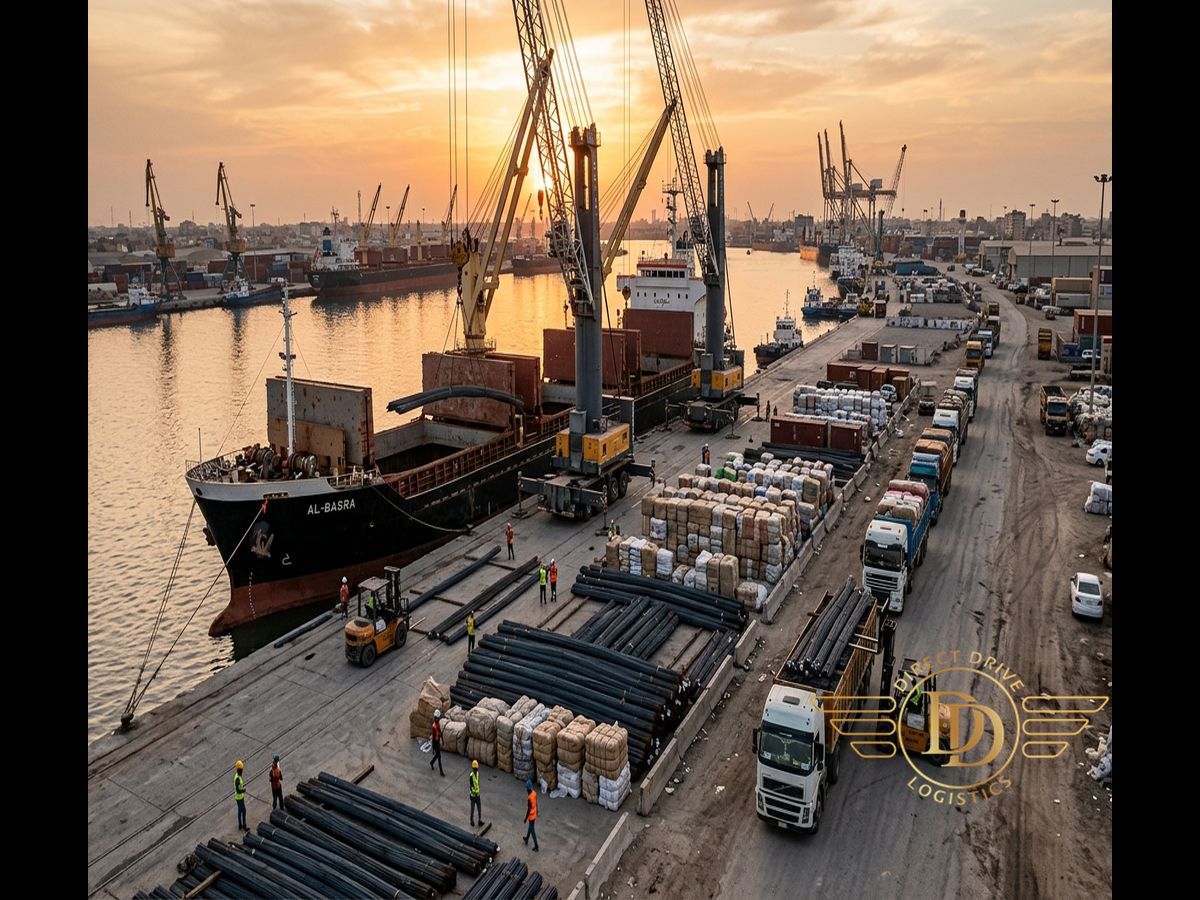
Navigating Security and Bottlenecks in Iraqi Supply Chains
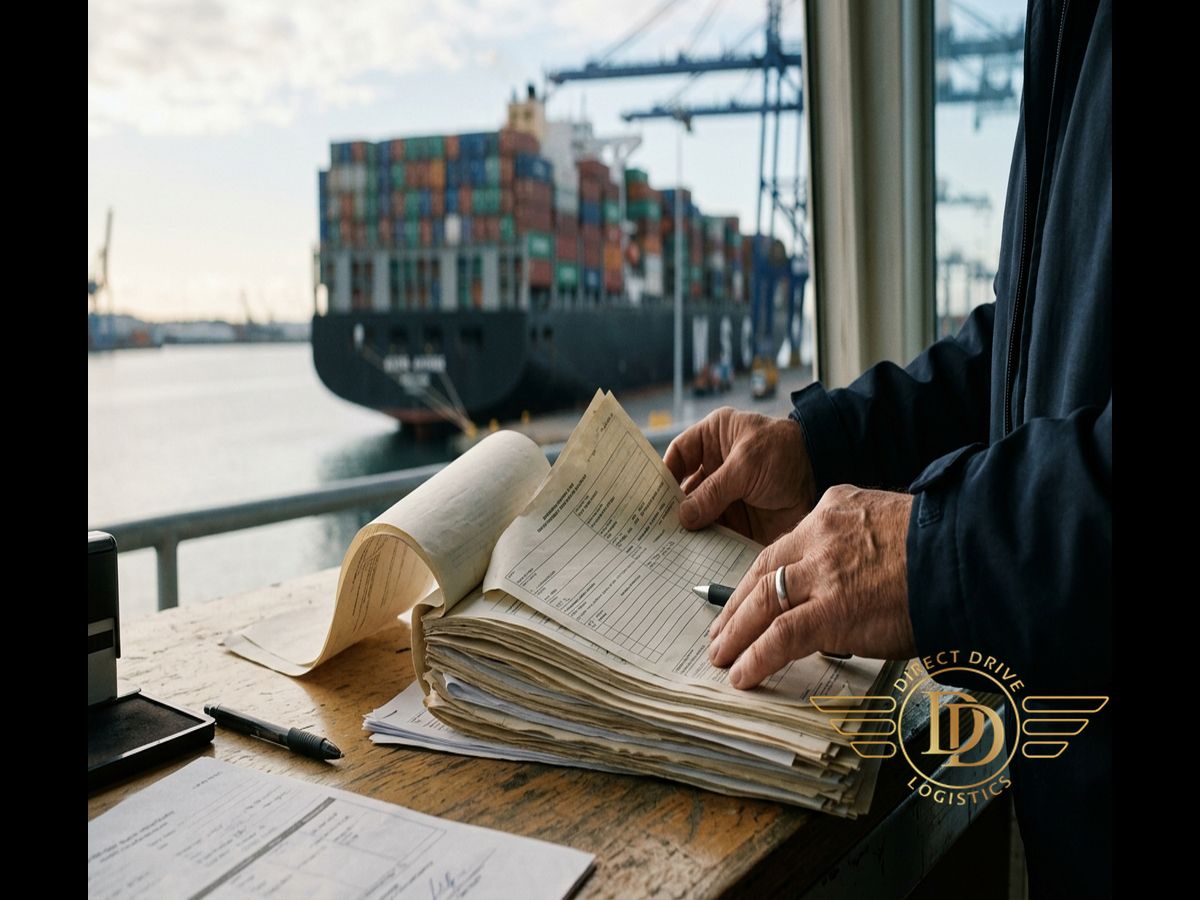
Effective Factory Output Distribution Iraq moves beyond simple transport; it requires mitigating risks inherent to the region. While inbound logistics focuses on getting materials to your plant, outbound logistics faces unpredictable delays at ports and borders that can derail delivery timelines. For instance, standard export customs clearance can take anywhere from 3 to 14 days, creating a wide and unreliable window for getting finished goods to market.
A frequent error we see is underestimating the financial impact of these delays, particularly at the Port of Umm Qasr. As of early 2026, demurrage fees for a container start around IQD 25,000 per day after the initial 5-7 free days and can escalate to over IQD 43,000 daily. Our team at Direct Drive Logistic has found that these unforeseen costs, which can easily reach USD 1,000–2,000 per container, directly erode profit margins on manufactured goods. Optimizing your factory logistics can significantly reduce these expenses.
This volatility demands a partner with ground-level control, not just a brokerage relationship. As a true multimodal operator with a presence at 17 border crossings across Iraq, we have the flexibility to bypass bottlenecks. When a primary border crossing was congested, we successfully re-routed three 40ft containers of FMCG goods from Tehran to Baghdad through an alternative crossing, meeting the original delivery deadline without any delay. Managing these export compliance rules proactively is key to avoiding such disruptions, and our trade documentation services Iraq can help.
Your next step: Request a risk assessment of your primary export corridor from our team to identify potential chokepoints and alternative routes before your next shipment.
Iraq’s Expanding Non-Oil Manufacturing: Key Output Sectors and Distribution Channels
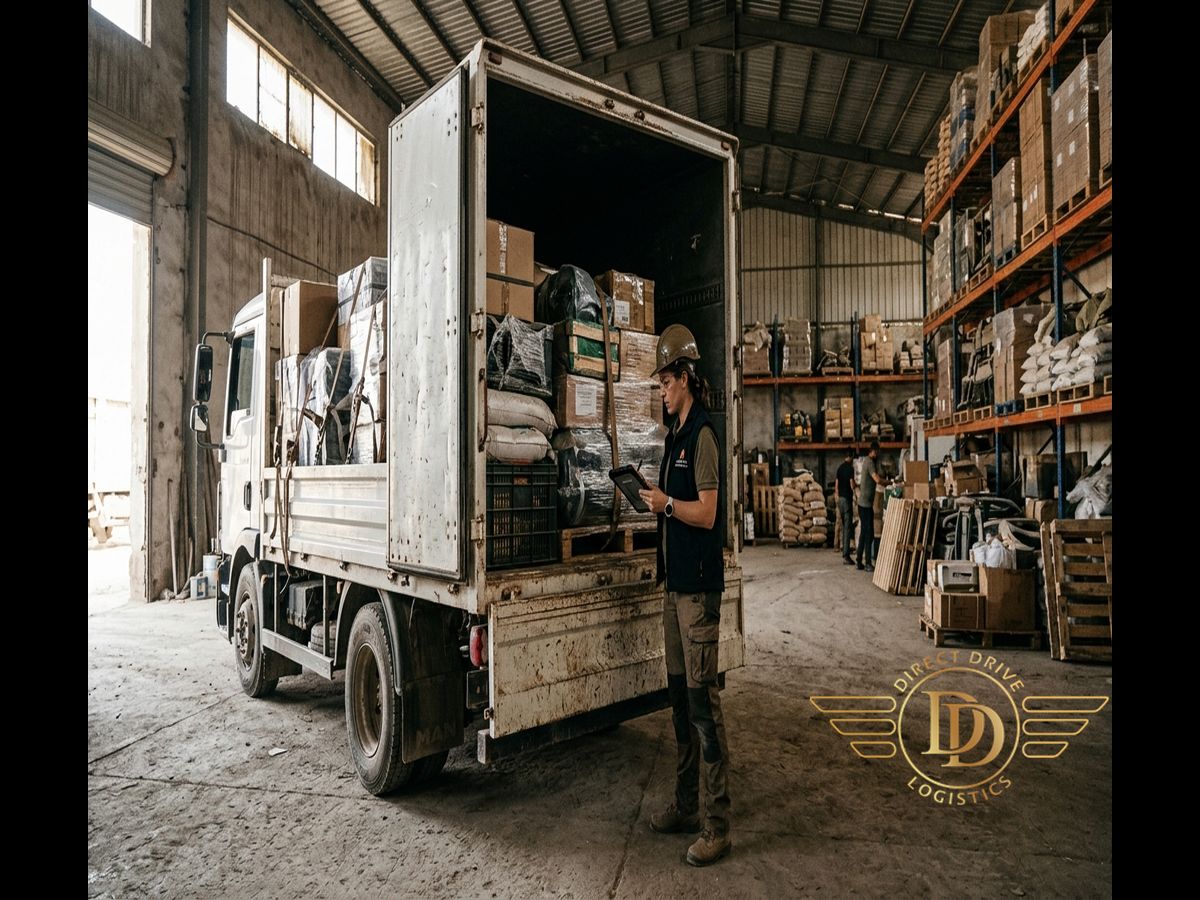
Spotlight on Key Non-Oil Industries: Construction Materials, Food Processing, and Textiles
While crude oil remains Iraq’s primary export, the nation’s non-oil sector is demonstrating significant growth. In 2024, Iraq’s non-oil commodity exports reached approximately USD 4.5 billion (5.8 trillion IQD), with Asian Arab countries receiving a commanding 88% of this volume. This expansion highlights the increasing importance of effective Factory Output Distribution Iraq for manufacturers in diverse sectors.
Key industries driving this growth include construction materials and food processing. Provinces like Anbar are major hubs for cement and rebar, requiring robust overland transport to domestic construction sites in Baghdad and Basra, or to border crossings for export. Similarly, the food processing sector, particularly dates and derivatives from central Iraq, depends on efficient logistics to reach both local markets and international buyers via ports like Umm Qasr.
In our operations across Iraq, we consistently see that reliance on a single border or port creates significant risk. A factory shipping rebar might find the Trebil crossing to Jordan congested, while a food exporter faces delays at Safwan. Our operational footprint across 17 border crossings and direct licensing at Umm Qasr allows us to immediately reroute shipments—a capability brokers simply cannot offer—ensuring Iraqi non-oil goods maintain their delivery schedules. Furthermore, ensuring proper documentation with certificate of origin Iraq services is crucial for smooth customs clearance.
The textile and light manufacturing industries, often centered near major cities like Baghdad and Erbil, face similar challenges for both domestic and regional distribution. Optimizing the final-mile delivery for these consumer-focused products is critical for market competitiveness. Successful factory output distribution in Iraq requires a partner with deep, on-the-ground infrastructure to navigate these varied supply chains, often leveraging a dedicated distribution warehouse Iraq for efficiency.
Your next step: Identify the primary and secondary export routes for your specific product category. Contact our team for a complimentary route analysis to benchmark your current transit times against our optimized, multi-border network.
Navigating Internal Distribution Infrastructure and Logistics Challenges for Iraqi Factory Output
Overcoming Iraq’s Deficient Road Networks and In-Transit Security Risks
Effective Factory Output Distribution Iraq depends on mastering the country’s ground-level realities. The freight and logistics market, valued at approximately USD 11.52 billion in 2026, is heavily reliant on road transport, which presents significant supply chain bottlenecks in Iraq. Navigating inconsistent road quality, multiple security checkpoints, and unpredictable congestion is a daily operational challenge.
Our team at Direct Drive Logistic has found that single-route dependency is a primary cause of delays. Relying on one path from Baghdad to Basra, for instance, can easily add 24-48 hours to transit times due to unforeseen closures. We solve this by leveraging our deep operational footprint, managing multi-stop domestic routes like our single-truck circuits through Baghdad, Basra, and Karbala, which streamlines complex distribution into one managed journey.
Addressing Critical Warehousing and Cold Chain Gaps in Industrial Corridors
As Iraq’s non-oil industrial sector grows, generating around USD 5.34 billion annually, the pressure on inadequate storage infrastructure intensifies. The 75+ Iraqi factories now exporting goods require modern warehousing and, increasingly, specialized cold chain facilities, particularly in key hubs like Baghdad, Basra, and Erbil. A lack of high-quality storage leads to product degradation and compromises market readiness.
A frequent error in this stage is dispatching cargo without pre-cleared, adequate receiving facilities, causing delays and potential spoilage. With non-oil commodity exports expanding significantly and Asian Arab nations taking 88% of these goods as of 2024, maintaining product integrity from factory to port is non-negotiable. Our network includes secure warehouses in Zakho, Erbil, and Basra, providing the necessary buffer and staging points for seamless export consolidation. This often involves navigating complex customs procedures, making a reliable importer of record service Iraq essential for smooth operations.
Your next step: Request a complimentary assessment of your internal distribution network from our Iraq-based team to identify security vulnerabilities and chokepoints within 48 hours.
Geographic Distribution of Factory Outputs in Iraq: Production Hubs vs. Consumption Centers
Mapping Iraq’s Primary Industrial Zones: Baghdad, Basra, and Erbil as Production Epicenters
Effective Factory Output Distribution Iraq requires a precise understanding of its core manufacturing hubs. The industrial landscape is dominated by a triangle of activity connecting Baghdad, Basra, and the Kurdistan Region’s capital, Erbil, which collectively serve as the primary sources for finished goods nationwide.
The economic artery running from Baghdad to Basra is one of the most critical major trade routes in Iraq. Based on a 550 km journey, the typical domestic road freight cost for this corridor was estimated in 2025 at USD 27–50 per ton. This figure accounts for the region’s elevated fuel and security expenditures.
Our team at Direct Drive Logistic has found that light manufacturing and fast-moving consumer goods (FMCG) are heavily concentrated in industrial zones surrounding Baghdad. In contrast, Basra’s factories focus more on petrochemical derivatives and processing imported raw materials that arrive via the port of Umm Qasr.
Identifying Major Consumption Markets and High-Demand Population Centers
While production is concentrated, consumption is distributed across Iraq’s major population centers. The Baghdad consumer market represents the single largest destination for finished goods. However, Basra, Mosul, and the urban centers of the Kurdistan Region also represent significant, high-demand markets.
For goods distributed from the south, port-related costs are a key budget line item. At Umm Qasr, standard Terminal Handling Charges (THC) add USD 150–250 to a 20ft container’s cost before it even begins its inland journey. These costs directly impact the final price of both imported goods and many of Iraq’s top non-oil exports destined for regional markets.
One mistake we see regularly is companies trying to manage multiple, unreliable local carriers for nationwide distribution. This creates inconsistent delivery timelines and fragmented cost structures. As a true multimodal operator, our daily scheduled departures from our Erbil hub offer a streamlined solution, providing reliable, next-day delivery to every Iraqi governorate with a single point of contact.
Your next step: Provide our team with your primary production locations and target consumer markets. We will map the most cost-effective and secure distribution routes within 48 hours.
Essential Capabilities for Effective Finished Goods Transport to Iraq
Mastering Iraqi Customs and Regulatory Compliance for Smooth Clearance
Effective factory output distribution in Iraq hinges on flawless customs navigation. With separate customs regimes in Federal Iraq and the Kurdistan Region (KRG), a logistics partner must possess direct, licensed authority to prevent costly delays. As of 2025, with at least 75 Iraqi factories exporting goods, the volume of cross-border documentation is substantial and requires specialized handling.
A frequent error is relying on third-party brokers who lack direct port access. In our operations as a government-licensed clearing agent at the Port of Umm Qasr, we see this firsthand. We recently cleared a shipment of sensitive medical equipment from Dubai to Baghdad in just 48 hours because our team handled the process directly, eliminating the communication gaps and delays common with intermediaries. Understanding the nuances of Iraq import export procedures is crucial for such efficiency.
Integrated Multimodal Transport Solutions for Comprehensive Iraqi Distribution
True control over your supply chain comes from a partner who operates assets, not just coordinates them. An asset-based multimodal freight provider offers the flexibility to adapt to Iraq’s dynamic ground realities, such as sudden border congestion. This capability is critical for maintaining delivery schedules and managing inventory costs across a complex distribution network.
Our team at Direct Drive Logistic recently demonstrated this control. A client’s shipment of three 40-foot containers from Tehran to Baghdad was threatened by congestion at the primary border. Because we operate across all 17 land border crossings, we immediately rerouted the cargo through the Mehran crossing, ensuring it arrived on its original schedule with zero days of delay. A broker would still be waiting for updates; we were already delivering the cargo.
Your next step: Request a complimentary route analysis for your highest-volume lane into Iraq. Our team will identify at least one alternative border crossing and outline a contingency plan to mitigate potential delays, delivered to you within 72 hours.
Send your cargo details to Direct Drive Logistic on WhatsApp — get a route-specific checklist and quote within 24 hours.
Message on WhatsAppWhy Choose Direct Drive Logistic?
Offices in Erbil (HQ) + Tehran (Nasim Shahr Terminal); warehouses in Zakho, Erbil, Basra, and Tehran (2,000 sqm)
Government-licensed clearing agent — direct port access for sea freight into southern Iraq
2,500+ Iraq domestic deliveries, 300+ Iran-Iraq cross-border, 100+ international freight; air freight handler at Erbil, Baghdad, and Basra airports
Operational at 6 KRG borders (Parviz Khan, Bashmagh, Haji Omran, Ibrahim Khalil, Sheikh Saleh, Shoshmi), 5 federal Iran-Iraq borders (Khosravi, Sumar, Mehran, Shalamcheh, Chazzabeh) and 6 further federal crossings (Trebil, Arar, Safwan, Al-Qaim, Al-Rabia, Al-Waleed), plus Bandar Abbas port
Full operational fluency in Farsi, Arabic, Kurdish, and English — client-facing and documentation
~10 trucks/day from Erbil hub covering Baghdad, Karbala, Najaf, Basra, Kut (Wasit), Diyala, Nasiriyah, and all Iraqi governorates
Frequently Asked Questions
Finished goods logistics in Iraq faces challenges including fluctuating customs regulations, infrastructure limitations, and security concerns, all impacting efficient factory output distribution. As of late 2025, Iraq’s shift to mandatory electronic customs declarations via ASYCUDA World for major gateways like Umm Qasr and Baghdad/Erbil airports, along with item-based duty calculations introduced in January 2026, necessitates precise documentation and compliance. Delays at borders, for instance, can extend typical customs clearance from 3 to 14 days, with sea freight at Umm Qasr often requiring 3-7 days. These complexities increase demurrage costs and can disrupt production schedules, making reliable, compliant logistics partners essential.
An effective logistics provider for factory output distribution in Iraq must offer comprehensive multimodal transport, expert customs clearance, and robust regional knowledge. This includes capabilities for road, sea, and air freight, with a strong understanding of the 17-border crossing network into Iraq, covering land frontiers with Iran, Turkey, Jordan, Saudi Arabia, Kuwait, and Syria. Crucially, a provider should act as a licensed clearing agent, such as at the Port of Umm Qasr, to directly manage customs processes, avoiding third-party delays and reducing storage fees. They should also possess a quad-language operations team (Farsi, Arabic, Kurdish, English) to navigate complex documentation and local authorities, as demonstrated by the 1-day resolution of an import license with KRG border authorities for an electronics shipment to Erbil.
To evaluate a logistics partner for factory output distribution in Iraq, assess their proven track record in multi-modal operations, border navigation, and crisis management. Look for evidence of a comprehensive network, such as a provider with established offices in Iraq and Iran, warehouses in key hubs like Zakho, Erbil, Basra, and Tehran, and a network covering all major land borders. For instance, Direct Drive Logistic successfully re-routed three 40ft containers of FMCG goods from Tehran to Baghdad through the Mehran border crossing without changing the original 4-5 day ETA, leveraging its 17-border network as a real-time fallback. This demonstrates the agility and operational control required to mitigate unforeseen disruptions and maintain delivery timelines.
An exceptional finished goods logistics provider for Factory Output Distribution Iraq stands out through verified operational control, not just brokerage, particularly for critical shipments. This means they operate their own assets and have direct control over key touchpoints. For example, a provider that manages the full corridor from China to Bandar Abbas port, Iran, and then onward to Erbil, Iraq, under a single operator, with a single CMR (Convention on the Contract for the International Carriage of Goods by Road) consignment note and invoice, eliminates multi-party coordination risks. Direct Drive Logistic, with over 10 years of experience, exemplifies this by handling Iran transit permits and Iraqi KRG import documentation for industrial machinery from Jebel Ali, Dubai, to Erbil, ensuring a seamless, single-forwarder experience from warehouse to warehouse.
Yes, a reputable logistics provider for factory output distribution in Iraq can demonstrate a proven track record of overcoming significant logistics hurdles. For instance, when dealing with border congestion, a provider with an extensive network of crossings can swiftly adapt. Direct Drive Logistic, for example, has successfully utilized its 17-border network, spanning all land frontiers into Iraq, to re-route shipments without delay. In one instance, FMCG goods in three 40ft containers from Tehran to Baghdad were re-routed through the Mehran border crossing, maintaining the original 4-5 day door-to-door timeline despite primary border congestion. This highlights the importance of having a diverse operational network and real-time fallback options to ensure minimal delays.
Comprehensive services, operational control, and crisis management significantly reduce risk and offer tangible benefits for Factory Output Distribution Iraq by ensuring reliability and efficiency. With daily scheduled departures, such as Direct Drive Logistic’s ~10 trucks/day from its Erbil hub to all Iraqi governorates, clients benefit from predictable ETAs and next-day delivery to most Iraqi cities from Erbil. This eliminates the uncertainty of “call-and-wait” services. Furthermore, having a licensed clearing agent status at Umm Qasr port means direct cargo clearance within 48 hours for medical equipment, avoiding significant port storage and demurrage fees. This integrated approach, backed by over 10 years of experience, minimizes supply chain disruptions and optimizes operational costs for manufacturers.
Conclusion
Effective Factory Output Distribution Iraq hinges on a robust understanding of the nation’s unique logistical landscape, from navigating deficient road networks and in-transit security risks to mastering complex customs regulations. As Iraq’s non-oil manufacturing sectors, such as construction materials and food processing, continue their expansion, the demand for secure and reliable finished goods transport from production hubs like Baghdad and Erbil to consumption centers intensifies. Successfully bridging this gap requires more than just transport; it demands a strategic partner with deep local knowledge and operational agility.
To immediately enhance your Factory Output Distribution Iraq strategy, start by auditing your current shipping invoices to verify all Incoterms are correctly applied, ensuring clarity on cost and risk transfer. Next, ask your current freight forwarder for their specific contingency plans for unexpected border delays or security incidents within Iraq. Finally, consider how Direct Drive Logistic, with its established presence and multimodal capabilities across Iraq and Iran, can offer the secure and efficient solutions necessary to overcome these challenges, ensuring your finished goods reach their destination reliably.
Direct Drive Logistic’s unparalleled expertise in Factory Output Distribution Iraq is built on years of hands-on experience and an extensive operational network. With daily scheduled departures from our Erbil hub to all Iraqi governorates, we provide a consistent, reliable line-haul schedule that eliminates uncertainty for your critical shipments. For a partner that understands the intricacies of the Iraqi market and prioritizes the security and timely delivery of your finished goods, contact us today at (+964) 750 637 9296.
Need Logistics Consultation?
The Direct Drive team is ready to assist. Message us now.
Ensure your critical factory output reaches every corner of Iraq efficiently and reliably. Optimize your distribution strategy today by calling Direct Drive Logistic at (+964) 750 637 9296 to discuss a tailored solution for your unique needs.
Get Your Free Quote NowContact Us for a Consultation
Location
Direct Drive Logistic
MRF Quattro towers, Block A-29-1
Erbil, Kurdistan Region