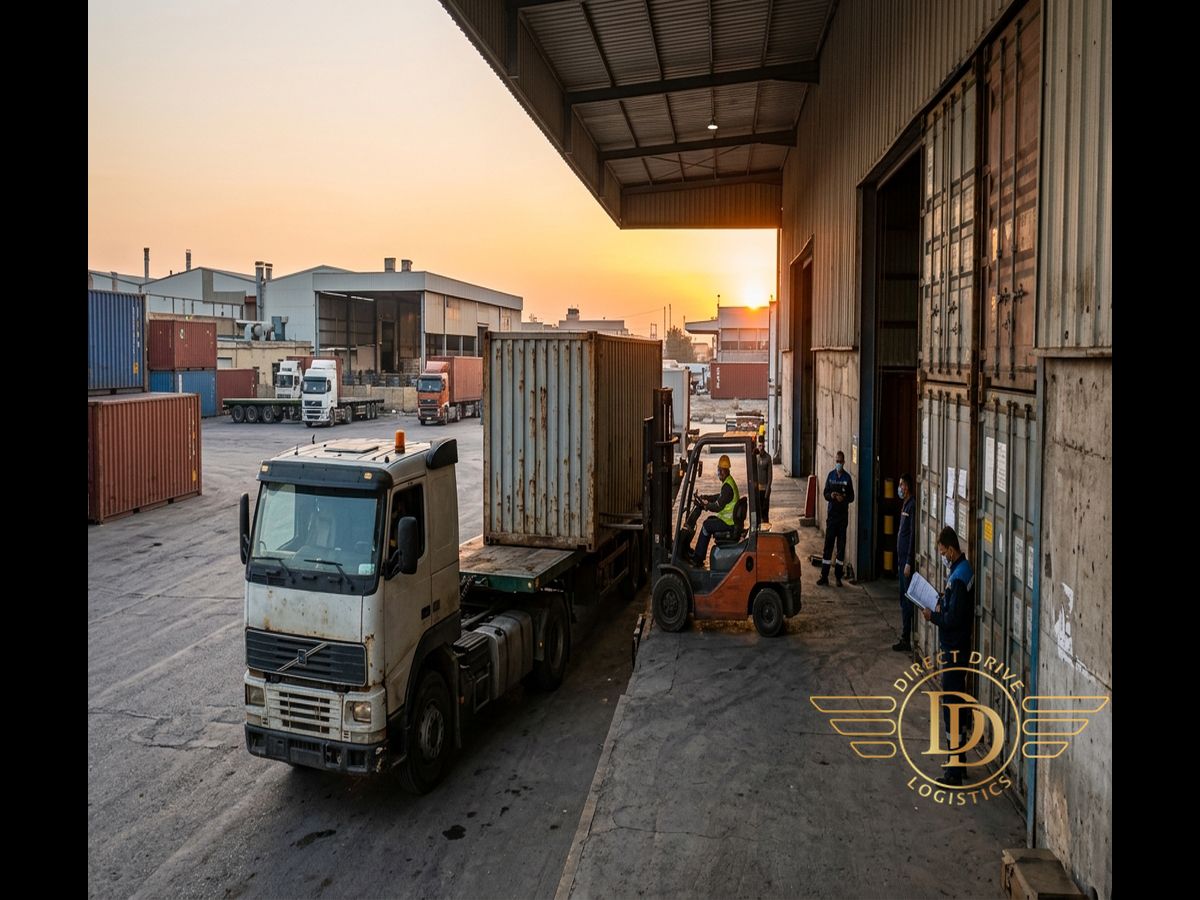
Discover how Export Logistics for Traders can transform your operations with this guide demystifies the export process for traders by providing a step-by-step operational playbook, leveraging our on-the-ground experience as a licensed, quad-lingual clearing agent with a physical presence in both iraq and iran.
Export Logistics for Traders involves the strategic planning and execution of moving goods from origin to a foreign destination, encompassing documentation, customs clearance, transportation, and cargo handling. It is a critical function for businesses engaged in international trade, ensuring compliance, cost-effectiveness, and timely delivery. Effective export logistics minimizes risks and maximizes profitability for traders.
Missing a single customs document can delay your Iraq shipment by 3–6 weeks, incurring USD 800+ in storage fees at congested borders like Ibrahim Khalil or Parviz Khan. This guide demystifies the export process for traders by providing a step-by-step operational playbook, leveraging our on-the-ground experience as a licensed, quad-lingual clearing agent with a physical presence in both Iraq and Iran. We will explore what key stages make up the Export Logistics Process, from initial order to final delivery.
Understanding the intricacies of “Export Logistics for Traders” is paramount for navigating global markets successfully. We will delve into how to choose the right international shipping mode (sea, air, road), ensuring your goods arrive efficiently. We’ll also cover “Incoterms (International Commercial Terms),” which are globally recognized rules defining the responsibilities of buyers and sellers for the delivery of goods under sales contracts.
This article will detail what essential documents are needed for export customs clearance, including the commercial invoice and certificate of origin, critical for avoiding costly delays. A “commercial invoice” is a legal document issued by the seller to the buyer, serving as a record of the transaction and outlining the goods sold, their value, and terms of sale. Furthermore, we will address how to ensure smooth and secure export cargo handling, a vital aspect of preventing damage and loss, and provide strategies for selecting an effective export freight forwarding partner.
Finally, we will examine common pitfalls in export logistics and how to avoid them, offering actionable insights to optimize your supply chain for specific trade corridors like Iraq. This comprehensive overview is designed to empower traders with the knowledge needed to streamline their export operations.
What Key Stages Make Up the Export Logistics Process?
From Factory to Port: Managing Pre-Shipment Preparations and Inland Transit
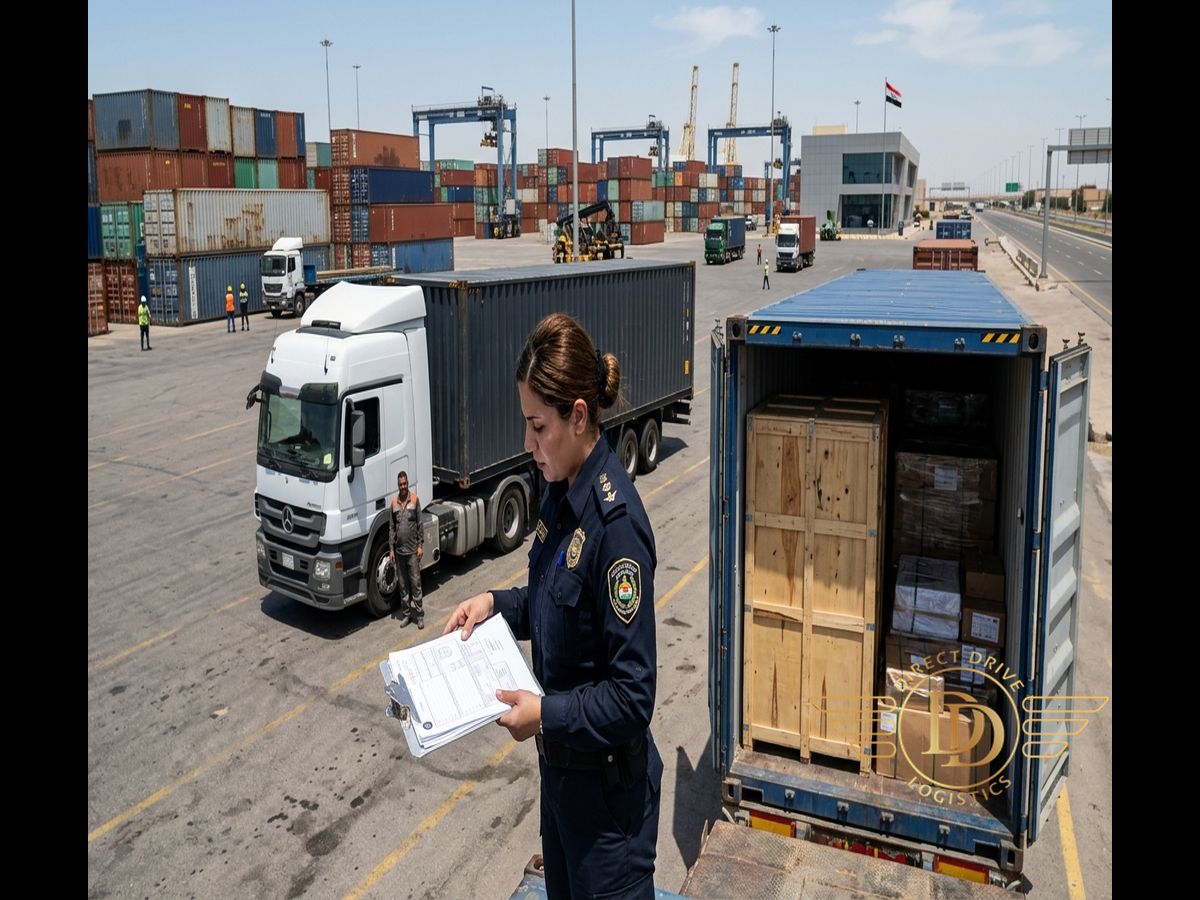
The initial phase of export logistics for traders involves meticulous pre-shipment preparations and efficient inland transit. This stage begins with consolidating cargo, ensuring it aligns with international shipping steps and regulatory requirements. For example, a 40’ FCL sea freight container to Umm Qasr typically costs between USD 2,000–2,800 port-to-port in 2024–2025. As traders navigate these complexities, understanding Import Logistics for traders is crucial for success.
Our team at Direct Drive Logistic has found that accurate cargo description and weight verification are paramount. One mistake we see regularly is under-declaring cargo weight, which leads to significant fines and delays at border crossings. In our operations across Iraq, we consistently see that proper documentation prevents such issues.
Inland transportation, whether by road or rail, forms a critical link in the export supply chain process. For instance, a full truckload (FTL) from Tehran to Baghdad, carrying 22–24 tons of dry cargo, typically costs USD 1,800–2,500. This road freight can experience 10–20% year-over-year fuel price fluctuations, adding to the volatility.
This phase also includes selecting the appropriate transport mode and ensuring the cargo is correctly loaded and secured for its journey to the port of exit. For example, a sea freight journey from Eastern Mediterranean or Gulf hubs to Umm Qasr can take 18–30 days door-to-port, emphasizing the need for timely pre-carriage. Direct Drive Logistic streamlines this, managing the full corridor from origin to destination, as we did for industrial machinery from Jebel Ali to Erbil, handling all transit permits and documentation.
Your next step: Schedule a consultation with Direct Drive Logistic within the next 7 days to review your current pre-shipment and inland transit procedures.
How Do I Choose the Right International Shipping Mode (Sea, Air, Road)?
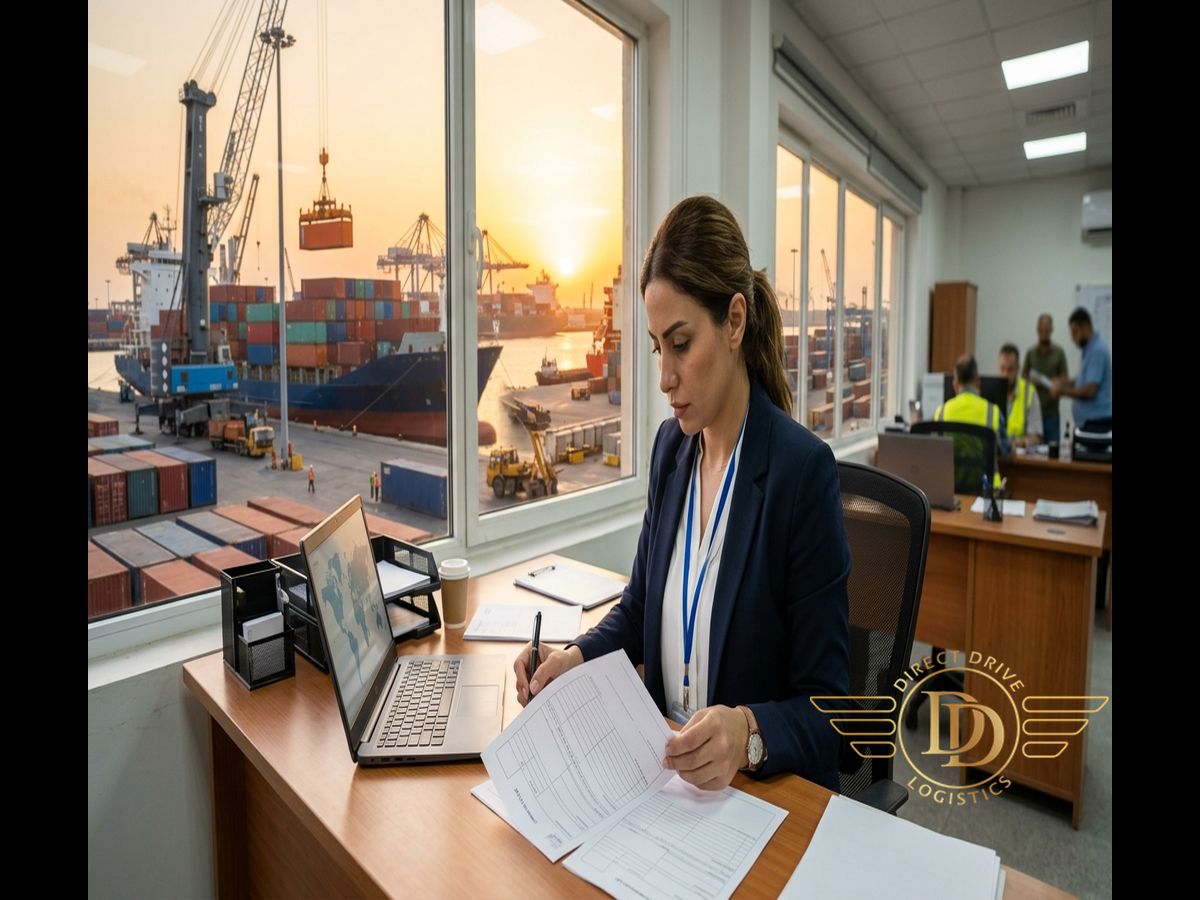
Comparing Key Factors: Cost, Speed, and Cargo Type for Each Shipping Mode
Choosing the right international shipping mode is pivotal for effective Export Logistics for Traders, directly impacting costs and delivery timelines. The Iraq logistics and freight market, currently valued at roughly USD 7–9 billion in 2024, offers various options, each with distinct advantages. Sea freight is generally the most cost-effective for bulk goods and large volumes, particularly for routes like Mersin–Umm Qasr or China to Bandar Abbas, with transit times often ranging from 15-30 days, which is crucial for Raw Material Logistics for factories.
Air freight provides unparalleled speed, ideal for high-value, time-sensitive cargo such as medical equipment or electronics. While significantly more expensive, it can reduce transit from weeks to days, critical for urgent deliveries. For instance, our team at Direct Drive Logistic has managed air freight clearances at Erbil and Baghdad airports in under 48 hours for vital medical supplies.
Road freight offers a balance of speed and cost for regional movements, especially within Iraq and its neighbors like Turkey and Iran. The deepening bilateral trade with these countries means frequent services. For example, Direct Drive Logistic operates approximately 10 trucks daily from our Erbil hub to all Iraqi governorates, ensuring next-day delivery to most cities from Erbil. This mode is excellent for small to medium-sized traders needing flexible schedules for domestic distribution or cross-border shipments through key entry points like Ibrahim Khalil or Parviz Khan, where customs delays of 2–5 extra days are increasingly reported during peak import seasons, despite the overall market growth of 4–6% CAGR to 2030, according to global logistics market data.
One mistake we see regularly is traders choosing sea freight for perishable or urgent goods to save on initial costs, only to incur significant losses due to spoilage or missed deadlines. Understanding the trade-offs between sea vs air freight cost and the implications of choosing FCL or LCL for sea freight is crucial. Road freight vs sea freight decisions often hinge on the total distance and urgency of the shipment.
Your next step: Evaluate your cargo’s urgency, value, and volume, then contact Direct Drive Logistic for a tailored multimodal shipping quote within 24 hours.
What Essential Documents Are Needed for Export Customs Clearance?
Core Commercial Paperwork: How to Prepare Your Commercial Invoice and Packing List
Export logistics for traders begins with meticulously prepared commercial paperwork. A commercial invoice for export serves as a bill of sale and a customs declaration, detailing the goods, their value, and the terms of sale. Our team at Direct Drive Logistic has found that a common mistake is understating or overstating cargo value, which can trigger costly delays; for instance, sea freight rates to Umm Qasr can fluctuate from an estimated USD 1,500 off-peak to USD 3,500 during peak seasons, making accurate declarations critical for duty calculations, which is where factory logistics plays a crucial role.
The export packing list requirements outline every item in the shipment, including dimensions, weight, and packaging type. This document is vital for customs inspection and cargo handling. In our operations across Iraq, we consistently see that a detailed packing list, cross-referenced with the commercial invoice, significantly expedites customs clearance, often reducing processing times by 24-48 hours.
Key Transport Documents: Understanding the Bill of Lading (B/L) and Air Waybill (AWB)
Transport documents like the Bill of Lading (B/L) for sea freight or the Air Waybill (AWB) for air cargo are contracts between the shipper and the carrier, acting as a receipt for goods and a document of title. These documents specify the origin, destination, carrier, and consignee. For example, a typical FCL shipment to Umm Qasr from Eastern Mediterranean hubs takes an estimated 18–30 days door-to-port, with the B/L being the central document guiding its journey.
Proper completion of these documents is paramount for smooth customs clearance paperwork. A frequent error in this stage involves discrepancies between the B/L/AWB and the commercial invoice, leading to significant hold-ups and potential penalties. Our quad-lingual operations team, fluent in Farsi, Arabic, Kurdish, and English, ensures all documentation aligns perfectly, which is particularly beneficial when navigating complex transit routes such as China to Bandar Abbas port, Iran, and then onward to Erbil, Iraq, where we manage the full corridor with a single operator. Understanding these transportation modes in is crucial for traders.
Your next step: Review your current commercial invoice and packing list templates against the latest Iraqi customs regulations by end of next week to identify any gaps, considering the importance of logistics in the process.
How Can I Ensure Smooth and Secure Export Cargo Handling?

Proper Cargo Packing and Labeling Strategies to Prevent Damage and Delays
Effective cargo handling begins before your goods ever leave the warehouse. Improper packing is a primary trigger for costly delays, especially at high-traffic Iraqi land borders. At crossings like Ibrahim Khalil and Parviz Khan, customs authorities report that documentation mismatches and poor cargo presentation can add 2–5 extra days to clearance times during peak seasons. To mitigate these risks, it’s essential to partner with a reliable Iraq logistics partner who understands local regulations and can provide guidance on proper packing and labeling.
In our operations across Iraq, we consistently see shipments flagged for secondary inspection due to non-standard pallets or unclear labeling, turning a routine check into a multi-day hold. A frequent error in this stage is reusing old boxes with conflicting shipping marks, which immediately raises red flags for customs officials. Adhering to international standards for export packing requirements, including ISPM 15 for wood pallets and providing clear, durable labels with consignee details in both English and Arabic, is non-negotiable for preventing cargo damage and ensuring swift transit.
Selecting a Reliable Freight Forwarder for Secure and Efficient Cargo Management
Vetting freight forwarders is critical for secure cargo management, especially when dealing with the complexities of the Iraqi market. A reliable partner does more than move boxes; they manage risk and provide on-the-ground solutions. For successful Export Logistics for Traders, your forwarder must have a deep, operational understanding of local customs protocols and language. This expertise is a key part of export trading best practices and protects your bottom line.
Direct Drive Logistic’s quad-lingual team (Farsi, Arabic, Kurdish, English) and operational presence at seven key border crossings are designed to proactively resolve issues. For instance, when a shipment of electronics from Mersin, Turkey, faced a temporary import license issue, our Kurdish-speaking Erbil team negotiated directly with KRG border authorities, securing release in just one day. This level of local integration is what separates a logistics provider from a true logistics partner.
Your next step: Request our complimentary cargo packing and labeling checklist, tailored for the Iran-Iraq-Turkey corridors, to standardize your shipments and minimize inspection risks.
What Are the Critical Steps for Navigating Customs as a Trader?
Mastering Documentation and Accurate Product Classification (HS Codes)
Effective Export Logistics for Traders into Iraq begins with flawless documentation. A single error in paperwork can halt a shipment worth thousands, compounding costs at a time when Middle East sea freight lanes are already projected to see 5–10% upward volatility through 2026. Correctly classifying goods with the right HS code is the foundation for avoiding customs delays and ensuring accurate duty calculation, which is a key aspect of international trade logistics that requires careful planning.
One mistake we see regularly is a mismatch between the commercial invoice and the packing list. This discrepancy immediately triggers a full inspection by Iraqi customs, turning a routine clearance into a week-long problem. Your core document package must be perfectly aligned: Commercial Invoice, Packing List, Certificate of Origin, and the Bill of Lading or CMR.
Partnering with a Customs Broker for Seamless Export Declaration and Clearance
Navigating Iraqi customs requires more than just paperwork; it demands local expertise. An experienced export customs broker acts as your representative, managing declarations and interfacing directly with officials. This partnership is vital for mitigating operational risks, especially as road freight costs are impacted by fuel price fluctuations of 10–20% YoY, making any delay at the border financially damaging.
Our team at Direct Drive Logistic has found that being a government-licensed clearing agent, not just a forwarder, is a significant advantage. It allows us to perform direct clearance at ports like Umm Qasr, as we did for a shipment of medical equipment, clearing it in just 48 hours without third-party involvement. Our quad-lingual team on the ground resolves documentation issues in Farsi, Arabic, Kurdish, or English, preventing minor queries from escalating into major delays.
Your next step: Send us your product list for a preliminary HS code review to identify potential customs compliance issues before you ship.
Send your cargo details to Direct Drive Logistic on WhatsApp — get a route-specific checklist and quote within 24 hours.
Message on WhatsAppWhy Choose Direct Drive Logistic?
Offices in Erbil (HQ) + Tehran (Nasim Shahr Terminal); warehouses in Zakho, Erbil, Basra, and Tehran (2,000 sqm)
Government-licensed clearing agent — direct port access for sea freight into southern Iraq
2,500+ Iraq domestic deliveries, 300+ Iran-Iraq cross-border, 100+ international freight; air freight handler at Erbil, Baghdad, and Basra airports
Operational at Parviz Khan, Bashmagh, Haji Omran (Piranshahr), Mehran, Khosravi, Ibrahim Khalil (Turkey), and Bandar Abbas port (Iran)
Full operational fluency in Farsi, Arabic, Kurdish, and English — client-facing and documentation
~10 trucks/day from Erbil hub covering Baghdad, Karbala, Najaf, Basra, Kut (Wasit), Diyala, Nasiriyah, and all Iraqi governorates
Frequently Asked Questions
For traders in Iraq, key components of export logistics involve meticulous documentation, efficient customs clearance, and strategic freight selection. This includes preparing accurate commercial invoices, packing lists, certificates of origin, and securing necessary Iraqi ministry approvals to avoid delays, which can add 2-5 extra days at borders like Ibrahim Khalil or Parviz Khan during peak seasons. Selecting the right Incoterms (e.g., FOB, CIF) is crucial to define responsibilities and costs. Finally, choosing between air, sea, or road freight depends on cargo type, urgency, and destination, with routes like Mersin-Umm Qasr or Tehran-Baghdad being high-volume corridors.
Traders can optimize their export supply chain by focusing on digitalizing documentation, consolidating shipments, and partnering with experienced logistics providers. Given Iraq’s logistics market is estimated at USD 7-9 billion in 2024 and growing at 4-6% CAGR, leveraging this growth means utilizing forwarders who offer structured processes and real-time tracking. Consolidating smaller shipments into Full Container Loads (FCL) or Less than Container Loads (LCL) can reduce per-unit costs. For example, pre-aligning documents (HS codes, certificates) with a proficient partner can lead to 1-3 days faster clearance at critical border crossings.
Export trading companies, or specialized logistics providers, play a crucial role by acting as a single point of contact for complex export processes, reducing administrative burden for Iraqi businesses. They manage everything from origin pickup, warehousing, customs declarations, freight booking, and final delivery. For instance, a reliable partner like Direct Drive Logistic, with over 10 years of experience and a dual-country physical presence in Iraq and Iran, can navigate the intricacies of multi-modal routes, such as ocean freight to Bandar Abbas port, Iran, followed by Iranian CMR transit and KRG import clearance into Erbil, streamlining the entire corridor under one operator.
Common challenges in cross-border export from Iraq to Turkey and Iran include customs delays, varying regulatory requirements, and infrastructure bottlenecks. Iraq’s annual trade with Turkey (USD 15-20 billion) and Iran (USD 10-13 billion non-oil) means these corridors are high-volume, leading to pressure on customs systems. Mitigation involves pre-clearance procedures, utilizing a network of multiple border crossings (e.g., Direct Drive Logistic operates across 7 key Iran-Iraq and Turkey-Iraq entry points including Parviz Khan, Bashmagh, and Ibrahim Khalil), and employing local, multilingual teams to resolve issues swiftly, as demonstrated by a 1-day resolution of an import license issue at KRG borders for electronics.
The professionalization and digitalization of freight forwarding, with the global market projected to reach USD 536.51 billion by 2034, significantly impacts export logistics for Iraqi traders by driving higher service standards and more transparent processes. This translates into better visibility, enhanced security, and more reliable transit times. Traders benefit from sophisticated tracking systems, standardized documentation, and expertise in navigating complex international trade regulations. Partnering with a professional forwarder ensures adherence to Incoterms 2020 and minimizes risks associated with cargo damage or loss, thereby improving overall supply chain efficiency.
For export shipments originating from Iraq, especially sea freight via Umm Qasr, critical documentation includes the commercial invoice, packing list, certificate of origin, bill of lading (or air waybill), and any required Iraqi export licenses or permits. For sea freight specifically, the Bill of Lading is paramount as it serves as a contract of carriage, a receipt for goods, and a document of title. Working with a licensed clearing agent at the Port of Umm Qasr, such as Direct Drive Logistic, is crucial. This direct port access allows for efficient customs processing, often completing direct clearance within 48 hours and eliminating the need for third-party brokers, saving significant port storage and demurrage fees.
Conclusion
Successful Export Logistics for Traders hinges on meticulous preparation and a deep understanding of each stage, from pre-shipment to customs clearance. As highlighted, accurately classifying products with HS Codes is paramount, directly impacting duties and avoiding delays. Overlooking crucial documentation like the commercial invoice or neglecting proper cargo handling can lead to significant financial penalties and lost market opportunities, especially when navigating complex routes within Iraq and Iran.
To proactively strengthen your export strategy, begin by conducting a comprehensive audit of your current internal documentation processes. Ensure that all team members involved in preparing commercial invoices and packing lists are fully conversant with Incoterms and the specific requirements of your target markets. This foundational step will significantly reduce common errors that often trigger customs hold-ups, streamlining your entire export operation.
When your Export Logistics for Traders requires navigating the complexities of Iraqi and Iranian borders, Direct Drive Logistic provides unparalleled expertise. With official licenses as a clearing agent at Port of Umm Qasr and operational presence across seven major border crossings, we ensure your cargo moves securely and efficiently. Our quad-language operations team eliminates communication barriers, guaranteeing seamless coordination. Call us today at (+964) 750 953 9899 to optimize your export routes.
Need Logistics Consultation?
The Direct Drive team is ready to assist. Message us now.
Ready to expand your global reach and streamline your export operations? Partner with Direct Drive Logistic for unparalleled efficiency and peace of mind. Call us today at (+964) 750 953 9899 to discuss your unique export logistics needs and discover how we can help your business thrive internationally.
Get Your Free Quote NowContact Us for a Consultation
Location
Direct Drive Logistic
MRF Quattro towers, Block A-29-1
Erbil, Kurdistan Region