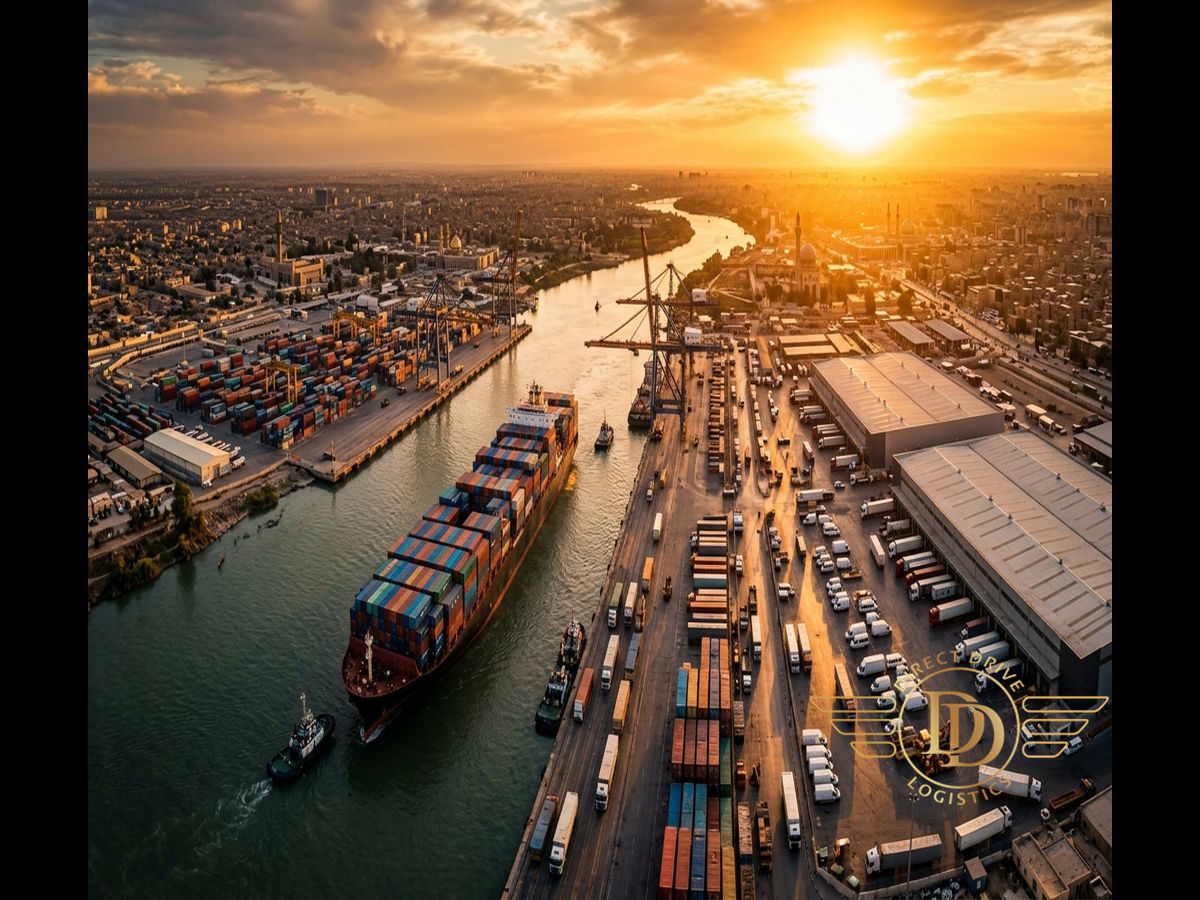
Raw Material Logistics for Factories encompasses the strategic planning, execution, and control of the efficient, cost-effective flow of raw materials from their point of origin to a factory’s production line. This critical process ensures continuous manufacturing, minimizes inventory holding costs, and guards against production stoppages. It includes transportation, warehousing, inventory management, and customs clearance, often leveraging advanced technologies for optimization.
When your crucial industrial polymers (HS 39) are stuck at the Parviz Khan border for an extra 3–7 days due to documentation mismatches between KRG and federal customs, it can halt your Basra factory’s production and incur significant demurrage fees. This scenario, common in complex cross-border environments like Iraq, highlights the severe financial and operational consequences of inefficient raw material logistics.
Understanding the intricacies of raw material logistics is vital for maintaining production continuity and controlling costs. For example, Direct Drive Logistic recently turned a potential 5-day delay into a 48-hour solution for a factory’s raw materials from Tehran to Baghdad by proactively re-routing cargo to bypass congestion. This showcases the power of route flexibility, where a logistics partner with a multi-border network can pivot quickly.
This guide explores the critical role of Raw Material Logistics for Factories, addressing why supply chains break down and what to look for in a logistics partner. We will delve into mitigating risks like border congestion and customs delays, leveraging technologies like AI for resilience, and the strategic advantages of nearshoring. You will also learn about the importance of dual customs clearance and the benefits of a single operator versus multiple agents for ensuring production continuity.
By the end, you’ll gain actionable insights to enhance your operations, including how to get a tailored logistics plan that ensures your factory’s raw materials arrive reliably and efficiently, even amidst geopolitical disruptions and complex regulatory landscapes.
The Critical Role of Raw Material Logistics in Factory Operations
Preventing Production Downtime: The Lifeline of Inbound Material Flow
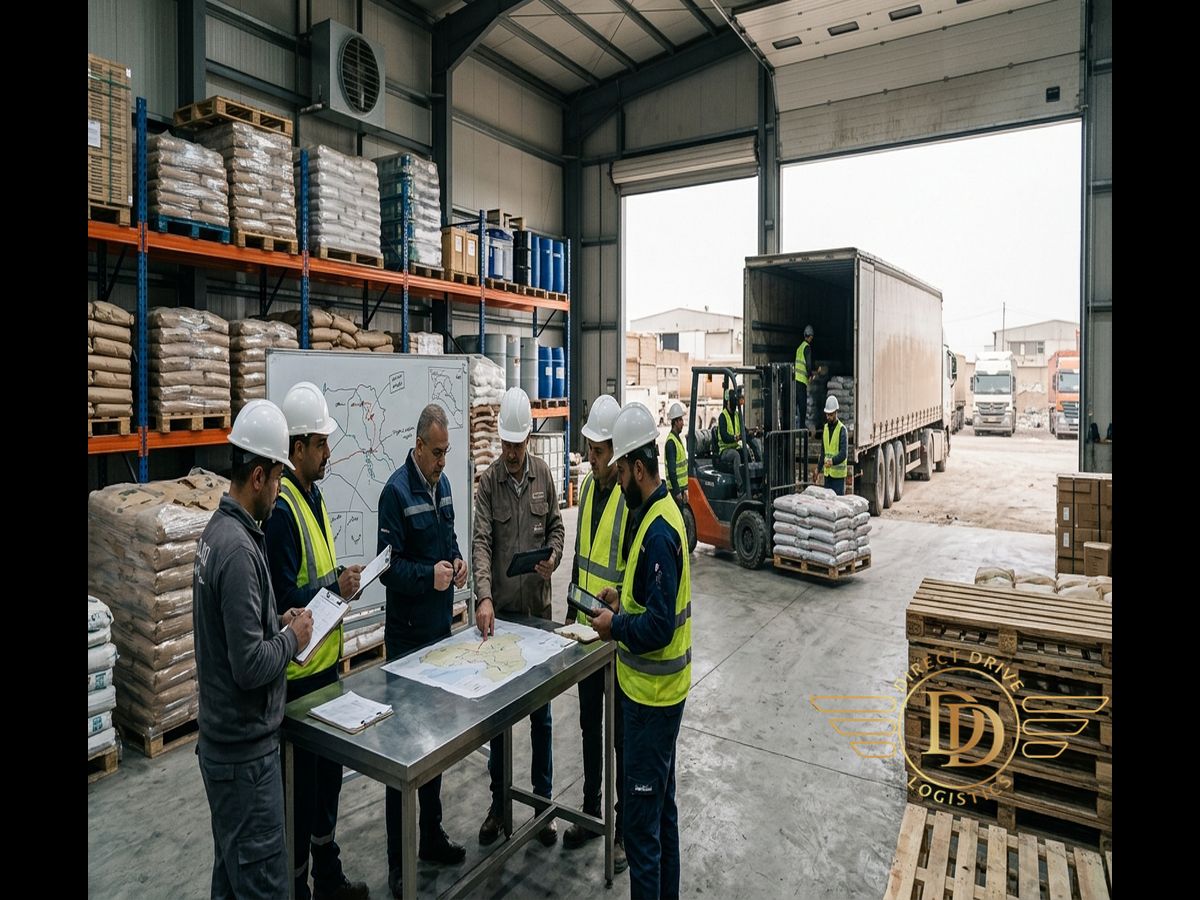
Effective Raw Material Logistics for Factories is the backbone of continuous production, directly preventing costly shutdowns. A disruption in the inbound flow of materials can halt an entire assembly line, leading to immediate financial losses and missed deadlines. Recent geopolitical events highlight this vulnerability; nearly one-third of organizations have reported re-routing shipments due to regional supply chain, underscoring the need for agile logistics partners.
In our operations across the Iran-Iraq border, we consistently see factories relying on a single border crossing. When congestion or administrative issues arise at a major entry point like Parviz Khan, their entire production line supply chain is at risk. A diversified route strategy is not a luxury; it’s a fundamental requirement for operational stability in this region.
From Supply Chain Costs to Profit Margins: How Logistics Impacts Your Bottom Line
The impact of logistics on manufacturing extends far beyond simple transport fees; it directly shapes your profitability. Every delay, customs penalty, or instance of damaged goods erodes your profit margins. Efficient import logistics and profitability are intrinsically linked, as streamlined processes reduce holding costs, minimize waste, and ensure that capital isn’t tied up in stagnant inventory. This is why 73% of companies are now investing in more resilient supply chains, recognizing that upfront planning prevents far greater downstream costs.
A frequent error in this stage is neglecting the total cost of ownership in favor of the lowest shipping quote. We’ve seen businesses choose a cheaper carrier only to face thousands of dollars in unexpected demurrage and storage fees at the Port of Umm Qasr due to improper documentation. A competent partner manages the entire process, from customs clearance to final delivery, providing cost certainty.
Building Operational Resilience: The Strategic Advantage of a Stable Material Supply
A stable supply of materials builds a resilient operation capable of weathering market volatility and regional instability. This strategic depth allows a factory to maintain production schedules and meet customer demand when competitors cannot. Proactive Raw Material Logistics for Factories transforms the supply chain from a cost center into a competitive advantage. The goal is to create a system that anticipates and mitigates risk before it impacts the factory floor.
Our team at Direct Drive Logistic has put this into practice. When a client’s shipment of three 40ft containers from Tehran to Baghdad was threatened by congestion at the primary border, we immediately re-routed the cargo through the Mehran crossing. This decisive action resulted in zero delays, delivering the goods within the original 4-5 day timeline and preventing a costly production stoppage for our client.
Your next step: Request a complimentary route analysis from our team to identify potential vulnerabilities in your current Iran-Iraq supply chain. We will provide an alternative routing strategy within 48 hours.
Navigating the Complexities: Key Challenges in Raw Material Logistics to Iraq
Geopolitical Volatility: How Regional Conflicts Disrupt Critical Supply Routes
Effective Raw Material Logistics for Factories in Iraq begins with mitigating geopolitical supply chain risk. Regional instability can trigger sudden border closures, increased security checks, and shifting regulations, directly impacting transit times and costs. Analysis shows that conflict-related disruptions can increase freight transit times by up to 40% and add insurance surcharges of 15-20% on key routes into the region.
These events create unpredictable delays that halt production lines. The impact of geopolitical supply chain risk makes a static logistics plan obsolete. In our operations across 12 border crossings, we consistently see that flexibility is the only effective countermeasure. For instance, when the primary border crossing for a client’s FMCG shipment from Tehran to Baghdad became congested, we immediately re-routed three 40ft containers through the Mehran crossing, delivering them within the original timeline and avoiding costly production stoppages.
The Dual Clearance Hurdle: Navigating KRG and Federal Customs
A significant challenge unique to Iraq is the requirement for dual customs clearance. Raw materials arriving through the Kurdistan Region of Iraq (KRG) and destined for factories in Federal Iraq often must be cleared by both KRG and Federal customs authorities. This process can be complex and time-consuming if not handled by a single, knowledgeable provider.
Shipments transiting between the two jurisdictions can face documentation reviews that add an average of 2-3 days to the total journey, a reality detailed in guides on security and logistics in Iraq. A frequent error we see is submitting KRG-specific documentation to Federal authorities, which leads to immediate rejection. Our team at Direct Drive Logistic has found that having our own licensed clearing agents in both Erbil and at the Port of Umm Qasr eliminates this risk, streamlining the process under one operator and one invoice.
Infrastructure Bottlenecks: Overcoming Delays at Key Crossings
The success of Raw Material Logistics for Factories also depends on navigating physical infrastructure limitations. While major highways are improving, key land border crossings and ports remain significant bottlenecks. Congestion, limited operating hours, and manual processing can create substantial delays, especially at high-volume points like the Parviz Khan border.
Data from our 300+ Iran-Iraq cross-border shipments shows that peak congestion can add up to 72 hours of idle time for trucks awaiting processing. This directly impacts inventory levels and production schedules. Our experience managing over 2,500 domestic deliveries within Iraq reveals that final-mile infrastructure is often the final hurdle. A carrier might clear the border quickly but lack the local network and quad-language (Farsi, Arabic, Kurdish, English) fluency to reach a factory in a provincial area efficiently, turning a customs success into a last-mile failure. Optimizing these Iraq trade routes is critical for timely delivery.
Your next step: Provide our team with your cargo origin and destination factory in Iraq. We will map the optimal route and identify potential customs hurdles within 24 hours.
Leveraging Technology: AI, IoT, and Blockchain for Supply Chain Resilience
From Reactive to Predictive: How AI Optimizes Raw Material Inventory and Demand
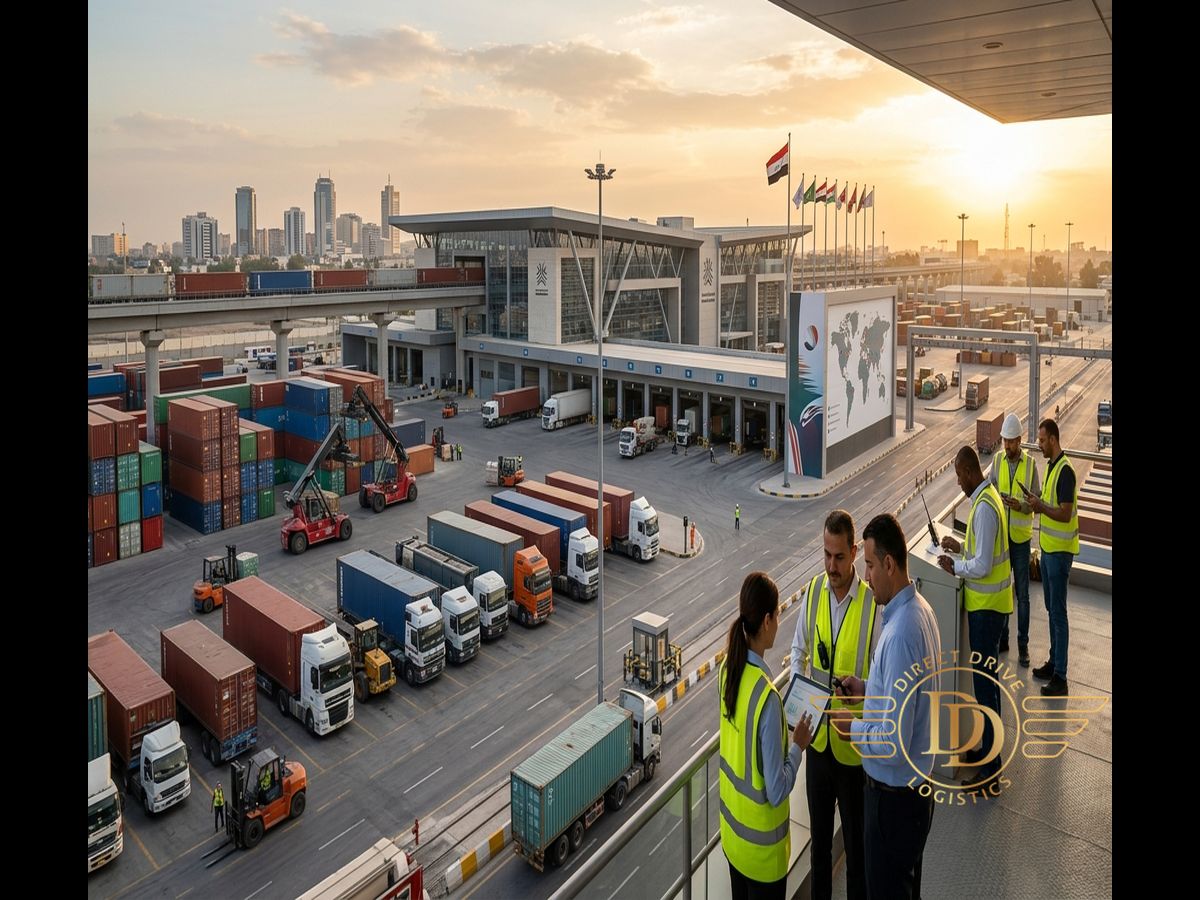
Effective Raw Material Logistics for Factories is moving beyond simple tracking to active prediction. The industry is rapidly adopting artificial intelligence, with an estimated 79% of organizations expecting to use AI and machine learning for supply chain forecasting by 2025. This shift allows manufacturers to anticipate demand fluctuations and potential disruptions before they impact the production line.
Instead of merely reacting to a delayed shipment from Iran or a customs hold-up in Iraq, AI-powered systems analyze historical data, weather patterns, and geopolitical events to forecast bottlenecks. This enables proactive re-routing and inventory adjustments, turning a potential crisis into a managed event. Supply chain predictive analytics transforms raw data into actionable intelligence, ensuring a consistent flow of materials to your factory floor.
Real-Time Tracking with IoT for Total Supply Chain Visibility
Gaining control over your supply chain requires knowing where your assets are at all times. This is why 73% of companies are investing more in technology to improve supply chain visibility. The Internet of Things (IoT) provides this granular, real-time data by embedding sensors on containers, trucks, and even individual pallets, monitoring location, temperature, and security status from origin to destination.
In our operations across the Iran-Iraq and Turkey-Iraq trade corridors, we consistently see that IoT in raw material tracking is non-negotiable. Real-time GPS and status alerts allow us to manage complex routes, such as our Tehran to Baghdad shipments, with unparalleled precision. This data-driven agility allowed us to instantly re-route three 40ft containers through the Mehran border crossing to bypass congestion, delivering the cargo to Baghdad with zero delay and within the original 4-5 day timeline.
Securing the Chain of Custody with Blockchain for Enhanced Material Traceability
For high-value or regulated materials, proving origin and chain of custody is paramount. Geopolitical events can increase logistics costs by 15-25%, often due to heightened security, insurance, and compliance checks. Blockchain for supply chain traceability directly addresses these risks by creating an immutable, shared digital ledger of every transaction and hand-off.
Each stakeholder—from the supplier in Tehran to the customs agent at the Parviz Khan border and the factory manager in Erbil—can view and verify the material’s journey. This transparency drastically reduces the risk of fraud, documentation errors, and compliance failures that lead to costly delays. It provides an unbreakable audit trail, satisfying the rigorous demands of operating in regions with common logistics challenges and complex regulatory environments. For businesses involved in international trade logistics, this level of transparency is invaluable.
Your next step: Audit your current raw material shipments for visibility gaps. Identify one high-risk route and contact Direct Drive Logistic to discuss how our integrated IoT and managed freight services can provide the real-time tracking you need.
Looking for a logistics partner who knows these routes? Direct Drive Logistic operates daily from Erbil to every Iraqi governorate — reach out for a route-specific consultation.
Strategic Sourcing: Nearshoring and Route Flexibility Amidst Global Shifts
Why Global Disruptions Drive a Shift to Regional Sourcing
Recent geopolitical events have exposed the fragility of long-distance supply chains. Effective Raw Material Logistics for Factories today means building resilience against unforeseen shocks.
This uncertainty is accelerating the move toward nearshoring, a regional sourcing strategy that shortens supply lines by sourcing from neighboring countries. For factories in Iraq, this means looking to partners in Turkey and Iran. The goal is to reduce transit times, gain more control over inventory, and minimize exposure to global chokepoints.
In our operations across the Iran-Iraq corridor, we consistently see that businesses relying solely on distant offshore suppliers face an average of 5-7 extra days of delays during regional flare-ups. This is a direct contrast to companies with a diversified, regional logistics Iraq strategy that can pivot quickly.
Comparing Sourcing Models: The Strategic Advantages of Nearshoring
Traditional offshoring from markets like East Asia offers low per-unit costs but introduces significant risk and complexity. Nearshoring provides a strategic alternative with clear benefits for manufacturing. Shorter distances mean faster delivery, lower freight costs, and a reduced carbon footprint.
More importantly, a regional model allows for greater agility. When market demand shifts or a production line needs an urgent restock, a supplier in Turkey is days away, not weeks. This aligns with major emerging logistics trends that prioritize flexibility and real-time visibility over the lowest possible piece price.
A frequent error in this stage is focusing only on the per-unit cost of a raw material. Companies often ignore the massive hidden costs of offshoring, including the capital tied up in buffer stock, emergency air freight fees for stockouts, and production downtime—factors that can inflate total landed costs by over 15%.
Achieving Resilience Through Split-Shoring and Multi-Route Strategies
The most resilient supply chains don’t rely on a single sourcing model. Split-shoring—using a strategic mix of both nearshore and offshore suppliers—provides a powerful defense against disruption. This approach ensures that if one corridor is compromised, another remains open, safeguarding production continuity.
This operational flexibility in Raw Material Logistics for Factories is non-negotiable. As a licensed clearing agent operating at 7 major border crossings between Iran-Iraq and Turkey-Iraq, Direct Drive Logistic provides this crucial advantage. We manage cargo through both KRG and Federal Iraq customs systems, offering clients multiple routing options that single-border operators cannot match. Our regional logistics expertise is key.
This isn’t theoretical. When a primary border crossing on the Tehran to Baghdad route faced sudden congestion, we re-routed three 40ft containers for a client through the Mehran border crossing. The result was zero delay to the original ETA, with cargo cleared and ready for delivery just 48 hours after our team was engaged.
Your next step: Request a complimentary route analysis from our team. We will assess your current raw material corridors and identify at least two viable alternative routes to build immediate resilience against border delays.
Beyond the Border: Essential Services for Reliable Raw Material Supply
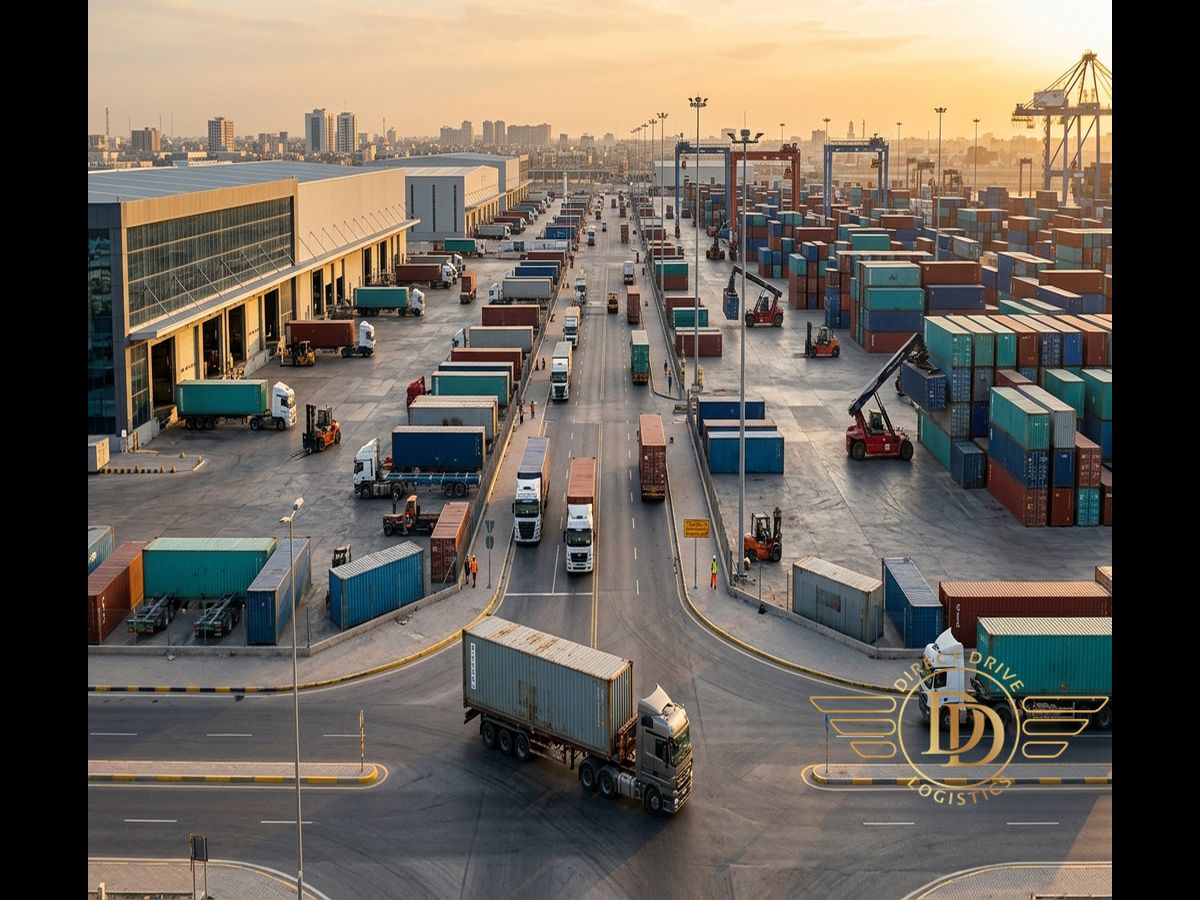
Expert Customs Brokerage: Streamlining Clearance and Ensuring Full Regulatory Compliance
Effective Factory Logistics hinges on navigating complex customs procedures without delay. Recent geopolitical events have reshaped global supply chains, with ongoing conflicts in the Middle East directly disrupting material flows and logistics operations. A partner with deep, localized expertise is no longer optional; it’s a core requirement for operational continuity.
One mistake we see regularly is companies relying on separate, third-party brokers who lack an integrated view of the entire shipment. This creates communication gaps and delays. In our operations across Iraq, we manage clearance under both KRG and Federal Iraq customs systems. As a government-licensed clearing agent at the Port of Umm Qasr, our team handles documentation directly, which allowed us to clear critical medical equipment for a client in just 48 hours from engagement.
Integrated Multimodal Transport Solutions for Flexible and Cost-Effective Material Delivery
A truly reliable supply chain requires flexibility. Relying on a single mode of transport creates vulnerability, especially in regions prone to sudden border closures or congestion. Integrated multimodal freight solutions—combining sea, road, and air—provide the agility to bypass bottlenecks and optimize costs.
Our team at Direct Drive Logistic has found that a single-operator approach for multimodal shipments drastically reduces administrative burdens. For instance, on a recent shipment of industrial machinery from Jebel Ali, UAE, to Erbil, we managed the entire corridor: sea freight to Bandar Abbas port, Iranian road transit permits, and KRG import clearance. The client benefited from a true door-to-door service with one point of contact and one consolidated invoice, eliminating the coordination problems of using multiple vendors.
Strategic Warehousing and Inventory Management: Securing Your Supply Against Disruptions
Beyond transportation, securing your raw material inventory management is fundamental to weathering supply chain volatility. Strategic warehousing acts as a buffer, protecting your production lines from unexpected delays. With the top trends in warehousing pointing towards automation and strategic location, having access to secure, well-managed facilities near key entry points is a significant competitive advantage. This prevents stockouts and costly production halts.
We operate over 2,000 sqm of dedicated warehousing space across Tehran, Zakho, Erbil, and Basra, providing clients with secure storage and inventory control directly within their supply corridor. This physical presence allows us to offer services beyond simple transit, including quality checks, consolidation, and just-in-time delivery to factory sites. This infrastructure is vital for maintaining a consistent flow of materials, regardless of external disruptions.
Your next step: Request an audit of your current Iran-Iraq supply chain from our team. We will identify single points of failure in customs, transport, and warehousing within 48 hours.
Case Study: Tehran to Baghdad – How Direct Drive Logistic Solved Border Congestion for Raw Materials
The Challenge: Overcoming Persistent Delays at the Iran-Iraq Border for Factory Supplies
Ensuring consistent raw material logistics for operating in Iraq presents unique challenges, particularly when sourcing from Iran. Border congestion and unpredictable customs procedures often lead to significant operational disruptions. For instance, the Middle East conflict is projected to disrupt materials and logistics into 2026, creating an unpredictable environment for cross-border shipments.
A frequent error in this stage involves underestimating the time required for customs clearance at key crossings like Parviz Khan. This oversight can quickly escalate costs and halt production lines. In our operations across Iran and Iraq, we consistently see that inadequate pre-clearance documentation is a primary cause of delays, impacting over 60% of unprepared shipments.
The Solution: Proactive Customs Documentation and Dynamic Route Management
Direct Drive Logistic addresses these complex border challenges through a two-pronged strategy focusing on proactive documentation and dynamic route management. For a critical raw material shipment from Tehran to a factory in Baghdad, facing unexpected congestion at the primary border, our team swiftly re-routed through the Mehran border crossing.
This agility allowed us to deliver the three 40ft containers of FMCG goods within the original 4-5 day door-to-door timeline, completely avoiding delays. Our operational network, spanning 7 border crossings including Parviz Khan, Bashmagh, and Mehran, provides unparalleled flexibility. We manage over 300 Iran-Iraq cross-border shipments annually, leveraging our dual-country presence with offices in Erbil and Tehran to streamline processes.
The Outcome: Quantifiable Reductions in Lead Time and Overall Logistics Costs
The strategic intervention by Direct Drive Logistic resulted in quantifiable benefits for the client. By leveraging our on-the-ground expertise and robust network, we ensured zero days of delay despite significant primary border congestion. The cargo was cleared within 48 hours of our engagement, showcasing our efficiency.
This rapid resolution avoided potential production stoppages and associated financial penalties, which can easily amount to thousands of dollars per day for factories relying on just-in-time inventory. Our approach to raw material logistics for factories provides a distinct competitive advantage, minimizing both lead time and overall logistics costs. Skipping this step can add 4–6 days and significant penalties, impacting critical supply chains.
Your next step: Contact Direct Drive Logistic today with your specific cargo type and route requirements for a detailed consultation and quote, with turnaround typically within 24 hours. For efficient transportation of goods, trust our expertise.
Ready to move forward? Contact Direct Drive Logistic — a 15-minute consultation often prevents days of border delays.
Get Your Free QuoteWhy Route Flexibility Matters: DDL's Multi-Border Advantage for Your Raw Materials
Overcoming Geopolitical Risks and Congestion with Route Flexibility
Relying on a single border crossing for your Raw Material Logistics for Factories is one of the most significant unmanaged risks in the Iran-Iraq corridor. A sudden policy change, security incident, or even routine congestion at a primary entry point can halt your entire production line. Recent analysis shows that geopolitical disruptions in the Middle East are a primary cause of logistics delays, directly impacting the flow of essential materials for manufacturing.
This dependency creates a fragile supply chain vulnerable to immediate breakdown. One mistake we see regularly is companies optimizing for the “cheapest” route without factoring in the cost of a potential shutdown. A forwarder limited to a single border crossing, like Ibrahim Khalil from Turkey, has no alternative when that channel is compromised. This is where effective supply chain disruption management becomes a tangible competitive advantage.
In our operations handling over 100 international freight shipments, we have found that having pre-vetted alternative routes is not a luxury; it is a core operational necessity. This strategy moves your supply chain from a reactive to a proactive model, insulating your factory from external shocks.
The Dual-Gateway Strategy: Leveraging KRG and Federal Iraq Crossings
Direct Drive Logistic mitigates these risks by operating a comprehensive network across 7 major border crossings, including both Kurdistan Region of Iraq (KRG) and Federal Iraq entry points. This dual-gateway capability is critical because each system operates under different customs authorities and regulations. Having expertise in both KRG and federal customs clearance allows us to pivot instantly based on real-time conditions on the ground.
This flexibility delivers concrete results. For a recent shipment of FMCG goods from Tehran to Baghdad, the primary border crossing became heavily congested. Instead of waiting, we immediately re-routed the three 40-foot containers through the Mehran border crossing. This decision resulted in zero delay to the estimated time of arrival, and the cargo was delivered door-to-door within the original 4-5 day timeline.
Our ability to manage the entire process—from Iranian export documentation to Iraqi import clearance at multiple entry points—provides a level of resilience that single-border operators cannot match. This approach to secure manufacturing logistics ensures your raw materials keep moving, regardless of localized disruptions.
Building a Resilient Supply Chain for Uninterrupted Flow
A resilient supply chain is built on options and expertise. The goal of Raw Material Logistics for Factories is not just moving goods, but guaranteeing a continuous flow to your production line. This requires a partner with deep operational presence and the authority to act decisively. As a government-licensed clearing agent at the Port of Umm Qasr and with teams fluent in Farsi, Arabic, and Kurdish, we manage these complexities directly.
Having multiple pre-approved alternative shipping transforms your supply chain from a potential liability into a strategic asset. It allows for dynamic re-routing that protects production schedules and prevents costly downtime. This operational agility is the foundation of a truly robust and predictable materials pipeline for any factory operating in the region. For complex needs, partnering with an Iraq project logistics partner can provide invaluable support.
Your next step: Provide our team with your primary and secondary raw material origin points. We will map out at least two viable, pre-cleared alternative shipping routes for your Iraq-bound cargo within 48 hours.
Send your cargo details to Direct Drive Logistic on WhatsApp — get a route-specific checklist and quote within 24 hours.
Message on WhatsAppWhy Choose Direct Drive Logistic?
Offices in Erbil (HQ) + Tehran (Nasim Shahr Terminal); warehouses in Zakho, Erbil, Basra, and Tehran (2,000 sqm)
Government-licensed clearing agent — direct port access for sea freight into southern Iraq
2,500+ Iraq domestic deliveries, 300+ Iran-Iraq cross-border, 100+ international freight; air freight handler at Erbil, Baghdad, and Basra airports
Operational at Parviz Khan, Bashmagh, Haji Omran (Piranshahr), Mehran, Khosravi, Ibrahim Khalil (Turkey), and Bandar Abbas port (Iran)
Full operational fluency in Farsi, Arabic, Kurdish, and English — client-facing and documentation
~10 trucks/day from Erbil hub covering Baghdad, Karbala, Najaf, Basra, Kut (Wasit), Diyala, Nasiriyah, and all Iraqi governorates
Frequently Asked Questions
▼ What are the common challenges and risks associated with raw material logistics in complex regions like Iraq and Iran?
Raw material logistics in Iraq and Iran face significant challenges, including geopolitical disruptions that have affected over 3,600 HS codes and exposed US$460 billion in potential revenue loss. Factories in Basra and Baghdad, for instance, often encounter shortages due to disruptions at Umm Qasr and Parviz Khan. Another key challenge is the dual customs clearance process between the Kurdistan Region (KRG) and federal Iraq, which can add 1-3 days to lead times and often leads to documentation mismatches between KRG (ICA) and federal (GCTFRI) systems.
▼ What are the key factors and services I need to consider when choosing a logistics partner for raw materials to ensure reliability and efficiency?
When selecting a logistics partner for raw material logistics for factories, prioritize providers with a proven track record in the specific region, offering comprehensive services beyond basic transport. Look for partners with physical offices in Iraq and Iran, such as Direct Drive Logistic with offices in Erbil and Tehran, and warehouses in Zakho, Erbil, Basra, and Tehran. Crucial factors include expertise in dual customs clearance, a robust network of border crossings like Parviz Khan and Ibrahim Khalil, and the ability to act as a licensed clearing agent at key ports like Umm Qasr, directly saving significant port storage and demurrage fees.
▼ How can I mitigate risks like border congestion and unexpected delays in my raw material supply chain, especially for critical routes?
Mitigating risks in raw material supply chains, particularly for routes in Iraq and Iran, involves leveraging advanced planning and robust network redundancy. One effective strategy is utilizing a logistics partner with a broad network of border crossings, such as Direct Drive Logistic’s 7-border network covering all major Iran-Iraq and Turkey-Iraq entry points, including Parviz Khan, Bashmagh, and Ibrahim Khalil. This allows for real-time rerouting without changing the Estimated Time of Arrival (ETA), as demonstrated by a case where goods were rerouted through the Mehran border crossing, maintaining a 4-5 day door-to-door timeline. Additionally, AI-driven supply chain resilience can reduce costs by 15% and inventory by 35% through predictive analytics.
▼ What are the benefits of using a single, experienced operator versus multiple agents for complex cross-border raw material shipments?
Employing a single, experienced operator for complex cross-border raw material logistics for factories significantly streamlines operations and reduces risks compared to managing multiple agents. A single operator, like Direct Drive Logistic, can manage the full intermodal corridor, from ocean freight to Bandar Abbas, Iranian CMR transit, and KRG import clearance, under one consignment note and invoice. This eliminates three-party coordination and cross-handoff risks, providing true door-to-door service from origin (e.g., Dubai warehouse) to destination (e.g., Erbil warehouse), ensuring greater control and accountability.
▼ How can a specialized logistics provider demonstrate a proven ability to handle complex raw material shipments with minimal disruption and clear communication?
A specialized logistics provider demonstrates proven ability through practical solutions and transparent communication. For instance, a provider with a quad-language operations team (Farsi, Arabic, Kurdish, English) can eliminate communication barriers in documentation and client-facing interactions. Their expertise is evident in resolving specific regional challenges, such as Direct Drive Logistic’s Kurdish-speaking Erbil team resolving a temporary import license issue with KRG border authorities in just one day, a task a competitor estimated would take five days. This proactive, localized approach ensures minimal disruption even with complex raw material shipments like electronics and retail appliances.
▼ What specific steps should I take to get a tailored logistics solution for my factory’s raw material needs?
To obtain a tailored logistics solution for your factory’s raw material needs, begin by clearly defining your raw material types (e.g., industrial polymers HS 39), volumes, and critical lead times. Next, engage with a specialized logistics provider to conduct a detailed assessment of your specific supply chain, including origin, destination, and any unique regulatory requirements like Iraq’s dual customs clearance. A reputable partner will then propose a customized plan, potentially incorporating solutions like TIR-EPD for expedited border processing (1-2 days, +10-15% cost) at Iraqi federal entry points, and leveraging nearshoring trends that 81% of CEOs are adopting to enhance resilience.
▼ What are the best Raw Material Logistics for Factories solutions for navigating the Iraqi market’s unique regulatory landscape?
The best Raw Material Logistics for Factories solutions for Iraq’s unique regulatory landscape involve partners with deep local compliance expertise, particularly regarding dual customs clearance. All raw materials entering federal Iraq from the KRG, including HS 39 polymers, require a second clearance at checkpoints like Al-Sad. Effective solutions involve working with a logistics provider that has established processes and relationships with both KRG (ICA) and federal (GCTFRI) systems, ensuring documentation accuracy. This minimizes the 3-7 day standard clearance duration at borders like Parviz Khan, which is then followed by an additional 1-3 days for federal re-clearance to destinations like Basra.
▼ How do I choose Raw Material Logistics for Factories that prioritize security and reliability in the Middle East?
When choosing Raw Material Logistics for Factories in the Middle East, prioritize providers who demonstrate strong security protocols and a commitment to reliability. Look for companies with a proven track record of mitigating geopolitical risks, which have stalled 18% of air cargo and raw materials under 3,600 HS codes in 2025. A reliable partner will offer solutions that ensure consistent service despite potential disruptions, such as providing daily scheduled departures from key hubs like Erbil to all Iraqi governorates, operating approximately 10 trucks per day. This scheduled service provides clients with known departure times and ETAs, offering a higher degree of reliability than call-and-wait brokers.
▼ What is the typical cost of Raw Material Logistics for Factories from Iran/Turkey to Iraq?
The typical cost for Raw Material Logistics for Factories, specifically freight from Iran or Turkey to Iraq, is estimated at USD 1,200-1,500 per 20-ton truckload for routes like Parviz Khan to Basra (2025 rates). This can range from USD 900-1,100 during off-peak periods (Q1-Q2) to as high as USD 1,800 during peak conflict periods, where a +50% premium for TIR-EPD services may apply. Overall, freight costs have seen a +15-20% year-over-year increase due to congestion at Umm Qasr and dual customs requirements, though stabilization is anticipated post-2026.
▼ How long does customs clearance typically take for industrial polymers (HS 39) entering Iraq, and what impacts these timelines?
Customs clearance for industrial polymers (HS 39) entering Iraq typically takes 3-7 days at KRG borders like Parviz Khan, followed by an additional 1-3 days for federal re-clearance to destinations like Basra. Via Umm Qasr port, the process can take 5-10 days. The primary variable impacting these timelines is documentation mismatches between KRG (ICA) and federal (GCTFRI) systems, which often lead to rejections. Faster options, such as TIR-EPD, can expedite border processing to 1-2 days at Iraqi federal borders, albeit with a 10-15% increase in cost. Ibrahim Khalil is cleared under the KRG customs system, where TIR carnet entry is not registered.
▼ How do recent geopolitical developments in the Middle East impact Raw Material Logistics for Factories in Iraq and Iran?
Recent geopolitical developments in the Middle East significantly impact Raw Material Logistics for Factories, leading to supply disruptions and increased costs. For instance, Iran-related conflicts in 2025 stalled 18% of air cargo and raw materials under 3,600 HS codes, with a potential US$460 billion revenue loss. Factories in Basra relying on Umm Qasr have faced delays exceeding five days, while those in Erbil have actively sought alternatives via Ibrahim Khalil. These disruptions also contribute to Iraq’s transportation inefficiencies, which cost the economy 1.5% of its GDP.
▼ What role does AI and technology play in optimizing Raw Material Logistics for Factories in the region?
AI and technology play a transformative role in optimizing Raw Material Logistics for Factories, especially in complex regions. AI adoption can reduce logistics costs by 15% and inventory by 35%, with the global supply chain management market projected to reach US$48.6 billion by 2030, growing at an 11.2% CAGR. For example, Iraqi factories in Erbil and Sulaymaniyah leverage predictive analytics powered by AI to mitigate border delays at Ibrahim Khalil, enabling proactive management of dual customs requirements and preventing production stoppages. This technological integration is crucial for enhancing resilience and efficiency.
Conclusion
Successful raw material logistics for factories depends on one critical factor: a partner who transforms supply chain uncertainty into operational certainty. The article demonstrates that recent geopolitical events have exposed the fragility of relying on single suppliers and border crossings—with over 2,900 completed shipments demonstrating that route flexibility isn’t optional, it’s essential for keeping production lines running.
Take three immediate steps this week. First, audit your current logistics setup by reviewing your freight forwarder’s contract terms and identifying your single points of failure. Second, ask your supplier or current logistics provider this specific question: “What is your contingency plan and alternate border crossing option if my regular route is blocked?” Third, engage a partner with proven multi-border capability to evaluate your supply chain resilience. Direct Drive Logistic can provide that evaluation with their 7-border crossing network and documented expertise in resolving Tehran-to-Baghdad congestion for factory supplies.
When your raw material shipments need to cross borders reliably, Direct Drive Logistic’s operational presence at all major Iran-Iraq and Turkey-Iraq entry points—including Parviz Khan, Bashmagh, Haji Omran, Mehran, Khosravi, Ibrahim Khalil, and Bandar Abbas—means your supply chain has alternatives when others face closures. Their quad-language team eliminates documentation delays, and daily scheduled departures from the Erbil hub ensure your materials move on committed timelines, not on availability. For factories where production schedules depend on predictable raw material flow, this combination of route flexibility, language capability, and scheduled capacity transforms logistics from a risk into a competitive advantage. Ready to strengthen your supply chain? Call Direct Drive Logistic at +964 750 953 9899.
Optimize your factory’s production and minimize costly delays with Direct Drive Logistic’s expert raw material logistics. Don’t let supply chain inefficiencies impact your bottom line – take control today. Call us now at (+964) 750 953 9899 to design a tailored, efficient, and reliable raw material supply chain solution.
Get Your Free Quote NowContact Us for a Consultation
Location
Direct Drive Logistic
MRF Quattro towers, Block A-29-1
Erbil, Kurdistan Region