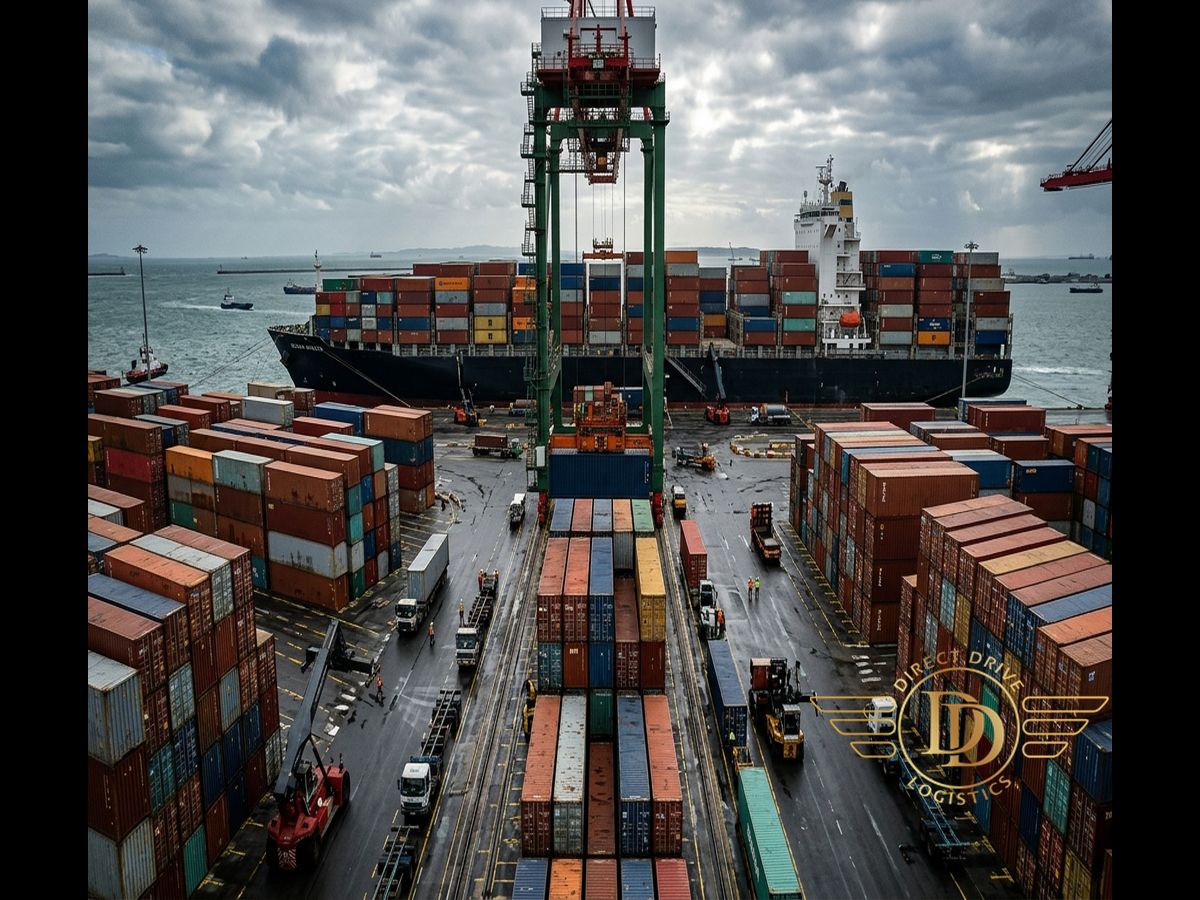
Discover how shipping to iraq can transform your operations. This guide provides actionable insights directly from a government-licensed clearing agent at the port of Umm Qasr, demystifying the entire process from port entry to final delivery in Baghdad or Erbil.
Imagine your cargo is already en route, but the Strait of Hormuz closes. Expect emergency freight rates to jump to USD 1,800–3,800 per container, potentially derailing your budget. As Direct Drive Logistics (DDL), a multimodal operator with a quad-language team, we know that navigating these volatile conditions requires expertise and flexibility. A Certificate of Conformity (CoC), for instance, is mandatory for many goods entering Iraq via sea or road, requiring careful documentation to avoid delays. We’ll show you how to manage these requirements.
This comprehensive guide explores shipping to iraq through multiple perspectives. We’ll cover What Makes Shipping to Iraq a Unique Logistical Challenge?, What Are the Essential Documents for Iraqi Customs Clearance?, How Do I Calculate the Total Landed Cost, Including Iraq’s Import Duties and Taxes?, Which Shipping Method is Best for My Cargo: Sea, Air, or Road?, What is the Step-by-Step Process for Sea Freight to the Port of Umm Qasr?, How Does Road Freight Work Through Major Border Crossings like Ibrahim Khalil (Turkey)?, What Are the Specific Logistics Challenges for Delivering Cargo to Baghdad?, How Can I Use Erbil as a Strategic Hub for Shipping and Distribution?, What Qualities Define the Best Shipping Companies for Iraq?, Are There Prohibited or Restricted Items I Can’t Ship to Iraq?, How Can I Avoid Common Delays and Unexpected Fees at Iraqi Customs?, and Your Final Pre-Shipment Checklist for a Smooth Delivery to Iraq. Whether you’re a professional or business owner, you’ll gain actionable insights to enhance your operations.
We will address critical questions like choosing the best shipping companies, understanding insurance for potential loss, and securing your packaging for international transit. Understanding CIF valuation (Cost, Insurance, and Freight), where duties and a 15% VAT are calculated on the total cost, is also crucial. We also explore regional nuances, like the differences between KRG and federal customs. This guide also highlights the importance of understanding HS codes (Harmonized System codes) for accurate customs classification.
Choosing the right Incoterms (International Commercial Terms), such as FOB or CIF, dictates responsibility for costs and risks during shipping to iraq. Let’s dive into the intricacies of Iraqi logistics, ensuring your shipments arrive smoothly and cost-effectively.
Iraq Shipping: Navigating Today's Volatile Landscape
How Regional Conflicts and Gulf Tensions Are Reshaping Iraq’s Shipping Routes
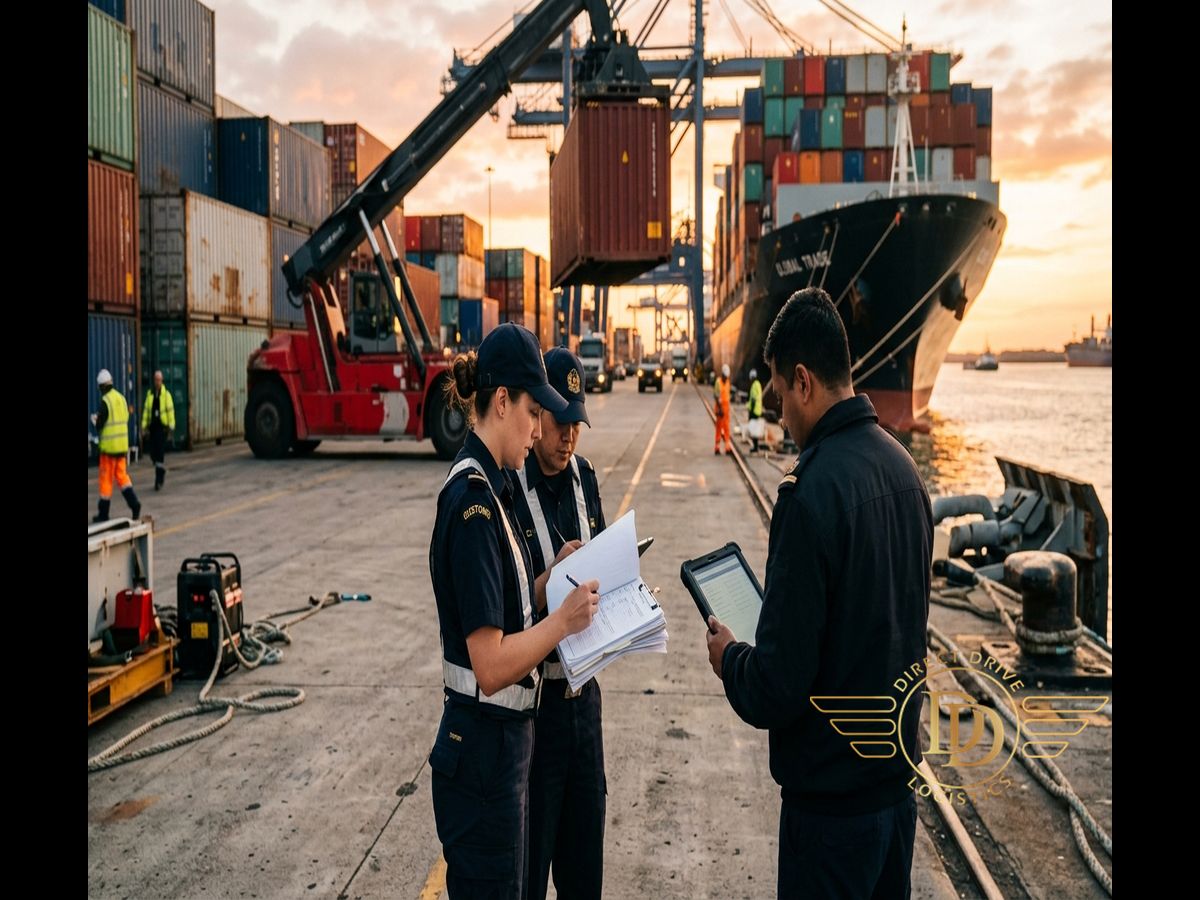
The landscape for shipping to Iraq has been fundamentally altered by recent regional instability. In March 2026, major carriers like Maersk suspended cargo bookings to key Gulf ports, a direct response to the effective halt of commercial traffic through the Strait of Hormuz. This disruption left hundreds of vessels holding in the Gulf of Oman, creating unprecedented backlogs and forcing a strategic re-evaluation of established supply chains.
This volatility has made land-based alternatives more critical than ever. Shipments from hubs like Jebel Ali now face significant delays and rate hikes of 2-3 times previous levels. As a result, importers in Baghdad and Basra are increasingly rerouting cargo via land from Turkey, a shift that adds between 7 and 14 days to transit times but offers a more predictable, albeit longer, path to market.
The E-commerce Boom: Meeting Last-Mile Delivery Demands
Simultaneously, internal market dynamics are creating new logistics pressures. Iraq’s e-commerce sector has exploded, hitting 700,000 scheduled daily orders across its 18 provinces as of 2025. This surge fuels immense demand for sophisticated fulfillment and last-mile delivery services, particularly in the major commercial centers of Baghdad, Erbil, and Basra, where Cash on Delivery (COD) remains the dominant payment method.
In our operations across the region, our team at Direct Drive Logistic has found that successfully serving this market requires deep local knowledge. For instance, hubs in Erbil process clearances for the Kurdistan Region of Iraq (KRG) separately from federal Iraq, often requiring dual documentation. One mistake we see regularly is shippers failing to prepare for both systems, which adds an avoidable 1-3 days to cross-system routing from Erbil to Baghdad.
Navigating Emergency Surcharges and Unpredictable Transit Times
The direct financial impact of the Gulf tensions is severe. The crisis has triggered a 100-200% year-over-year spike in freight costs, with emergency rates for a 20ft container from Jebel Ali to Umm Qasr now ranging from USD 1,800 to USD 3,800. These emergency freight rates do not include ancillary costs like Terminal Handling Charges (THC), which can add another USD 200-400 per container. This level of cost uncertainty makes accurate budgeting for any cargo to Iraq extremely challenging.
As a government-licensed clearing agent at the Port of Umm Qasr, we manage these complexities directly for our clients. By handling clearance in-house, we bypassed third-party broker delays for a client’s recent shipment of medical equipment from Dubai, clearing the cargo in just 48 hours. This direct control is vital when port congestion and unpredictable fees can derail even the best-laid plans. For example, shipping from italy to iraq can also face similar issues.
Your next step: Request a comparative quote from Direct Drive Logistic for both sea freight to Umm Qasr and land freight via Turkey. This will provide a clear, data-backed view of your current cost and transit time options within 24 hours.
Sea, Air, or Land: Choosing the Right Shipping Method for Iraq
Air Freight to Iraq: The Fastest Method for Urgent and High-Value Shipments
When speed is the non-negotiable priority for your cargo, air freight is the definitive solution. The primary advantage is a drastically reduced transit time, with typical shipments from regional hubs reaching Baghdad or Erbil in just 3-5 days. This speed, however, comes at a significant cost premium, often 3 to 5 times higher than sea or land options, with rates around USD 5-10 per kilogram.
This method is best suited for high-value electronics, urgent medical supplies, or critical replacement parts where the cost of operational downtime far exceeds the logistics expense. As an experienced air freight handler at Erbil, Baghdad, and Basra airports, we manage the entire process from tarmac to final delivery, ensuring your most sensitive cargo is handled with precision.
In our operations across Iraq, our team at Direct Drive Logistic has found that for urgent medical equipment or critical machinery parts, air freight’s higher cost is easily justified by preventing costly operational downtime in Baghdad or Basra.
Sea Freight via Umm Qasr: The Most Cost-Effective Choice for Bulk Cargo
For large-volume or heavy-industrial goods, sea freight remains the most economical method for shipping to Iraq. The port of Umm Qasr is the main artery for bulk cargo entering the south. Yet, this cost-efficiency is balanced by longer lead times, typically 14-21 days for a multimodal sea-to-road journey from a hub like Mersin, and significant vulnerability to regional geopolitics.
The recent impact on global supply chains from events like the Strait of Hormuz closure in March 2026 saw emergency freight rates spike to as high as USD 3,800 per container. Furthermore, all imports face a mandatory 15% VAT on the total CIF value, a figure that must be factored into your landed cost calculations.
One mistake we see regularly is businesses failing to account for the full landed cost. They budget for the freight rate but are surprised by the mandatory 15% VAT on the total CIF value (cost, insurance, and freight), which can add thousands of dollars to a container’s final cost upon arrival at Umm Qasr.
Overland Trucking: Flexible Land Routes for Regional and Rerouted Shipments
Overland trucking provides a powerful, flexible alternative, offering a balance between the speed of air and the cost of sea. A direct land freight from Turkey to Iraq via the Ibrahim Khalil crossing can take as little as 7-10 days. This option became critical during the recent Arabian Gulf shipping suspensions, allowing cargo to be rerouted and avoid indefinite delays.
Navigating the dual customs systems between the Kurdistan Region of Iraq (KRG) and federal Iraq is a key challenge. Cargo destined for Baghdad entering via Ibrahim Khalil can face an additional 1-3 days of processing as it crosses internal checkpoints. For one of our clients shipping electronics from Mersin to Erbil, our Kurdish-speaking team on the ground resolved a temporary import license issue with KRG authorities in just one day, ensuring the total transit time remained within the 5-7 day window.
Your next step: Provide our team with your cargo’s HS code and destination (e.g., Baghdad, Erbil). We will deliver a comparative cost and transit time analysis for all three modes within 24 hours.
Cost Breakdown: Understanding All Shipping Expenses to Iraq
Calculating Core Freight Rates for Air, Sea, and Land Shipments
Understanding the true cost of shipping to iraq begins with the core freight rate, which is highly volatile. Following the March 2026 Strait of Hormuz closures, major carriers suspended bookings, causing emergency sea freight rates for a 20ft container from Jebel Ali to Umm Qasr to spike by over 100%, landing between USD 1,800 and USD 3,800. This reflects added war-risk premiums and operational complexities.
Land and air offer crucial alternatives. A 10 CBM pallet from Istanbul to Baghdad via the Ibrahim Khalil border crossing typically takes 7-10 days by road. For urgent cargo, air freight provides a 3-5 day transit time, though the air freight cost to Baghdad can be 3 to 5 times higher than trucking. In our operations, we’ve seen clients pivot to the Mersin-Erbil land route to bypass Gulf port congestion, saving them from the 10-20 day delays hitting Umm Qasr.
Iraqi Customs Duties and Taxes: Estimating Tariffs and VAT
To accurately calculate import tax Iraq requires, you must use the CIF (Cost, Insurance, and Freight) valuation method. Iraqi Customs applies duties to this total declared value, and then a mandatory 15% Value Added Tax (VAT) is levied on the CIF value plus the duty amount. For example, electronics valued at USD 100 with a USD 20 duty would incur an additional USD 17.40 in VAT, for a total tax of USD 37.40.
This system applies to all goods, with no minimum value threshold. As a government-licensed clearing agent at the Port of Umm Qasr, Direct Drive Logistic manages this process directly. In one instance, we handled a critical shipment of medical equipment from Dubai to Baghdad, achieving direct clearance in just 48 hours without needing third-party brokers. A frequent error we see is clients undervaluing freight on their commercial invoice to lower the CIF base. Iraqi Customs cross-references this with carrier manifests, leading to penalties and delays of several weeks.
Unpacking Additional Expenses: Surcharges, Insurance, and Terminal Fees
Your final container shipping cost Iraq will include several ancillary charges beyond the base freight and taxes. At the port of Umm Qasr, you can expect Terminal Handling Charges (THC) ranging from USD 200 to USD 400 per container. On top of this, standard customs clearance fees typically fall between USD 300 and USD 500, covering documentation and processing.
These figures are essential for accurate budgeting and are detailed in comprehensive Iraqi customs fees breakdowns. Our team at Direct Drive Logistic has found that bundling customs clearance with freight forwarding eliminates surprise fees. When separate brokers are used, clients are often hit with unexpected ‘documentation’ or ‘port coordination’ charges that can add another USD 200-300 per container.
Your next step: Request a line-item quote from Direct Drive Logistic that separates freight, duties, VAT, and all handling fees to get a transparent view of your total landed cost. If you need a shipping company Erbil (21 chars), contact us.
Looking for a logistics partner who knows these routes? Direct Drive Logistic operates daily from Erbil to every Iraqi governorate — reach out for a route-specific consultation.
Decoding Iraqi Customs: A Guide to Regulations and Compliance
Essential Documentation for a Smooth Iraq Customs Clearance Process
Successfully managing the import documentation for Iraq hinges on flawless paperwork. Since 2025, Iraq’s Customs Authority (ICA) has mandated digital filing for all imports, requiring a Certificate of Conformity (CoC) for most non-essential goods. This applies to cargo arriving by sea at Umm Qasr or by road through crossings like Ibrahim Khalil.
Our team at Direct Drive Logistic has found that incomplete commercial invoices are the most common cause of delays. Missing HS codes or incorrect CIF values can halt a shipment for days. As a government-licensed clearing agent at the Port of Umm Qasr, we manage this process directly. For a recent shipment of medical equipment from Dubai to Baghdad, we secured direct clearance in just 48 hours, bypassing third-party broker delays.
Navigating Prohibited and Restricted Goods
Understanding which goods are prohibited or restricted is fundamental to avoiding seizures and penalties. While food and medicine often have exemptions, all other goods must comply with strict ICA regulations. The CoC process is the primary checkpoint for verifying compliance before your cargo even departs, making it a critical step in the Iraq customs clearance process.
One mistake we see regularly is the misclassification of dual-use items, which can be flagged for security review. Accurate Harmonized System (HS) code classification is not just a formality; it’s a security and compliance requirement. Failing to declare items correctly under the 12-digit HS code system used for GCC-linked imports can result in fines and indefinite holds on your shipment.
Understanding CIF Valuation and the Duty Process
The financial side of shipping to iraq is transparent but unforgiving. Iraq mandates a Cost, Insurance, and Freight (CIF) valuation for calculating duties, plus a flat 15% Value Added Tax (VAT) on top of the final amount. There is no de minimis threshold, meaning every shipment is taxed.
For example, a USD 100 electronics item could incur a USD 20 duty plus USD 17.40 in VAT, for a total of USD 37.40 in import taxes. This is in addition to standard clearance fees, which typically range from USD 300-500. You can estimate your potential costs using a duties and taxes calculator, though final amounts are set by the ICA. On a positive note, a 2025 update reduced duties on renewable energy equipment to just 5%, encouraging green-tech imports into Basra.
Considering transporting goods iraq? Provide our team with your commercial invoice and packing list. We will pre-verify your HS codes and CoC requirements within 24 hours to prevent costly border delays.
For the official texts behind these rules — KRG Customs Instructions No. 6 of 2016, Iraqi Customs Law No. 23 of 1984 and the Kurdistan CBCA list — see our Iraq & Kurdistan Regulations Library.
KRG vs Federal Customs: What Changes at the Iraqi Border
Understanding the Two Customs Systems: Federal Iraq vs. the Kurdistan Region (KRG)
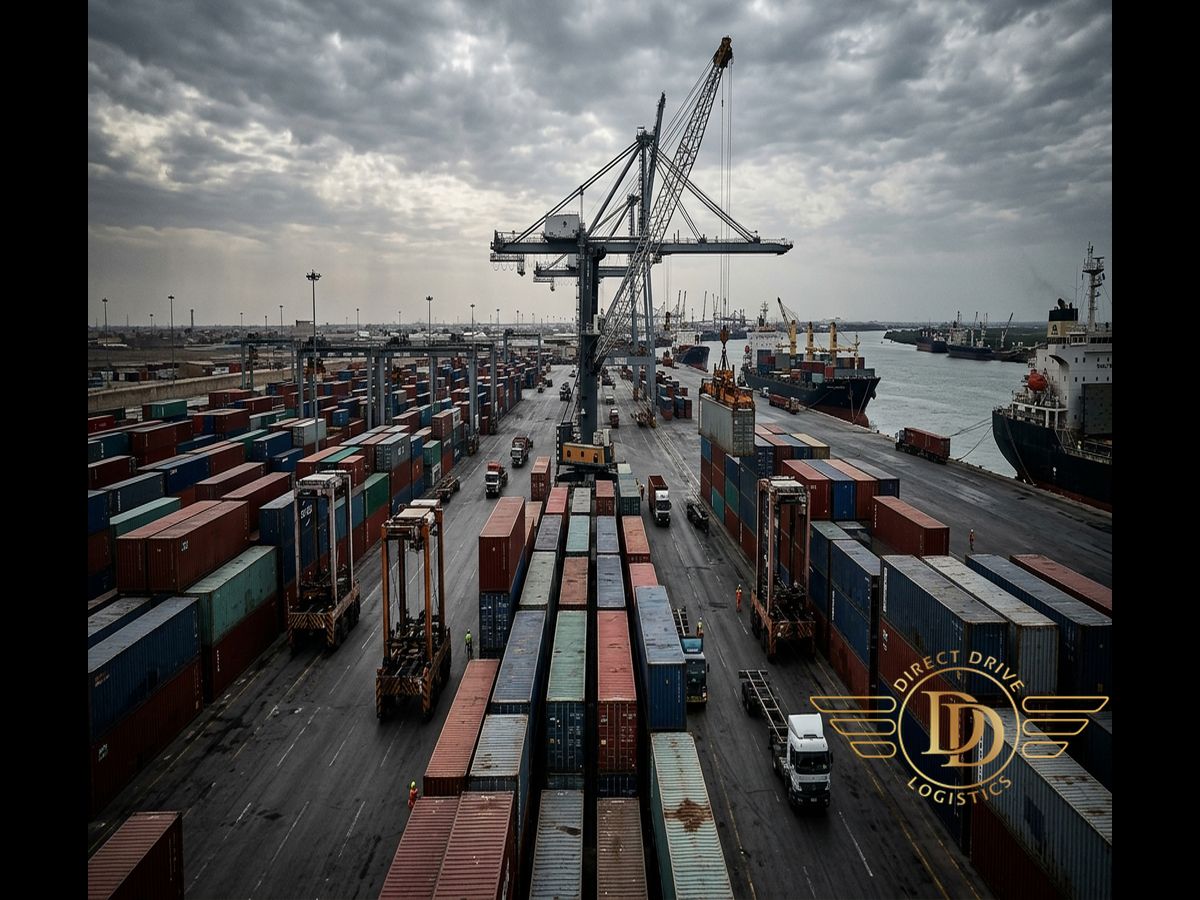
Successfully shipping to Iraq requires understanding its two distinct customs jurisdictions: the federal system governed by Baghdad and the separate system managed by the Kurdistan Regional Government (KRG) in Erbil. Federal Iraq mandates a strict customs valuation process based on CIF (Cost, Insurance, and Freight). This means all duties and a flat 15% VAT are calculated on the total landed cost of your goods, a rule that applies to all sea freight arriving at Umm Qasr.
In contrast, KRG customs regulations, while aligning on many international standards, operate with their own procedures at border crossings like Ibrahim Khalil with Turkey. This dual-system reality means cargo entering through Erbil is not automatically cleared for distribution in federal territories like Baghdad or Basra. Our team at Direct Drive Logistic has found that this distinction is the single most critical factor in route planning for time-sensitive deliveries.
Key Differences in Tariffs, Documentation, and Inspection
The primary operational challenge lies in the documentation and inspection processes. A shipment’s Certificate of Conformity (CoC) and customs declaration must be filed through the correct digital portal for its point of entry. Federal Iraq’s 2025 digital filing update requires specific HS code classifications that may differ slightly from KRG interpretations. These procedural differences are not minor; they directly impact transit times.
For example, cargo destined for Baghdad that enters through the KRG can face an additional 1-3 days of delays for dual KRG-federal customs processing. A frequent error in this stage is assuming a single clearance at the border is sufficient for nationwide distribution. Cargo cleared in Erbil often requires a second, federal-level clearance to legally enter Baghdad, a step that adds unexpected costs and delays if not pre-planned.
Navigating Internal Transit: Clearing Shipments Between KRG and Federal Zones
Managing Iraq internal customs clearance is where deep logistical expertise becomes vital. A standard 10 CBM pallet from Istanbul can reach Baghdad in just 7-10 days via the direct road route through Ibrahim Khalil (KRG). The same shipment routed through the federal system via Mersin and Umm Qasr could take 14-21 days. The faster route’s efficiency hinges entirely on a forwarder’s ability to seamlessly manage the hand-off between the two customs authorities.
This is where our operational structure provides a decisive advantage. Direct Drive Logistic’s quad-language operations team—fluent in Kurdish, Arabic, Farsi, and English—eliminates the communication gaps that cause delays at internal checkpoints. We manage the entire documentation chain, from KRG entry to final federal clearance, ensuring compliance with all Iraq import tax laws and preventing costly seizures. This integrated approach is essential for reliable nationwide distribution.
To ensure business success in Iraq, understanding these regulations is key. This understanding is essential for reliable nationwide distribution.
Your next step: Provide our team with your cargo’s HS code and final destination city. We will map the optimal entry point and customs clearance strategy within 24 hours.
Umm Qasr Port: A Step-by-Step Guide to Sea Freight
Pre-Arrival Preparations: Essential Documentation for Umm Qasr Port
Successfully navigating the Umm Qasr port clearance process begins long before your container arrives. The cornerstone of compliance is the Certificate of Conformity (CoC), managed through the Iraqi Customs Authority’s digital portal. Since the system’s 2025 update, this is mandatory for all non-essential goods and requires precise 12-digit HS code classification for seamless integration with GCC systems.
While the government has incentivized certain sectors, such as the 2025 duty reduction for renewable energy equipment to 5%, general cargo compliance is strict. A frequent error in this stage is submitting documentation without the mandatory CoC, which will stop your cargo cold at the port. In our operations, we consistently see delays caused by mismatched HS codes between the CoC and the commercial invoice, an error that can halt the entire process.
Navigating the Arrival and Unloading Process at the Terminal
The physical container arrival at Umm Qasr is heavily influenced by regional stability. The complete halt of commercial traffic through the Strait of Hormuz in March 2026 demonstrated this vulnerability. Major carriers like Maersk suspended bookings, imposing emergency freight rates that surged to between USD 1,800 and USD 3,800 per container, a spike of over 100%.
This disruption created significant secondary congestion at regional hubs like Jebel Ali, directly impacting sea freight to Basra. The global supply chain impact of these events forces a dynamic approach to logistics. Our team at Direct Drive Logistic has found that having a direct, on-the-ground presence at the port allows us to immediately pivot to land-bridge alternatives via Turkey when sea lanes are compromised.
From Dock to Delivery: Clearing Customs and Arranging Inland Transport
Once your cargo is unloaded, the final stage of shipping to iraq involves customs valuation and inland transit. Iraq mandates a CIF-based valuation, meaning duties are calculated on the total cost of goods, insurance, and freight. On top of the calculated duty, a flat 15% VAT is applied to the combined CIF and duty value, a policy with no de minimis threshold.
For example, electronics valued at USD 100 could incur a USD 20 duty, and the 15% VAT is then applied to the USD 120 total, adding another USD 18 for a final tax of USD 38. As a government-licensed clearing agent at the Port of Umm Qasr, we handle this complex calculation directly. For a recent shipment of medical equipment from Dubai, our direct port access enabled clearance in just 48 hours, bypassing common third-party broker delays and ensuring accurate adherence to Iraq’s customs fees. Alternatively, for time-sensitive cargo, International Air Freight can offer a faster solution.
Your next step: Provide our team with your cargo’s HS code and commercial invoice. We will deliver a preliminary landed cost estimate for Umm Qasr within 24 hours, including all duties and the 15% VAT.
Ready to move forward? Contact Direct Drive Logistic — a 15-minute consultation often prevents days of border delays.
Road Freight via Ibrahim Khalil: Key Considerations
Navigating the Customs Clearance Process at the Ibrahim Khalil Border
As maritime routes face disruption, reliable land freight from Turkey to Iraq has become a strategic necessity. The Ibrahim Khalil border crossing is the primary artery for this trade, yet its dual customs system presents a unique challenge. All cargo must clear both Kurdistan Regional Government (KRG) and federal Iraqi checkpoints, a process that adds a baseline of 1-3 days for shipments destined for non-KRG cities like Baghdad.
Our team at Direct Drive Logistic has found that incomplete or mismatched documentation between the KRG and federal manifests is the single most common cause of significant delays. Since 2025, compliance requires a digitally filed Certificate of Conformity (CoC) and mandatory 12-digit HS codes for accurate classification. With our quad-language operations team fluent in Kurdish, Arabic, Farsi, and English, we ensure documentation is precise and harmonized for both systems, preventing hold-ups.
Estimating Transit Times and Delays for Road Freight from Turkey
For businesses planning their supply chain, the standard transit time for a direct truckload from Istanbul to Baghdad via Ibrahim Khalil is typically 7-10 days. This overland route offers a significant speed advantage over the 14-21 days required for multimodal sea/road options that transit through Mersin and Umm Qasr. This speed has become even more valuable following the recent Strait of Hormuz closures.
The suspension of Arabian Gulf shipping has forced many importers to reroute cargo, adding an estimated 7-14 days to their timelines as they shift to land-based options. This influx of volume puts pressure on border capacity. In a recent project moving electronics from Mersin to Erbil, our Kurdish-speaking team resolved a temporary import license issue with KRG authorities in just one day, ensuring the total door-to-door transit remained within the 5-7 day window, bypassing common bottlenecks.
Key Documentation and Compliance for the Turkey-Iraq Route
Successfully shipping to Iraq via the Ibrahim Khalil crossing hinges on meticulous documentation. A frequent error in this stage is a commercial invoice that does not precisely match the cargo packing list. This discrepancy immediately flags the shipment for a full physical inspection, adding days and unexpected costs to the transit. Every item must be correctly declared to align with the required Certificate of Conformity (CoC).
Understanding the total landed cost is vital for profitability. Iraq’s customs system uses CIF valuation for all duties, and you can get a preliminary idea of these costs by using a duties and taxes calculator. However, only a licensed agent can provide the final, binding figures based on the specific HS codes for your goods. Precise compliance prevents your cargo from being held and re-valued at the border, which can disrupt your entire distribution schedule. For more complex situations, consider customs brokerage to navigate the complexities.
Your next step: Provide our team with your cargo’s HS code and final destination in Iraq. We will deliver a preliminary customs and transit plan for the Ibrahim Khalil route within 24 hours.
Insurance for Iraq Shipments: Protecting Against Loss and Damage
Understanding Key Types of Freight Insurance for Your Iraq-Bound Cargo
Securing the right freight insurance for Iraq is not a formality; it’s a strategic necessity. With regional events like the recent Strait of Hormuz closure halting commercial traffic, standard carrier liability is insufficient to cover the significant financial risks involved. Such disruptions can force shipments to reroute via land from Turkey, adding 7 to 14 days to transit times and exposing cargo to different perils.
There are two primary coverage types. All-Risk insurance offers the broadest protection, covering all physical loss or damage from any external cause unless explicitly excluded. Named Perils insurance is more restrictive, only covering losses from specific events listed in the policy, such as fire, theft, or vessel sinking. Given the operational complexities, All-Risk coverage is the recommended standard for high-value or sensitive goods entering the region.
In our operations across the Ibrahim Khalil and Parviz Khan borders, we consistently see that clients with All-Risk policies recover from transit incidents far more quickly. Their claims are processed faster because the burden of proof is on the insurer to show an exclusion applies, not on the shipper to prove a named peril occurred.
How Declared Value and Risk Factors Impact Your Insurance Premium Costs
Your insurance premium is directly calculated based on the declared value of your goods and the assessed risk of the route. For all imports, Iraq mandates a CIF (Cost, Insurance, and Freight) valuation for customs, which provides a clear baseline for your insurance declaration. This value, plus a percentage for anticipated profit (typically 10%), should be your insured amount to ensure full recovery.
Regional instability directly translates to higher premiums for high-risk shipping insurance. When major carriers suspend bookings and impose emergency freight rates of up to USD 3,800 per container, insurance underwriters adjust their pricing to reflect the heightened risk of delay, diversion, and potential loss. A frequent error in this stage: under-declaring cargo value to lower the premium. This is a false economy, as it guarantees you will be under-compensated in the event of a total loss, negating the purpose of the insurance itself.
Step-by-Step Guide to Filing a Cargo Damage Claim
The cargo damage claim process for shipments to Iraq requires meticulous documentation and swift action. If you discover loss or damage upon arrival, your first step is to immediately notify the carrier in writing and note the damage on the proof of delivery. Photograph everything—the damaged goods, the packaging, and the container—before the cargo is moved from the arrival point, whether it’s Umm Qasr port or a warehouse in Erbil.
Next, you must formally file a claim with your insurance provider, submitting all supporting documents. This includes the commercial invoice, bill of lading or CMR, packing list, and a detailed survey report from an independent surveyor. The process can be complicated by the dual KRG and federal customs systems, which can add 1 to 3 days for cross-system routing and create documentation challenges. This is where having a partner like Direct Drive Logistic with a quad-language operations team fluent in Arabic, Kurdish, and Farsi becomes invaluable for liaising with local authorities and ensuring your claim paperwork is accurate.
Understanding the limits of standard carrier liability underscores why a robust, separate policy is vital for protecting your investment when shipping from Malaysia to Iraq. Carriers are often only liable for a fraction of your cargo’s true value.
To optimize your supply chain tracking iraq, consider integrating real-time monitoring solutions.
Your next step: Request a comprehensive insurance quote from Direct Drive Logistic for your next shipment. Provide your cargo’s HS code and commercial invoice, and our team will deliver a tailored All-Risk coverage option within 24 hours.
Speed vs. Cost: Comparing Shipping Options by Package Size
Small Parcels & Documents: Express vs. Standard Mail
Choosing the right method for shipping to iraq starts with understanding the urgency and value of your small shipment. The country’s e-commerce market, now processing around 700,000 orders daily, has intensified the need for reliable parcel delivery. For time-sensitive documents or high-value samples, express couriers offer the fastest transit, typically delivering in 3-5 days.
While the express courier rates Iraq are higher, they include detailed tracking and delivery confirmation. Slower, more economical options like standard postal services exist, but often lack the same level of visibility. In our operations, we consistently see businesses choose express services for contracts and critical parts, where the cost of delay far exceeds the premium shipping cost.
Medium-Sized Shipments: Air Cargo vs. LCL Road Freight
For cargo between 50kg and 5,000kg, the primary decision is between air freight and Less-than-Container-Load (LCL) road transport. The trade-off is clear: a 10 CBM pallet from Istanbul can reach Baghdad in 3-5 days via air freight, but at a premium of USD 5-10 per kg. The same shipment via direct road freight takes 7-10 days but offers significant cost savings.
A frequent error we see is businesses comparing only the base freight rates. They fail to account for customs complexities; for example, cargo transiting the Kurdistan Region to federal Iraq can face dual customs checks, adding 1-3 days to the total journey. Direct Drive Logistic mitigates this, as seen when we managed a B2B electronics shipment from Mersin to Erbil. Our Kurdish-speaking team resolved a KRG import license issue in just one day, ensuring the total 5-7 day door-to-door timeline was met. This on-the-ground expertise is vital for calculating the true shipping cost per kg to Iraq.
Large Pallets & Oversized Freight: Calculating the Best Bulk Method
For full container loads (FCL) or oversized project cargo, the cheapest way to send a box is almost always via multimodal transport. A typical sea/road combination from a port like Mersin, Turkey, through Umm Qasr to Baghdad can take 14-21 days. However, this route’s reliability is subject to significant geopolitical risk, which must be factored into your logistics planning.
Recent events underscore this vulnerability. The March 2026 Strait of Hormuz closure effectively halted commercial traffic, leaving hundreds of vessels holding in the Gulf of Oman. This forced an immediate pivot to land routes from Turkey, adding an extra 7-14 days to transit times for Baghdad-bound freight. Our team at Direct Drive Logistic has found that for any large-scale project, having a pre-vetted, alternative land route through our 7-border crossing network is non-negotiable for ensuring supply chain resilience. For specialized needs, consider Industry Logistics Iraq to ensure seamless operations.
Your next step: Provide our team with your cargo dimensions, weight, and desired delivery date. We will return a comparative quote for at least two viable shipping modes within 24 hours.
Erbil as a Logistics Hub: Strategic Advantages for Distribution
Geographic Gateway: Erbil’s Proximity to Turkish and European Trade Corridors
Erbil’s strategic location makes it a primary gateway for goods entering from Turkey and Europe, bypassing southern port congestion. When regional conflicts disrupt maritime routes, the value of this land bridge becomes immediately apparent. An overland route provides a reliable alternative for inland distribution in Iraq.
The speed advantage is significant. A standard 10 CBM pallet shipment from Istanbul can reach Baghdad in just 7-10 days via the Ibrahim Khalil border crossing. This direct road option is substantially faster than the 14-21 day multimodal journey required through southern ports. Recent suspensions in the Arabian Gulf have only amplified the importance of this northern corridor.
In our operations at Direct Drive Logistic, we consistently see clients pivot to the Mersin-Erbil land route during periods of maritime instability. This corridor offers a stable and predictable timeline for cargo destined for both the Kurdistan Region and federal Iraq, mitigating risks associated with sea freight disruptions.
Superior Infrastructure and Security for Reliable Distribution
The Kurdistan Region offers a secure environment with modern infrastructure, making an Erbil distribution center a dependable choice for warehousing and fulfillment. This stability is critical for protecting high-value inventory. However, navigating the dual customs systems between the KRG and federal Iraq requires specific expertise.
One mistake we see regularly is shippers providing only one set of customs paperwork for cargo transiting Erbil to federal Iraq. This error causes immediate delays, as the KRG-federal customs process at borders like Ibrahim Khalil requires dual documentation and can add 1-3 days to the transit time if not handled correctly. Our on-ground, Kurdish-speaking team in Erbil resolved this exact issue for an electronics shipment from Mersin, clearing a temporary import license with KRG authorities in just one day.
A Central Hub for Last-Mile Delivery Across Iraq
Erbil has become the engine for last-mile delivery, fueled by a booming e-commerce market that reached 700,000 scheduled daily orders across Iraq in 2025. An Erbil hub allows for rapid deployment of goods across all 18 provinces.
This centralized model transforms the challenge of nationwide coverage into a streamlined operation. From our Erbil headquarters, Direct Drive Logistic dispatches approximately 10 trucks per day on a fixed schedule to every Iraqi governorate. This reliable line-haul service enables next-day delivery to most major cities and allowed us to complete a B2B restock delivery from our Erbil warehouse to a Baghdad client in just 6 hours. This capability is essential for effective shipping to Iraq.
Your next step: Assess your current transit times for deliveries to northern and central Iraq. Contact our Erbil-based team for a comparative quote on the Turkey-Ibrahim Khalil land route to quantify your potential time savings.
Avoiding Delays: Proactive Strategies for Iraqi Customs
Perfecting Your Paperwork: A Pre-Shipment Checklist for Iraqi Customs Compliance
Navigating the requirements for shipping to Iraq begins long before your cargo reaches the border. The Iraqi Customs Authority (ICA) mandates a Certificate of Conformity (CoC) for all non-essential goods, managed through a digital portal updated in 2025. Failure to secure this document pre-shipment is a primary cause of common customs clearance delays at ports like Umm Qasr or land crossings like Parviz Khan.
All commercial invoices must be detailed and accurate, as they form the basis for valuation. In our operations across Iraq, we consistently see that incomplete or vague goods descriptions on the invoice are the number one trigger for physical inspections, adding days to clearance times. Your documentation must be flawless from the start.
Accurate Goods Declaration: Using the Correct Harmonized System (HS Code)
Properly classifying your goods is non-negotiable for avoiding customs fines in Iraq. The country uses the Harmonized System, and for shipments with GCC links, a precise 12-digit HS code is mandatory for declaration. This code directly impacts the duties and taxes applied to your shipment. A frequent error in this stage is using a generic 6-digit code, which forces a re-classification by customs officials, often resulting in higher tariffs and penalties.
Since 2025, Iraq has enforced a strict CIF-based valuation (Cost, Insurance, and Freight) for all imports, with a standard 15% VAT applied on top of duties. An incorrect HS code can lead to an incorrect duty calculation, which then cascades into an incorrect VAT assessment, creating a compliance issue that can hold your cargo for weeks.
Leveraging Local Expertise: How a Customs Broker Can Expedite Your Entry into Iraq
The complexities of Iraq’s dual customs systems—federal and Kurdistan Regional Government (KRG)—present a significant hurdle. Cargo entering via the Ibrahim Khalil border from Turkey can face an additional 1-3 days of processing if it’s destined for federal Iraq but lacks the correct dual documentation. Businesses expanding into the region should consider business shipping services.
As a government-licensed clearing agent at the Port of Umm Qasr, Direct Drive Logistic manages this process directly, eliminating third-party brokers. For a recent shipment of medical equipment from Dubai to Baghdad, our direct engagement secured customs clearance in just 48 hours. Our quad-language team—fluent in Arabic, Kurdish, Farsi, and English—navigates these regional nuances, ensuring your customs paperwork for Iraq is precise for every entry point.
Your next step: Send our team your commercial invoice and packing list for a complimentary pre-shipment compliance review. We will identify potential HS code or CoC issues within 24 hours.
Selecting a Partner: Qualities of Top Shipping Companies for Iraq
Evaluating Local Expertise and Compliance with Iraqi Customs
Selecting the best shipping companies for Iraq begins with verifying their deep, on-the-ground knowledge of customs. The country operates a dual-clearance system; cargo entering the Kurdistan Region of Iraq (KRG) via borders like Ibrahim Khalil requires separate processing from federal Iraq. This complexity frequently adds 1-3 days to transit times for cargo destined for Baghdad if not managed by a knowledgeable local team.
A frequent error we see is shippers assuming a single customs clearance covers all of Iraq. This oversight leads to unexpected impounds and fees when cargo moves from KRG territory to federal provinces. In our operations, Direct Drive Logistic’s quad-lingual team—fluent in Kurdish, Arabic, Farsi, and English—directly interfaces with authorities. This was pivotal in a recent Mersin-to-Erbil shipment, where our Kurdish-speaking staff resolved a temporary import license issue with KRG authorities in just one day.
Assessing Network Resilience and Contingency Plans
An effective Iraq logistics partner must demonstrate resilience against regional instability. When events like the March 2026 Strait of Hormuz closure halt sea traffic, a provider’s contingency plans are tested. This single event forced importers to reroute cargo via land from Turkey, adding an average of 7-14 days to delivery schedules for Baghdad and Basra.
A partner’s value is measured by their ability to pivot. Direct Drive Logistic maintains an operational network across seven key border crossings, including Parviz Khan, Mehran, and Ibrahim Khalil. This allows us to reroute shipments seamlessly. For instance, when one crossing closes, we can divert cargo through another without significant delay, as demonstrated when we rerouted FMCG goods from Tehran to Baghdad via the Mehran border, meeting the original delivery timeline.
Comparing Service Capabilities for Domestic Distribution
True end-to-end service for reliable cargo to Baghdad extends far beyond port or border clearance. With Iraq’s e-commerce market generating over 700,000 scheduled daily orders, the demand for a sophisticated domestic distribution network is immense. A provider must have the infrastructure to manage last-mile delivery across all 18 provinces, not just major cities.
Our team at Direct Drive Logistic has found that many forwarders rely on a fragmented network of third-party local truckers, introducing communication gaps and security risks. We operate a scheduled line-haul service, with approximately 10 trucks departing daily from our Erbil hub to every Iraqi governorate. This fixed schedule provides clients with predictable, secure, and consistent delivery, whether for B2B restocking in Basra or fulfilling e-commerce orders in Karbala. This level of integrated domestic capability is a key differentiator in the Iraqi logistics landscape.
Your next step: Ask your potential logistics partner to provide a specific contingency plan for a port closure at Umm Qasr. Evaluate their response for concrete, alternative routes and documented transit time impacts. If you need a logistics company Iraq, consider Direct Drive Logistics.
Send your cargo details to Direct Drive Logistic on WhatsApp — get a route-specific checklist and quote within 24 hours.
Why Choose Direct Drive Logistic?
Offices in Erbil (HQ) + Tehran (Nasim Shahr Terminal); warehouses in Zakho, Erbil, Basra, and Tehran (2,000 sqm)
Government-licensed clearing agent — direct port access for sea freight into southern Iraq
2,500+ Iraq domestic deliveries, 300+ Iran-Iraq cross-border, 100+ international freight; air freight handler at Erbil, Baghdad, and Basra airports
Operational at Parviz Khan, Bashmagh, Haji Omran (Piranshahr), Mehran, Khosravi, Ibrahim Khalil (Turkey), and Bandar Abbas port (Iran)
Full operational fluency in Farsi, Arabic, Kurdish, and English — client-facing and documentation
~10 trucks/day from Erbil hub covering Baghdad, Karbala, Najaf, Basra, Kut (Wasit), Diyala, Nasiriyah, and all Iraqi governorates
Frequently Asked Questions
▼ What are the biggest challenges when shipping to Iraq for a general business?
Key challenges for businesses shipping to Iraq include navigating complex customs procedures, dealing with potential delays at border crossings like Ibrahim Khalil, and ensuring cargo security throughout the transit. The 15% VAT (Value Added Tax) applied to the CIF (Cost, Insurance, and Freight) value of goods, coupled with import duties, can also significantly impact the overall cost. Regional instability, such as disruptions in the Strait of Hormuz, can lead to emergency freight rate increases, as seen in March 2026 when rates jumped to USD 1,800-3,800 per container.
▼ How do I choose the best shipping method to Iraq for my goods?
Selecting the best shipping method to Iraq depends on factors like the type of goods, urgency, and budget. Sea freight to Umm Qasr is cost-effective for large, non-urgent shipments, while road transport via Turkey or Iran may be faster but subject to border delays. Air freight offers the quickest transit time (3-5 days) but at a higher cost (USD 5-10/kg to Baghdad). Consider using a multimodal approach, combining sea and road, to balance cost and speed, and always factor in potential delays at customs.
▼ What is the cost of shipping to Iraq, and what factors influence it?
The cost of shipping to Iraq varies significantly based on several factors. For example, a 20ft container from Jebel Ali or Mersin to Umm Qasr typically ranges from USD 1,800-3,800, with potential spikes due to regional conflicts. Additional costs include terminal handling charges (THC) of USD 200-400 and clearance fees of USD 300-500. The 15% VAT on the CIF value, import duties, and war-risk premiums can also increase the total cost.
▼ How long does shipping to Iraq typically take?
Shipping times to Iraq vary depending on the origin and mode of transport. Direct road transport from Istanbul to Baghdad takes approximately 7-10 days via Ibrahim Khalil. Sea/road multimodal transport via Mersin-Umm Qasr can take 14-21 days due to federal clearance processes. Air freight is the fastest option, with delivery in 3-5 days. Remember that dual customs clearance requirements at borders like Ibrahim Khalil can add 1-3 days for non-KRG cargo.
▼ What documentation is required for shipping goods to Iraq?
Essential documentation for shipping to Iraq includes a commercial invoice, packing list, bill of lading (for sea freight) or airway bill (for air freight), certificate of origin, and a Certificate of Conformity (CoC) for many non-essential goods. The Iraqi Customs Authority (ICA) requires HS code classification for all imports, and digital filing is mandatory. Ensure all documents are accurate to avoid delays and penalties during customs clearance.
▼ What are the main ports and border crossings used for shipping to Iraq?
The primary port for sea freight is Umm Qasr, near Basra. Key border crossings include Ibrahim Khalil (Turkey-Iraq), Parviz Khan, and Haji Omran (Iran-Iraq). Road transport often utilizes Ibrahim Khalil for goods entering from Turkey and Mehran for goods from Iran. Direct Drive Logistic’s 7-border crossing network includes Parviz Khan, Bashmagh, Haji Omran (Piranshahr), Mehran, Khosravi, Ibrahim Khalil, and Bandar Abbas port (Iran), providing flexibility and redundancy.
▼ How can I ensure the security of my shipments to Iraq?
Ensuring shipment security to Iraq requires working with reputable logistics providers, securing adequate cargo insurance, and utilizing real-time tracking. Due to potential instability, consider armed escorts for high-value goods, especially in certain regions. Direct Drive Logistic, for example, leverages its dual-country presence and established network to mitigate risks and maintain cargo integrity.
▼ What are the current import regulations and tariffs in Iraq?
Iraq mandates CIF valuation for duties and applies a 15% VAT on all imports, with no de minimis threshold. A Certificate of Conformity (CoC) is required for many non-essential goods. Be aware that renewable energy equipment imports have seen duty reductions to 5% in 2025. Staying updated on the latest regulations via the Iraqi Customs Authority (ICA) digital portal is essential.
▼ What is the impact of e-commerce growth on shipping to Iraq?
Iraq’s booming e-commerce sector, with 700,000 daily orders in 2025, is driving demand for efficient last-mile delivery and fulfillment solutions, particularly in Baghdad, Erbil, and Basra. This growth necessitates robust warehousing and distribution networks to handle the increasing volume of shipments. Cash-on-delivery (COD) remains a dominant payment method, influencing logistics processes and security considerations.
▼ How can I handle customs clearance efficiently when shipping to Iraq?
Efficient customs clearance in Iraq requires meticulous documentation, accurate HS code classification, and familiarity with local regulations. Engaging a licensed clearing agent at ports like Umm Qasr can expedite the process. Direct Drive Logistic is a government-licensed clearing agent with direct port access for sea freight into southern Iraq, eliminating the need for intermediaries and reducing potential delays.
▼ What are the implications of the ongoing regional conflicts on shipping to Iraq?
Regional conflicts can significantly disrupt shipping to Iraq. For example, the suspension of cargo bookings to Iraq and Gulf ports by major carriers in March 2026, due to Strait of Hormuz closures, led to substantial delays and emergency freight rate increases. Shippers should be prepared for potential rerouting, increased insurance costs, and longer transit times. Having a logistics partner with a flexible network, like Direct Drive Logistic with its 7-border crossing coverage, is crucial for mitigating these risks.
▼ What special considerations are there for shipping to the Kurdistan Region of Iraq (KRG)?
Shipping to the KRG requires navigating a separate customs system from federal Iraq. Erbil hubs process clearances independently, necessitating dual documentation for goods moving between the KRG and other parts of Iraq, adding 1-3 days to transit times. Direct Drive Logistic’s Kurdish-speaking Erbil team can resolve import license issues with KRG border authorities quickly, often within a day, facilitating smoother transit.
Conclusion
Successful shipping to Iraq hinges on understanding the complex interplay of regional dynamics, customs regulations, and logistical options. As we’ve seen, choosing the right shipping method, whether air, sea via Umm Qasr, or road via Ibrahim Khalil, directly impacts both speed and cost, with expenses potentially escalating due to unforeseen delays or non-compliance. Navigating these challenges requires a proactive approach and a deep understanding of the Iraqi landscape.
To start optimizing your shipping to Iraq, meticulously review your documentation process against the pre-shipment checklist detailed earlier. Ensure all paperwork is complete, accurate, and compliant with the specific requirements of either the Federal Iraq or KRG customs systems. Addressing these details before shipping can significantly reduce the risk of costly delays and penalties.
When your shipment needs Umm Qasr customs clearance, Direct Drive Logistic’s official, government-licensed clearing agent status ensures direct port access and faster processing. With years of experience navigating the intricacies of shipping to Iraq, we provide reliable and secure solutions. Speak with our Iraq shipping experts today at (+964) 750 637 9296 to discuss your specific needs.
Need reliable and secure shipping to Iraq? Get a quote today from Direct Drive Logistic for guaranteed delivery and competitive rates. Call us now at (+964) 750 637 9296 to discuss your shipping needs and experience hassle-free logistics.
Contact Us for a Consultation
Location
Direct Drive Logistic
MRF Quattro towers, Block A-29-1
Erbil, Kurdistan Region
View on Google Maps →