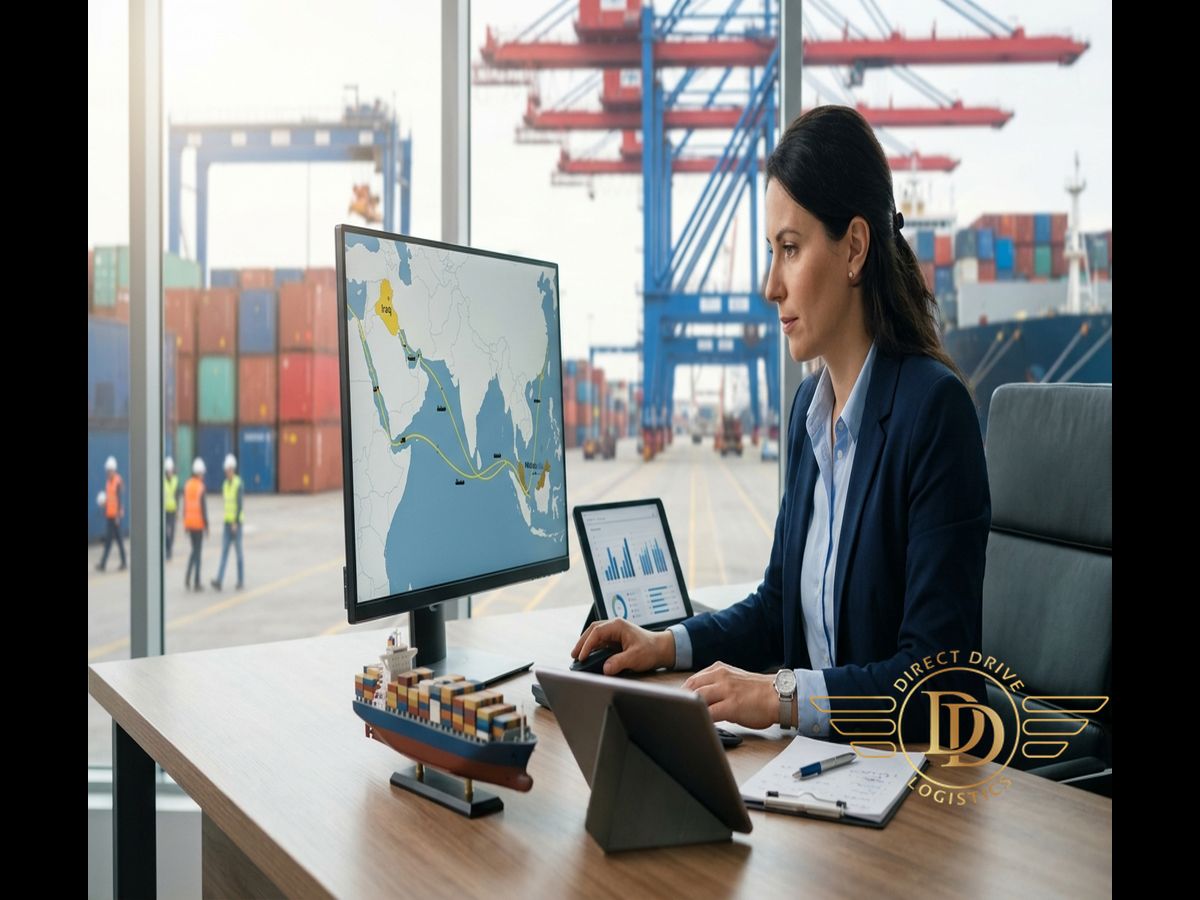
Discover how shipping from malaysia to iraq can transform your operations with this guide moves beyond standard air/sea options to reveal how a dual-country presence in both iraq and iran provides unmatched route flexibility and customs expertise that single-country forwarders cannot offer.
Shipping from Malaysia to Iraq involves navigating complex logistics, including varied transit times and specific customs requirements. While sea freight typically takes 25–40 days, air freight offers a faster, albeit more expensive, alternative. Understanding the intricacies of routes, documentation, and on-the-ground support is crucial for successful and timely delivery to Iraqi markets, which saw an estimated USD 200–300 million in bilateral trade with Malaysia in 2023.
When your cargo is stuck at an Iraqi border for 3–5 days due to incorrect documentation, incurring USD 800+ in demurrage fees, the true cost of an inefficient forwarder becomes painfully clear. Many Malaysian businesses shipping to Iraq struggle with a fragmented logistics landscape, often facing unexpected delays and additional charges because their forwarder lacks comprehensive, on-the-ground capabilities. This guide will reveal why choosing a partner with a dual-country presence in both Iraq and Iran, like Direct Drive Logistic, is critical.
This unique approach offers unmatched route flexibility and customs expertise that single-country forwarders simply cannot provide, especially given the rising trend of routing via Bandar Abbas (Iran) or Mersin (Turkey) due to Red Sea disruptions. We will explore core shipping options and challenges, distinguishing between air and sea freight, and delve into the critical on-the-ground network capabilities that truly matter in Iraq. For instance, understanding Incoterms (International Commercial Terms) is vital, as these globally recognized standards define the responsibilities of buyers and sellers for the delivery of goods under sales contracts, significantly impacting costs and risks during transit.
You’ll discover how a forwarder with offices and warehouses in both Iraq and Iran, alongside a 7-border crossing network covering both Kurdistan Region of Iraq (KRG) and Federal Iraq customs systems, can mitigate common pitfalls. We will also address crucial aspects like restricted and prohibited goods, cargo insurance for Malaysia to Iraq shipments, and the essential proof of experience you should demand from any partner handling your valuable goods. Moreover, we’ll clarify the often-confusing process of navigating both KRG and Federal Iraq customs without delays, highlighting that dual customs clearances are often needed when shipping to different regions within Iraq, adding 1–3 days to transit.
This guide moves beyond standard air/sea options, providing actionable insights for business owners and logistics professionals aiming to streamline their shipping from Malaysia to Iraq, ensuring greater reliability and cost predictability. We conclude by outlining how to obtain a reliable quote and initiate your next shipment with confidence.
Complete Guide to shipping from
Malaysia-Iraq Trade Dynamics: Understanding Growth Drivers and Key Opportunities
Successfully shipping from Malaysia to Iraq requires a clear understanding of a market driven by reconstruction and growing consumer demand. The trade relationship is expanding, with key opportunities for Malaysian exporters in machinery, electronics, and automotive parts. Navigating this landscape means balancing opportunity with the operational realities of logistics costs and transit complexities.
Cost is a primary factor in market entry. A standard 40ft container (FCL) from Port Klang to Umm Qasr typically ranges between USD 3,000 and USD 4,500. However, regional instability can cause dramatic fluctuations; recent reports show Asia-Gulf shipping lanes have seen rate spikes of 30-50%. Understanding these bilateral trade flows is vital for accurate budgeting and maintaining competitive pricing in the Iraqi market.
In our operations across Iraq, we consistently see that the most successful Malaysian exporters are those who plan for logistics volatility. They build resilient supply chains that can adapt to sudden port congestion or border delays, which are common in the region. This foresight prevents stockouts and protects profit margins when unforeseen challenges arise. For those considering shipping from Sweden to Iraq, similar strategic planning is crucial for success, just as it is for shipping from KSA to Iraq.
Direct Drive Logistic’s dual-country presence in both Iran and Iraq provides a unique advantage. When sea freight rates to Umm Qasr spike, our ability to re-route cargo through Iran’s Bandar Abbas port—where off-peak rates can be as low as USD 2,200–3,000 per container—offers a strategic alternative that single-country forwarders cannot match. This flexibility is essential for managing costs and ensuring reliable delivery.
Your next step: Request a comparative quote from our team for both the Port Klang-Umm Qasr sea route and the alternative Port Klang-Bandar Abbas land bridge route to evaluate your cost savings for Q3 2024 shipments.
Air Freight vs. Sea Freight: Choosing the Right Solution for Your Cargo to Iraq
Air Freight vs. Sea Freight: Choosing the Right Solution for Your Cargo to Iraq
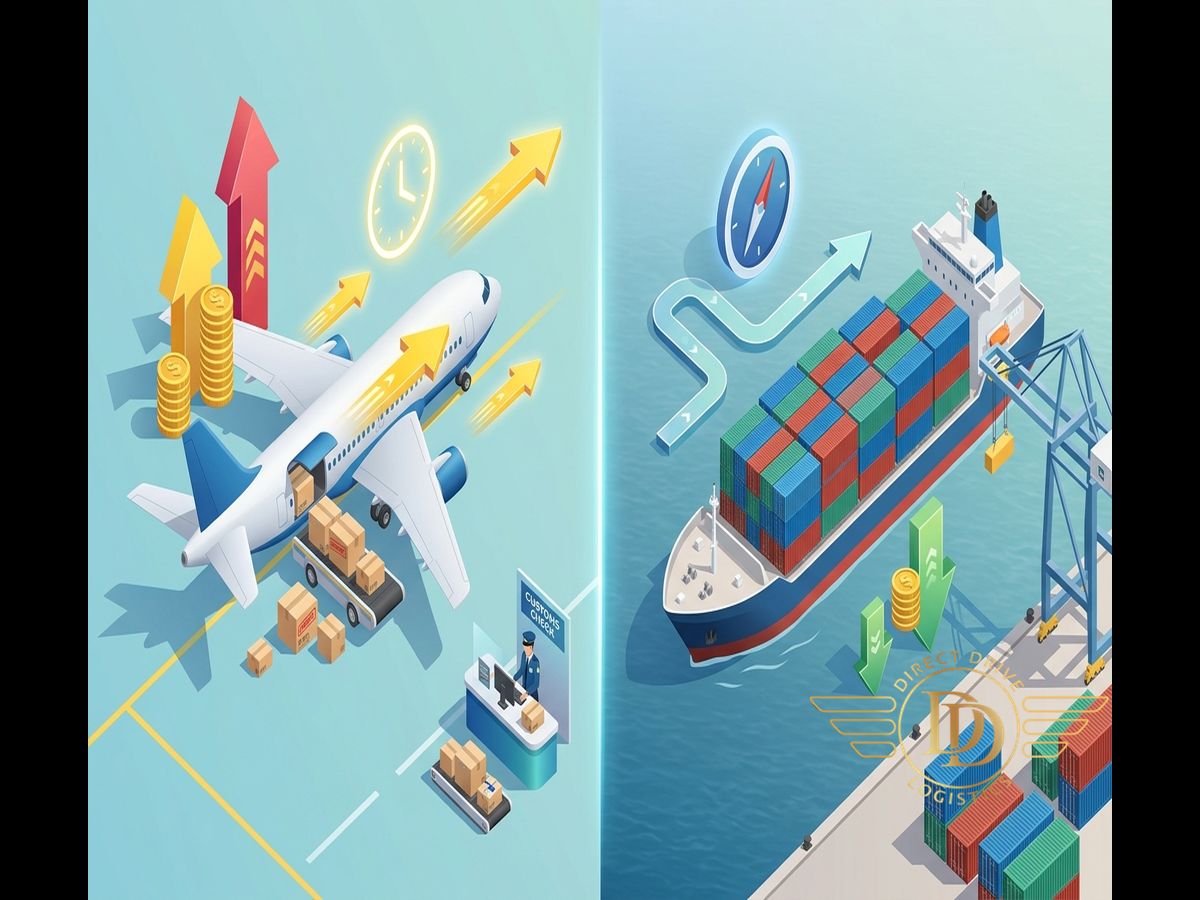
Selecting the optimal method for shipping from Malaysia to Iraq requires a careful analysis of your cargo’s urgency, volume, and value. The decision between air and sea freight directly impacts your timeline and budget, with each mode offering distinct advantages for different supply chain strategies.
Air freight provides unparalleled speed, making it the default choice for high-value electronics, urgent medical supplies, or critical spare parts. Sea freight, conversely, offers significant cost savings for bulk commodities, raw materials, and non-urgent stock replenishments. Understanding these core differences is the first step in building a resilient and cost-effective logistics plan.
| Feature | Air Freight (KUL to BGW/EBL) | Sea Freight (Port Klang to Umm Qasr) |
|---|---|---|
| Typical Transit Time | 3-7 days | 25-40 days |
| Cost Profile | Higher per kilogram | Significantly lower for bulk volume |
| Ideal Cargo | High-value, low-volume, time-sensitive goods | Heavy machinery, raw materials, large-volume consumer goods |
| Security & Risk | Lower risk of damage, theft, or delays | Higher exposure to geopolitical risks and port congestion |
While sea freight is the backbone for large-scale trade, recent geopolitical events underscore its vulnerabilities. The 2026 conflict, which led to a partial closure of the Strait of Hormuz, caused a sharp drop in regional cargo flows and introduced significant uncertainty for shipments relying on this route. This volatility makes having a logistics partner with multi-modal and multi-country capabilities essential for mitigating risk and avoiding costly delays that affect even routine maritime movements.
In our operations across Iraq, we consistently see that relying solely on a single transport mode is a critical vulnerability. Our experience managing over 300 Iran-Iraq cross-border shipments confirms that a dual-country presence is a powerful advantage. When sea routes to Umm Qasr face disruption, we can pivot cargo to Bandar Abbas in Iran and seamlessly truck it across one of our 12 managed border crossings into Iraq, preserving the supply chain’s integrity.
A frequent error in this stage is underestimating the total landed cost of sea freight. Businesses often focus on the low ocean freight rate but overlook potential demurrage, storage fees, and security surcharges that can accumulate during unexpected port delays, quickly eroding any initial cost savings. For a complete understanding of all factors, consult our complete guide to shipping.
Your next step: Request a comparative analysis from our team. Provide your cargo’s specifications, and we will deliver a detailed cost and transit time breakdown for both air and sea options to Iraq within 24 hours.
Streamlining Customs Clearance: Malaysia Export and Iraq Import Documentation
Essential Malaysian Export Documentation: From K2 Forms to Certificates of Origin (COO)
Successful shipping from Malaysia to Iraq begins with flawless documentation before the cargo ever leaves Port Klang. The bilateral trade, estimated at USD 200–300 million in 2023, relies on precise paperwork to move smoothly. Your Malaysian export customs declaration (K2 Form) must be accurate and submitted electronically.
Beyond the K2, a complete document package includes a detailed commercial invoice, a comprehensive packing list, and the bill of lading or air waybill. A notarized Certificate of Origin for Iraq is non-negotiable; it verifies the goods’ country of manufacture and is a core part of Iraq import requirements from Malaysia. A frequent error in this stage: Mismatches between the commercial invoice value and the packing list details. This single mistake can trigger a full customs audit in Iraq, delaying clearance by days.
Meeting Iraqi Customs Requirements: The Clearance Process
Upon arrival, navigating Iraqi customs requires local expertise, especially for high-value goods like machinery, which constitute over 30% of Malaysian exports to the region. As a government-licensed clearing agent at the Port of Umm Qasr, Direct Drive Logistic manages this entire sequence directly, often securing release in 48 hours. For those looking at shipping from China to Iraq, similar rigorous processes apply.
- Step 1: Pre-Arrival Document Legalization — Your commercial invoice and Certificate of Origin must be legalized by the Iraqi Embassy in Kuala Lumpur before shipment. We manage this submission to ensure compliance before the vessel departs.
- Step 2: Cargo Declaration & Inspection — Upon arrival, we file the import declaration. Iraqi customs physically inspects the cargo against the manifest, a process influenced by factors like regional shipping flows, to verify contents and condition.
- Step 3: Duty & Tax Finalization — Customs assesses duties and taxes based on the cargo’s CIF value. Our on-ground team liaises directly with officials to resolve any valuation queries and expedite payment.
Your next step: Provide our team with your commercial invoice and packing list. We will perform a complimentary pre-shipment compliance check within 24 hours to identify potential customs issues.
Restricted and Prohibited Goods: Navigating Iraqi Import Regulations
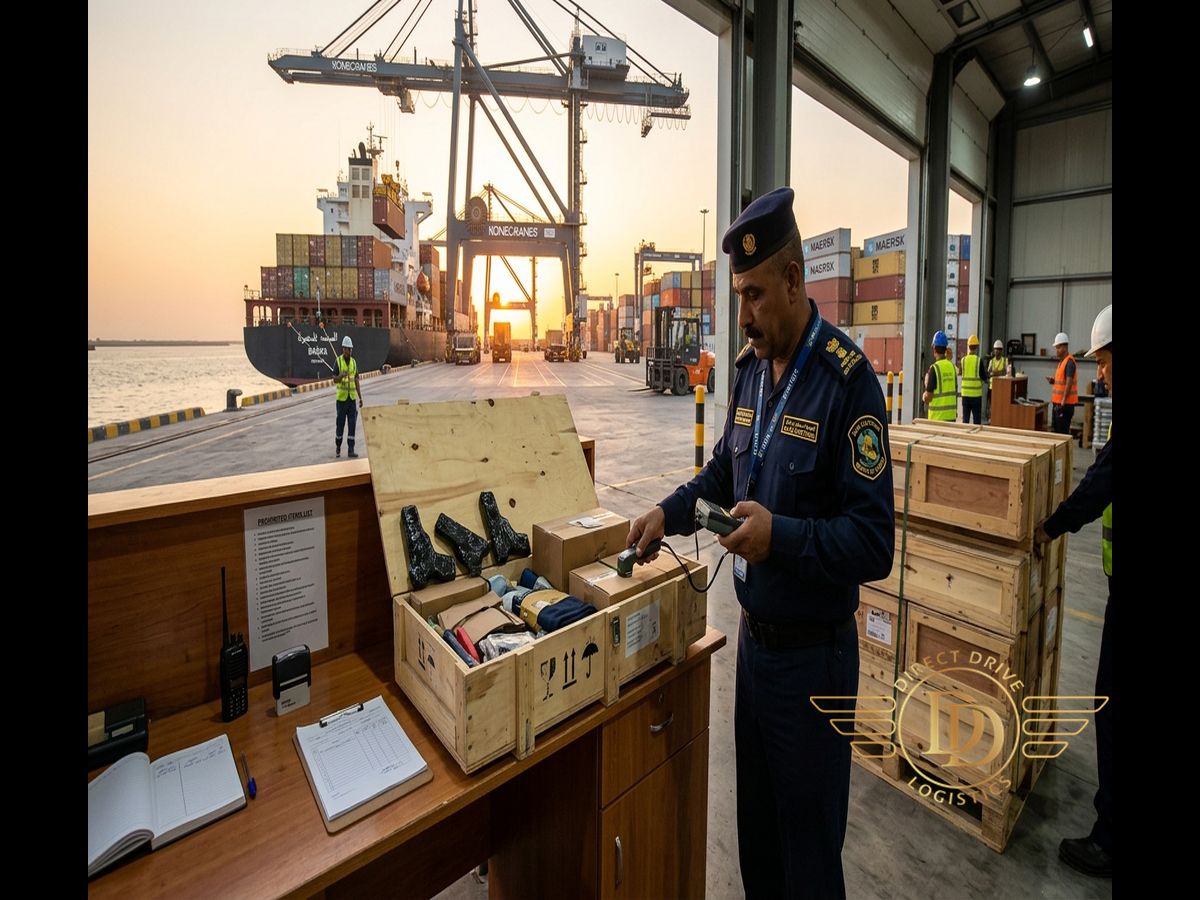
Prohibited Items List: Goods Absolutely Banned from Import into Iraq
Successfully shipping from Malaysia to Iraq begins with understanding what cannot enter the country under any circumstances. Iraq enforces a strict list of prohibited goods to protect national security, public health, and cultural norms. These items are subject to immediate seizure and can result in severe penalties for the shipper and consignee.
Absolutely prohibited items include narcotics, psychotropic substances, weapons and ammunition without Ministry of Interior approval, and any goods originating from an officially boycotted country. Additionally, materials deemed contrary to Islamic teachings or public decency are banned. A frequent error in this stage is assuming that a product allowed in a neighboring Gulf country is automatically permitted in Iraq; Iraqi regulations are distinct and require independent verification.
Restricted Goods and Special Permits: Navigating Iraqi Import License Requirements
Beyond prohibited items, a wide range of goods are restricted, meaning they require special permits or licenses from specific Iraqi government ministries before import. This category frequently includes telecommunications equipment, pharmaceuticals, chemicals, and dual-use goods that could have both civilian and military applications. Failure to secure pre-approval is a primary cause of costly delays at ports like Umm Qasr.
Navigating these rules is critical, as heightened regional security concerns have already caused war-risk premia to add double-digit percentage increases to freight costs, and non-compliant cargo faces even steeper financial penalties. In our operations across Iraq, we consistently see shipments delayed due to the misclassification of dual-use goods. An electronic component can be flagged if its documentation isn’t precise, highlighting the need for expert review before shipment, especiall
Your next step: Provide Direct Drive Logistic with your product’s Harmonized System (HS) code and technical specifications for a preliminary compliance assessment. Our team can typically provide feedback within 48 hours.
Securing Your Investment: Cargo Insurance for Malaysia to Iraq Shipments
Why Protecting Your Cargo is Non-Negotiable
When executing a shipment from Malaysia to Iraq, your cargo’s value is exposed to significant transit risks. Recent geopolitical instability, which led to a high-risk classification for the Strait of Hormuz, underscores this reality. The resulting disruptions have caused tanker and cargo flows from the region to decline, making robust protection for your goods a sound business decision. Relying on basic carrier liability is insufficient, as it often covers only a fraction of your cargo’s commercial value.
One mistake we see regularly is businesses assuming their freight forwarder automatically includes comprehensive insurance. The reality is that shippers must explicitly request and verify the policy type. The legal implications for from maritime disruptions mean that an inadequate marine insurance for Iraq can lead to catastrophic financial loss. In our experience managing over 2,900 successful shipments, a tailored policy is the only way to secure your investment fully.
Comparing Coverage: All-Risk vs. Named Perils Policies
Choosing the right coverage depends on your cargo’s value, type, and your company’s risk tolerance. The primary options are ‘All-Risk’ and ‘Named Perils’ policies, which offer vastly different levels of protection compared to the minimal liability offered by carriers. Understanding these differences is key to making a cost-effective decision.
| Feature | Carrier’s Limited Liability | Named Perils (FPA) | All-Risk (ICC ‘A’) |
|---|---|---|---|
| Coverage Scope | Minimal; only proven carrier negligence | Covers only specific risks listed in policy (e.g., fire, vessel sinking) | Covers all physical loss/damage unless specifically excluded |
| Typical Cost | Included in freight rate | 0.3% – 0.7% of insured value | 0.5% – 1.5% of insured value |
| Best For | Low-value goods (Not Recommended) | Bulk commodities where total loss is the main concern | High-value, sensitive, or manufactured goods |
| Common Exclusions | Acts of God, shipper error, inherent vice | Damage from poor packing, delays, strikes, war | War, strikes, inherent vice (can be added back via rider) |
Our team at Direct Drive Logistic helps you navigate the freight insurance claim process by aligning your policy with the real-world risks of your chosen route, whether via sea to Umm Qasr or through one of our 12 land border crossings.
Your next step: Provide our team with your commercial invoice and packing list. We will return a tailored freight quote that includes at least two distinct cargo insurance options within 24 hours.
Send your cargo details to Direct Drive Logistic on WhatsApp — get a route-specific checklist and quote within 24 hours.
Why Choose Direct Drive Logistic?
Offices in Erbil (HQ) + Tehran (Nasim Shahr Terminal); warehouses in Zakho, Erbil, Basra, and Tehran (2,000 sqm)
Government-licensed clearing agent — direct port access for sea freight into southern Iraq
2,500+ Iraq domestic deliveries, 300+ Iran-Iraq cross-border, 100+ international freight; air freight handler at Erbil, Baghdad, and Basra airports
Operational at Parviz Khan, Bashmagh, Haji Omran (Piranshahr), Mehran, Khosravi, Ibrahim Khalil (Turkey), and Bandar Abbas port (Iran)
Full operational fluency in Farsi, Arabic, Kurdish, and English — client-facing and documentation
~10 trucks/day from Erbil hub covering Baghdad, Karbala, Najaf, Basra, Kut (Wasit), Diyala, Nasiriyah, and all Iraqi governorates
Frequently Asked Questions
Shipping from Malaysia to Iraq primarily involves sea freight, often routed through intermediate hubs due to regional dynamics. While bilateral trade is growing, estimated at USD 200–300 million in 2023, security risks in the Gulf and Strait of Hormuz since Q1 2026 have made routing via Bandar Abbas (Iran) or Mersin/Iskenderun (Turkey) the dominant pattern. This adds 3–7 extra days compared to direct routes but offers flexibility to serve both federal Iraq (Basra/Umm Qasr) and the Kurdistan Region (Erbil/Sulaymaniyah). A key challenge is navigating Iraq’s dual customs systems, where cargo moving from the KRG to federal Iraq often requires two separate clearances, adding 1–3 days and additional fees.
Typical transit times for sea freight from Malaysia to Iraq, particularly from Port Klang, range from 25 to 40 days, factoring in the common routing via Bandar Abbas or Turkish ports. This includes ocean transit, transshipment, and overland trucking into Iraq. For instance, routing through Bandar Abbas to Erbil or Basra can add 3-7 days to the sea leg. Average costs for shipping a 20-foot or 40-foot container from Malaysia to Iraq vary significantly based on port of discharge, specific route (e.g., direct to Umm Qasr vs. intermodal via Iran/Turkey), and current market rates, which have seen sharp increases on Middle East lanes since Q1 2026. Costs will also include terminal handling charges (THC), customs duties, and overland trucking fees, which can add hundreds to thousands of USD per container.
When shipping from Malaysia to Iraq, look for a freight forwarder with extensive on-the-ground presence and a robust network. Essential capabilities include official licensed clearing agent status at key ports like Umm Qasr, enabling direct port access and reducing clearance times to as little as 48 hours. A strong forwarder should also have a 7-border crossing network, covering all major Iran-Iraq and Turkey-Iraq entry points such as Parviz Khan, Bashmagh, and Ibrahim Khalil, ensuring flexibility and mitigating delays. Furthermore, look for quad-language operations (Farsi, Arabic, Kurdish, English) to eliminate communication barriers and a proven track record with over 2,900 completed shipments, demonstrating true multimodal expertise across road, sea, and air.
To track your shipment from Malaysia to Iraq, a reliable freight forwarder should provide real-time visibility through a dedicated tracking portal or regular updates. This typically includes milestones for vessel departure, port calls (e.g., Bandar Abbas, Mersin), customs clearance at entry points, and final delivery. Ensuring security involves selecting a forwarder with robust operational protocols, including secure warehousing facilities in key locations like Zakho, Erbil, Basra, and Tehran. They should also possess strong relationships with border authorities and a deep understanding of regional security landscapes to proactively manage risks. For instance, Direct Drive Logistic leverages its 10 years of experience and dual-country physical presence in Iraq and Iran to manage security and provide reliable tracking across complex corridors.
Ensuring cost-effectiveness and timely delivery when shipping from Malaysia to Iraq requires strategic planning and a forwarder with integrated services. Opt for multimodal solutions that combine sea freight to regional hubs like Bandar Abbas or Mersin with efficient overland trucking. Look for forwarders who offer full intermodal corridor management, handling ocean freight, Iranian CMR transit, and KRG import clearance under a single operator to eliminate coordination risks. Services like daily scheduled departures from major hubs in Iraq (e.g., Erbil to all governorates with ~10 trucks/day) can significantly improve delivery predictability. Additionally, a forwarder acting as a licensed clearing agent directly at Umm Qasr port can eliminate third-party broker fees and reduce port storage costs.
To build confidence for shipping from Malaysia to Iraq, a freight forwarder should demonstrate over 10 years of experience in the region, coupled with tangible evidence of local presence. This includes physical offices in strategic locations like Erbil (HQ) and Tehran, alongside owned warehouses in key transit points such as Zakho, Erbil, Basra, and Tehran (2,000 sqm). Look for proof of official government licenses, such as being a licensed clearing agent at the Port of Umm Qasr, which signifies direct operational capability. Furthermore, a provider with a proven track record of successfully navigating complex routes, such as managing the full corridor from China or Dubai via Bandar Abbas to Erbil, showcases invaluable expertise in overcoming regional logistical challenges.
Conclusion
Navigating the complexities of shipping from Malaysia to Iraq demands more than just booking cargo space; it requires a strategic approach encompassing optimal freight mode selection, meticulous customs documentation, adherence to specific Iraqi import regulations, and robust cargo insurance. As highlighted, understanding the nuances of both air and sea freight – considering factors like cost, speed, and cargo type – is paramount to achieving efficiency and cost-effectiveness for your supply chain.
To optimize your next shipment from Malaysia to Iraq, first, review your current Incoterms to ensure they align with your risk tolerance and cost responsibilities. Second, ask your current freight forwarder how they handle the K2 forms for Malaysian exports and the specific Certificate of Origin requirements for Iraq. Third, consider partnering with Direct Drive Logistic, whose in-depth knowledge of Iraqi import regulations, including the “Prohibited Items List” and dual-country presence, offers unparalleled security and compliance.
Direct Drive Logistic is your trusted partner for seamless shipping from Malaysia to Iraq. With our dual-country physical presence, including offices in Erbil (HQ) and Tehran, and our official license as a clearing agent at the Port of Umm Qasr, we ensure smooth operations and direct port access for your sea freight. Our deep local expertise and problem-solving approach guarantee reliability and security for your valuable cargo. Contact us today to discuss your specific requirements at (+964) 750 637 9296.
Need Logistics Consultation?
The Direct Drive team is ready to assist. Message us now.
Ready to streamline your shipments from Malaysia to Iraq? Experience unparalleled reliability and efficiency with Direct Drive Logistics. Call us today at (+964) 750 637 9296 to discuss your specific needs and receive a tailored logistics solution.
Contact Us for a Consultation
Location
Direct Drive Logistic
MRF Quattro towers, Block A-29-1
Erbil, Kurdistan Region