
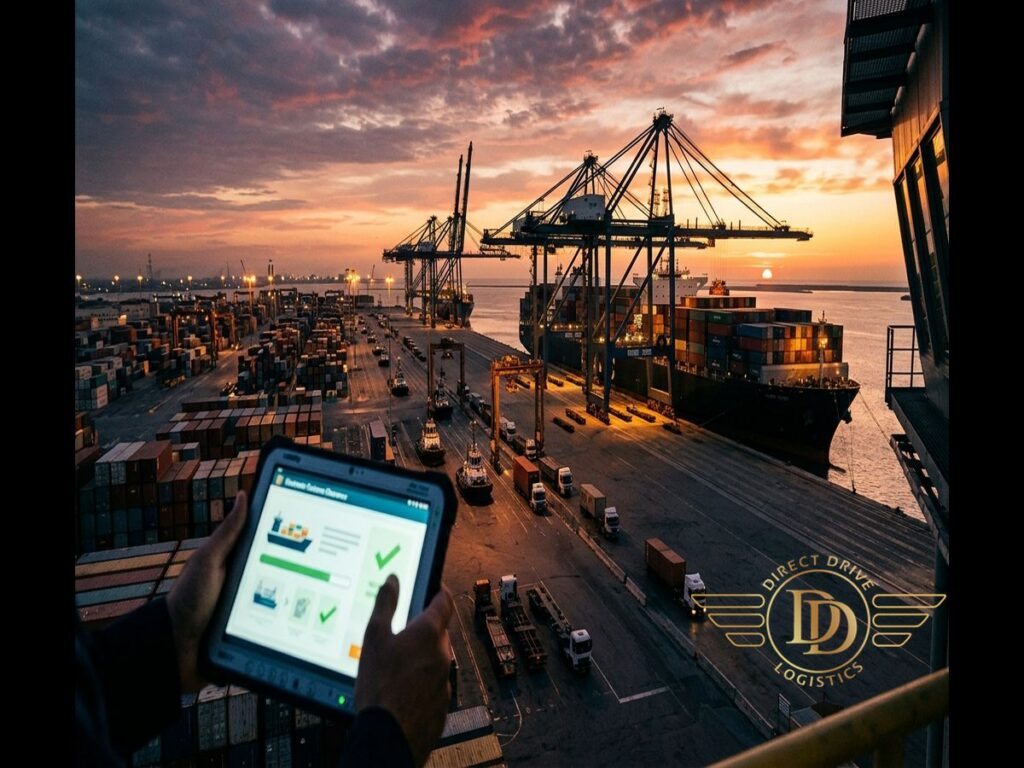
Discover how iraq export paperwork can transform your operations with this is a practical, step-by-step guide for iraqi-based businesses on the specific paperwork required to export goods out of iraq, leveraging our direct, licensed experience at 17 border crossings to navigate both krg and federal customs systems.
Navigating Iraq export paperwork involves preparing an export declaration (Bayan), commercial invoice, packing list, and often a Certificate of Origin (COO). As of 2026, the Iraqi Customs Authority (ICA) is digitizing submissions, aiming for a 20-25% reduction in physical document handling, especially at Umm Qasr and Baghdad International Airport, which can cut clearance delays by 1-2 days.
When your cargo is stuck at the border for 5 days due to incorrect documentation, the costs quickly escalate, potentially reaching USD 800+ in storage fees. Missing a specific export license, which costs approximately IQD 100,000 (around USD 68), can halt your entire shipment. This guide provides Iraqi-based businesses with a practical, step-by-step approach to the specific paperwork required to export goods *out of* Iraq, leveraging direct, licensed experience at 17 border crossings to navigate both KRG and federal customs systems.
We will explore essential documents like the export declaration (Bayan), a mandatory customs document detailing the goods being exported, their value, and destination, crucial for all shipments. We’ll also cover the nuances of Certificates of Origin (COO), official documents certifying the country where goods were produced, vital for preferential trade agreements and often seeing a 15% increase in demand for non-oil exports from Iraq (2025-2026). Furthermore, understanding specific Iraqi labeling and packaging requirements is critical to avoid delays.
This article addresses common paperwork mistakes that delay exports, details how to correctly prepare commercial invoices, and clarifies when special permits are needed, particularly for dual-use goods, which faced an 8-12% increase in inspection rates in 2025. You will also learn about the attestation process for commercial documents at the Iraq Embassy, a critical step for international recognition. By the end, you will be able to create a compliant export documentation checklist, transforming your operations and enhancing efficiency.
Navigating Iraq’s Digital Shift: Streamlining Export Declarations
Understanding the Iraqi Customs Authority’s Push for Digital Submissions
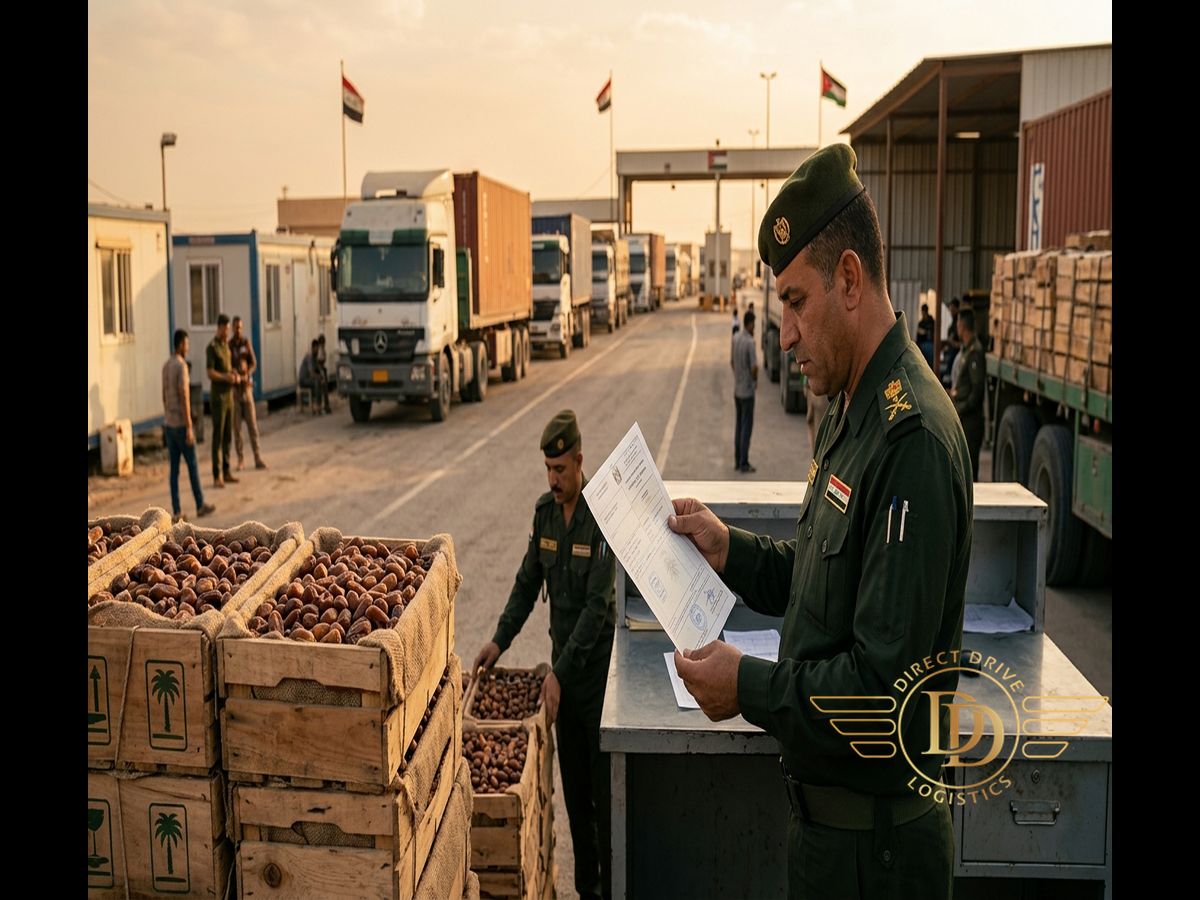
The correct preparation of Iraq export paperwork is transitioning from physical to digital. The Iraqi Customs Authority (ICA) is actively rolling out its electronic export declaration system, aiming to reduce physical document handling by 20-25% at major hubs like the Port of Umm Qasr. This digital customs clearance initiative is designed to accelerate trade for businesses that are properly prepared.
Successfully using the Iraqi customs online portal can significantly cut down on processing times. For standard cargo, customs clearance at the Port of Umm Qasr averages 48-72 hours. However, accurate and complete digital submissions can reduce these delays by a critical 12-24 hours, directly impacting your delivery schedule and reducing demurrage risk.
One mistake we see regularly is a mismatch between the digitally submitted Commercial Invoice and the physical Packing List. This error, often a simple data entry mistake, flags the entire shipment for manual inspection, leading to rejections and delays of 3-5 days. This completely negates the speed advantage of electronic submission and highlights the need for meticulous pre-submission audits. For businesses seeking to streamline their operations, understanding import export compliance Iraq is crucial.
As a government-licensed clearing agent at the Port of Umm Qasr, our team operates directly within this evolving digital framework. We ensure your documentation aligns with all current Iraqi documentation requirements before it ever reaches a customs official. This direct-access capability, which most forwarders lack, is how we executed a 48-hour clearance for time-sensitive medical equipment arriving from Dubai. Our expertise also extends to providing comprehensive Iraq export CO services for various shipments.
Your next step: Before your next shipment, have our team pre-audit your export declaration (Bayan) and supporting documents to catch errors that typically cause 3-5 day delays at the port.
Essential Certificates of Origin for Iraqi Non-Oil Exports: What You Need to Know

The Critical Role of the COO in Securing Market Access and Tariff Benefits
For Iraqi businesses expanding globally, the Certificate of Origin (COO) is a fundamental piece of Iraq export paperwork. It officially declares that your goods were produced, manufactured, or processed in Iraq. This document is non-negotiable for accessing preferential tariffs under trade agreements and satisfying customs authorities in your target market, a growing necessity as Iraq’s non-oil exports reached USD 4.2 billion in 2025, a 7.7% increase from the previous year.
Securing the correct proof of origin for Iraqi goods is vital for products like dates, construction materials, and other agricultural goods driving this export growth. In early 2026, the Erbil Chamber of Commerce began an electronic Certificate of Origin (e-COO) pilot, which has already reduced processing times by 20-30% for participating exporters. This digitization streamlines a traditionally paper-heavy process, cutting a 2-3 day wait down to just 1-2 days for KRG-based businesses.
In our operations across Iraq’s 17 border crossings, we consistently see how a correctly filed COO accelerates import export procedures Iraq, especially for agricultural goods destined for the UAE and Jordan. A frequent error in this stage is submitting a COO without the required Chamber of Commerce attestation, which renders the document invalid at the destination port. This oversight can lead to re-export or seizure of goods, completely negating the benefits outlined in the destination country’s import requirements and documentation.
Your next step: Verify the specific COO format required by your buyer’s country and confirm if they accept documents issued under the KRG’s e-COO pilot program. Contact our team to manage the attestation process and ensure compliance.
Securing Specific Licenses for Exporting from Iraq: A Step-by-Step Guide
Identifying Controlled Goods and Your Specific Licensing Needs
Successfully navigating Iraq export paperwork begins with correctly identifying if your goods require a special license. While standard items may only need a customs declaration, strategic goods, certain chemicals, agricultural products, and antiquities fall under stricter controls. As Iraq’s non-oil exports are projected to hit USD 5.5 billion by 2028, the variety of goods leaving the country is expanding, increasing the complexity of this first step.
In our experience handling over 300 Iran-Iraq cross-border shipments, we consistently see delays caused by misclassifying goods. A product considered unrestricted for export from the Kurdistan Region might be a controlled good requiring a Ministry of Trade export license when exiting through a Federal port like Umm Qasr. Verifying your product’s Harmonized System (HS) code against both KRG and Federal lists is a non-negotiable preliminary check. For efficient export logistics for traders, accurate classification is paramount.
The Step-by-Step Iraqi Export Permit Application Process
Once you confirm a license is needed, the application process is methodical. With an estimated 40% of export declarations in Federal Iraq expected to be digital by 2027, familiarizing yourself with online portals now provides a significant advantage. A frequent error at this stage is submitting documents with mismatched company details, which causes automatic rejection and forces the process to restart. Understanding Iraq trade routes can also streamline your planning.
- Step 1: Assemble Core Documents — Prepare your company’s valid commercial registration, tax clearance certificate, a detailed commercial invoice, and a comprehensive packing list. Ensure all names and addresses match exactly across all forms.
- Step 2: Complete the Application Form — Obtain the correct export license application from the Iraqi Ministry of Trade or the relevant authority for your specific product. This form requires precise details about the goods, their value, destination, and the end-user.
- Step 3: Submit and Track — File your completed application package, including all supporting official export documents, with the appropriate ministry. Receive a submission reference number and use it to track your application’s status, being prepared to respond quickly to any requests for additional information.
Your next step: Compile your commercial invoice and packing list. Cross-reference your product’s HS code with the Iraqi Ministry of Trade’s list of controlled goods before starting the application.
Iraqi Labeling and Packaging Requirements: Examples and Compliance Checklist
Mandatory Information for Product Labels: Language and Country of Origin Rules
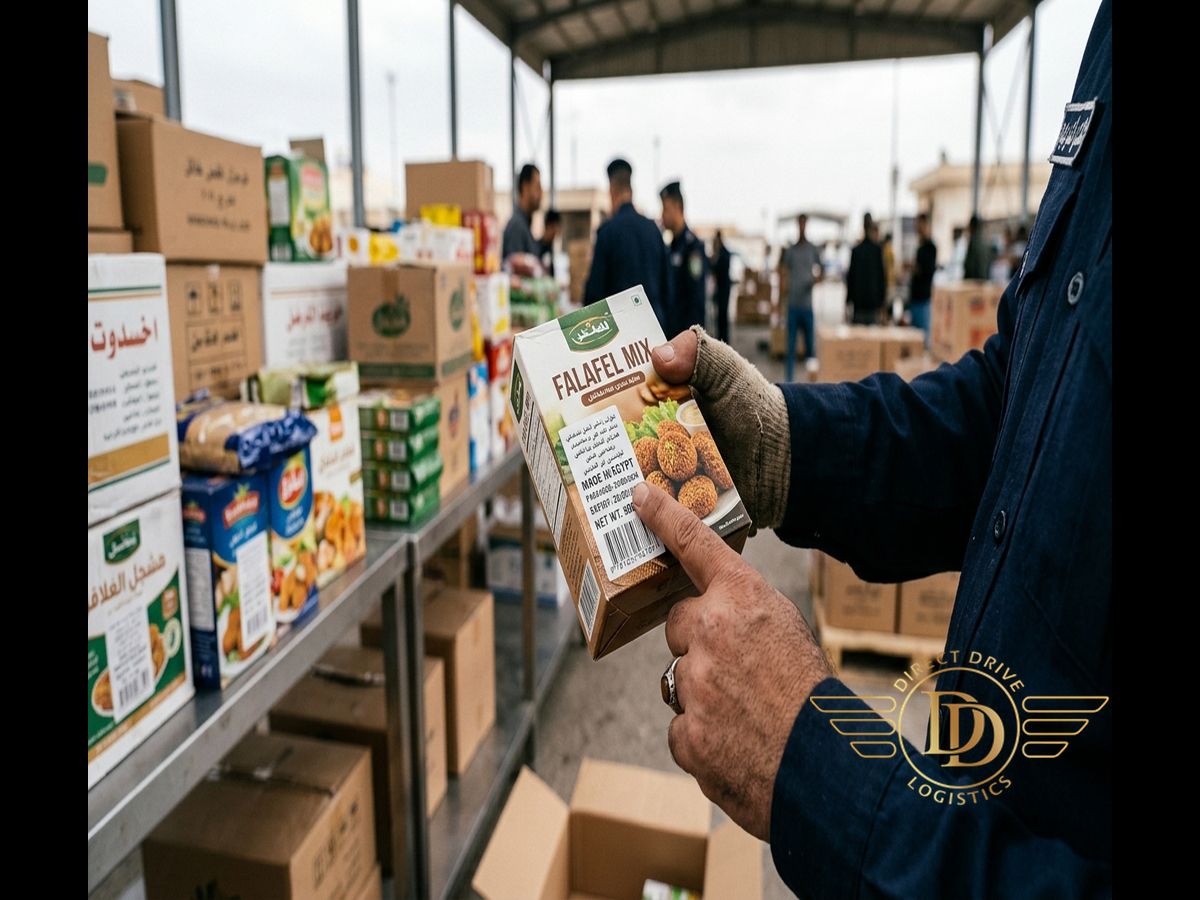
Incorrect product labeling is a primary cause of customs delays, complicating your Iraq export paperwork from the start. All goods exported from Iraq must clearly display the country of origin. The label must be in Arabic, and for most international destinations, English is also required. The information on the physical label must perfectly match the details on your Certificate of Origin (COO) and commercial invoice.
In our operations across Iraq, we consistently see shipments delayed because a minor discrepancy between the product label and the COO flags an entire container for manual inspection. With demand for COOs for non-oil exports having increased by 15% in 2025-2026, officials are scrutinizing this alignment more closely than ever. Our quad-language team, fluent in Arabic, Kurdish, Farsi, and English, verifies this alignment as a standard step in our process.
Special Packaging and Labeling Regulations for Foodstuffs and Medical Goods
For sensitive items like food and medical supplies, regulations are even stricter. Labels must include production and expiration dates, batch numbers, and any relevant health warnings in both Arabic and English. These details are cross-referenced against your other export document requirements. A frequent error in this stage is neglecting to include specific storage temperature requirements on the outer packaging, which can lead to spoilage and liability issues.
The rise in specialized exports, reflected by the approximately 12,500 Certificates of Origin issued by the Erbil Chamber of Commerce in 2025, means more scrutiny on these niche requirements. Packaging must be robust enough for the transit route, whether it’s a short domestic transfer or a multi-day journey through one of the 17 border crossings we service. For efficient movement of goods within the country, reliable Iraq local transportation is essential.
Your next step: Send our team photos of your current product labels and outer packaging. We will provide a free compliance check against both Iraqi export and destination country import regulations within 48 hours.
Attesting Commercial Documents at the Iraq Embassy: A Global Perspective
The Standard Process for Attesting Commercial Documents
Properly legalized documents are a non-negotiable part of the Iraq export paperwork required by Iraqi Customs. This process, known as attestation or legalization, verifies the authenticity of your commercial invoice and certificate of origin. It must be completed at the Iraqi Embassy or Consulate in the country where the goods originate before they ship.
While embassy fees vary, the costs for document preparation and agent services can add between USD 34 and USD 102 to each shipment. In our operations across more than 100 international freight movements, we have found that having a team fluent in Arabic is critical for liaising with embassy staff, preventing minor language misunderstandings from causing major delays.
A frequent error in this stage is assuming the process is the same globally. Failing to follow the precise sequence of local and embassy-level stamps is a common cause of document rejection, which can easily add 3-5 days of costly delays at the Iraqi border. For similar complexities, understanding Iran trade compliance is also crucial for seamless operations.
Country-Specific Attestation Requirements at Iraqi Embassies
The requirements for commercial invoice legalization in Iraq are not standardized across all diplomatic missions. For example, the Iraqi Embassy in the UAE may have different procedural steps or fees compared to the one in Turkey or India. Most processes require a preliminary stamp from the origin country’s Chamber of Commerce before the documents can be presented to the Iraqi Embassy.
Exporters must confirm the exact sequence for their specific location. The certificate of origin attestation, for instance, often requires this dual-validation path. This step validates the goods’ origin for customs and duty assessment and is scrutinized by both Federal and KRG customs authorities.
Your next step: Contact the commercial section of the Iraqi Embassy in your country of export to obtain their most current checklist and fee schedule for document attestation. Ask specifically if pre-certification by a local Chamber of Commerce is required.
Send your cargo details to Direct Drive Logistic on WhatsApp — get a route-specific checklist and quote within 24 hours.
Message on WhatsAppWhy Choose Direct Drive Logistic?
Offices in Erbil (HQ) + Tehran (Nasim Shahr Terminal); warehouses in Zakho, Erbil, Basra, and Tehran (2,000 sqm)
Government-licensed clearing agent — direct port access for sea freight into southern Iraq
2,500+ Iraq domestic deliveries, 300+ Iran-Iraq cross-border, 100+ international freight; air freight handler at Erbil, Baghdad, and Basra airports
Operational at 6 KRG borders (Parviz Khan, Bashmagh, Haji Omran, Ibrahim Khalil, Sheikh Saleh, Shoshmi), 5 federal Iran-Iraq borders (Khosravi, Sumar, Mehran, Shalamcheh, Chazzabeh) and 6 further federal crossings (Trebil, Arar, Safwan, Al-Qaim, Al-Rabia, Al-Waleed), plus Bandar Abbas port
Full operational fluency in Farsi, Arabic, Kurdish, and English — client-facing and documentation
~10 trucks/day from Erbil hub covering Baghdad, Karbala, Najaf, Basra, Kut (Wasit), Diyala, Nasiriyah, and all Iraqi governorates
Frequently Asked Questions
Essential documents for exporting goods from Iraq typically include the Commercial Invoice, Packing List, Certificate of Origin (COO), Export Declaration (Bayan), and a Bill of Lading or Air Waybill. This paperwork can be complex due to evolving regulations, especially the Iraqi Customs Authority’s (ICA) increasing move towards electronic submissions, which aims to reduce physical paperwork by 30% by late 2026. Furthermore, heightened scrutiny on dual-use goods means that specific industrial machinery and chemicals faced an 8-12% increase in additional review or inspection at borders like Ibrahim Khalil and Umm Qasr in 2025, demanding meticulous documentation.
Common pitfalls in Iraq export documentation include delays due to incomplete or inaccurate paperwork, misclassification of goods, and a lack of understanding of regional variations in requirements, such as those between Federal Iraq and the Kurdistan Region (KRG). For example, the official government fee for an export license from the Iraqi Ministry of Trade is approximately IQD 100,000 (around USD 68), but additional costs can arise from document preparation or agent fees, ranging from IQD 50,000 to IQD 150,000. Exporters of non-oil products, like agricultural goods, also face increased demand for Certificates of Origin (COO), with the Erbil Chamber of Commerce issuing approximately 12,500 COOs in 2025, highlighting their criticality for market access.
A specialized service provider like Direct Drive Logistic can significantly streamline Iraq export paperwork by offering expertise in local regulations and digital submission processes. Our 10 years of experience in the region, coupled with a quad-language operations team fluent in Farsi, Arabic, Kurdish, and English, ensures accurate documentation and effective communication with authorities. For instance, our licensed clearing agent status at the Port of Umm Qasr allows for direct clearance, as demonstrated by a medical equipment shipment from Dubai to Baghdad that cleared in 48 hours, eliminating the need for third-party brokers and saving significant port storage and demurrage fees.
A standout export documentation service provider for the Iraq market offers deep local expertise, a robust operational network, and a proven track record of reliability and security. Direct Drive Logistic distinguishes itself with a 17-border crossing network, spanning every land frontier into Iraq, including 6 KRG borders and 5 federal Iran-Iraq borders. This extensive network enables us to re-route shipments without delay, as seen when we successfully navigated primary border congestion for an FMCG shipment from Tehran to Baghdad, delivering within the original 4-5 day timeline. Our ability to manage the full intermodal corridor, from ocean freight to Iranian CMR transit and KRG import clearance, under a single operator also eliminates coordination risks.
A reliable provider offers tangible proof of expertise and operational capacity, such as official licenses, a wide network, and a high volume of successful operations. Direct Drive Logistic, for example, maintains a dual-country physical presence with offices in Erbil (HQ) and Tehran, along with warehouses in Zakho, Erbil, Basra, and Tehran. We are an official licensed clearing agent at the Port of Umm Qasr and have successfully completed over 2,900 shipments, including 2,500+ Iraq domestic deliveries and 300+ Iran-Iraq cross-border movements. Our daily scheduled departures from Erbil to all Iraqi governorates, averaging ~10 trucks per day, further demonstrate our consistent operational capacity and commitment to reliable service.
Key documents serving as proof of export from Iraq include the stamped Export Declaration (Bayan) by Iraqi Customs, the Bill of Lading or Air Waybill endorsed by the carrier, and the Certificate of Origin. Choosing the right partner for your Iraq export paperwork needs requires evaluating their specific experience, local presence, and problem-solving capabilities. Look for a provider with at least 10 years of experience in the region, a strong understanding of both Federal Iraq and KRG regulations, and a proactive approach to potential challenges. Prioritize partners who can offer comprehensive solutions, such as Direct Drive Logistic, who can manage complex scenarios like resolving temporary import licenses with KRG border authorities in just one day, as we did for an electronics shipment from Mersin to Erbil.
Conclusion
Mastering Iraq export paperwork is not merely a bureaucratic hurdle; it is the cornerstone of efficient, compliant, and profitable international trade. The shift towards digital declarations by the Iraqi Customs Authority, coupled with stringent requirements for Certificates of Origin, specific licenses for controlled goods, precise labeling, and embassy attestations, underscores the complexity. Successfully navigating these demands ensures market access and avoids costly delays or penalties, as evidenced by the critical role of accurate documentation in securing tariff benefits for non-oil exports.
To confidently manage your next shipment, first verify that your commercial invoice precisely matches your Certificate of Origin and that your chosen Incoterms are clearly defined. Next, ask your current freight forwarder how they manage the digital submission process with the Iraqi Customs Authority and what specific measures they take to prevent labeling non-compliance. Finally, leverage Direct Drive Logistic’s deep expertise in Iraqi export regulations to streamline your operations and ensure seamless compliance from origin to destination.
Direct Drive Logistic offers unparalleled expertise in handling intricate iraq export paperwork, providing a secure and reliable pathway for your goods. Our dual-country physical presence, with offices in Erbil and Tehran, and our quad-language operations team ensure clear communication and meticulous document preparation, eliminating common pitfalls. For a partnership that prioritizes your success and peace of mind in the Iraqi market, contact Direct Drive Logistic today at (+964) 750 637 9296.
Need Logistics Consultation?
The Direct Drive team is ready to assist. Message us now.
Navigate the complexities of Iraq export paperwork with ease and confidence. Secure your shipments and avoid costly delays by leveraging Direct Drive Logistic’s expert services today. Call us at (+964) 750 637 9296 to streamline your next export.
Get Your Free Quote NowContact Us for a Consultation
Location
Direct Drive Logistic
Gulan Street, MRF Quattro Block A 13-9
Erbil, Kurdistan Region