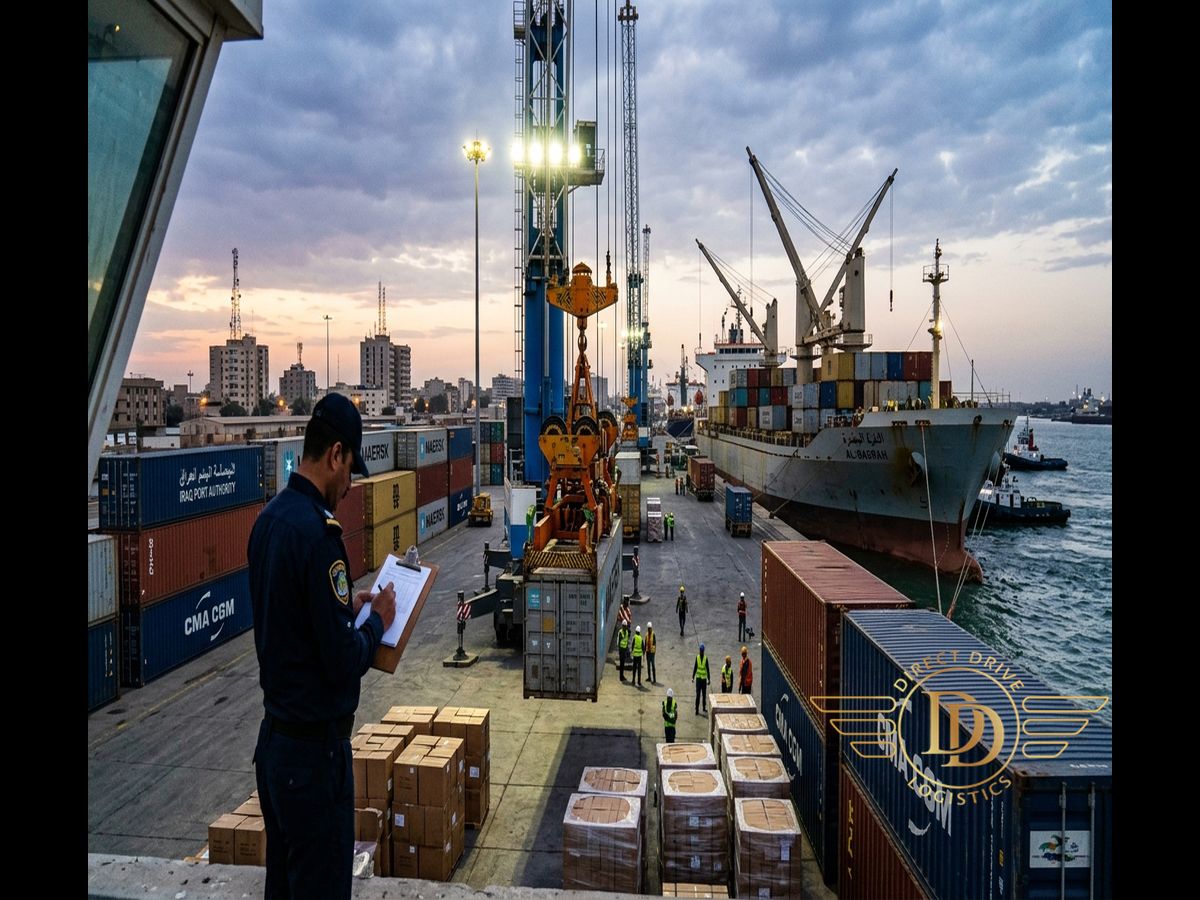
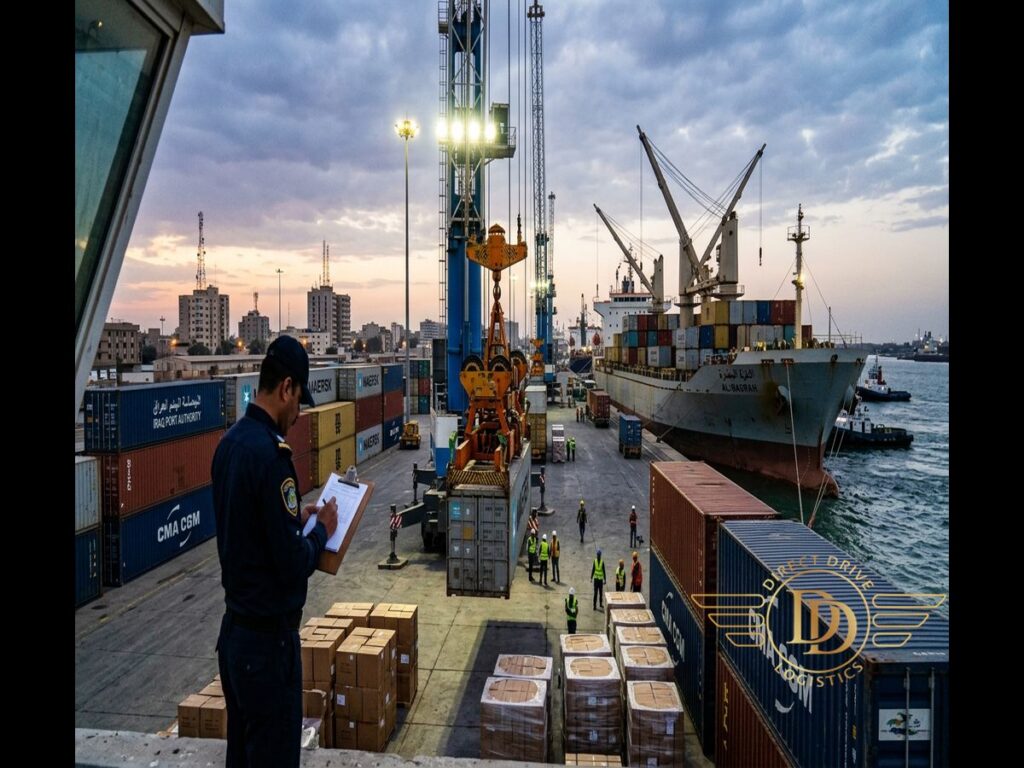
Discover how coc certificate iraq can transform your operations with this guide demystifies iraq’s coc process by showing how an integrated logistics partner with a licensed clearing agent at the port of umm qasr and a 15-crossing land border network prevents compliance failures before they happen.
The Iraq Certificate of Conformity (CoC) is a mandatory document for many goods entering Iraq, verifying that products meet Iraqi technical regulations and safety standards. Issued by accredited inspection bodies, the CoC is crucial for customs clearance, preventing delays and ensuring market access for imported items.
When your cargo is stuck at the border for 5 days due to missing CoC documentation, it can easily incur USD 800+ in demurrage and storage fees. Missing one customs document can delay your Iraq shipment by 3–6 weeks and cost USD 800+ in storage fees. Discover how the coc certificate iraq can transform your operations; this guide demystifies Iraq’s CoC process by showing how an integrated logistics partner with a licensed clearing agent at the Port of Umm Qasr and a 15-crossing land border network prevents compliance failures before they happen.
This comprehensive guide explores the complexities of the coc certificate iraq, offering actionable insights for logistics managers and business owners. We will cover specific product categories requiring a CoC, the detailed application process, and common pitfalls that lead to delays at Iraqi customs, such as incomplete paperwork or incorrect product classifications. Understanding these nuances is critical for smooth, compliant, and cost-effective shipments.
We’ll also differentiate between CoC enforcement in Federal Iraq and the Kurdistan Region of Iraq (KRG), highlighting how on-the-ground presence in both Iraq and Iran can significantly streamline compliance. The Central Organization for Standardization and Quality Control (COSQC) is the primary Iraqi authority overseeing these standards. This article equips you with a complete Iraq export checklist, from CoC acquisition to final delivery, ensuring you navigate these regulations with confidence.
Complete Guide to Coc Certificate Iraq
What is an Iraqi Certificate of Conformity (CoC) and Why is it Mandatory?
A coc certificate iraq is a mandatory import document verifying that your products meet national safety and quality standards. Mandated by Iraq’s Central Organization for Standardization and Quality Control (COSQC), this certificate is a non-negotiable requirement under the updated 2025-2026 Import and Standardization Program (ISIP). Its purpose is to ensure that goods entering the country are safe for consumers and compliant with Iraqi technical regulations.
Securing this product conformity assessment is a pre-shipment requirement, not a post-arrival option. The standard issuance time is 7-14 working days from the submission of correct documentation and a successful physical inspection. In our operations, managing over 300 Iran-Iraq cross-border shipments, we consistently see that failing to start the CoC process before cargo departs is the single largest source of costly delays at crossings like Parviz Khan and Shalamcheh.
One mistake we see regularly is shippers underestimating the documentation lead time and treating the CoC as a simple formality. The cost for a standard certificate typically ranges from USD 350 to USD 700 per shipment from accredited bodies. This fee is minor compared to the demurrage and re-export costs incurred when cargo arrives without a valid CoC. The entire Certificate of Conformity for process is designed to prevent substandard goods from entering the market, and COSQC enforcement at ports like Umm Qasr is strict. For other essential trade documents, consider our expert certificate of origin Iraq services to streamline your exports.
Your next step: Identify your product’s HS code and send it to our compliance team. We can confirm within 24 hours if it falls under the regulated product list and requires a CoC.
Goods Requiring a COC for Iraq: Key Categories & Exceptions
Mandatory Regulated Product Categories for Iraqi Imports
Determining if your goods require a coc certificate iraq is the first critical step for customs clearance Iraq. The list of regulated items is not static; Iraq’s Central Organization for Standardization and Quality Control (COSQC) regularly updates it. As of early 2026, new circulars expanded the list to include specific household electronics and automotive spare parts, adding an estimated USD 500 million in annual import value to the program.
The Iraq Conformity Assessment Program, also known as ICIGI, covers a broad range of goods. Key categories include toys, electrical and electronic products, vehicle tires and spare parts, construction materials, household hardware, kitchenware, and specific food items. For a comprehensive overview of the ISIP program regulated goods, exporters should consult the latest official directives. Misclassifying your product can lead to significant delays and costs at the border.
| Metric | Value | Source |
|---|---|---|
| Annual Value of Newly Regulated Goods | ~USD 500 million | COSQC Circulars (Q1 2026) |
| Impact on Previously Unregulated Imports | 8-10% increase | COSQC Circulars (Q1 2026) |
In our operations across Iraq’s 15 land borders, we consistently see shipments of automotive parts, like brake pads and oil filters, delayed at crossings from Turkey into the Kurdistan Region. This is a frequent error stemming from shippers being unaware of the early 2026 regulation changes. This increased scrutiny, which began in late 2025, has already caused a 10-15% rise in delays due to documentation issues at federal Iraq customs clearance.
Your next step: Send our team your product’s HS code and description. We will confirm its CoC status within 24 hours based on the latest COSQC directives.
The COC Application Process: Step-by-Step Guide & Required Documents
Step 1: Initiating Your Application and Compiling the Required Documents
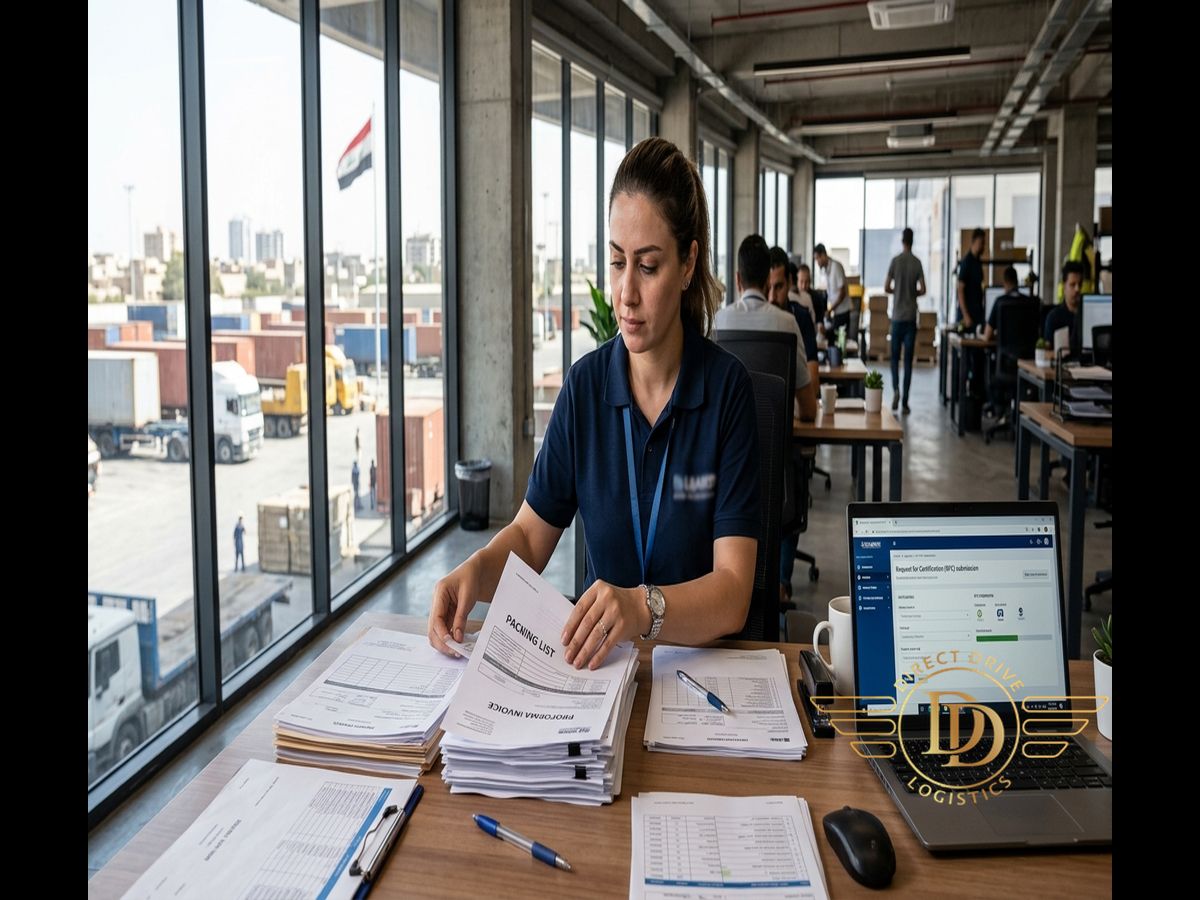
Securing an Iraq CoC begins with meticulous documentation. The initial step is submitting a Request for Certification (RFC) to an accredited inspection body. This must be accompanied by a proforma invoice, a detailed packing list, and any relevant product technical datasheets or test reports. The shift to digital processing is significant; as of 2025, approximately 35% of applications were submitted online, a figure projected to reach 60% by 2028.
A frequent error in this stage is a mismatch between the commercial invoice and the RFC form; even minor differences in HS codes or declared values can lead to immediate rejection. In our operations at Direct Drive Logistic, we leverage our official government clearing agent license at the Port of Umm Qasr to manage this process directly. This was key in a recent shipment of medical equipment from Dubai to Baghdad, where our direct oversight ensured document alignment and achieved cargo clearance services Iraq in just 48 hours, bypassing third-party broker delays.
Step 2: The Pre-Shipment Inspection (PSI) and Product Testing Process
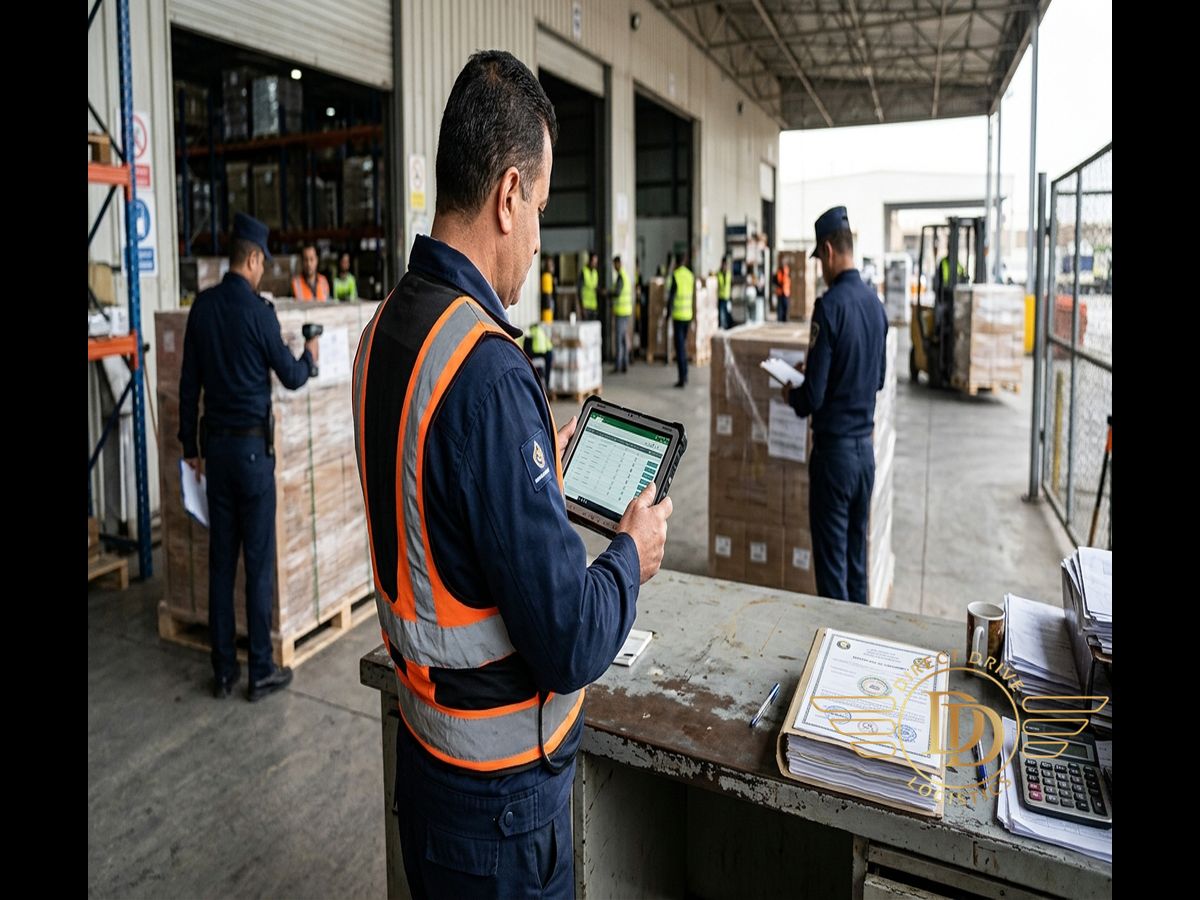
Once your documents are accepted, the accredited body schedules a Pre-Shipment Inspection (PSI). An inspector physically verifies that the goods match the documentation, checks for correct labeling and marking per Iraqi standards, and confirms quantities. This inspection is a mandatory part of Iraq’s Verification of Conformity program and is designed to prevent substandard or non-compliant goods from entering the country.
For certain regulated products, such as electronics or toys, the inspector will take samples for laboratory testing to ensure they meet specific safety and quality benchmarks. Our team at Direct Drive Logistic has found that coordinating closely with the inspection agency to prepare cargo for easy access and sampling can shorten the PSI timeline by a full day. Upon successful completion of the inspection and any required testing, the final coc certificate iraq is issued, typically in electronic format, ready for Iraq cargo clearance upon arrival.
Your next step: Assemble your proforma invoice and packing list. Send them to our compliance team for a complimentary pre-check to identify potential rejection flags before you formally apply.
Overcoming COC Challenges: Delays, Border Congestion & Expert Solutions
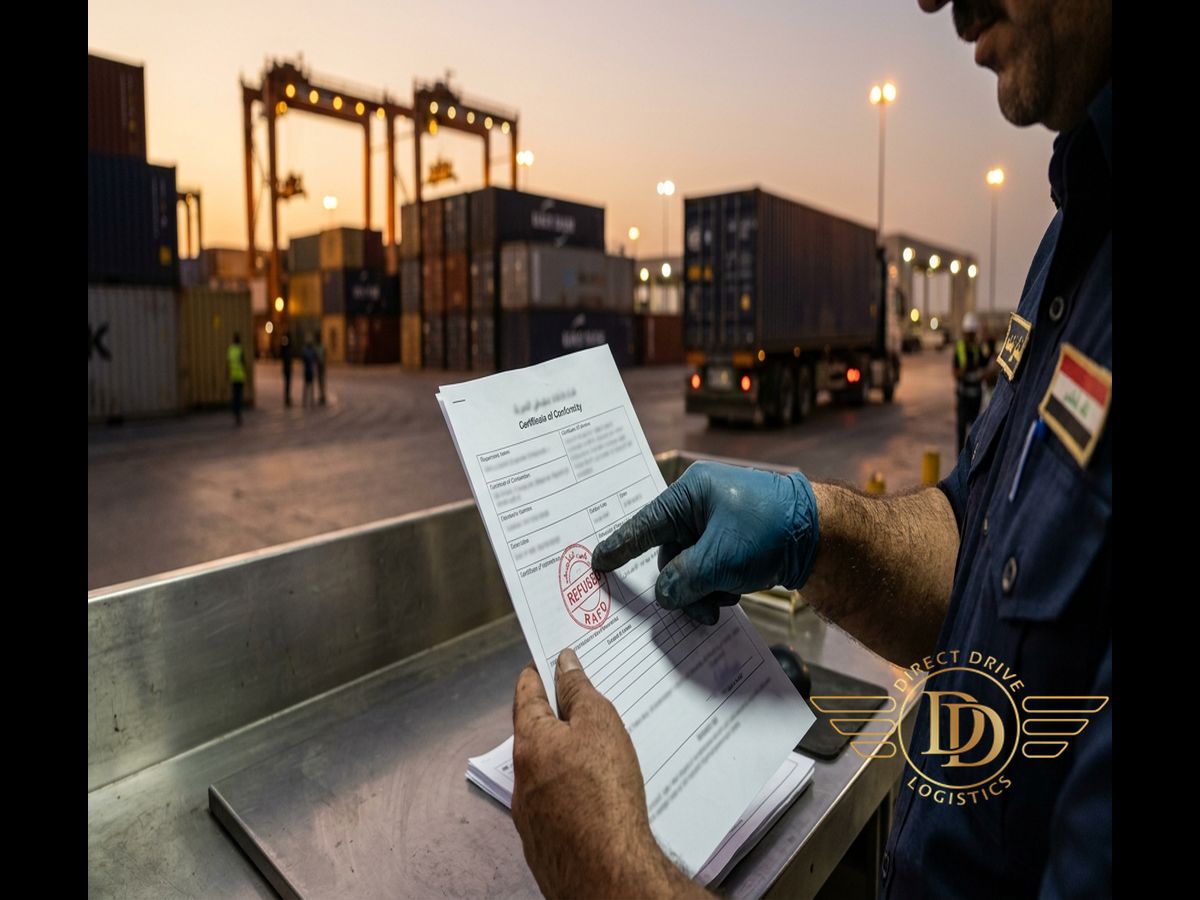
Common Pitfalls: Why CoC Applications Are Rejected at Iraqi Customs
Navigating the requirements for a coc certificate iraq can be complex, and simple errors often lead to costly rejections. In Q2 2026 alone, an estimated 25% of regulated shipments faced additional scrutiny or documentation requests related to CoC compliance. This level of enforcement means that incomplete or inaccurate applications are almost certain to be flagged.
One mistake we see regularly is a mismatch between the HS codes on the commercial invoice and the product description provided to the inspection body. This discrepancy is a primary trigger for rejection. Embracing digitalization can mitigate these risks; a Q1 2026 pilot program for Iraq’s CoC program showed that digital submissions reduced initial application processing times by 12%, largely by minimizing manual data entry errors.
Navigating Bottlenecks: Managing Delays at Ibrahim Khalil and Umm Qasr Ports
Documentation failures directly translate into physical delays at Iraq’s busiest entry points. For cargo moving on the popular Mersin to Baghdad route via the Ibrahim Khalil border, incomplete CoC paperwork resulted in an average clearance delay of 1-2 days. These delays create demurrage charges and disrupt supply chains, turning profitable shipments into losses.
In our operations at the Port of Umm Qasr, we consistently see that having a direct, licensed presence is the most effective way to iraq prohibited and restricted goods from escalating. As a government-licensed clearing agent, our team can interface directly with customs authorities to resolve discrepancies on the spot. This capability, combined with our operational network across 15 Iraqi border crossings, provides the flexibility to manage and mitigate potential Iraqi customs clearance delays before they impa
Your next step: Before your next shipment, have our team conduct a pre-verification check of your CoC documentation against your commercial invoice to ensure 100% consistency.
KRG vs. Federal Customs: Navigating CoC Enforcement at Iraqi Borders
Divergent Certificate of Conformity Policies: Federal Iraq vs. KRG
Navigating Iraq’s import landscape requires understanding its dual customs system. Federal Iraq, governed by Baghdad, and the semi-autonomous Kurdistan Region of Iraq (KRG) operate separate customs authorities with distinct enforcement protocols for the coc certificate iraq. While both systems aim for product safety, their interpretation and application of standards can vary significantly, impacting routing, costs, and clearance times.
The federal system, managed by the Central Organization for Standardization and Quality Control (COSQC), strictly adheres to national import programs. In contrast, KRG customs at borders like Ibrahim Khalil or Parviz Khan may have slightly different procedural nuances. A frequent error is assuming a single customs payment at a KRG entry point covers transit to federal territory. This often leads to the costly surprise of “Iraq customs double duty” at federal checkpoints south of Kurdistan.
In our operations across Direct Drive Logistic’s 15 border crossings, we consistently see this dual system in action. A shipment from Turkey to Baghdad via the KRG’s Ibrahim Khalil border requires two separate customs settlements: one with KRG authorities and a second with federal authorities. Planning for this is not an exception; it is the rule for compliant, predictable transit.
Border-Specific Procedures: Ibrahim Khalil (KRG) vs. Umm Qasr (Federal)
The choice of entry point—the KRG’s primary land border at Ibrahim Khalil or Federal Iraq’s main seaport at Umm Qasr—dictates the entire clearance workflow. While obtaining a CoC takes a standard 7-14 working days, the on-the-ground enforcement at these ports determines actual cargo release speed. Even an expedited CoC, which can cost a 20-30% premium for a 3-5 day turnaround, won’t prevent delays if your logistics plan clashes with port-specific rules.
Umm Qasr, as a federal port, is directly supervised by COSQC, involving rigorous, by-the-book inspections. Ibrahim Khalil, managed by KRG authorities, has its own established clearance process. The key difference lies in tariff settlement and finality. Clearance at Umm Qasr is final for all of Iraq, whereas clearance at Ibrahim Khalil is final only for the KRG. Our licensed clearing agents at Umm Qasr provide direct port access, bypassing the third-party brokers often required for complex federal clearances, which is a key part of the Iraqi conformity program.
| Feature | Ibrahim Khalil Border (KRG) | Port of Umm Qasr (Federal) |
|---|---|---|
| Governing Authority | Kurdistan Regional Government (KRG) Customs | Federal Government of Iraq / COSQC |
| Tariff Settlement | Paid to KRG; valid only within KRG territory | Paid to Federal Govt; valid for all of Iraq |
| Onward Transit to Federal Iraq | Requires a second federal customs declaration and payment | No further customs payments required |
| CoC Enforcement | Adheres to KRG standards and approved lists | Strict adherence to Federal COSQC mandates |
Your next step: Provide our team with your cargo’s HS codes and final destination city. We will map the optimal entry point and provide a fully landed cost estimate, including all anticipated customs duties, within 24 hours.
Send your cargo details to Direct Drive Logistic on WhatsApp — get a route-specific checklist and quote within 24 hours.
Message on WhatsAppWhy Choose Direct Drive Logistic?
Offices in Erbil (HQ) + Tehran (Nasim Shahr Terminal); rentable warehouse space in Baghdad, Karbala, Najaf, Erbil, Duhok and Basra, plus a warehouse in Tehran
Government-licensed clearing agent — direct port access for sea freight into southern Iraq
2,500+ Iraq domestic deliveries, 300+ Iran-Iraq cross-border, 100+ international freight; air freight handler at Erbil, Baghdad, and Sulaymaniyah airports
Operational at 4 KRG borders (Parviz Khan, Bashmagh, Haji Omran, Ibrahim Khalil) plus the Sheikh Saleh border market, 5 federal Iran-Iraq borders (Khosravi, Sumar, Mehran, Shalamcheh, Chazzabeh) and 6 further federal crossings (Trebil, Arar, Safwan, Al-Qaim, Al-Rabia, Al-Waleed), plus Bandar Abbas port
Full operational fluency in Farsi, Arabic, Kurdish, and English — client-facing and documentation
~10 trucks/day from Erbil hub covering Baghdad, Karbala, Najaf, Basra, Kut (Wasit), Diyala, Nasiriyah, and all Iraqi governorates
Frequently Asked Questions
A Certificate of Conformity (CoC) for Iraq is a mandatory document issued by an accredited inspection body, verifying that imported goods comply with Iraq’s technical regulations and safety standards set by the Central Organization for Standardization and Quality Control (COSQC). It is essential because, as of early 2026, COSQC has intensified its enforcement of the Iraq’s Import and Standardization Program (ISIP), with an estimated 25% of all regulated shipments to Federal Iraq and KRG facing additional scrutiny in Q2 2026 if CoC documentation is incomplete. Without a valid CoC, shipments risk significant delays, penalties, or even rejection at major entry points like Umm Qasr and Ibrahim Khalil.
Obtaining a CoC certificate for Iraq involves several key steps and documentation requirements. First, identify if your product is on COSQC’s regulated list, which was updated in early 2026 to include certain electronics and automotive spare parts. The process typically begins with submitting a complete application to an accredited inspection body (e.g., Intertek, SGS, Bureau Veritas), including proforma invoices, packing lists, product test reports, and quality management system certificates. Next, the inspection body conducts a physical inspection of the goods, often at the point of origin, to verify compliance. Once all documentation is approved and the inspection is satisfactory, the CoC is issued. The standard duration for this process is 7-14 working days from complete document submission and successful inspection.
Securing a CoC for Iraq, especially with complex cross-border logistics, often presents several challenges. A primary pitfall is incomplete or inaccurate documentation, which is the most critical factor affecting CoC issuance speed and can lead to 1-2 day delays at borders like Ibrahim Khalil. Another challenge arises from the shifting product categories under CoC mandate; for instance, early 2026 saw certain electronics and automotive spare parts added, impacting an estimated USD 500 million in annual imports and potentially adding 7-14 days to supply chains if not prepared. Furthermore, managing inspections for goods transiting through multiple countries, such as via Iran to Iraq, requires meticulous coordination to ensure compliance at each stage. Direct Drive Logistic, with its 15-border crossing network and quad-language operations team, helps mitigate these complexities.
A proficient logistics provider can significantly simplify the CoC process and manage the entire supply chain to Iraq by acting as a single point of contact. They can guide businesses through the updated COSQC regulations, which now impact products worth USD 18.5 billion in imports as of 2025. By leveraging strong relationships with accredited inspection bodies, they can expedite documentation submission and inspection scheduling, potentially reducing lead times from the standard 7-14 days to 3-5 days with expedited services. For complex routes like China → Bandar Abbas port, Iran → Erbil, Iraq, Direct Drive Logistic manages the full corridor, including ocean freight, Iranian CMR transit, and KRG import clearance, eliminating three-party coordination and cross-handoff risks, as demonstrated by successful industrial machinery shipments from Jebel Ali, Dubai to Erbil.
A logistics provider is uniquely qualified to handle CoC and complex Iraq shipments, particularly those involving Iran or multiple border crossings, through deep regional expertise and comprehensive operational capabilities. Direct Drive Logistic, with over 10 years of experience in the region, possesses dual-country physical presences in Iraq (Erbil HQ) and Iran (Tehran), along with a 15-border crossing network covering every land frontier into Iraq. This network allows for real-time re-routing, as seen when FMCG goods from Tehran to Baghdad were re-routed through Mehran border crossing without changing the ETA, avoiding delays due to primary border congestion. Their quad-language operations team (Farsi, Arabic, Kurdish, English) also eliminates communication barriers crucial for navigating diverse customs authorities and CoC documentation requirements.
For the most comprehensive, reliable, and compliant solution when exporting to Iraq with CoC requirements, a partner with extensive local presence and a proven track record is crucial. Direct Drive Logistic stands out by offering end-to-end management, from CoC application support to final delivery. They are an official licensed clearing agent at the Port of Umm Qasr, enabling direct clearance within 48 hours for sea freight, eliminating the need for third-party brokers and saving significant port storage and demurrage fees. Furthermore, their daily scheduled departures from the Erbil hub to all Iraqi governorates, operating approximately 10 trucks per day, provide next-day delivery to most cities, offering unparalleled reliability and allowing clients to know exact departure times and ETAs, which is critical for time-sensitive CoC-mandated goods.
Conclusion
Mastering the nuances of the coc certificate Iraq is paramount for uninterrupted trade, particularly given the distinct regulatory landscapes between Federal Iraq and the Kurdistan Region of Iraq (KRG). As highlighted, even a minor discrepancy in documentation can lead to significant delays and rejections at customs, underscoring the critical need for meticulous preparation and expert guidance throughout the CoC application process.
To ensure your next shipment to Iraq proceeds without complications, first, audit your existing product classifications against the mandatory regulated categories for Iraqi imports. Second, ask your current freight forwarder for their specific success rate and documented procedures for handling coc certificate Iraq applications and border challenges, especially concerning the divergent KRG and Federal policies. Finally, consider how Direct Drive Logistic, with our deep-rooted operational expertise across all 15 land borders and official licensing at Port of Umm Qasr, can streamline your compliance.
Direct Drive Logistic offers unparalleled expertise in navigating the complexities of Iraqi import regulations, including the specific requirements for the coc certificate Iraq. Our dual-country physical presence and quad-language operations team ensure clear communication and proactive problem-solving, preventing costly delays. For a reliable, secure, and compliant logistics partner in Iraq, contact us today at (+964) 750 637 9296.
Need Logistics Consultation?
The Direct Drive team is ready to assist. Message us now.
Navigating the complexities of COC certification for Iraq can be a significant hurdle. Let Direct Drive Logistic simplify this process, ensuring your shipments comply seamlessly and arrive on time. Don’t let compliance delays impact your business – call us today at (+964) 750 637 9296 to streamline your COC certification and accelerate your supply chain.
Get Your Free Quote NowContact Us for a Consultation
Location
Direct Drive Logistic
Gulan Street, MRF Quattro Block A 13-9
Erbil, Kurdistan Region