

Discover how iraq prohibited and restricted goods can transform your operations with this is the only guide that explains iraq’s prohibited and restricted goods through the lens of a licensed, on-the-ground operator with a physical presence at 15 border crossings and iraq’s main seaport, umm qasr, offering actionable solutions for navigating both federal and krg customs.
Iraq’s prohibited and restricted goods refer to items absolutely banned from entry or those requiring specific licenses and permits from Iraqi federal or Kurdistan Regional Government (KRG) authorities. Prohibited goods, like narcotics or weapons of mass destruction, are outright forbidden. Restricted goods, such as pharmaceuticals or certain chemicals, can enter only with prior regulatory approval, varying by item and destination within Iraq.
When your cargo is stuck at the border for 3–7 days due to an incorrect HS classification, incurring USD 75–150 per container per day in demurrage, the financial impact quickly escalates. This scenario is increasingly common as Iraq’s customs shifted toward item-based valuation under Council of Ministers Decision No. 957 of 2025. Understanding these nuances is critical for businesses importing into Iraq.
This is the only guide that explains Iraq’s prohibited and restricted goods through the lens of a licensed, on-the-ground operator with a physical presence at 15 border crossings and Iraq’s main seaport, Umm Qasr, offering actionable solutions for navigating both federal and KRG customs. We clarify the critical distinction between “prohibited goods,” which are entirely banned, and “restricted goods,” which may enter with specific government permits.
We will explore how specific agricultural seeds and live animals require special approvals, a detail often overlooked by general logistics providers. Furthermore, we address the strict scrutiny on “harmful materials” and “chemicals,” including the need for specific documentation and adherence to Iraqi customs codes. This guide will equip you to avoid common mistakes that lead to costly delays and fines.
By leveraging insights from an operator with permanent offices in both Iraq and Iran, you will gain unparalleled clarity on navigating these complex regulations. This guide offers a comprehensive breakdown, including specific regulations and documentation for items like pharmaceuticals and advanced electronics, ensuring your shipments comply with both federal Iraq and KRG requirements.
Navigating Iraq’s Evolving Customs: Item-Based Valuation and Digital Declarations

From Fixed Fees to Item-Based Valuation: Understanding Iraq’s New Customs System
Iraq’s customs framework has fundamentally shifted away from older, fixed-fee per container models. The current Iraq customs valuation method now relies on the Harmonized System (HS) code of each specific item in your shipment, creating a more complex but standardized process for calculating duties.
This change, implemented across 2025 and 2026, means duties are now assessed as a percentage of the cargo’s customs value. Rates typically range from 5% for essential goods to as high as 30–40% for luxury or protected items, in addition to a mandatory 3% upfront tax deposit. This item-based system makes accurate HS code classification Iraq a critical financial factor in your landed cost calculations.
A frequent error in this stage is a mismatch between the HS code on the commercial invoice and the code assigned by Iraqi customs inspectors. In our operations at the Port of Umm Qasr, we’ve seen such discrepancies halt clearance, triggering demurrage costs of approximately USD 75–150 per container per day. These delays can easily extend the standard 5–7 day clearance timeline by another week, significantly inflating project costs before cargo even leaves the port.
Navigating this system requires proactive documentation management, as even minor errors can impact Iraqi import trends and clearance speeds at key crossings like Ibrahim Khalil and Parviz Khan. Furthermore, ensuring compliance with Iraq COSQC standards inspection is vital for smooth operations. As a licensed clearing agent with a permanent presence at 15 Iraqi border crossings, we manage this process directly, ensuring classifications are verified before arrival.
Your next step: Send your commercial invoice and packing list to Direct Drive Logistic for a complimentary pre-shipment HS code review to identify potential classification disputes before they cause delays.
Understanding Iraq’s Prohibited and Restricted Import Categories
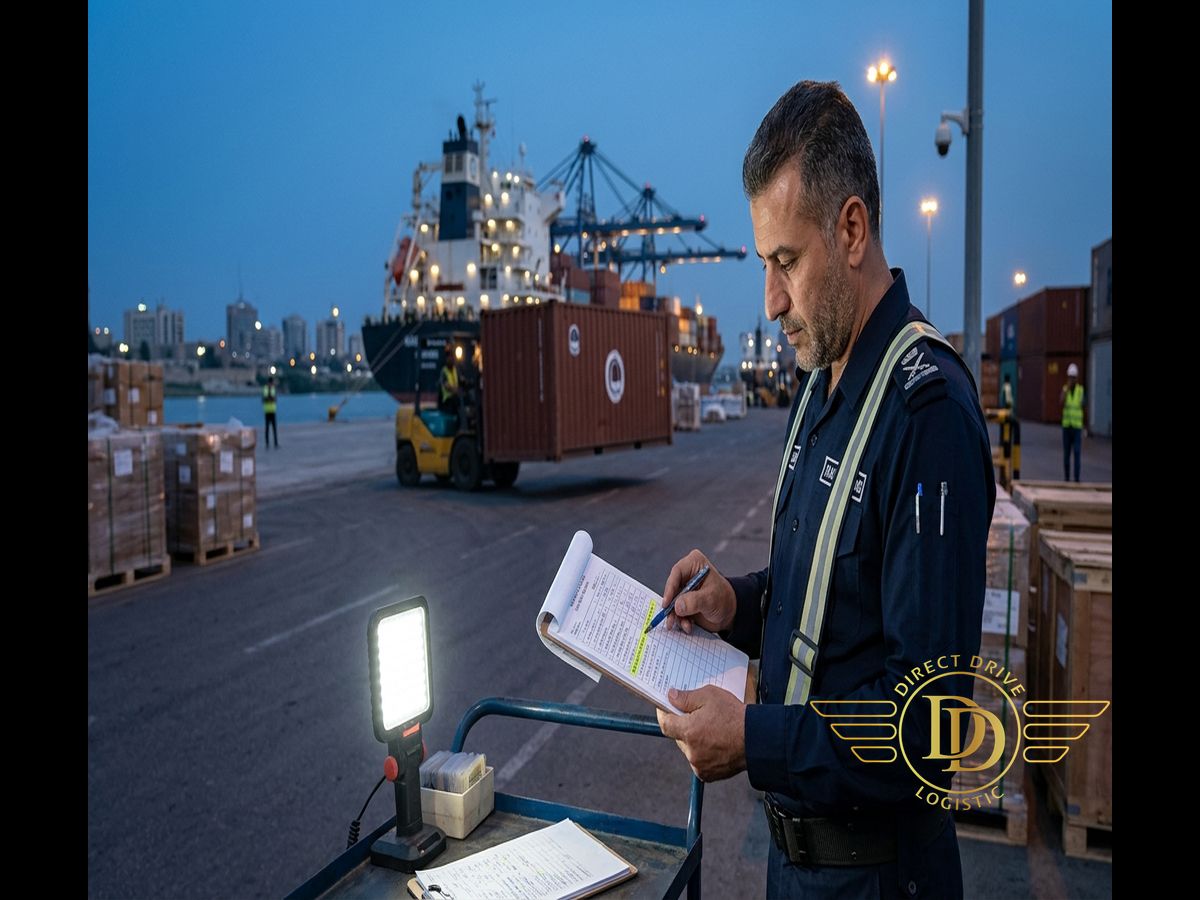
Prohibited Goods Explained: What Constitutes an Absolute Ban in Iraq?
Understanding Iraq’s prohibited and restricted goods is the first step in successful market entry. Prohibited goods are items completely banned from import under any circumstances, typically for national security, public health, or moral reasons. Restricted goods, however, are not banned but require conditional import approval in Iraq, demanding specific licenses, permits, or certifications from government bodies before they can clear customs.
The list of prohibited items includes obvious contraband like narcotics and certain weapons, but also less apparent goods that violate Iraqi law. The consequences for attempting to import these items are severe, leading to confiscation, fines, and legal action. Recent enforcement activity by Iraq’s Central Organization for Standardization and Quality Control (COSQC), which conducted 191 inspection campaigns and identified 51 violations in a 2026 update, demonstrates the government’s focus on compliance. For a detailed breakdown, the U.S. government provides a helpful visual resource on Iraqi import rules.
A frequent error we see is shippers misclassifying goods with dual-use components, assuming they only need a permit when an ingredient renders the entire product prohibited. This is particularly relevant for items under Iraq food import regulations. In our operations across Iraq’s 15 border crossings, our teams have seen shipments delayed for weeks due to a single misidentified chemical. This highlights the importance of pre-shipment verification, as Iraq’s import regulations are becoming more strictly enforced.
Your next step: Provide Direct Drive Logistic with your product’s full ingredient list and HS code. Our team will conduct a preliminary screening against both Federal and KRG prohibited lists within 48 hours.
Key Prohibited Goods: What You Absolutely Cannot Import into Iraq
Hazardous Materials and Weapons Strictly Banned for National Security Reasons
Understanding Iraq prohibited and restricted goods starts with items banned for national security. This category includes all forms of weapons, ammunition, explosives, and related components. It also extends to chemical, biological, and nuclear materials, as well as any dual-use technology that could be repurposed for military applications.
One mistake we see regularly is shippers misclassifying industrial chemicals that appear on Iraq’s banned items list. A documentation error can add 3-7 days to clearance at major crossings like Umm Qasr or Ibrahim Khalil, but attempting to import a prohibited substance can lead to seizure and legal action.
Culturally and Religiously Offensive Goods Prohibited Under Iraqi Law
Beyond security concerns, Iraq maintains a list of illegal imports to Iraq based on cultural and religious laws. This includes pornographic materials, products originating from Israel, and items deemed offensive to Islamic values. Certain alcoholic beverages and pork products may also be prohibited depending on the final destination and specific import regulations at the time of entry.
Navigating this requires local expertise, as the interpretation can vary. Failing to comply with the complete Iraq customs banned goods list risks not just delays but the complete rejection and confiscation of your entire shipment. Our on-the-ground teams at 15 border crossings ensure your cargo manifest is compliant before it ever leaves the port of origin. For additional support, explore our Iraq logistics resources.
Your next step: Provide your Direct Drive Logistic account manager with the HS codes for your entire shipment. We will pre-verify every item against both Federal and KRG prohibited lists within 48 hours.
Restricted Imports: Navigating Licenses, Permits, and Special Conditions
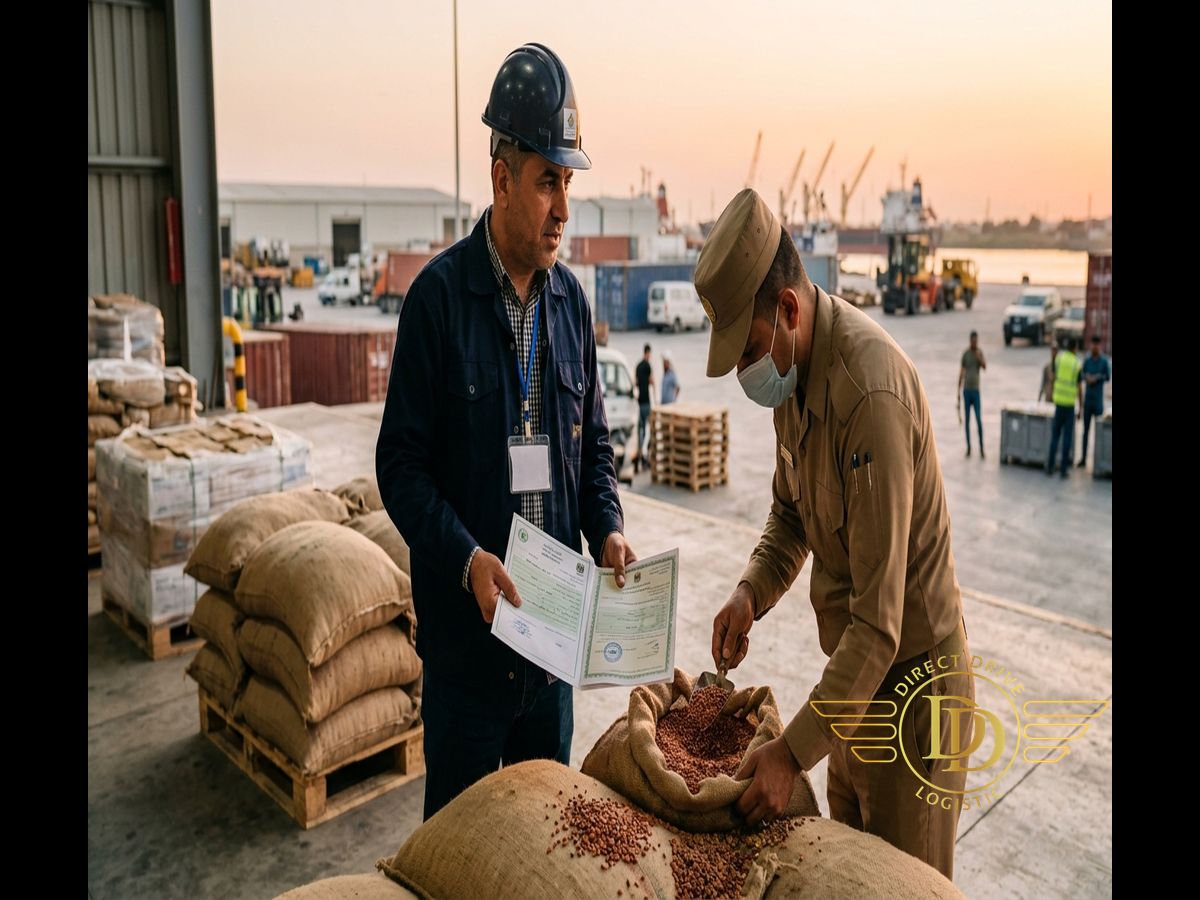
The Process for Obtaining an Import License for Regulated Goods
Understanding Iraq prohibited and restricted goods begins with a key distinction: restricted items are importable, but only with prior authorization. Unlike prohibited goods, these require an import license from the specific Iraqi ministry governing that sector, such as the Ministry of Health for medical supplies or the Ministry of Communications for telecommunications equipment. This approval must be secured before the cargo is dispatched from its country of origin.
The Iraq import approval process involves submitting detailed product specifications and certifications. For pharmaceuticals, securing the necessary approvals was reported to take approximately 2 to 4 weeks, with the complete import cycle from application to clearance often lasting 4 to 6 weeks. In our operations across Iraq, we consistently see that the most successful importers treat this pre-approval not as a formality, but as the most critical step in their shipping timeline.
Navigating Special Permits for Chemicals, Pharmaceuticals, and Dual-Use Items
Certain categories face even greater scrutiny. Medical devices, for example, can require an additional 30 to 45 days for testing and validation by Iraqi authorities. Similarly, dual-use goods and specific chemicals demand meticulous documentation to prove their intended civilian application, a process detailed in official import guidance. These timelines make advance planning absolutely essential.
A frequent error in this stage is shipping goods before the final import permit is issued, assuming an ‘in-progress’ application is sufficient. It is not. As a government-licensed clearing agent at the Port of Umm Qasr, our team has direct port access to manage these sensitive shipments. We recently handled a medical equipment import from Dubai to Baghdad, achieving clearance in just 48 hours because all ministerial permits were correctly filed and approved in advance. For comprehensive guidance on navigating these complex requirements, explore our expertise in Iraq logistics compliance.
Your next step: Provide our compliance team with your product’s HS code and technical data sheet. We will deliver a preliminary assessment of the required permits and timelines within 48 hours.
Special Approvals: Agricultural Seeds and Live Animal Imports to Iraq
Required Documentation and Permits for Importing Agricultural Seeds into Iraq
Importing agricultural products is a specialized process governed by strict regulations, making them a key category of Iraq’s restricted goods. All seed imports require a pre-approved Iraq Ministry of Agriculture import permit and an official phytosanitary certificate from the country of origin. This applies especially to strategic crops like wheat, barley, and high-yield vegetable seeds.
The approval timeline for these sensitive items can be extensive. While not pharmaceuticals, the documentation process can often take a comparable 4 to 6 weeks to complete. In our operations across our 15 border crossings, we consistently see shipments of agricultural goods delayed for an extra 3 to 7 days simply because the phytosanitary certificate was issued after the bill of lading date, invalidating it upon arrival. For complex shipments like these, having an experienced Iraq project logistics partner can prevent costly delays.
Navigating Health Certificates and Quarantine Rules for Live Animal Imports
The live animal import regulations in Iraq are among the most stringent, demanding meticulous preparation. Every shipment requires an import license from the Ministry of Agriculture, a detailed veterinary health certificate, and a full vaccination record valid for the specific animal, from livestock to domestic pets.
Upon arrival at a port like Umm Qasr or a land border, all live animals are subject to mandatory inspection and potential quarantine by Iraqi veterinary authorities. The government’s focus on Iraqi import policy for biosecurity means no exceptions are made. One mistake we see regularly is shippers providing a generic health certificate; Iraqi customs requires specific attestations against regional diseases, and its absence can lead to immediate rejection or costly quarantine. Navigating these complexities requires an expert Iraq logistics partner to ensure compliance.
Your next step: Provide our team with your cargo’s species or seed variety. We will confirm the exact permit and certificate requirements with Iraqi authorities within 48 hours.
Send your cargo details to Direct Drive Logistic on WhatsApp — get a route-specific checklist and quote within 24 hours.
Message on WhatsAppWhy Choose Direct Drive Logistic?
Offices in Erbil (HQ) + Tehran (Nasim Shahr Terminal); rentable warehouse space in Baghdad, Karbala, Najaf, Erbil, Duhok and Basra, plus a warehouse in Tehran
Government-licensed clearing agent — direct port access for sea freight into southern Iraq
2,500+ Iraq domestic deliveries, 300+ Iran-Iraq cross-border, 100+ international freight; air freight handler at Erbil, Baghdad, and Sulaymaniyah airports
Operational at 4 KRG borders (Parviz Khan, Bashmagh, Haji Omran, Ibrahim Khalil) plus the Sheikh Saleh border market, 5 federal Iran-Iraq borders (Khosravi, Sumar, Mehran, Shalamcheh, Chazzabeh) and 6 further federal crossings (Trebil, Arar, Safwan, Al-Qaim, Al-Rabia, Al-Waleed), plus Bandar Abbas port
Full operational fluency in Farsi, Arabic, Kurdish, and English — client-facing and documentation
~10 trucks/day from Erbil hub covering Baghdad, Karbala, Najaf, Basra, Kut (Wasit), Diyala, Nasiriyah, and all Iraqi governorates
Frequently Asked Questions
Importing goods into Iraq generally requires adherence to federal customs regulations, which, as of Council of Ministers Decision No. 957 of 2025, shifted to HS-code-based, item-level customs valuation. Prohibited items typically include narcotics, weapons, certain types of agricultural products without proper certification, and materials deemed harmful to public safety or morals. Restricted goods, such as pharmaceuticals, medical devices, and telecommunications equipment, require specific pre-approvals from sector regulators; pharmaceutical approvals alone can take 2–4 weeks, with the full import process extending to 4–6 weeks. Direct Drive Logistic, with over 10 years of experience, helps businesses navigate these complexities.
To identify if your products are restricted or require special permits, you must first determine their correct HS (Harmonized System) code. This classification dictates the applicable customs duties, which generally start at 5% and can reach 30–40% for certain categories, along with a potential 3% upfront tax deposit. For regulated items like advanced electronics, industrial control systems, or laboratory equipment, approvals from relevant Iraqi ministries or the KRG are mandatory before dispatch. Required documentation typically includes a commercial invoice, packing list, certificate of origin, bill of lading/air waybill, and any specific import licenses or health/safety certificates relevant to the product’s HS code. Incorrect HS classification can cause delays of 3–7 days at key entry points like Umm Qasr or Ibrahim Khalil.
Practical difficulties in Iraqi customs often stem from the dual customs treatment between Federal Iraq and the Kurdistan Region (KRG). KRG crossings, such as Ibrahim Khalil, Parviz Khan, and Bashmagh, operate under different tariff and ASYCUDA arrangements than federal crossings. For instance, clearance averages were 5–7 days for standard FCL at Umm Qasr but 3–5 days at Ibrahim Khalil in 2025. A significant pitfall is assuming KRG import approval automatically authorizes distribution in federal Iraq, as cargo may require tariff-difference settlement at a federal customs office. Furthermore, documentation errors or classification issues can significantly increase port storage fees, which can range from USD 75–150 per container per day at Umm Qasr, excluding shipping-line detention.
An effective logistics provider for Iraq needs a robust network and deep local expertise. Direct Drive Logistic stands out with a dual-country physical presence, including offices in Erbil (HQ) and Tehran, and rentable warehouse space across Baghdad, Karbala, Najaf, Erbil, Duhok, and Basra. We are an officially licensed clearing agent at the Port of Umm Qasr, allowing direct port access for sea freight and eliminating the need for third-party brokers, as demonstrated by a 48-hour direct clearance for medical equipment from Dubai. Our 15-border crossing network, spanning all land frontiers into Iraq, provides crucial redundancy, enabling us to re-route shipments through alternative crossings like Mehran without delay, even during primary border congestion.
A logistics partner mitigates risks by ensuring meticulous compliance and leveraging local relationships. For sensitive or restricted items, this means pre-vetting all documentation against federal and KRG requirements, specifically for products like advanced electronics or medical devices that undergo stricter scrutiny. Our quad-language operations team (Farsi, Arabic, Kurdish, English) eliminates communication barriers, which is vital for resolving issues quickly. For example, our Kurdish-speaking Erbil team resolved a temporary import license issue with KRG border authorities in just one day for an electronics shipment from Mersin to Erbil. This proactive, detail-oriented approach prevents delays and avoids costly penalties associated with non-compliance, ensuring reliable delivery.
To plan and execute a compliant shipment to Iraq, the first step is to provide your logistics provider with detailed information about your goods, including their HS codes and intended destination (Federal Iraq or KRG). This allows for an initial assessment of any potential restrictions or special permit requirements. Next, your provider should outline the necessary documentation and estimated timelines, including any pre-approvals for regulated goods that can take 2–4 weeks for pharmaceuticals. A comprehensive quote covering customs duties, taxes (e.g., the 3% upfront tax deposit), and transportation costs will follow. Finally, a clear communication plan will be established to keep you informed through each stage, from origin to final delivery in Iraq.
Conclusion
Navigating the complexities of Iraq’s import regulations, particularly concerning prohibited and restricted goods, is paramount for successful logistics operations. As Iraq continues to refine its customs framework, moving towards item-based valuation and digital declarations as of 2025, understanding the nuances of categories like hazardous materials, weapons, and even specific agricultural seeds is critical. Compliance is not merely about avoiding penalties; it’s about ensuring the seamless flow of goods and maintaining operational integrity within a dynamic market.
To confidently manage shipments, first, meticulously review your product’s Harmonized System (HS) code against the latest Iraqi customs schedules to identify any potential restrictions or outright prohibitions. Second, inquire with your current freight forwarder about their specific experience in obtaining the necessary licenses and permits for restricted items, such as the special approvals required for live animal imports into Iraq. Direct Drive Logistic offers comprehensive pre-shipment compliance checks and expert guidance, proactively addressing challenges related to iraq prohibited and restricted goods.
When your shipment requires precise navigation through Iraqi customs, including the intricate documentation for restricted items, Direct Drive Logistic stands ready. As an officially licensed clearing agent at the Port of Umm Qasr, we ensure direct port access and streamlined processing for sea freight into southern Iraq. Leverage our deep local expertise to safeguard your operations and ensure compliance. Reach out to our specialists today at (+964) 750 637 9296 for tailored solutions.
Need Logistics Consultation?
The Direct Drive team is ready to assist. Message us now.
Navigating the complexities of Iraq’s prohibited and restricted goods regulations can be a logistical minefield. Ensure your shipments clear customs seamlessly and avoid costly delays by partnering with Direct Drive Logistics. For expert guidance and a smooth, compliant shipping experience, call us today at (+964) 750 637 9296 and let us simplify your supply chain.
Get Your Free Quote NowContact Us for a Consultation
Location
Direct Drive Logistic
Gulan Street, MRF Quattro Block A 13-9
Erbil, Kurdistan Region