
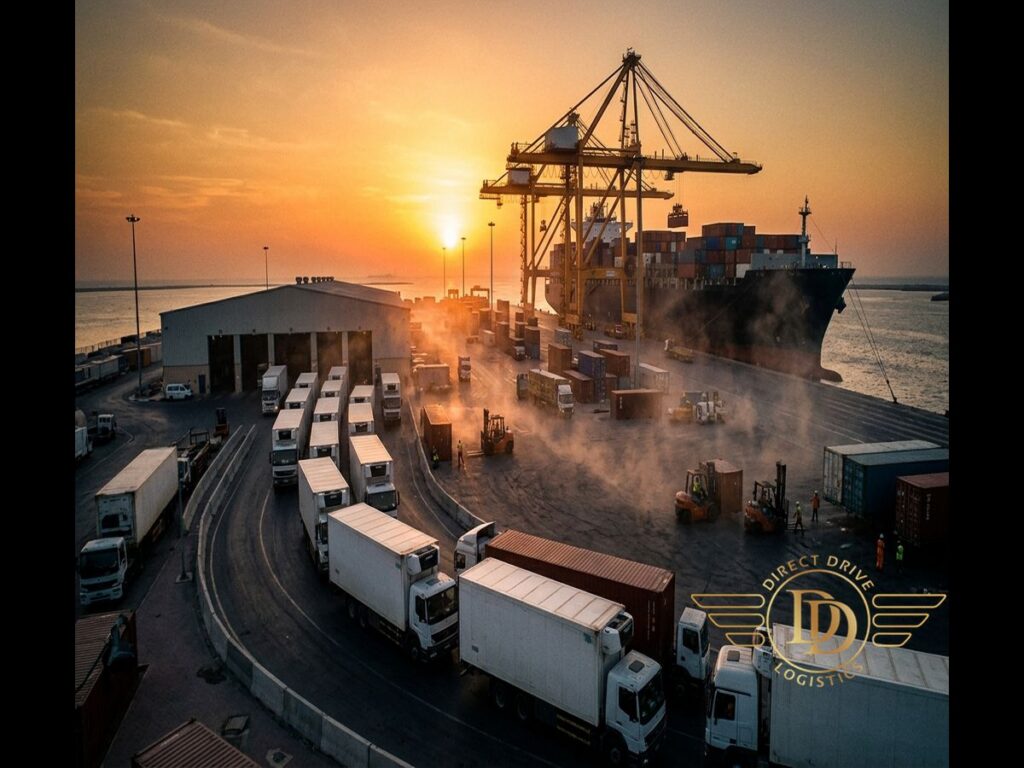
Discover how temperature controlled storage iraq can transform your operations with this guide demonstrates that true cold chain integrity in iraq is only achievable through a provider with a physical, dual-country presence in both iran and iraq, combined with official port clearing licenses—not just a network of agents.
Temperature controlled storage in Iraq refers to specialized warehousing solutions designed to maintain specific environmental conditions, crucial for preserving the integrity and efficacy of sensitive goods. These facilities utilize advanced refrigeration, insulation, and monitoring systems to ensure consistent temperatures, protecting products like pharmaceuticals, perishable foods, and certain chemicals from degradation due to heat, cold, or humidity fluctuations. Such storage is indispensable for safeguarding product quality and ensuring compliance with stringent industry regulations throughout the supply chain.
When pharmaceutical shipments, particularly those requiring 2–8°C or -20°C, are delayed at the border due to incomplete documentation or a lack of direct port access, the financial consequence of spoilage can easily exceed USD 10,000 per container. This comprehensive guide explores temperature controlled storage Iraq through multiple perspectives, demonstrating that true cold chain integrity in Iraq is only achievable through a provider with a physical, dual-country presence in both Iran and Iraq, combined with official port clearing licenses—not just a network of agents.
You need more than just a refrigerated truck; you need a partner who understands the complexities of maintaining product viability from origin to final destination. We will delve into why cold chain integrity is non-negotiable for your shipments to Iraq, covering the precision environmental controls essential for sensitive cargo and the specific risks to your cold chain in the Iraqi logistics landscape. This includes navigating challenges like extreme ambient temperatures and ensuring compliance with international standards such as Good Distribution Practices (GDP) for pharmaceuticals.
Beyond basic temperature maintenance, a complete solution in Iraq involves comprehensive services like real-time temperature monitoring and integrated logistics, which many standard forwarders simply cannot provide. We will also examine how to vet Iraq logistics providers for temperature-sensitive cargo, differentiating a true Iraq cold chain partner from a mere broker. This includes understanding the benefits of an integrated network spanning Iran, Iraq, and Turkey, which secures your pharma and food logistics through optimized routing and customs clearance.
Ultimately, this article will equip you with the knowledge to secure your cold chain effectively, ensuring that your temperature-sensitive goods reach their destination in Iraq without compromise. From understanding the critical need for temperature-controlled storage in Iraq to exploring advanced technologies for environmental control, you’ll gain actionable insights to enhance your operations and mitigate significant risks. Ready to transform your logistics?
The Critical Need for Temperature-Controlled Storage in Iraq
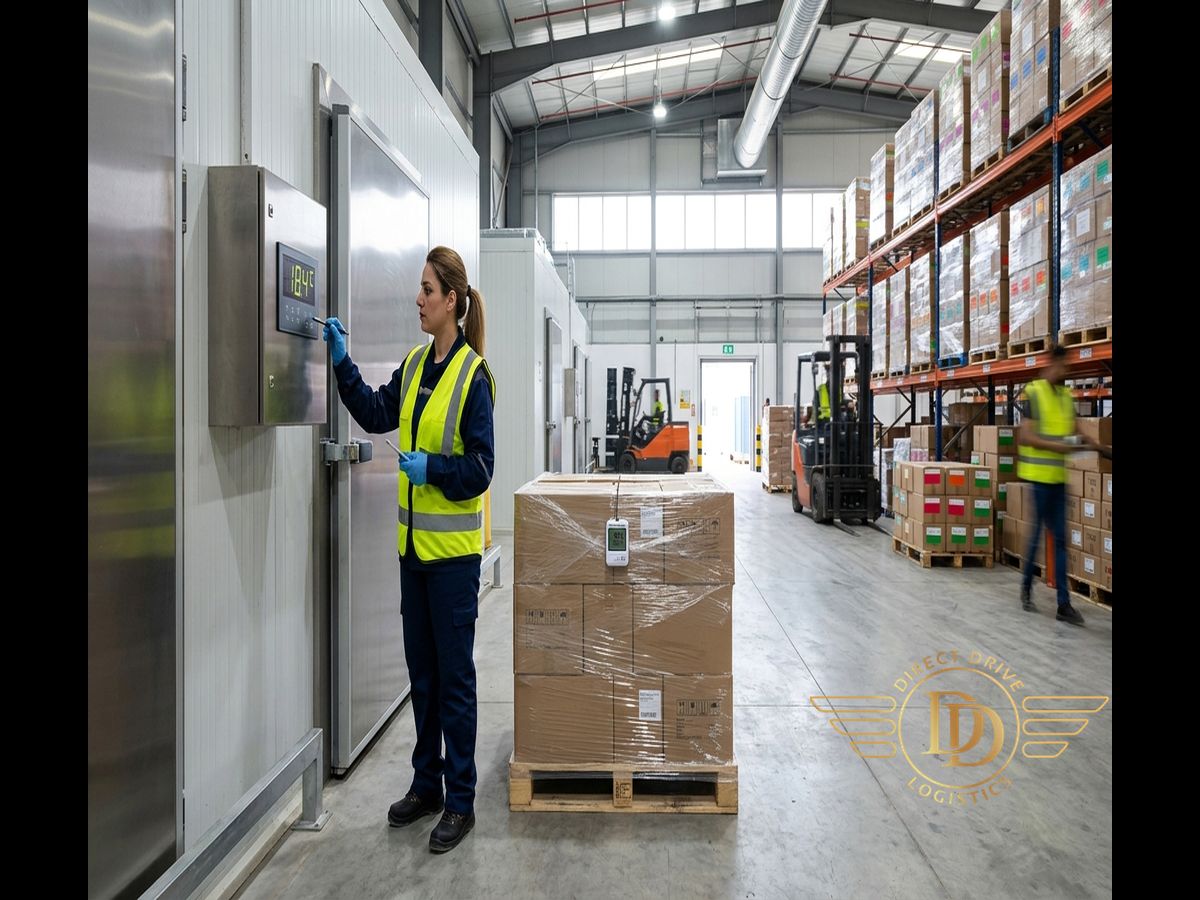
Surging Pharmaceutical Imports: The Primary Driver for Cold Chain Logistics
The demand for professional temperature-controlled storage in Iraq is escalating, driven primarily by the critical needs of the pharmaceutical and food sectors. As regional supply chains adapt, the cost of specialized transport has seen a significant increase. Reefer road-freight costs on Middle East corridors, a pattern mirrored in Iraq-bound traffic, rose by 15–25% between 2023–2025 due to fuel prices and rerouting, underscoring the growing investment required to maintain product integrity.
Industries needing cold storage in Iraq extend beyond just produce to high-value pharmaceuticals, vaccines, and sensitive chemical reagents. These goods require precise environmental control, not just cooling. The operational costs reflect this complexity, with reefer trucks commanding a 20–40% premium over standard dry-truck rates. This premium is a direct investment in preventing spoilage and ensuring compliance, as any disruption in the pharmaceutical supply chain can have severe consequences for public health and business viability. For more detailed information, explore our cold storage Iraq solutions.
In our operations across Iraq, we consistently see that the most significant cold chain failures happen not during transit, but at the handover points—ports and border crossings. A frequent error is relying on disconnected agents. Without a single operator like Direct Drive Logistic managing both the port clearance and the immediate transfer to a pre-cooled reefer, sensitive cargo can sit on a hot tarmac for hours, compromising an entire shipment’s integrity before it even begins its domestic journey.
Your next step: Review your current import process for temperature-sensitive goods. Identify the exact time your cargo waits between customs release and loading onto a refrigerated truck at Umm Qasr or your border of entry.
Precision Environmental Controls for Sensitive Cargo in Iraq
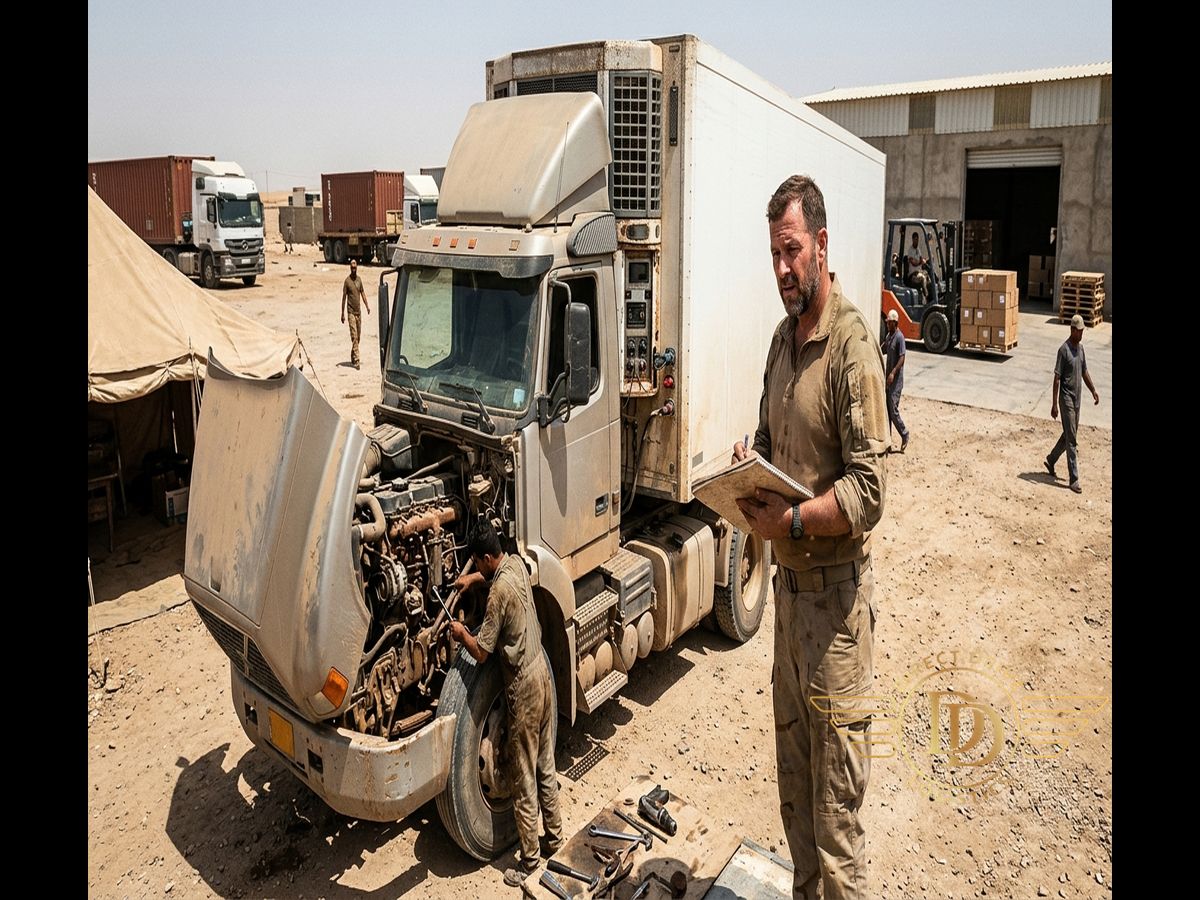
Advanced Temperature Mapping and Multi-Zone Climate Control Systems
True product integrity in Iraq demands more than a simple “cold” setting. Professional logistics partners provide validated environmental controls across multiple temperature regimes, including refrigerated (+2°C to +8°C) for pharmaceuticals, frozen (-20°C to -25°C) for sensitive biologicals, and controlled ambient (+15°C to +25°C) for other goods. These specifications are not just targets; they are guaranteed through calibrated systems.
Recent regional instability has intensified these demands. With air-cargo capacity in the Gulf dropping by 79% during recent escalations, sensitive goods are increasingly rerouted overland through Turkey and Iran. This shift dramatically increases transit time and elevates the risk of temperature excursions, making verified pharmaceutical supply chain integrity at border warehouses more critical than ever.
In our operations managing over 300 Iran-Iraq cross-border shipments, we have found that real-time temperature monitoring is the only way to ensure compliance. Our facilities use advanced sensors to provide a constant data stream, ensuring that humidity-controlled storage in Iraq meets stringent international Good Distribution Practice (GDP) standards. This is a non-negotiable for pharmaceutical-grade cold storage Iraq.
One mistake we see regularly is companies relying on a single temperature reading from a truck’s reefer unit. This fails to account for “hot spots” within the cargo. Proper temperature mapping validates the entire storage space, ensuring uniform conditions and preventing localized product spoilage that a single sensor would miss.
Your next step: Request the temperature mapping validation and GDP compliance certificates for any proposed facility. Direct Drive Logistic provides these documents for all our temperature-controlled storage in Iraq as a standard part of our service agreement.
Challenges of Maintaining Cold Chain Integrity in Iraq’s Logistics Landscape
Navigating Infrastructural Deficiencies and Unreliable Power for Refrigerated Units
Maintaining the integrity of temperature controlled storage in Iraq is immediately complicated by infrastructure gaps. With pharmaceutical imports projected to grow by 6–8% annually through 2028, the demand for reliable cold chain facilities in Baghdad, Erbil, and Basra is outpacing the development of the power grid needed to support them. A frequent error we see is reliance on the local grid without a dedicated, redundant power source for reefer units, leading to catastrophic temperature deviations.
These power inconsistencies represent significant Iraq’s infrastructure challenges and a primary source of cold chain risks in Iraq. In our operations, we’ve found that only logistics partners with their own on-site generators and pre-vetted, fuel-secure rest stops can guarantee an unbroken cold chain from port to final destination. Without this self-sufficiency, cargo is constantly at risk. For comprehensive solutions, consider our secure storage Iraq guide.
Overcoming Extreme Climate Conditions and Their Impact on Refrigerated Transport
The extreme climate, with summer temperatures often exceeding 50°C, places immense stress on refrigerated transport. For sensitive pharmaceuticals requiring a strict +2–8°C range, even minor delays during customs clearance or transit can cause irreversible product spoilage. This is a critical factor for shipments moving through key gateways like Umm Qasr Port or land routes from Iran.
Our team at Direct Drive Logistic has found that having a physical, dual-country presence in both Iran and Iraq is the only way to proactively manage these climate-related risks. By controlling the entire journey, including customs at crossings like Parviz Khan, we eliminate reliance on third-party agents who may not have the equipment or urgency to prevent temperature excursions during prolonged waits.
Your next step: Request a complimentary route risk assessment from our team to identify potential power and climate vulnerabilities in your current Iraq supply chain.
Meeting International Standards: GDP & GMP Compliance for Temperature-Controlled Storage in Iraq
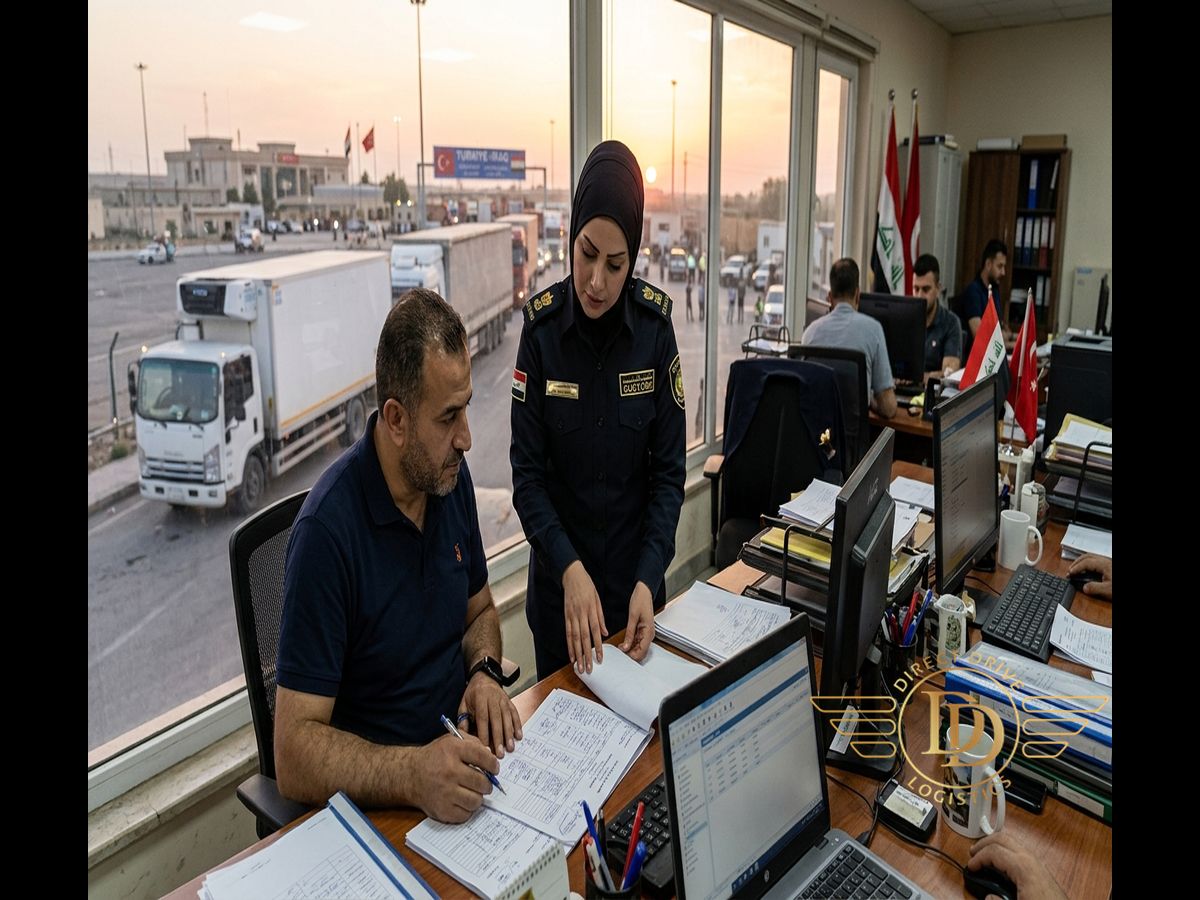
Implementing Good Distribution Practices (GDP) for a Secure Pharmaceutical Supply Chain in Iraq
For high-value pharmaceuticals and medical devices, compliance is not optional. Verifying a partner’s adherence to international standards is the only way to safeguard your investment in a market where reefer road-freight costs have surged by 15–25% between 2023–2025. A failure in the cold chain means losing both the product and these inflated transport fees.
- Step 1: Verify GDP Certification and Documentation. Demand to see current GDP certifications for any proposed warehousing. Ensure your provider can produce complete, accurate customs paperwork in advance, as this is critical for navigating complex pharmaceutical supply chains. Proper documentation is the key to achieving priority clearance times of 12–24 hours at ports like Umm Qasr.
- Step 2: Scrutinize Standard Operating Procedures (SOPs). Ask for documented SOPs covering the entire transit process, from port reception to final delivery. This includes procedures for temperature monitoring, handling deviations, and emergency response. A provider without robust, written protocols cannot guarantee a GDP compliant cold chain.
Adhering to Good Manufacturing Practices (GMP) for Quality Assurance in Cold Storage
While GDP governs distribution, GMP principles apply to the quality management systems within storage facilities. For temperature controlled storage in Iraq, this distinction is vital for product integrity, especially for biologics and vaccines requiring precise environmental control.
One mistake we see regularly is shippers focusing only on the transit vehicle’s temperature log, while ignoring the GMP compliance of the cross-docking or storage facility itself. A compliant truck is useless if the product is held for hours in an uncertified warehouse during unloading.
Practitioner Observation: In our operations across Iraq, we consistently see that providers with a physical, owned presence—like our facilities in Erbil and Basra—can enforce GMP standards directly. This contrasts with agent-based networks where quality control is often inconsistent and unverifiable. Our official clearing license at Umm Qasr Port provides an unbroken chain of custody from vessel to warehouse, a critical component of GMP adherence. For many international businesses, utilizing an strategic fulfillment center in Iraq is becoming essential.
Your next step: Request a virtual or in-person audit of your potential partner’s Iraqi warehousing facilities. Ask to see their equipment calibration logs and staff training records for the last 12 months.
Comprehensive Temperature-Controlled Logistics Services in Iraq
End-to-End Cold Chain Management: From Port of Entry to Final Storage
True integrated cold chain solutions in Iraq require a provider who manages every link, from origin to final delivery. Recent regional disruptions, which saw commercial activity through the Strait of Hormuz fall 90% below previous levels, have forced cargo to reroute overland through new corridors like Istanbul-Ibrahim Khalil. This shift increases complexity and the risk of temperature deviations.
In our operations across Iraq, we consistently see that relying on a chain of separate agents for transport, border crossing, and final storage creates multiple failure points. Direct Drive Logistic mitigates this by being a single operator with a physical presence in both Iran and Iraq, managing the entire journey under one consignment note. We operate across 12 border crossings, ensuring seamless temperature controlled distribution Iraq-wide.
Integrated Customs Clearance for Temperature-Sensitive Goods in Iraq
For refrigerated cargo, delays at customs are not just costly—they are catastrophic. A frequent error is assuming a freight forwarder has direct clearing authority; most use third-party brokers, adding delays and risk at critical entry points like Umm Qasr Port. This fragmented approach can easily violate strict Iraqi port regulations for sensitive goods.
As an official, government-licensed clearing agent at the Port of Umm Qasr, Direct Drive Logistic provides direct port access, eliminating intermediaries. Our in-house team handles all documentation for refrigerated customs clearance in Iraq, ensuring your cargo is processed and moved into warehouse storage Iraq pricing without delay, with stock control support once it is inside. This direct control is the only way to guarantee the integrity of pharmaceuticals and perishables upon arrival.
Your next step: Request a review of your current cold chain route to identify potential customs and transit vulnerabilities. Our team provides this analysis within 48 hours.
Send your cargo details to Direct Drive Logistic on WhatsApp — get a route-specific checklist and quote within 24 hours.
Message on WhatsAppWhy Choose Direct Drive Logistic?
Offices in Erbil (HQ) + Tehran (Nasim Shahr Terminal); warehouses in Zakho, Erbil, Basra, and Tehran (2,000 sqm)
Government-licensed clearing agent — direct port access for sea freight into southern Iraq
2,500+ Iraq domestic deliveries, 300+ Iran-Iraq cross-border, 100+ international freight; air freight handler at Erbil, Baghdad, and Basra airports
Operational at Parviz Khan, Bashmagh, Haji Omran (Piranshahr), Mehran, Khosravi, Ibrahim Khalil (Turkey), and Bandar Abbas port (Iran)
Full operational fluency in Farsi, Arabic, Kurdish, and English — client-facing and documentation
~10 trucks/day from Erbil hub covering Baghdad, Karbala, Najaf, Basra, Kut (Wasit), Diyala, Nasiriyah, and all Iraqi governorates
Frequently Asked Questions
Essential considerations for temperature-controlled storage and logistics in Iraq revolve around maintaining product integrity amidst challenging environmental and logistical conditions. Businesses must prioritize facilities with multiple temperature regimes, such as ambient, +25°C, +2–8°C, and -20 to -25°C, to accommodate diverse cargo like pharmaceuticals, which saw an estimated 6–8% annual growth in imports from 2023–2028. Key hubs like Basra and Erbil are seeing an emergence of integrated warehousing, with roughly 10–15 licensed refrigerated warehouses in Basra and 8–12 in Erbil by 2025. Reliable power supply, real-time temperature monitoring, and adherence to international standards like GDP/GMP are crucial for ensuring compliance and minimizing spoilage.
Maintaining cold chain integrity in Iraq faces specific risks including extreme ambient temperatures, power supply inconsistencies, and potential customs delays at border crossings like Parviz Khan or Umm Qasr Port. The conflict-related supply chain disruptions, as highlighted by reports on pharmaceutical supplies, necessitate robust contingency planning. Furthermore, the diverse regulatory landscape across federal Iraq and the Kurdistan Region (KRG) adds complexity. Without real-time temperature monitoring, an estimated 35–50% of temperature-sensitive pharma shipments in the wider Middle East by 2025 could be compromised, leading to significant financial losses and health risks.
Iraq offers a growing range of temperature-controlled logistics services, including refrigerated warehousing, reefer container transport, and specialized cold chain distribution for sensitive goods. Facilities in key cities like Basra and Erbil are increasingly equipped with multi-zone storage, capable of handling chilled, frozen, and pharmaceutical products, mirroring GCC standards. For instance, some operators provide distinct zones for <25°C, <8°C, and -25°C. Capabilities include active temperature monitoring using IoT sensors and telematics, ensuring end-to-end visibility. This allows for documentation of 2–8°C integrity across complex corridors, such as Istanbul–Ibrahim Khalil–Mosul–Baghdad, enhancing audit trails and reducing disputes over temperature excursions.
Assessing a temperature-controlled logistics provider in Iraq requires evaluating their compliance with local regulations, their physical infrastructure, and their operational transparency. Look for providers with a proven track record of handling GDP/GMP-compliant cargo and those with licensed operations, such as being an official licensed clearing agent at Umm Qasr Port. A robust network reach, evidenced by daily scheduled departures from key hubs like Erbil to all Iraqi governorates, indicates strong operational capability. Furthermore, providers with quad-language operations (Farsi, Arabic, Kurdish, English) and a 7-border crossing network, including Parviz Khan, Bashmagh, and Ibrahim Khalil, demonstrate superior local market understanding and flexibility.
A logistics provider truly stands out in Iraq for temperature-controlled services by offering integrated, technology-driven solutions and unparalleled local expertise. Beyond basic storage and transport, a top-tier provider leverages real-time temperature monitoring and IoT sensors to provide full digital audit trails for sensitive cargo. Their competitive edge comes from dual-country physical presence with offices in Iraq and Iran, offering a seamless corridor for goods. For example, Direct Drive Logistic, with over 10 years of experience, manages the full intermodal corridor from Jebel Ali, Dubai, UAE, through Bandar Abbas port, Iran, to Erbil, Iraq, under a single operator, eliminating multi-party coordination risks. This comprehensive approach ensures reliability and security for temperature controlled storage Iraq.
A top-tier provider offers crucial operational advantages to ensure sensitive cargo safety and compliance in Iraq. This includes having a dedicated, licensed clearing agent at major entry points like Umm Qasr Port, enabling direct clearance within 48 hours and eliminating costly third-party broker delays. Such providers also possess a deep understanding of local regulatory nuances, with bilingual teams (Kurdish/Arabic) capable of resolving import license issues with KRG authorities in as little as one day, as demonstrated in shipments from Mersin to Erbil. Their ability to manage full intermodal corridors, from ocean freight to Iranian CMR transit and KRG import clearance, under a single consignment note significantly reduces cross-handoff risks and ensures end-to-end accountability for temperature controlled storage Iraq.
Conclusion
Maintaining cold chain integrity for sensitive cargo in Iraq is not merely a service; it is a critical safeguard against product degradation and financial loss. The surging demand for pharmaceuticals, for instance, underscores the absolute necessity for precision environmental controls and adherence to international standards like GDP and GMP, especially given the infrastructural challenges inherent in the region. True product integrity in Iraq demands advanced temperature mapping and multi-zone climate control systems, ensuring cargo remains viable from port of entry to final storage.
To secure your sensitive shipments, begin by auditing your current logistics provider’s cold chain capabilities against international compliance standards. Specifically, inquire about their real-time temperature monitoring protocols and contingency plans for power outages in Iraq. Then, consider how Direct Drive Logistic’s expertise, specifically our 2,000 sqm warehouses in Zakho, Erbil, Basra, and Tehran, can provide the robust and compliant temperature controlled storage Iraq demands for pharmaceutical and perishable goods.
Direct Drive Logistic offers unparalleled expertise in navigating the complexities of temperature controlled storage Iraq. With our proven track record and deep understanding of regional logistics, we ensure your valuable cargo is handled with the utmost care, from customs clearance at Umm Qasr to final delivery across all Iraqi governorates. For a solutions-oriented partner dedicated to securing your cold chain, contact us directly at (+964) 750 637 9296.
Need Logistics Consultation?
The Direct Drive team is ready to assist. Message us now.
Ensure your sensitive goods are protected in Iraq’s demanding climate. Contact Direct Drive Logistic today for a consultation on our state-of-the-art temperature-controlled storage solutions, specifically designed for reliability and peace of mind. Call us now at (+964) 750 637 9296 to secure your supply chain.
Get Your Free Quote NowContact Us for a Consultation
Location
Direct Drive Logistic
MRF Quattro towers, Block A-29-1
Erbil, Kurdistan Region