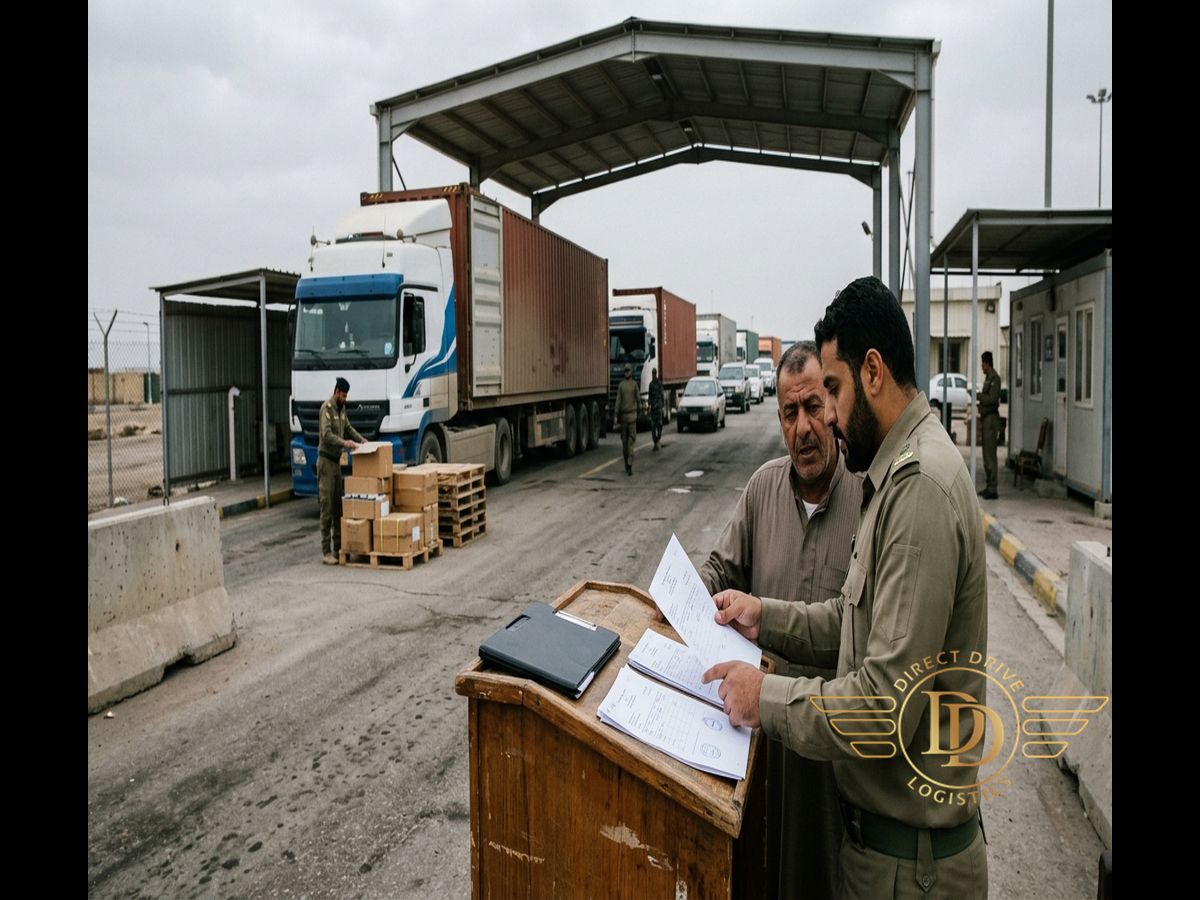
The Kuwait-Iraq transit route connects Kuwait City to Baghdad, Basra, and northern Iraq via the Safwan border crossing and Umm Qasr seaport. This corridor handles the majority of GCC-Iraq trade, with land freight taking 2-4 days plus 1-3 days for customs clearance. TIR system activation in April 2025 reduced transit times by up to 90% for some shipments, making this route critical for perishable goods and time-sensitive cargo.
Your shipment just arrived at Safwan, but without the correct commercial invoice and certificate of origin, it’s now sitting in a holding yard—adding USD 800-1,500 in daily storage fees while you scramble to fix documentation errors. This scenario happens daily to businesses relying on third-party agents who lack direct customs licenses at Basra and Umm Qasr. The difference between a 4-day delivery and a 3-week delay often comes down to whether your logistics partner holds an official government clearing agent license or simply brokers the transaction through intermediaries.
This comprehensive guide addresses the exact gaps competitors ignore: detailed permit procedures, real-time border crossing conditions, full cost breakdowns for land versus sea freight (USD 1,200-1,800 per 20ft container via Safwan versus USD 1,500-2,200 via sea), and geopolitical risk analysis including maritime border disputes. You’ll learn why operators with permanent in-country presence and direct customs licenses at Iraq’s primary ports consistently outperform brokers who vanish when problems arise.
Whether you’re shipping consumer goods to Baghdad, perishables to Basra, or heavy equipment to Erbil, this handbook provides the strategic overview and tactical insights needed to transform your Kuwait-Iraq transit route operations from unpredictable costs into reliable, compliant supply chain performance.
What Are My Core Shipping Options from Kuwait to Iraq?
Overland Trucking via Safwan: The Most Direct Route for Land Freight
For most businesses, overland trucking is the primary and most balanced option for Kuwait to Iraq freight services. The main artery for this is the Safwan border crossing, connecting directly to key southern Iraqi cities like Basraand the port of Umm Qasr. The typical transit time for land freight from Kuwait City to Basra is 2-4 days, with an additional 1-3 days often required for customs clearance at Safwan.
The recent activation of the international TIR system has significantly enhanced this corridor. Since April 2025, the TIR system is operational, enabling a 90% reduction in transit time for certain shipments, like those from Türkiye to Kuwait via Iraq, cutting a 45-day sea journey to just 4 days. This makes overland transport to Basra increasingly viable for time-sensitive and perishable goods. A standard 20ft container shipment from Kuwait City to Basra typically costs between USD 1,200 and USD 1,800 door-to-door.
In our operations managing over 300 Iran-Iraq cross-border shipments, we consistently see that while the transit itself is fast, unpredictable customs queues at Safwan are the main bottleneck. Having a licensed, on-the-ground team in Basra to pre-file documentation is the single most effective way to minimize these costly delays. Our local Iraqi delivery network ensures seamless transportation to final destinations across Basra, Baghdad, and Erbil.
Sea and Air Options: Balancing Bulk, Cost, and Urgency
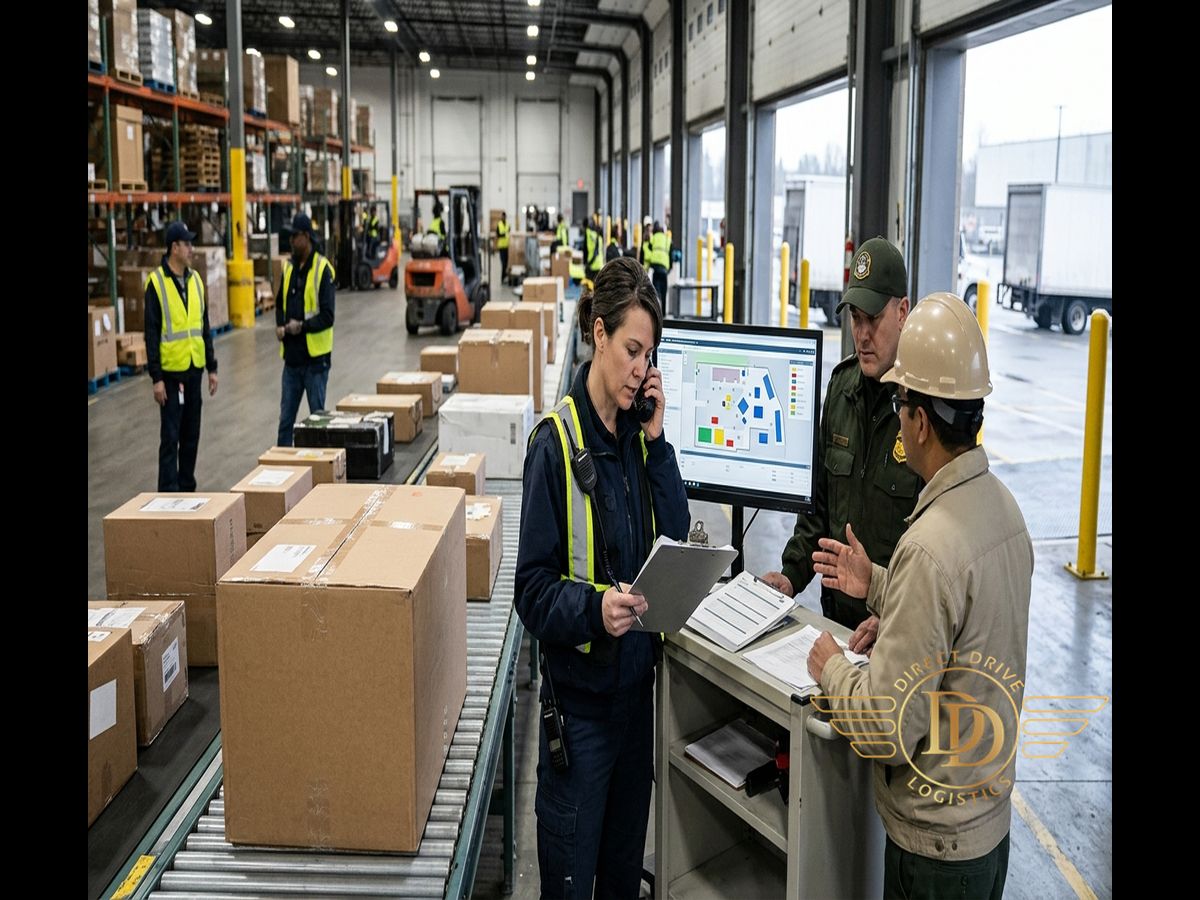
While land freight offers a blend of speed and cost, sea and air freight serve specific needs for multimodal shipping options. Sea freight from Kuwait’s Shuwaikh Port to Iraq’s Umm Qasr Port is ideal for bulk, non-urgent cargo. The sea journey itself is short at around 2 days, but port clearance at Umm Qasr is extensive, often taking 3-7 days. This extended clearance time is a critical factor to consider in your supply chain planning.
A frequent error we see is shippers underestimating the total landing cost for sea freight. While the ocean transit rate of USD 1,500-2,200 may seem competitive, port handling, storage, and third-party clearance fees at Umm Qasr can quickly erode savings. As Direct Drive Logistic holds an official government clearing agent license at the Port of Umm Qasr, we provide direct port access, eliminating intermediary broker fees and delays.
For absolute speed, air cargo to Basra, Baghdad, or Erbil is the fastest, with total transit times of just 1-2 days. However, this speed comes at a 50-100% cost premium over land freight. It’s a strategic choice for high-value or emergency shipments, underscored by the 2025 Kuwait Customs emergency plan, which restructured pathways to handle 100% of rerouted air cargo via land trucks during disruptions.
| Feature | Overland Trucking (via Safwan) | Sea Freight (to Umm Qasr) | Air Cargo (to BSR/BGW/EBL) |
|---|---|---|---|
| Cost Range (20ft Container Equivalent) | USD 1,200 – 1,800 | USD 1,500 – 2,200 (plus port fees) | +50-100% Premium vs. Land |
| Total Transit Time (Door-to-Door) | 3-7 Days | 5-9 Days | 1-2 Days |
| Best For | General cargo, perishables, time-sensitive goods | Bulk cargo, heavy machinery, non-urgent stock | High-value electronics, medical supplies, critical parts |
| Key Challenge | Safwan border congestion and customs delays | Lengthy and complex clearance at Umm Qasr Port | High cost and vulnerability to airspace disruptions |
Your next step: Request a comparative quote for all three modes from Direct Drive Logistic. Provide your cargo dimensions and desired delivery date to receive a detailed cost-benefit analysis within 24 hours.
Land vs. Sea vs. Air: Which Transit Route Best Fits My Cargo?
Cost vs. Speed: A Detailed Breakdown for Kuwait-Iraq Land, Sea, and Air Freight
Selecting the optimal kuwait iraq transit route requires a clear understanding of the trade-offs between cost and delivery time. Land freight from Kuwait City to Basra via the Safwan border is the most balanced option, with typical door-to-door rates for a 20ft container estimated between USD 1,200 and USD 1,800 and a transit time of 2-4 days, plus customs.
In contrast, air freight offers the fastest shipping from Kuwait to Iraq, delivering cargo to Basra, Baghdad, or Erbil in just 1-2 days. This speed comes at a significant price, carrying a 50-100% cost premium over land transport. Sea freight from Shuwaikh to Umm Qasr Port offers a transit time of 2 days but is often hampered by longer port clearance procedures that can take 3-7 days, making it less suitable for time-sensitive goods.
In our operations across the Gulf, we consistently see clients reserve air freight for extremely urgent shipments, like critical medical equipment or high-value electronics, where the substantial cost premium is justified by the absolute need for speed. For most other cargo, the improved efficiency of land routes makes it the superior choice.
Matching Your Cargo to the Mode: Best Options for Perishables, Bulk, and High-Value Shipments
The activation of the TIR system in April 2025 has fundamentally changed the land vs sea freight Iraq calculation, especially for perishable goods. This system enables a remarkable 90% reduction in transit time on corridors like Türkiye-Kuwait via Iraq, making land transport faster and more reliable for fresh produce heading to Basra and Baghdad.
For large-volume, non-perishable cargo like construction materials or industrial machinery, sea freight to Umm Qasr remains a cost-effective choice. However, shippers must account for potential port congestion. One mistake we see regularly is businesses choosing sea freight to save on initial costs for FMCG products, only to lose those savings to demurrage fees during extended customs clearance. The total landed cost via the Safwan land route is often more predictable and economical.
Direct Drive Logistic’s status as an official government-licensed clearing agent at the Port of Umm Qasr provides our clients with a distinct advantage. We manage clearance directly, avoiding third-party brokers and significantly reducing the risk of costly delays that plague other forwarders.
Route Reliability and Risk Factors: Comparing Security Across Land, Maritime, and Air Corridors
Security and reliability are paramount when choosing a shipping method. The land corridor through the Safwan border has proven its resilience, highlighted when Kuwait Customs recently restructured pathways to handle 100% of rerouted air shipments via land trucks, ensuring supply chain continuity during air traffic disruptions. This demonstrated the robustness of the land network into Basra and Baghdad.
While maritime routes to Umm Qasr are generally secure, the primary risk is operational, stemming from port congestion and bureaucratic delays. Air freight provides the highest level of cargo security but remains vulnerable to sudden airspace closures or service halts. Our team at Direct Drive Logistic has found that operational control across multiple entry points is the best security. By operating at 12 different border crossings in both Federal Iraq and the KRG, we can reroute cargo to avoid localized disruptions—a flexibility most single-border operators cannot offer.
Your next step: Provide our team with your cargo dimensions, type, and desired delivery date. We will return a detailed kuwait to iraq shipping cost comparison across all three modes within 24 hours.
How Do I Navigate Customs at the Safwan Border Crossing and Umm Qasr Port?
Required Customs Documentation for Shipments at Safwan and Umm Qasr
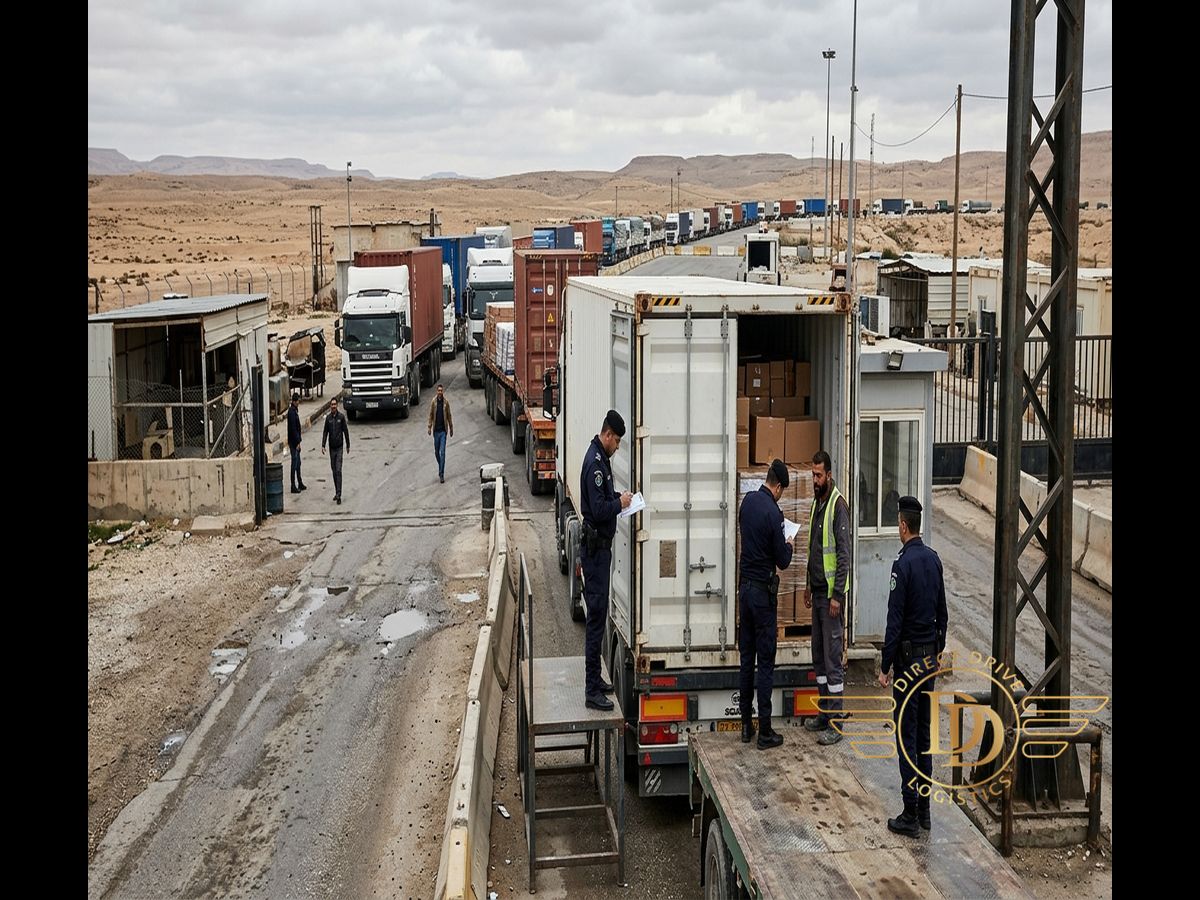
Successfully navigating customs for the Kuwait-Iraq transit route major trade routes iraq begins with flawless documentation. For any shipment crossing at Safwan or arriving at Umm Qasr Port, a complete and accurate set of documents is non-negotiable. This includes a Commercial Invoice, a Certificate of Origin (COO) proving GCC origin, the Bill of Lading (B/L) or CMR, and a detailed Packing List.
Under updated 2025 bilateral trade rules, goods with a valid GCC COO typically benefit from preferential duties between 0-5%. However, specific cargo like perishable foods requires an additional health certificate and is subject to mandatory inspection at the border. Since Iraq activated the TIR system in April 2025, ensuring all paperwork is TIR-compliant has become essential for accessing the system’s efficiencies.
In our experience managing over 2,900 shipments in the region, the Certificate of Origin is the most scrutinized document. Any mismatch between the COO and the commercial invoice, no matter how minor, will trigger an automatic customs review and significant delays. This is a critical detail for maintaining smooth transit through the Safwan border crossing.
Step-by-Step Guide to the Clearance Process at the Safwan Land Border
The customs clearance process at the Safwan land border follows a structured sequence. Upon arrival, your truck presents its manifest and documentation for initial verification. Following this, the documents are processed, duties are assessed, and payment is arranged. While physical inspections are not universal, they are common for high-value or sensitive goods.
One mistake we see regularly is submitting a Commercial Invoice that doesn’t match the Packing List in item count or valuation. This frequent error causes immediate holds, turning a 2-4 day trip into a week-long ordeal. Even with recent efficiency gains, customs processing at Safwan can add 1-3 days to your total transit time if documentation is not perfect. Proactive management is key to avoiding these costly delays.
Our team at Direct Drive Logistic has found that submitting all customs documents for pre-clearance before a truck even departs Kuwait is the most effective strategy. This allows Iraqi customs officials to review and flag any potential issues ahead of time, often reducing the standard 1-3 day border delay to less than 24 hours.
Navigating Maritime Customs Inspections and Procedures at Umm Qasr Port
While sharing documentation requirements with Safwan, the Umm Qasr port clearance process involves unique maritime procedures. Containers undergo scanning upon discharge, and customs authorities may flag them for physical inspection based on cargo type, origin, or risk assessment. This process, combined with port-side logistics, means standard sea freight clearance takes 3-7 days—significantly longer than a well-managed land crossing.
This is where direct port access becomes a powerful advantage. As an official, government-licensed clearing agent at the Port of Umm Qasr, Direct Drive Logistic operates directly inside the port, eliminating reliance on third-party brokers. For a recent shipment of medical equipment from Dubai, this direct access enabled us to achieve full customs release in just 48 hours. Streamlining these port procedures is a core element of strengthening Kuwait-Iraq trade relations.
Your next step: Send your draft Commercial Invoice and Packing List to our customs team for a complimentary compliance review. We will identify potential red flags before your cargo is even booked.
Looking for a logistics partner who knows these routes? Direct Drive Logistic operates daily from Erbil to every Iraqi governorate — reach out for a route-specific consultation.
What Are the Hidden Risks in the Kuwait-Iraq Supply Chain and How Can I Mitigate Them?
Navigating Geopolitical Instability and Security Threats on the Kuwait-Iraq Corridor
Geopolitical risk requires proactive route diversification and on-the-ground intelligence, and our Iraq Logistics Resources provide helpful tools. Relying on a single border crossing like Safwan creates a critical point of failure. Security situations can shift rapidly, impacting cargo security and transit times along key highways to Baghdad and Basra.
Direct Drive Logistic mitigates this by maintaining operational capability across 12 different border crossings in both Federal Iraq and the Kurdistan Region. This network allows us to instantly re-route shipments, like our successful Tehran to Baghdad deliveries, away from congested or high-risk areas without impacting the delivery timeline. This flexibility is critical for navigating the region’s complex geopolitical dynamics.
Overcoming Unpredictable Border Delays and Regulatory Compliance Hurdles
The most common risk is not conflict, but paperwork. While standard transit from Kuwait City to Basra is 2-4 days, customs clearance at the Safwan border can add another 1-3 days of costly delays. These hold-ups are almost always caused by incorrect or incomplete documentation, especially for goods requiring health certificates or those subject to GCC preferential duties of 0-5%.
A frequent error we see is shippers using third-party brokers who are disconnected from the carrier, leading to documentation mismatches. In our experience handling over 2,500 domestic Iraqi deliveries, we’ve found direct control is the only solution. As a government-licensed clearing agent at the Port of Umm Qasr, Direct Drive Logistic manages the entire process in-house, ensuring compliance and minimizing port-side delays.
Building a Resilient Supply Chain: Proactive Mitigation and Contingency Planning
A resilient supply chain anticipates disruptions and has pre-vetted alternatives. When regional events disrupt air freight, a contingency plan is not a luxury—it’s essential for continuity. The 2025 Kuwait Customs emergency plan demonstrated this by successfully shifting 100% of rerouted air shipments to land transport via the kuwait iraq transit route.
This shift added only 2-3 days to the total transit time, a manageable adjustment that kept supply chains moving to Basra, Baghdad, and Erbil. Our established infrastructure and daily truck departures from our Erbil hub enable us to absorb such surges. Failing to have this type of supply chain contingency planning in place can trap cargo indefinitely, incurring demurrage fees that quickly surpass the initial freight cost.
Your next step: Request a complimentary risk assessment of your current Kuwait-to-Iraq shipping plan. Our team can identify compliance gaps and route vulnerabilities within 48 hours, and you can also consult our Iraq Logistics Resources for further guidance.
Why is a Direct Customs Clearing License at Basra's Port a Game-Changer for My Sea Freight?

Slash Transit Times by Eliminating Third-Party Broker Delays at Basra Port
When your sea freight arrives at Umm Qasr Port, the clock starts ticking. Standard transit from Kuwait may only be two days, but the real challenge is a customs clearance process that typically takes an additional 3 to 7 days. This delay is almost always caused by communication gaps between your freight forwarderand the separate, third-party customs broker they hire locally.
A direct customs clearing license eliminates this bottleneck entirely. As a government-licensed clearing agent at the Port of Umm Qasr, Direct Drive Logistic manages your shipment with a single, unified team. There are no handoffs, no lost paperwork, and no waiting for another company to respond. This integrated approach provides faster customs clearance in Basra, turning a week-long ordeal into a streamlined process.
Our team at Direct Drive Logistic has found that this direct control is the single most effective way to accelerate cargo release. For a time-sensitive shipment of medical equipment moving from Dubai to Baghdad, our direct license allowed us to secure customs clearance in just 48 hours, completely bypassing the typical broker-related delays.
Gain Full Control and Transparency Over Your Sea Freight’s Customs Journey
Using a forwarder without a direct license creates a “black box” at the port. You lose visibility and control the moment your container is offloaded, leaving you dependent on second-hand information. This lack of transparency introduces significant risk, especially when customs authorities raise questions about documentation or require physical inspections.
Direct customs brokerage in Iraq means you have one partner with full accountability from origin to final delivery. Our team is physically present at the port, managing documentation and communicating with officials directly. This ensures any issues are resolved immediately, not after a day of back-and-forth emails between multiple companies. This level of control is essential for correctly managing documentation for items subject to GCC preferential duties, which require precise and timely submission. Once customs clearance is complete, we can also coordinate efficient warehouse services to streamline your final delivery.
How a Direct License Drastically Reduces Demurrage and Hidden Fees
Demurrage and port storage fees are the direct financial consequence of slow customs clearance. Each day your container sits at Umm Qasr waiting on a third-party broker, these charges accumulate, often adding unexpected costs that erode your profit margins. These delays are a key reason some shippers opt for air freight, which carries a 50-100% cost premium.
A frequent error in this stage is underestimating the financial impact of broker delays. Businesses budget for freight but are caught off-guard by demurrage fees that can quickly exceed the initial shipping cost. By providing direct and efficient customs clearance, we attack the root cause of these hidden fees. The efficient handling along the broader kuwait iraq transit route ensures that both land and sea components of your supply chain are optimized for cost and speed.
Our ability to clear cargo in as little as 48 hours minimizes port dwell time, effectively eliminating the risk of surprise demurrage charges and making sea freight a reliable, cost-effective option for your business.
Your next step: Provide our team with the details of your last sea freight shipment to Basra. We will provide a complimentary analysis showing the specific time and cost savings our direct customs license would have delivered.
How Does a True Multimodal Operator Provide Flexibility When Borders Face Congestion?
Seamlessly Switching Transport Modes to Bypass Land Border Bottlenecks
When a primary land border like Safwan faces congestion, a static logistics plan fails. A true multimodal operator provides a dynamic solution for the kuwait iraq transit route by not being dependent on a single mode of transport. If sea freight clearance at Umm Qasr is projected to take 3-7 days, we can immediately pivot to land freight, which often clears in just 1-3 days.
This agility prevents cargo from being trapped in port-side administrative delays. Instead of waiting, your shipment is already moving toward its destination in Basra or Baghdad. This capability is the core of a resilient multimodal transport contingency plan.
One mistake we see regularly is shippers committing to a single-mode provider. When that provider’s primary channel—whether sea at Umm Qasr or land at Safwan—experiences a backlog, the client’s entire supply chain is paralyzed with no immediate recourse.
Leveraging Alternative Routes and Crossings for Agile Cargo Rerouting
Flexibility extends beyond just changing transport modes; it requires a deep network of alternative ground routes. When Kuwait Customs activated its 2025 emergency plan, it successfully rerouted air shipments via land, adding only 2-3 days of transit but ensuring 100% supply chain continuity. This highlights the viability of rerouting cargo from Kuwait when planned correctly.
Direct Drive Logistic operates across 12 border crossings spanning the Iran-Iraq and Turkey-Iraq corridors. In our experience completing over 300 Iran-Iraq cross-border shipments, having pre-cleared, alternative routes is the only way to guarantee delivery timelines. For instance, when a primary border faced congestion on a Tehran to Baghdad route, our team rerouted three 40ft containers through the Mehran crossing, delivering the cargo within the original 4-5 day window with zero delay to the client.
How a Single Point of Contact Manages Contingency Logistics
Managing a crisis requires swift, centralized decision-making. A multimodal operator acts as your single point of contact, eliminating the chaos of coordinating separate sea, air, and land brokers during a disruption. This unified control is critical when peak season congestion can drive land freight costs up to USD 2,000-2,500 per container.
Our team handles all documentation, customs amendments, and carrier changes internally, providing a seamless transition between alternative shipping. This integrated approach, backed by our physical offices in both Erbiland Tehran, means we execute contingency plans in hours, not days, protecting your budget and your delivery schedule.
Your next step: Request a contingency plan assessment from our team. We will analyze your current Kuwait-to-Iraq shipping lanes and identify two viable alternative routes within 48 hours.
Ready to move forward? Contact Direct Drive Logistic — a 15-minute consultation often prevents days of border delays.
What's My Final Checklist for Choosing a Reliable Logistics Partner for the Kuwait-Iraq Route?
How do I verify a provider’s licensing and on-the-ground expertise in Iraq?
Verifying a partner’s credentials for the Kuwait-Iraq corridor requires looking beyond a simple trade license. Demand proof of direct customs clearance capabilities. A reliable freight forwarder for Iraq should hold an official government clearing agent license, particularly for the Port of Umm Qasr, to avoid costly third-party broker delays.
Assess their physical presence and track record. A partner with established offices and warehouses in key Iraqi cities like Erbil and Basra demonstrates commitment and local knowledge. At Direct Drive Logistic, our direct-licensed clearance at Umm Qasr and history of over 2,500 successful domestic Iraqi deliveries provide verifiable proof of our deep operational control and expertise.
One mistake we see regularly is shippers accepting a forwarder’s claim of having an “agent” in Iraq. This often means they are using a subcontractor, adding a layer of communication delays and costs. This can extend sea freight clearance times from a standard 3-7 days to over two weeks.
What technology and contingency plans are critical for this route?
Effective logistics on the Kuwait to Iraq route depends on robust contingency planning backed by technology. Your partner must demonstrate the ability to adapt to sudden disruptions, such as the 2025 emergency plan that shifted air cargo to land. A capable provider absorbed this shift by adding only 2-3 days to transit times, ensuring supply chain continuity.
Ask potential providers how they manage border congestion and closures. In our operations across 12 border crossings between Turkey/Iran and Iraq, we consistently see the need for dynamic rerouting. W
How can I ensure transparent freight pricing and avoid hidden costs?
True cost transparency goes beyond the initial quote. When vetting a Kuwait logistics provider, demand a detailed, all-inclusive cost breakdown that separates freight, duties, clearance, and any potential surcharges. For example, a standard Kuwait City-to-Basra container rate can surge from its off-peak base to USD 2,000-2,500 during holidays or periods of high congestion at the Safwan border.
A trustworthy partner will proactively explain these variables. The recent 15-20% year-over-year rate increases on this lane are driven by rising volumes, and your provider should be able to explain how they mitigate these costs. Failing to get this clarity is a significant financial risk; we’ve onboarded clients who were hit with surprise terminal handling and brokerage fees that added nearly 20% to their final invoice, erasing their profit margin.
Your next step: Request a comparative, all-inclusive quote from Direct Drive Logistic. Provide your current lane and commodity, and we will deliver a fully-costed, door-to-door proposal within 24 hours that outlines all potential variables.
Send your cargo details to Direct Drive Logistic on WhatsApp — get a route-specific checklist and quote within 24 hours.
Why Choose Direct Drive Logistic?
Offices in Erbil (HQ) + Tehran (Nasim Shahr Terminal); warehouses in Zakho, Erbil, Basra, and Tehran (2,000 sqm)
Government-licensed clearing agent — direct port access for sea freight into southern Iraq
2,500+ Iraq domestic deliveries, 300+ Iran-Iraq cross-border, 100+ international freight; air freight handler at Erbil, Baghdad, and Basra airports
Operational at Parviz Khan, Bashmagh, Haji Omran (Piranshahr), Mehran, Khosravi, Ibrahim Khalil (Turkey), and Bandar Abbas port (Iran)
Full operational fluency in Farsi, Arabic, Kurdish, and English — client-facing and documentation
~10 trucks/day from Erbil hub covering Baghdad, Karbala, Najaf, Basra, Kut (Wasit), Diyala, Nasiriyah, and all Iraqi governorates
Frequently Asked Questions
▼ What is kuwait iraq transit route?
Kuwait Iraq Transit Route refers to specialized professional services services in . This encompasses a comprehensive range of solutions designed to meet the unique challenges of this market, providing businesses and customers with reliable and high-quality results. Our expertise ensures you receive the best service tailored to your specific needs.
▼ Why is kuwait iraq transit route important?
Understanding kuwait iraq transit route is crucial because it directly impacts quality, cost management, and customer satisfaction. In , having the right provider with proven expertise can mean the difference between success and failure. Effective professional services solutions help navigate requirements, optimize processes, and ensure reliable outcomes for your goals.
▼ How to get started with kuwait iraq transit route?
Getting started with kuwait iraq transit route requires a clear understanding of your specific needs and requirements. First, assess your current situation and identify areas for improvement. Then, consult with experienced providers who have proven expertise in the market. They can help you develop a customized solution that addresses your unique requirements.
▼ What are the costs involved in kuwait iraq transit route?
Costs for professional services services in vary depending on several factors including scope, specifications, quality requirements, and any special handling needs. For accurate pricing tailored to your specific needs, contact our team for a detailed quote. We offer competitive rates and transparent pricing with no hidden fees, ensuring you get the best value for your investment.
Conclusion
The Kuwait–Iraq transit route rewards operators who plan around its two real constraints: customs processing at the border and the condition of the onward road corridor. Transit time is rarely lost on the highway itself — it is lost waiting for documentation to clear, which is why pre-arrival filing and a complete document set matter more than raw distance.
Cost follows the same pattern. The quoted freight rate is only part of the landed figure; demurrage, escort requirements on certain segments and insurance for high-value cargo change the total materially. Shippers who price only the truck are the ones surprised at delivery, and a route comparison that ignores clearance time compares the wrong thing.
Treat the corridor as one continuous operation rather than a series of handovers. Direct Drive Logistic runs its own clearance and trucking on both sides of the border, so documentation, transit and final delivery sit with one team and a single point of accountability.
Experience faster, reliable transit between Kuwait and Iraq with Direct Drive Logistic—cut delivery times by up to 30% and keep your supply chain moving smoothly. Call now at (+964) 750 637 9296 to secure your shipment today!
Contact Us for a Consultation
Location
Direct Drive Logistic
MRF Quattro towers, Block A-29-1
Erbil, Kurdistan Region