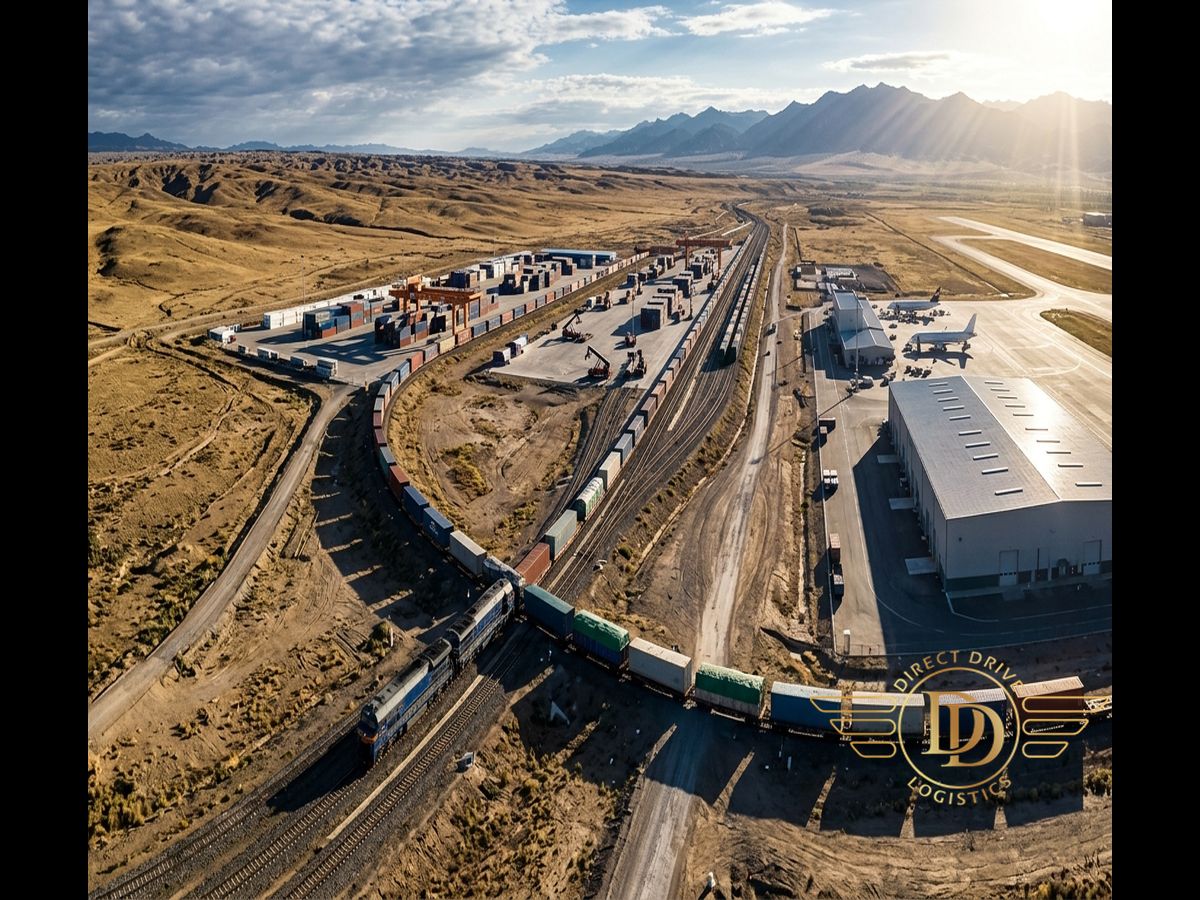
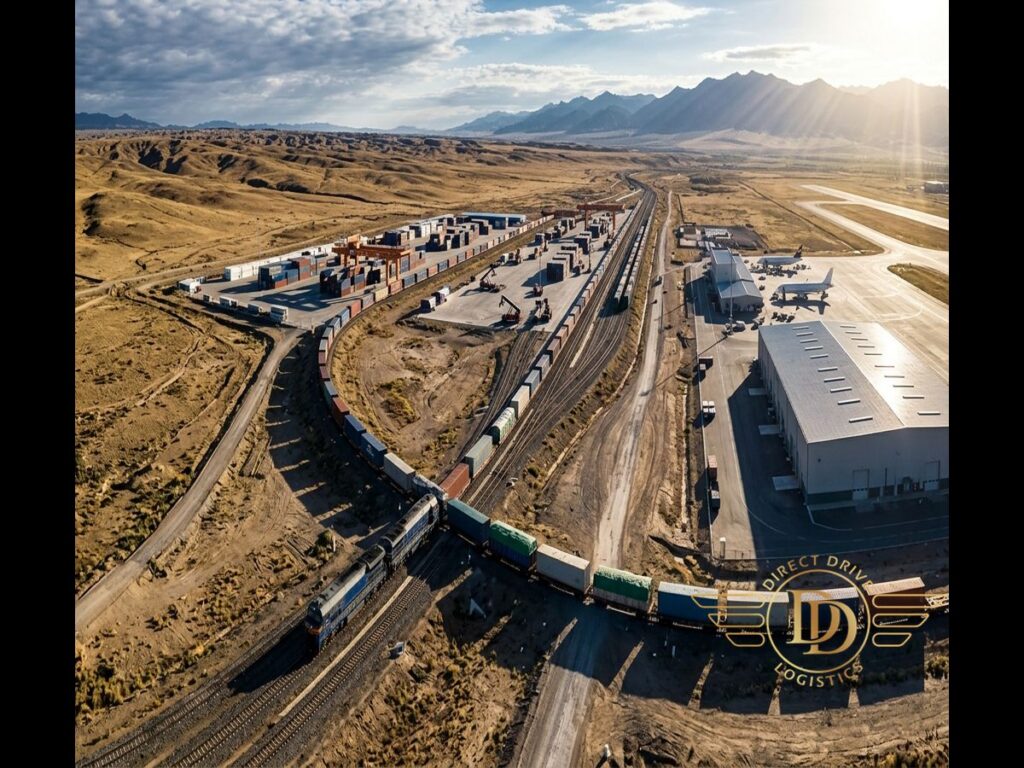
Rail freight from China to Iran has seen a sixfold increase in trains, now reaching 43 trains in nine months, significantly boosting trade via the Khorgos gateway. This route, leveraging the Khorgos Dry Port, slashes transit times to just 15 days compared to 30-45 days by sea, making it a pivotal corridor for goods like solar panels and industrial parts destined for Tehran.
When your high-value cargo faces a 3-6 week delay at a primary border crossing, incurring USD 800+ in unexpected storage fees, the true cost of an inefficient logistics partner becomes painfully clear. This guide moves beyond theoretical routes to provide a practical playbook for navigating the rail freight Tehran via Khorgos to Tehran corridor, using our experience in managing 300+ complex cross-border shipments to show you how to anticipate and solve real-world delays.
Understanding the intricacies of the Khorgos Dry Port, a critical inland transit hub at the China-Kazakhstan border facilitating gauge changes and customs processing, is essential. Similarly, navigating IRICA Form T1 (Transit Declaration) for Iranian customs clearance at arrival points like Aprin Dry Port, a major rail logistics hub near Tehran, can be complex without expert guidance.
This comprehensive guide explores rail freight Tehran via Khorgos to Tehran through multiple perspectives. We’ll cover what are your real options for the Iran-China rail link, how to compare costs and transit times, and what the biggest risks in Central Asia rail transport are (and how to mitigate them). You will also learn why on-the-ground experience at multiple borders matters more than price, what a step-by-step Tehran to Khorgos shipment actually looks like, and the essential documents needed for Iranian customs and the Khorgos Dry Port.
Whether you’re a logistics professional or business owner, you’ll gain actionable insights to enhance your operations, ensuring your shipments on the rail freight Tehran via Khorgos to Tehran route arrive efficiently and cost-effectively.
Mapping the Khorgos to Tehran Rail Freight Corridor

Charting the Route from the Khorgos Gateway
The journey for rail freight Tehran(iran) via Khorgos(china) to Tehran begins at the Khorgos Dry Port, a critical logistics hub on the China-Kazakhstan border. This 10,297 km corridor is engineered to bypass maritime chokepoints, offering a direct land bridge into Central Asia and the Middle East. Shipments traverse Kazakhstan before entering Turkmenistan, a route designed for efficiency.
Understanding this geography is fundamental. The route’s viability hinges on infrastructure like the dual-gauge tracks at Khorgos and the modernized crossings at Saraghs on the Turkmenistan-Iran border. These points directly influence the total transit time, which currently averages around 15 days.
Cost and Transit Time: A Comparative Analysis
When evaluating the Khorgos to Tehran route, a direct comparison against traditional sea freight reveals significant advantages in both speed and cost. Rail transport is not just faster; post-2024 tariff agreements have made it remarkably cost-effective. The total rail journey is often 34% lower than sea freight equivalents, which can take 30-45 days.
Our team at Direct Drive Logistic has found that the most significant variables are border efficiency and gauge changes. A standard block train accounts for approximately four days just for gauge adjustments at key points like Dostyk and Saraghs. Without expert coordination, these technical stops can easily extend transit times.
| Feature | Rail Freight (Khorgos-Tehran) | Sea Freight (China-Bandar Abbas) |
|---|---|---|
| Average Cost (per TEU) | USD 3,500 – 4,500 | USD 5,000 – 7,000 |
| Standard Transit Time | ~15 days | 30 – 45 days |
| Primary Delay Risks | Gauge changes, border tariffs | Port congestion, customs holds |
| Cost Add-ons | Gauge change fees (USD 500-800) | Terminal Handling Charges (THC) |
Navigating Central Asian Corridors to Iran
The Kazakhstan-Turkmenistan-Iran railway segment is the backbone of this corridor. After leaving Khorgos, cargo moves south through Kazakhstan and crosses into Turkmenistan before reaching the Iranian border. The efficiency of this leg depends heavily on harmonized customs protocols and unified tariffs, which mitigate delays that can add 2-4 days to the schedule.
The final entry into Iran requires precise documentation and coordination. As a logistics partner with a dual-country physical presence, including a 2,000 sqm warehouse at the Nasim Shahr Terminal in Tehran, we manage this final-mile complexity directly. This physical infrastructure ensures cargo is not just delivered to the border but is efficiently received, cleared, and prepared for distribution across Iran. For similar logistics challenges in other regions, consider our solutions for Air Freight Iraq.
Your next step: Request a comparative quote from Direct Drive Logistic for the Khorgos-Tehran rail route. We will provide a detailed cost and transit time analysis against your current sea freight solution within 24 hours.
Transit Times and Schedule Consistency for Khorgos-Tehran Routes
A Breakdown of the 15-Day Khorgos-Tehran Journey
The standard rail freight Tehran(iran) via Khorgos(china) to Tehran service is benchmarked at a 15-day transit time. This schedule covers the entire 10,297 km corridor, which runs from the Khorgos Dry Port through Kazakhstan and Turkmenistan. A significant portion of this timeline, typically four days, is allocated for the complex process of gauge changes at the Dostyk and Saraghs border crossings.
Achieving this 15-day target depends entirely on flawless execution at these transshipment points. In our operations managing cargo through this corridor, we consistently see that proactive coordination is the key to preventing delays. Having a team on the ground that understands both the Kazakh and Iranian rail systems is essential for a smooth transition and maintaining the schedule.
Factors Impacting Rail Freight ETA Reliability
While the timetable is set, several variables can affect the final ETA. The most common sources of delay are border congestion at the Khorgos Dry Port and the Iran-Turkmenistan crossings at Incheh Buroun and Saraghs. Without unified tariffs and pre-clearance protocols, these chokepoints can add between two and four days to a shipment’s journey. These delays disrupt the entire khorgos tehran rail schedule.
This is where Direct Drive Logistic’s dual-country presence provides a distinct operational advantage. With our fully staffed office at the Nasim Shahr Terminal in Tehran, we directly engage with Iranian customs and rail authorities to resolve documentation issues before they cause delays. This on-the-ground capability is critical for navigating the proposed Iran-China rail link complexities and ensuring cargo keeps moving.
Comparing Seasonal Variations and Timetable Reliability
For time-sensitive cargo, a premium service offers a faster 14-day transit time, leveraging direct block trains and prioritized handling. This expedited option comes at a 20-30% cost premium but provides significantly higher schedule reliability, bypassing much of the congestion that affects standard services. These faster options are becoming more common as new routes for another freight train are launched and track upgrades are completed.
The decision between standard and premium service depends on the value of your cargo versus the cost of a potential delay. Our team at Direct Drive Logistic has found that for high-value electronics or critical industrial parts, the 20-30% premium is easily justified by preventing just one or two days of production downtime. Evaluating the true china to iran train time requires factoring in these commercial risks, not just the carrier’s timetable. For alternative shipping methods, consider our Sea Freight Erbil options.
Your next step: Provide our team with your cargo details and required delivery date to receive a comparative analysis of standard vs. premium Khorgos-Tehran rail options within 24 hours.
Customs Clearance Essentials: From Khorgos to Tehran
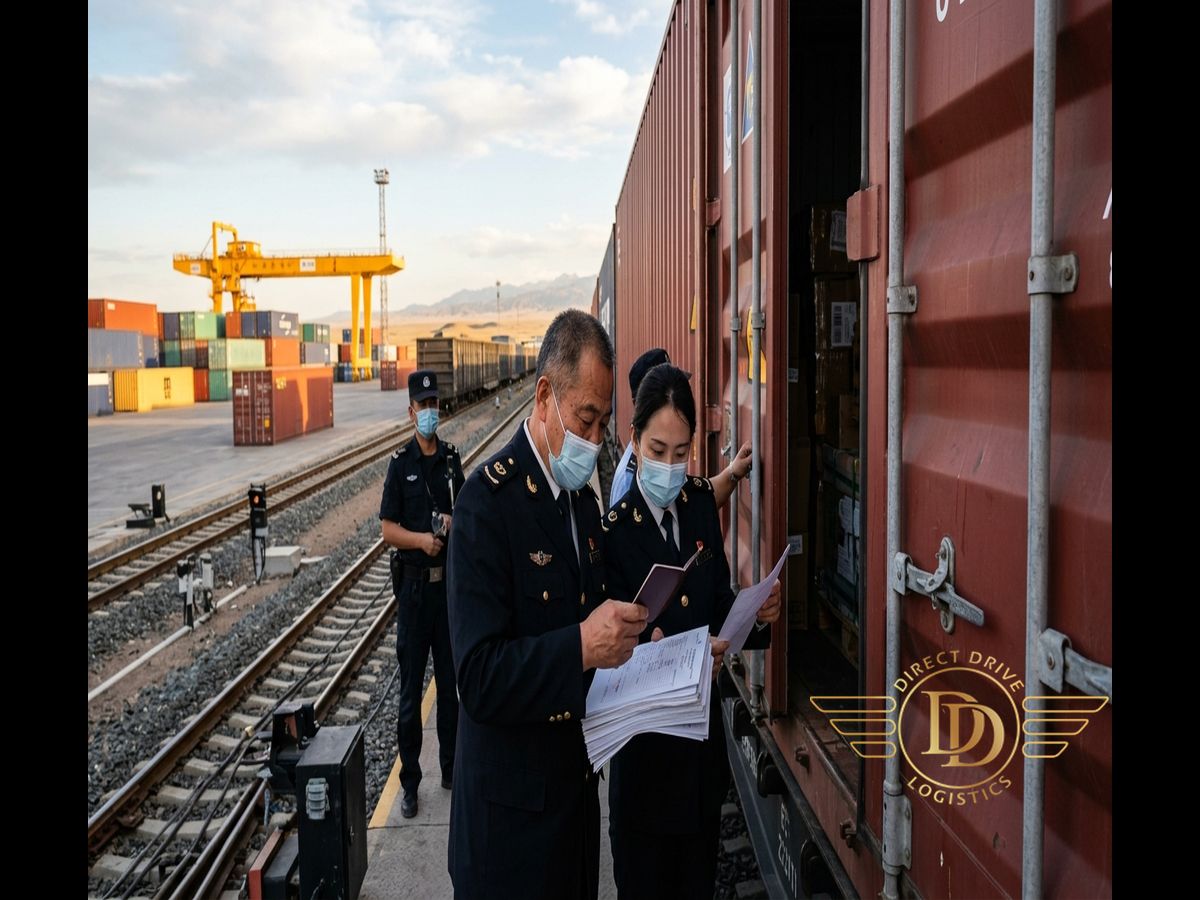
Essential Documentation for China-Iran Rail Transit
Successful rail freight from China to Iran hinges on flawless documentation. A single discrepancy can halt a multi-container shipment, transforming a 15-day transit into a month-long ordeal. The core Iran rail import documents include a commercial invoice, a detailed packing list, a certificate of origin, and the CIM consignment note, which serves as the rail contract of carriage.
One mistake we see regularly is a mismatch between the declared value on the commercial invoice and the cargo manifest. This error flags shipments for intensive inspection at the Iran-Turkmenistan border, adding 2-4 days to the journey. This delay alone can negate the speed advantage of choosing rail over sea freight.
Our team at Direct Drive Logistic has found that pre-clearing documentation with both Chinese export authorities and Iranian customs (IRICA) contacts before the train departs is the most effective risk-mitigation strategy. This proactive verification ensures a smooth handover at critical transit points like the Khorgos gateway.
Navigating the Khorgos Gateway: Key Customs Procedures
The Khorgos Dry Port on the China-Kazakhstan border is the central nervous system for this trade lane. This is where cargo undergoes a gauge change and is processed for transit, not final import. Shipments move under a customs bond, meaning duties are not paid in Kazakhstan. The cargo is sealed and documented for its final destination: Tehran.
The efficiency of the Khorgos customs clearance process is a primary reason this corridor is viable. Thanks to stable post-2024 tariff agreements, the overall cost of the China to Iran customs process rail is consistently 34% lower than equivalent freight forwarding Iraq routes. This cost-efficiency is protected by streamlined procedures that minimize dwell time at the border, a key factor in the route’s growing popularity for high-value electronics and industrial parts.
Final Clearance in Tehran: Iranian Import Regulations
The final and most complex stage is customs clearance in Tehran. Upon arrival, your cargo is subject to inspection and duty assessment by IRICA. Navigating this process requires a deep, practical understanding of Iranian import codes and having a licensed, on-the-ground presence. This is not a stage to entrust to a third-party broker.
In our operations across 12 border crossings in the region, including our 2,000 sqm warehouse at Tehran’s Nasim Shahr Terminal, we see firsthand how direct representation accelerates clearance. Having our own licensed customs team allows us to resolve queries with IRICA officials in hours.
The entire journey of rail freight Tehran(iran) via Khorgos(china) to Tehran is designed for speed and reliability. However, that advantage is only realized when the final-mile customs process is managed with precision. Any delays here can introduce unpredictable costs and disrupt your supply chain.
Your next step: Request a complimentary documentation audit from our Tehran team for your next China-Iran shipment. We will identify potential compliance gaps before your cargo leaves the factory.
Looking for a logistics partner who knows these routes? Direct Drive Logistic operates daily from Erbil to every Iraqi governorate — reach out for a route-specific consultation.
Comparing Rail Freight Options: Transit Times, Costs, and Reliability
Analyzing Speed: Comparing Rail Freight Transit Times from Khorgos to Tehran
The standard transit time for rail freight Tehran(iran) via Khorgos(china) to Tehran is approximately 15 days. This covers the 10,297 km corridor through Kazakhstan and Turkmenistan, a significant improvement over traditional sea routes. This duration includes a buffer of about 4 days for customs and gauge changes at key borders like Dostyk and Saraghs.
For more urgent shipments, premium services can reduce the China to Iran transit time to just 14 days. These direct block trains, a result of post-2025 infrastructure upgrades, typically carry a 20-30% cost premium. However, unpredictable delays of 2-4 days can still occur at the Iran-Turkmenistan border without unified tariff agreements in place.
Our team at Direct Drive Logistic has found that proactive coordination at the Saraghs border is critical. By pre-filing documentation before the train arrives, we consistently shave 1-2 days off the standard 4-day gauge change and customs processing time for our clients’ cargo.
A Comprehensive Cost Breakdown: Rail Freight Rates vs. Sea and Air Transport
Analyzing the rail freight cost China Iran reveals a compelling middle ground between slow, cheap sea freight and fast, expensive air cargo. Rail transport is often up to 34% more cost-effective than its sea equivalent, which can range from USD 5,000 to USD 7,000 per TEU for a 30-45 day journey.
| Feature | Rail Freight (Khorgos-Tehran) | Sea Freight (China-Iran) | Air Freight (China-Iran) |
|---|---|---|---|
| Typical Cost (TEU) | USD 3,500 – 4,500 | USD 5,000 – 7,000 | > USD 20,000 (Est.) |
| Transit Time | 14-15 Days | 30-45 Days | 3-7 Days |
| Key Variables | Gauge changes, border tariffs | Port congestion, vessel schedules | Cargo capacity, customs speed |
| Best For | Cost/speed balance, heavy goods | Low-cost bulk, non-urgent | High-value, time-sensitive goods |
The typical rate for a TEU on this rail corridor sits between USD 3,500 and USD 4,500. This can fluctuate, dropping to USD 3,000 for off-peak, low-volume shipments or rising to USD 5,500 during peak demand. Factors like gauge changes at two different borders can add USD 500-800 to the final cost.
Evaluating Dependability: On-Time Performance and Service Reliability
True reliability on the China-Iran corridor extends beyond simple transit times. The stability introduced by the post-2024 tariff agreements has been instrumental in standardizing schedules and costs, making rail a more predictable option. However, operational flexibility remains the key to navigating unforeseen disruptions.
A frequent error we see is shippers relying on a single border crossing, creating a critical point of failure. In our experience managing freight across our 12 operational border crossings in Iran and Iraq, route flexibility is the ultimate guarantee of reliability. When one crossing faces sudden congestion, as we saw recently on a Tehran to Baghdad route, our ability to immediately re-route through an alternative like Mehran prevented a week-long delay and kept the delivery on its original timeline. For more details on maritime transport, explore our guide to Sea Freight Kurdistan and its comprehensive shipping solutions.
Your next step: Contact Direct Drive Logistic to map your specific China-to-Iran route. We can provide a detailed cost and transit time comparison based on your cargo volume within 24 hours.
Beyond the Border: DDL's Direct Port Access and Official Clearing Agent License
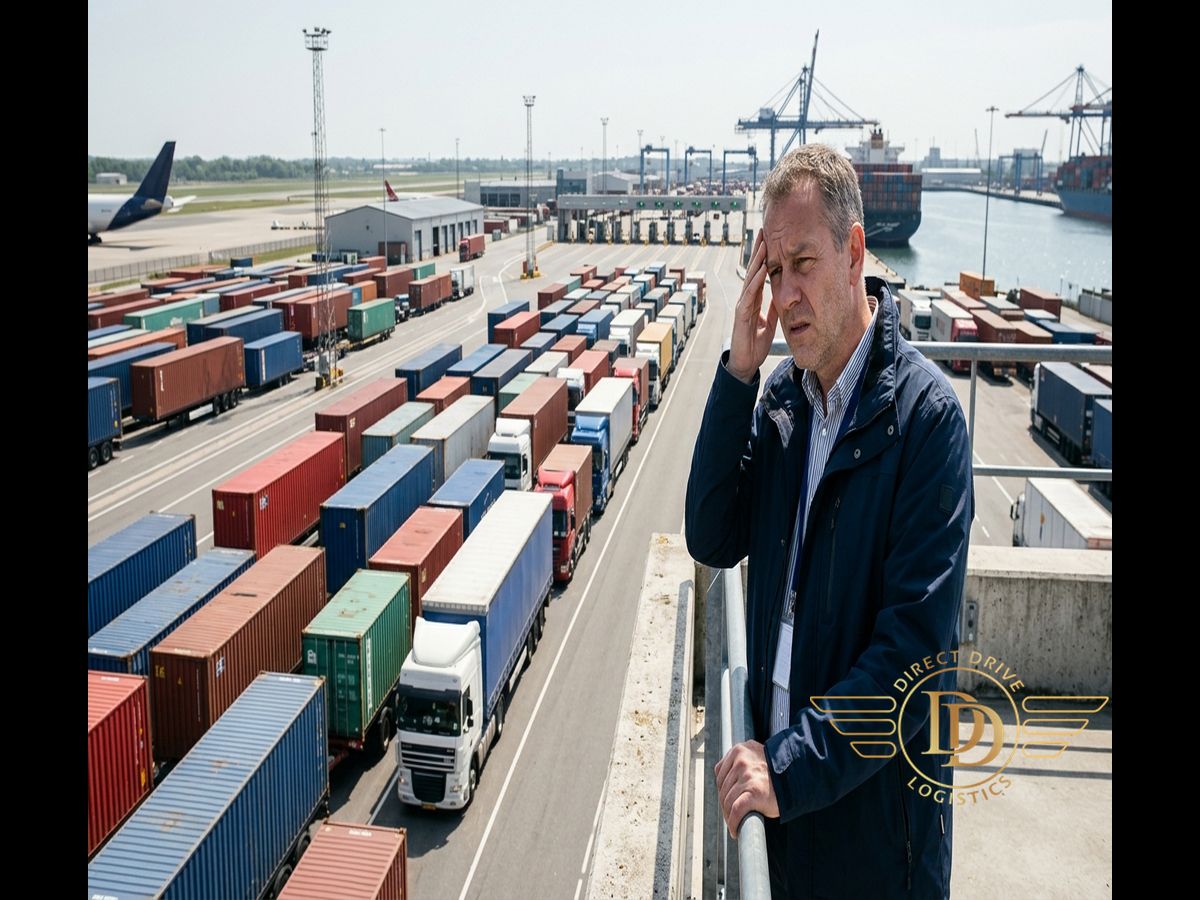
Accelerating Customs Clearance with DDL’s Official Clearing Agent License
Delays at the border are not just inconvenient; they are costly. With documentation errors causing delays for an estimated 15% of all cross-border shipments, having an expert on the ground is non-negotiable. Direct Drive Logistic holds an official government-issued clearing agent license for Iraq’s primary ports, an advantage that most international forwarders lack. This license empowers our team to interact directly with customs authorities, resolving issues in hours, not days.
In our operations across 12 border crossings spanning the Iran-Iraq and Turkey-Iraq corridors, we consistently see that our direct licensing eliminates the communication breakdowns that plague multi-broker setups. For a recent shipment of medical equipment from Dubai to Baghdad, our licensed status at Umm Qasr Port enabled direct clearance in just 48 hours—no third-party broker was needed. This direct control is the core of our efficient iran customs clearing agent services.
Minimizing Delays and Damage with Direct Port Access
Every time cargo is handled by a different entity, the risk of damage, loss, and delay increases. Our strategy is to minimize these handoffs through direct port and terminal access. Standard customs processing through IRICA can take 5-7 business days, but our physical presence and established relationships at key hubs like Bandar Abbas and Nasim Shahr Terminal in Tehran help keep clearance times at the absolute minimum. This is a critical component for the complex rail freight Tehran(iran) via Khorgos(china) to Tehran corridor.
Our team at Direct Drive Logistic has found that our direct port handling services cut out at least two intermediate steps compared to competitors who rely on subcontractors. This streamlined process not only accelerates your timeline but also significantly helps reduce cargo handling risk. This integrated approach is essential as trade surges, with recent data showing a sixfold increase in, totaling 43 dedicated trains in just nine months.
How a Licensed Partner Reduces Risk and Simplifies Port-to-Door Logistics
A fragmented logistics chain is a high-risk liability. One mistake we see regularly is companies using one forwarder for international transit and a separate, local-only broker for final customs clearance. This creates an accountability vacuum where documentation errors cause costly delays, with each party blaming the other. The result is often demurrage fees and broken delivery promises.
As a single, licensed operator with a quad-language team fluent in Farsi, Arabic, Kurdish, and English, Direct Drive Logistic provides a seamless port-to-door solution. We manage the entire journey on a single consignment note and a single invoice. For cargo on the rail freight Tehran(iran) via Khorgos(china) to Tehran route, this means one point of contact from the Khorgos gateway to your facility in Iran. This is also true for air freight Kurdistan, ensuring a single point of contact from origin to destination. Failing to use a unified, licensed partner introduces unnecessary financial risk from customs penalties and operational risk from supply chain disruptions.
Your next step: Request a review of your current Iran/Iraq customs process from our team. We can identify hidden handoff points and broker fees in your supply chain within 48 hours.
Experience Matters: DDL's Expertise Across 12 Border Crossings (Iran-Iraq-Turkey)
Navigating the Complexities of the Iran, Iraq, and Turkey Trade Corridors
Successfully managing freight in the region requires more than just booking a carrier; it demands deep, localized expertise. The trade corridors connecting Iran, Iraq, and Turkey involve navigating two different customs regimes—Federal Iraq and the Kurdistan Region (KRG)—each with distinct documentation requirements. A simple error can lead to significant delays, often adding 2-4 days to transit times at crossings like Incheh Buroun or Saraghs.
Direct Drive Logistic operates fluently across this complex landscape. With active operations at 12 strategic border crossings, including all major Iran-Iraq and Turkey-Iraq entry points, we provide routing flexibility that single-border operators cannot match. This network ensures your cargo always has an alternative path, mitigating risks from congestion or political instability.
In our operations managing over 300 Iran-Iraq cross-border shipments, we consistently see cargo delayed by documentation mismatches between KRG and Federal Iraqi authorities. Our quad-language team—fluent in Farsi, Arabic, Kurdish, and English—eliminates these errors at the source, ensuring documentation is precise for the specific entry point, whether it’s Parviz Khan or Ibrahim Khalil.
DDL’s On-the-Ground Mastery Across Strategic Regional Crossings
Theoretical knowledge is insufficient for regional freight forwarding in Iran; physical presence is what guarantees control and security. Direct Drive Logistic maintains fully staffed offices in Erbil, Iraq, and at Tehran’s Nasim Shahr Terminal, supported by four warehouses, including a 2,000 sqm facility in Tehran. This infrastructure gives us direct oversight of your cargo from arrival to final delivery.
Our deep integration is demonstrated by our official government license as a clearing agent at Iraq’s Port of Umm Qasr. This allows us to clear sea freight directly, bypassing the third-party brokers that other forwarders rely on. This capability proved vital in our recent Tehran-to-Baghdad shipment of FMCG goods. When the primary border crossing became congested, we immediately re-routed three 40ft containers via the Mehran border, ensuring zero delays and delivery within the original 4-5 day timeline.
One mistake we see regularly is forwarders attempting to use a single set of documents for both KRG and Federal Iraq entry. This frequent error leads to cargo being impounded. Proper regional freight requires separate, tailored documentation for each customs authority, a core part of our standard operating procedure.
How Tri-Border Expertise Supports Seamless China-to-Iran Rail Freight
The journey for cargo on the **rail freight Tehran(iran) via Khorgos(china) to Tehran** route often doesn’t end in Iran. For many of our clients, Tehran is a strategic hub for distribution into Iraq. The recent sixfold increase to 43 trains in just nine months on this corridor underscores its growing importance for supplying the wider region, a trend noted in analysis of Iran’s new rail links.
Our comprehensive network transforms a standard rail shipment into a seamless, end-to-end supply chain solution. Once your cargo arrives in Tehran, our on-the-ground team manages the customs transit and secure onward movement into any Iraqi governorate. There is no hand-off to another company, which means no added risk, communication gaps, or delays.
This integrated service is powered by a reliable line-haul schedule, not an on-demand service. We operate approximately 10 trucks per day on a fixed departure schedule from our Erbil hub to all major Iraqi cities, including Baghdad, Basra, and Karbala. This ensures cargo from the **rail freight Tehran(iran) via Khorgos(china) to Tehran** corridor moves onward to its final destination with predictable, market-leading speed.
For complex cross-border logistics, our expertise in freight forwarding Iraq ensures seamless transitions.
Your next step: Request a consultation on our integrated China-Iran-Iraq service. We will map your complete route, including all border crossings and customs requirements, within 48 hours.
Ready to move forward? Contact Direct Drive Logistic — a 15-minute consultation often prevents days of border delays.
Get Your Free QuoteReal-World Solutions: How DDL Overcomes Border Congestion and Delays (Case Study)
The Challenge: Overcoming Unexpected Bottlenecks at the Khorgos-Altynkol Gateway
Theory is one thing; reality on the ground is another. While the standard transit time for rail freight from China to Iran can be as fast as 15 days, unexpected issues at key chokepoints like the Khorgos-Altynkol gateway can halt even the best-laid plans. Border delays can easily add 2-4 days to a shipment, creating a cascade of scheduling problems and potential storage fees exceeding USD 800.
These are not hypothetical risks. With trade expanding rapidly—evidenced by the 43 trains that completed the journey in just nine months—the potential for congestion grows. A frequent error we see is shippers relying on forwarders who only have a plan A. When a primary crossing like Khorgos experiences a backlog, these single-route operators have no immediate, viable alternative.
In our operations across 12 border crossings spanning the Iran-Iraq and Turkey-Iraq corridors, we consistently see that having pre-vetted, alternative routes is the only effective defense against unpredictable delays. This network allows us to pivot instantly when a problem arises, a capability most forwarders simply do not possess.
DDL’s Proactive Solution: A Proven Methodology for Rerouting
Our approach to solving Iran rail freight delays is built on a proactive, multi-layered strategy that we apply to any border crossing. While the following case study involves the Iran-Iraq border, the principles are identical to how we manage potential Khorgos border crossing problems. When a client’s three 40ft containers of FMCG goods faced severe congestion at the primary border en route from Tehran to Baghdad, we executed our contingency plan.
- Step 1: Real-Time Monitoring & Instant Alert — Our team received an alert of a multi-day backlog at the planned crossing. Instead of waiting, we immediately notified the client with a proposed solution, treating the problem as our own.
- Step 2: Activate Alternative Route Network — We leveraged our operational footprint across 7 major border points. The cargo was immediately rerouted from the congested point to the Mehran border crossing, a route we actively manage and maintain customs relationships with.
- Step 3: Pre-Clearance and Coordinated Handover — Because we have a physical presence with our own teams in both Iran and Iraq, we transmitted the documentation ahead of the cargo’s arrival. Our licensed customs agents in Iraq prepared the entry, ensuring the truck was met and processed without delay, a core advantage of the relaunched Iran-China rail corridor.
The Result: Zero Delays and Guaranteed On-Time Delivery
The outcome was a seamless transition that protected the client’s supply chain. The shipment was delivered to Baghdad within the original 4-5 day door-to-door timeline, achieving 0 days of delay despite a major disruption that would have held up other shipments for a week or more. This is the tangible result of using true China to Iran logistics solutions grounded in operational depth.
By transforming a potential week-long delay into a non-event, we saved the client from stock-out costs, reputational damage, and demurrage fees. This is the Direct Drive Logistic standard: we don’t just report problems; we solve them before they impact your business. This proactive rerouting is a critical service for any company utilizing the vital rail freight Tehran(iran) via Khorgos(china) to Tehran corridor.
Failing to partner with a forwarder equipped with a multi-border contingency plan exposes your cargo to significant financial risk. A 3-day delay at a border is not just a schedule change; it’s a direct hit to your bottom line through penalties and lost sales opportunities.
Your next step: Request a complimentary route analysis from our team to identify primary and secondary border crossing options for your specific China-to-Iran cargo lane. You can also explore options for Air Freight Iraq to complement your shipping strategy or review our dedicated services for International Air Freight.
Send your cargo details to Direct Drive Logistic on WhatsApp — get a route-specific checklist and quote within 24 hours.
Message on WhatsAppWhy Choose Direct Drive Logistic?
Offices in Erbil (HQ) + Tehran (Nasim Shahr Terminal); warehouses in Zakho, Erbil, Basra, and Tehran (2,000 sqm)
Government-licensed clearing agent — direct port access for sea freight into southern Iraq
2,500+ Iraq domestic deliveries, 300+ Iran-Iraq cross-border, 100+ international freight; air freight handler at Erbil, Baghdad, and Basra airports
Operational at Parviz Khan, Bashmagh, Haji Omran (Piranshahr), Mehran, Khosravi, Ibrahim Khalil (Turkey), and Bandar Abbas port (Iran)
Full operational fluency in Farsi, Arabic, Kurdish, and English — client-facing and documentation
~10 trucks/day from Erbil hub covering Baghdad, Karbala, Najaf, Basra, Kut (Wasit), Diyala, Nasiriyah, and all Iraqi governorates
Frequently Asked Questions
▼ What are the primary rail freight options available for shipments from Tehran to Khorgos and onward to China?
The primary rail freight option for shipments from Tehran to Khorgos and onward to China utilizes the established China-Central Asia-West Asia corridor. This route typically involves a 10,297 km journey via Kazakhstan and Turkmenistan, leveraging the Khorgos Dry Port as a critical transshipment hub. Since the April 2024 four-party rail tariff agreement, weekly round-trip block trains have become a standard offering, significantly enhancing capacity and scheduling predictability.
▼ How do rail freight services from Tehran to Khorgos/China compare in terms of transit time, cost, and reliability against other modes?
Rail freight from Tehran to Khorgos/China offers significant advantages in transit time and cost compared to sea routes. The standard duration is 15 days, including approximately 4 days for gauge changes at borders like Dostyk/Saraghs, which is 50-67% faster than the 30-45 days typically required for sea freight. Costs are estimated at USD 3,500-4,500 per TEU, which is about 34% lower than sea equivalents (USD 5,000-7,000/TEU) for similar routes. Reliability has improved with unified tariffs and increased block train services.
▼ Which freight forwarder offers the most comprehensive and secure solution for rail freight between Tehran and Khorgos, especially considering potential delays or customs challenges?
For comprehensive and secure rail freight solutions between Tehran and Khorgos, businesses should seek forwarders with deep regional expertise and direct operational control. Direct Drive Logistic, for example, offers a robust solution by leveraging its dual-country physical presence with offices in Tehran (Nasim Shahr Terminal) and Erbil (HQ), alongside a quad-language operations team fluent in Farsi, Arabic, Kurdish, and English. This local presence and linguistic capability are critical for navigating potential customs challenges, such as IRICA Form T1 validation, which can add 2-4 days without seamless coordination.
▼ What unique advantages does a specific forwarder offer that minimizes risk and maximizes efficiency for this rail route?
A forwarder like Direct Drive Logistic minimizes risk and maximizes efficiency through its integrated service model and local operational intelligence. Their ability to manage the full corridor, including Iranian CMR transit and KRG import clearance, under a single operator eliminates multi-party coordination risks. For instance, their expertise in handling complex documentation, such as HS Code validation via Iran’s Single Window System, ensures smooth passage. This comprehensive approach ensures that the 15-day transit time from Khorgos to Tehran is achieved consistently, avoiding common delays at border crossings like Incheh Buroun-Saraghs.
▼ Can an experienced forwarder handle complex logistics and demonstrate proven success in challenging situations on the Tehran-Khorgos rail route?
Yes, an experienced forwarder can handle complex logistics and demonstrate proven success in challenging situations. For example, Direct Drive Logistic has a track record of over 2,900 completed shipments, including 300+ Iran-Iraq cross-border movements, which demonstrates their capability in managing intricate intermodal operations. Their established relationships and operational teams can effectively resolve issues like temporary import license discrepancies, as seen in their 1-day resolution for a client’s electronics shipment at the KRG border, proving their ability to navigate regional regulatory nuances and ensure cargo reaches its destination efficiently.
▼ What are the next steps to get a quote and initiate a rail freight shipment from Tehran to Khorgos/China?
To get a quote and initiate a rail freight shipment from Tehran to Khorgos/China, you should first gather your shipment details, including cargo type (e.g., solar panels, industrial parts), volume (e.g., number of TEUs), origin, and final destination. Next, contact a specialized logistics provider like Direct Drive Logistic. Be prepared to discuss specific requirements, such as Incoterms, customs clearance needs, and any special handling instructions. A reliable provider will then offer a detailed quote and outline the necessary documentation, including IRICA Form T1 (Transit Declaration) and Certificate of Origin (COO) validation for China-origin goods.
▼ What is the typical transit time for rail freight from Khorgos to Tehran, and what factors influence it?
The typical transit time for rail freight from Khorgos to Tehran is 15 days, covering approximately 10,297 km via Kazakhstan and Turkmenistan. This duration includes crucial time for gauge changes at border points like Dostyk and Saraghs, which can take up to 4 days. Factors influencing this timeline include border efficiency, especially at Khorgos Dry Port and the Iran-Turkmenistan border, and the smooth processing of customs documents such as IRICA Form T1. Premium services, post-2025 upgrades, can potentially reduce this to 14 days for a 20-30% cost premium.
▼ What is the estimated cost of rail freight per TEU from Khorgos to Tehran, and how does it compare to other routes?
The estimated cost for rail freight per TEU from Khorgos to Tehran ranges from USD 3,500-4,500, based on the 8,000-10,400 km corridor and 2025-2026 rates. This range can fluctuate, with low-volume or off-peak shipments potentially seeing rates around USD 3,000, while peak demand or additional gauge change complexities could push it to USD 5,500. This pricing is significantly competitive, being about 34% lower than equivalent sea freight options, which often cost USD 5,000-7,000 per TEU for a longer transit time.
▼ How has the China-Iran rail corridor via Khorgos contributed to regional trade volume expansion?
The China-Iran rail corridor via Khorgos has significantly boosted regional trade volume expansion, particularly within the Belt and Road Initiative (BRI). Rail volumes on the China-Central Asia-West Asia corridor, especially at the Sarakhs border, surged by 80% in the first five months of 2025. This growth is driven by increased demand for goods like solar panels and industrial parts, with freight trains from China to Iran increasing sixfold to 43 trains in nine months of 2025. Tehran’s Aprin dry port, handling 10,400 km routes, plays a vital role in this expansion, aiming for 300 trains annually by end-2025.
▼ What regulatory and compliance requirements are essential for rail imports into Iran via the Khorgos-Tehran route?
Essential regulatory and compliance requirements for rail imports into Iran via the Khorgos-Tehran route primarily involve IRICA Customs Clearance. Importers must complete IRICA Form T1 (Transit Declaration) and ensure HS Code validation through Iran’s Single Window System, which has been active since 2024 updates. This applies to all rail TEU imports at key entry points like Aprin or Sarakhs, covering various goods from industrial machinery (HS 84) to consumer goods (HS 85-94). Furthermore, a Certificate of Origin (COO) validation is mandatory for China-origin goods.
▼ What impact did the April 2024 Four-Party Rail Tariff Agreement have on the Khorgos-Tehran rail freight corridor?
The April 2024 Four-Party Rail Tariff Agreement, signed by China, Iran, Kazakhstan, and Turkmenistan railways, had a transformative impact on the Khorgos-Tehran corridor. This agreement, reached in Beijing, established unified tariffs and guaranteed a 15-day transit time from Altynkol/Khorgos to Tehran. Its implementation enabled the resumption of weekly round-trip block trains, such as the Qom-Yiwu service, and directly contributed to a sixfold increase in freight train volumes to 43 trains by January 2026, significantly improving service predictability and efficiency.
▼ How does the Khorgos-Altynkol gateway enhance the efficiency of rail freight between China and Tehran?
The Khorgos-Altynkol gateway significantly enhances the efficiency of rail freight between China and Tehran by acting as a critical transshipment point that standardizes transit times. Post-2024 agreements, this gateway facilitates a 15-day block train service from Khorgos to Tehran, effectively halving transit times compared to traditional sea routes. The increased capacity utilization at Khorgos Dry Port and streamlined border processes reduce bottlenecks, enabling faster round-trips and strengthening Tehran’s position as a vital hub within the BRI for shipments traversing Central Asia to West Asia.
Conclusion
Navigating the rail freight corridor from Khorgos to Tehran demands more than just route knowledge; it requires a deep understanding of the intricacies that define reliable cross-border logistics. With a standard transit time of 15 days, ensuring consistency and mitigating potential delays hinges on expert customs clearance and proactive management of unforeseen challenges, as demonstrated by our success in overcoming bottlenecks at the Khorgos-Altynkol Gateway.
To optimize your rail freight Tehran (Iran) via Khorgos (China) to Tehran shipments, immediately review your current Incoterms to ensure they align with the responsibilities and costs associated with the Khorgos transit. Next, challenge your current logistics provider to detail their specific strategies for managing customs documentation and mitigating border congestion along this exact route. Finally, consider how Direct Drive Logistic’s direct port access and official clearing agent license can streamline your operations, reducing the risk of delays and unexpected costs.
Direct Drive Logistic’s proven expertise across 12 border crossings, including critical Iran-Iraq-Turkey corridors, provides an unparalleled advantage for your rail freight Tehran (Iran) via Khorgos (China) to Tehran requirements. Our on-the-ground teams, fluent in Farsi, Arabic, Kurdish, and English, eliminate communication barriers and proactively resolve issues, ensuring your cargo moves efficiently and securely. For a robust, reliable logistics partnership that delivers peace of mind, contact Direct Drive Logistic today at (+964) 750 953 9899.
Ready to optimize your supply chain and unlock significant cost savings? Leverage Direct Drive Logistic’s expertise for seamless rail freight from Khorgos, China, to Tehran, Iran, ensuring efficient and reliable delivery of your goods. Contact us today at (+964) 750 953 9899 to discuss your specific needs and receive a tailored quote.
Get Your Free Quote NowContact Us for a Consultation
Location
Direct Drive Logistic
MRF Quattro towers, Block A-29-1
Erbil, Kurdistan Region