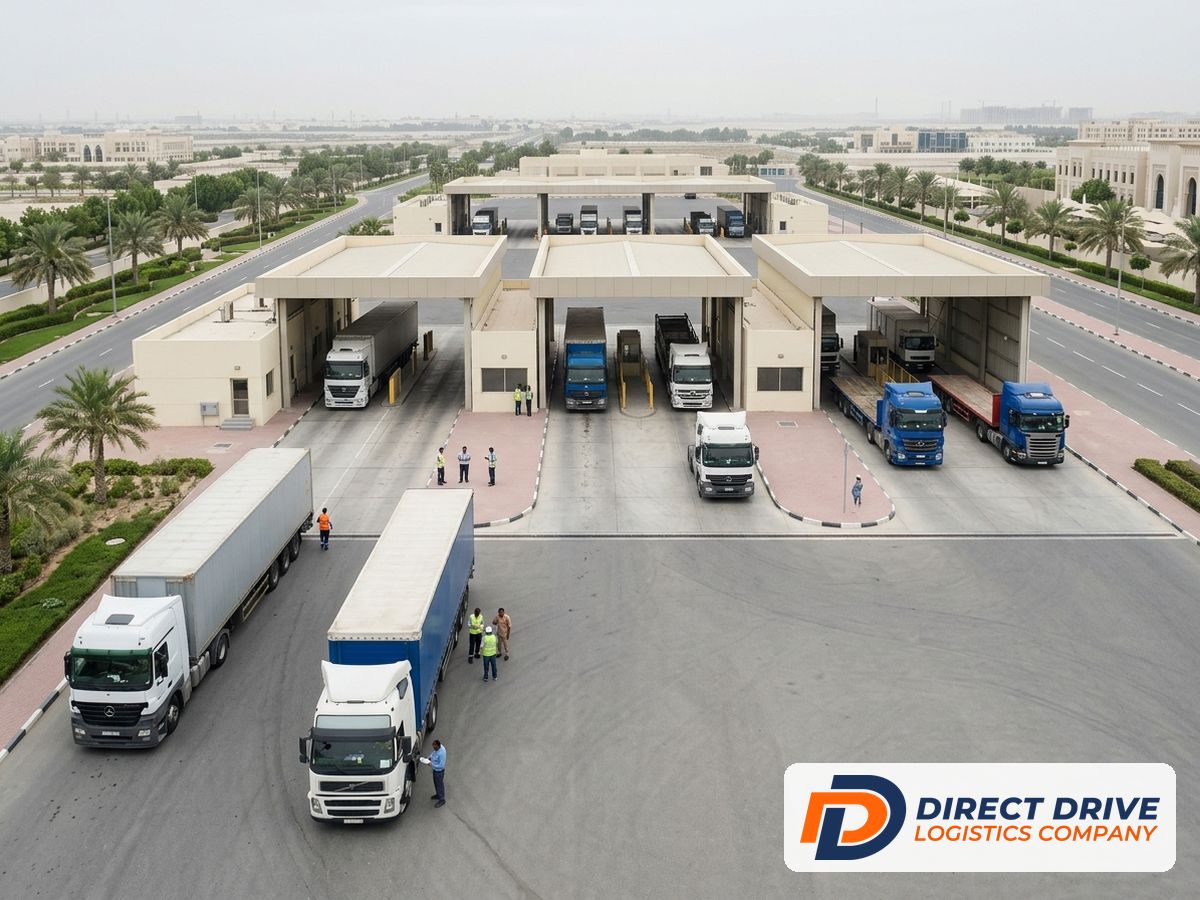
Discover how iraq syria commercial border crossings can transform your operations with direct drive logistic writes this guide as an operator, not a commentator: it treats the iraq-syria crossings as one part of a 15-crossing network spanning both krg and federal iraq customs, backed by offices in erbil and tehran, 6 warehouses (baghdad, karbala, najaf, erbil, duhok, tehran) and a government clearing license at umm qasr, so logistics managers can plan syria-linked freight with ready fallback routes instead of single-border dependency.
Iraq-Syria commercial border crossings are three road gateways: Al-Qaim–Albu Kamal and Al-Waleed–Al-Tanf in Anbar, and Al-Rabia–Al-Yarubiyah in Nineveh. Al-Qaim serves Baghdad-bound freight. Al-Waleed links western Anbar with Damascus and the Syrian coast, and Al-Rabia connects Mosul and northern Iraq toward Syria and Turkey.
Your truck reaches Al-Qaim, but one mismatched invoice holds it in customs while demurrage (daily charges for holding equipment beyond free time) accumulates. Route data puts Latakia to Baghdad at 3–5 days by road. One document error can push delivery well past that window.
This guide shows which Iraq-Syria commercial border crossings suit your cargo and gives a dated timeline from the 2011 closures onward. It then covers federal customs and anti-smuggling screening, transshipment (transferring cargo between trucks at the frontier), and backup corridors via Turkey, Jordan and the Gulf. The first section matches each crossing to your cargo.
Al-Qaim, Al-Waleed or Al-Rabia: Matching Each Crossing to Your Cargo
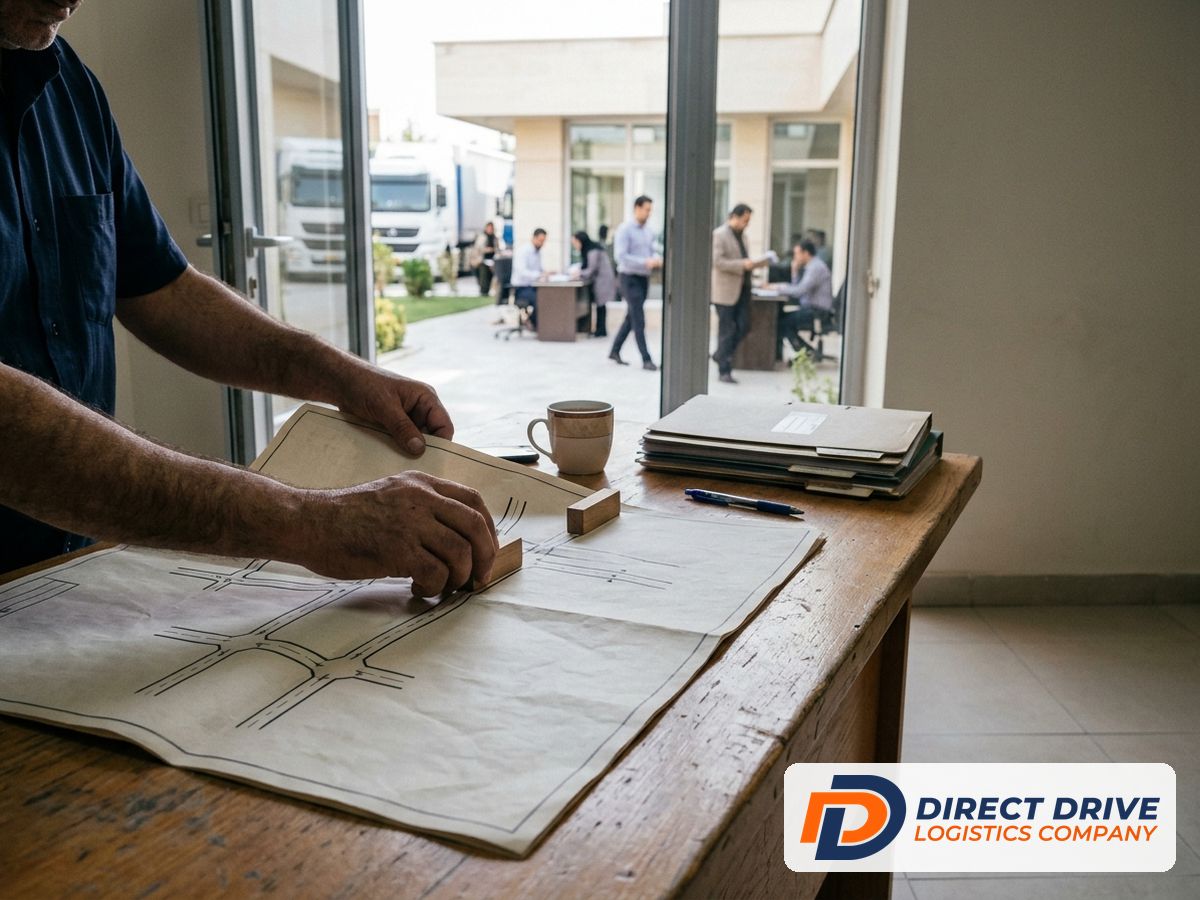
Side-by-Side Comparison Table: Iraqi and Syrian Post Names, Markets and Destinations
Iraq syria commercial border crossings come down to 3 road gateways. Two are in Anbar and one is in Nineveh. Each pairs an Iraqi post with a Syrian counterpart, and each suits a different market, so the right choice starts with where your cargo is going inside Iraq.
| Feature | Al-Qaim–Albu Kamal | Al-Waleed–Al-Tanf | Al-Rabia–Al-Yarubiyah |
|---|---|---|---|
| Iraqi governorate | Anbar | Anbar | Nineveh |
| Iraqi markets served | Baghdad, western Anbar | Baghdad, western Anbar | Mosul, Kirkuk, northern Iraq |
| Syrian destinations | Syrian coast via the Euphrates corridor | Damascus, Syrian coast | Syrian coast, Syria–Turkey link |
| Cargo profile | Baghdad-bound general and containerized freight | Damascus-linked trade, fuel-tanker traffic | Northern Iraq trade, Turkey-linked loads |
| Route transit time | Latakia to Baghdad: 3-5 days from port by road | Latakia to Baghdad: 3-5 days from port by road; Baghdad to Damascus: 3-5 days door to door | Latakia to Mosul: 3-5 days from port by road; Kirkuk to Latakia: 4-5 days door to door |
The port-based figures exclude the sea voyage when cargo originates at a Syrian port. Add the ocean leg to Latakia before you quote a delivery date to a Baghdad or Mosul consignee.
Cargo type shifts the choice too. Higher tanker volumes may add congestion at the Al-Waleed Al-Tanf border. Time-sensitive dry cargo bound for Baghdad can then compare Al-Qaim, since both Anbar gateways show the same 3-5 day window from Latakia.
Are Iraq’s borders closed? No single answer covers them. Each of these iraq syria commercial border crossings has its own operating status, hours and permitted traffic. Confirm the Al-Qaim Albu Kamal crossing or the Rabia Yarubiyah border crossing for your cargo class before dispatch, and use our interactive Iraq border crossings map to compare routes. Recent truck transit measures show the rules change, and the 2026 plan includes dedicated lanes for perishable loads.
Cost follows the same logic. Border dwell, inspection, transshipment and security requirements differ by post. Customs duty depends on your goods and their HS code. Estimate it with our tariff calculator, or request a quote and our team will confirm the full cost.
From 2011 Closures to 2026 Reopenings: A Dated Timeline for Shippers
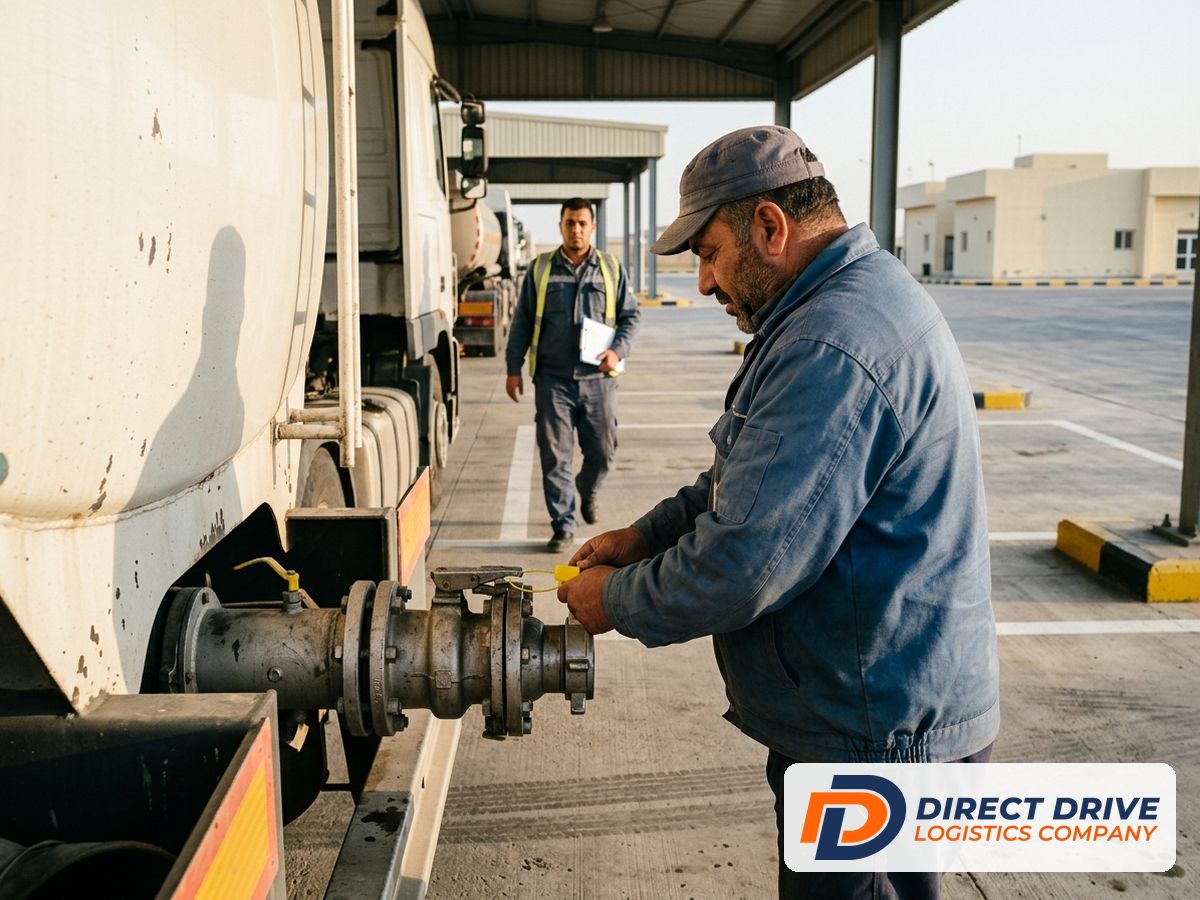
2011–2014 Conflict-Era Closures and the Long Freeze on Iraq–Syria Overland Freight
The Iraq–Syria border closure history begins with the conflict years of 2011–2014. During that period, all three road gateways lost regular commercial use. Al-Rabia–Al-Yarubiyah in Nineveh went through nearly 13 years of restricted activity. For more than a decade, Syria-linked cargo had to route through Jordan, Turkey or the Gulf.
The freeze ended in stages, so planners should read each crossing’s record separately:
- June 2025: Al-Qaim–Albu Kamal reopened. Anbar regained a direct Baghdad-bound gateway to Syria.
- 2026-04-02: Al-Waleed–Al-Tanf reopened for commercial traffic and goods transit. Passenger operations were scheduled for a later phase. Early traffic included tanker movements, with Syrian petroleum moving toward Iraq and Iraqi crude moving toward Syria’s Baniyas refinery.
- 2026-04-20: Iraq began reopening Al-Rabia, and the General Customs Authority automated the crossing during the process. See this Rabia reopening report for background.
- May 2026: Al-Rabia handled its first 3 commercial shipments from Syria, which restored the movement of essential goods.
- September 2026: The two governments signed a bilateral customs agreement. It extended cooperation from individual gateways to shared procedures.
Is Iraq friendly with Syria? On trade policy, the 2025–2026 record points to working cooperation. Both governments coordinated three reopenings within about 10 months and then formalised customs ties. Iraq–Syria relations still carry a long history of closures. That history is the reason shippers should treat the Iraq–Syria commercial border crossings as a newer, less-tested option than Iraq’s established corridors.
The practical lesson from this timeline is that a single gateway should not carry a whole supply plan. From our own operations, we operate at 15 border crossings into Iraq. These cover the Iran-Iraq corridor through the Ibrahim Khalil border crossing and the Turkey-Iraq corridor, plus the Jordan, Saudi Arabia, Kuwait and Syria frontiers, along with Bandar Abbas port, across both KRG and Federal Iraq customs systems. That network gives clients route flexibility that single-border operators cannot match. When one Syria-facing crossing slows, freight can move to Al-Qaim, Al-Waleed or Al-Rabia, or to a non-Syrian corridor, without rebuilding the plan from scratch.
Federal Customs Clearance and Security Screening on the Western Frontier
Federal Tariff Under ASYCUDA: Core Documents and HS Code Declarations
All three Iraq Syria commercial border crossings, Al-Qaim, Al-Waleed and Al-Rabia, fall under Federal Iraq customs rather than the KRG system. Each applies the Iraq federal customs tariff at the border. Declarations are lodged through ASYCUDA customs procedures in Iraq.
Prepare 5 core documents before the truck is dispatched:
- Commercial invoice
- Packing list
- Certificate of origin
- Harmonized System Code (HS Code) declaration
- Permits for any regulated goods
Customs duty depends on your goods and their HS code. Estimate it with our tariff calculator, or request a quote and our team will confirm the full cost. For permit and paperwork questions, our Iraq logistics compliance consulting team can review your files before dispatch.
One mistake causes frequent holds. The HS code on the declaration describes a different product from the one on the commercial invoice. Officers treat that gap as a classification query, and the truck waits until all 5 documents match line by line.
Electronic Customs Data Exchange and Dedicated Lanes for Trucks, Tankers and Perishables
In September 2026, Baghdad and Damascus agreed to link their customs systems. The agreement covers electronic customs data exchange, direct port-to-port communication and dedicated lanes for trucks, tankers and perishables. Invoices and certificates of origin can be verified electronically, so errors surface before the truck arrives.
The Damascus Chamber of Commerce projected a 30%–50% first-year rise in bilateral trade from these measures. It forecast possible bilateral trade of USD 300–500 million by 2027. Pre-arrival processing rewards shippers whose files are complete before departure.
Capacity is planned to grow as well. The Rabia crossing is slated to expand by 100 dunams, approximately 100,000 m², for additional trucks and fuel tankers.
Are there still illegal border crossings? Informal, unofficial crossing points have long existed along the desert frontier between Anbar, Nineveh and eastern Syria. Cargo moved through them carries no valid Iraqi entry record. It can be seized at internal checkpoints, and carriers linked to those routes may draw closer security screening at official gates. Expect cargo inspection and driver checks at all 3 federal crossings, because they are designed to counter exactly this traffic.
Onward Routes to Turkey, Jordan and the Gulf: Planning a Federal Backup Corridor
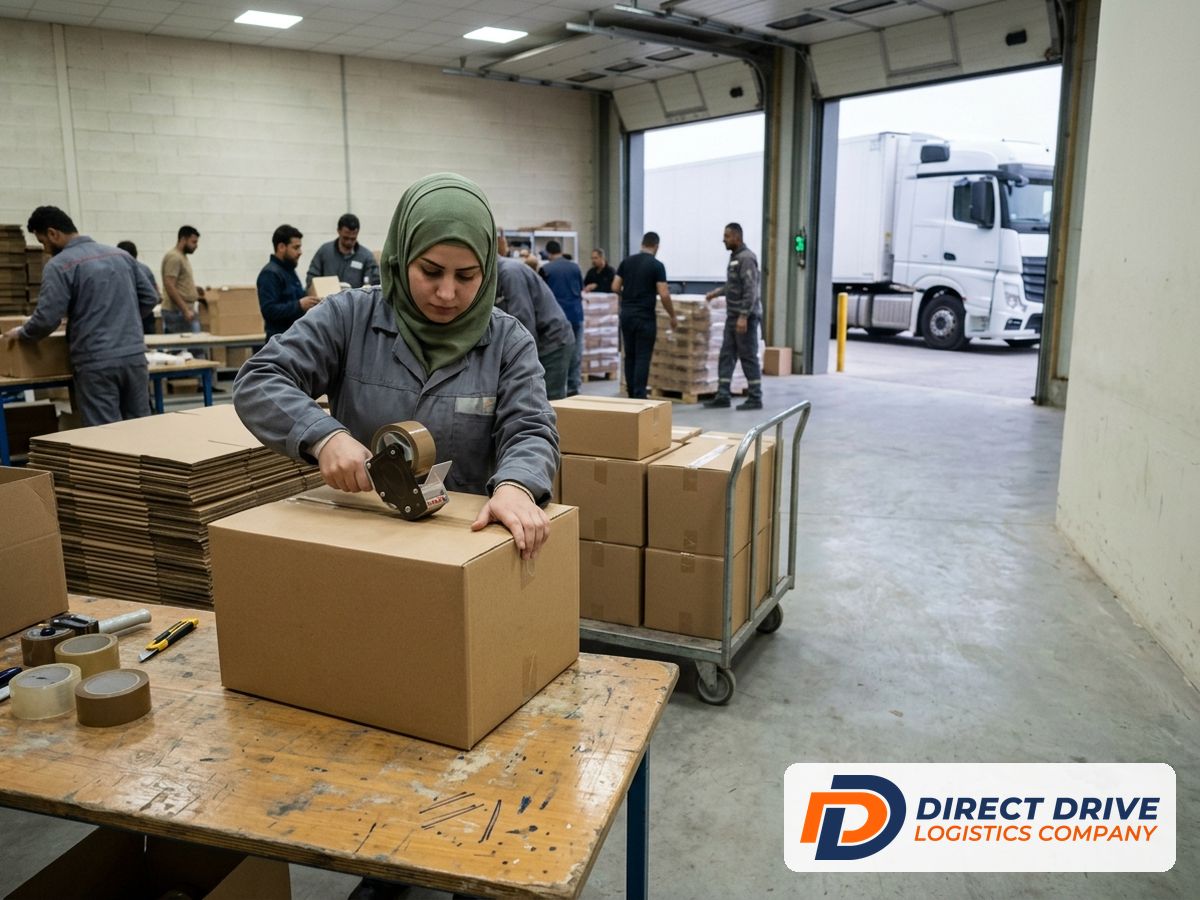
Goods That Cross the Frontier: Foodstuffs, Refrigerated Trucks (Reefer), Fuel Tankers and Building Materials
Freight on the Iraq Syria commercial border crossings falls into five groups: foodstuffs, perishables in refrigerated trucks (reefers), construction materials, fuel and tanker cargo, and consumer goods. Each group follows its own inspection pattern along roughly 600 km of frontier. Reefer and tanker loads use lanes separate from general cargo.
Food shippers should confirm whether Iraq’s food customs exemption covers their HS code before loading. Customs duty depends on your goods and their HS code. Estimate it with our tariff calculator, or request a quote and our team will confirm the full cost.
Al-Rabia as a Syria–Turkey Transit Link for Mosul and Northern Iraq Cargo
Al-Rabia gives Mosul and Nineveh shippers a Syria–Turkey alternative without routing cargo through Baghdad first. Like Al-Qaim and Al-Waleed, it sits under the federal system, one of Iraq’s 2 customs systems. That classification determines which backup corridors are interchangeable with it.
Back up a federal crossing with another federal crossing. Aqaba to Baghdad trucking via the Trebil border crossing with Jordan takes 10-12 days from the port by road. The sea voyage is not included. Baghdad to Amman via Trebil runs 3-5 days door to door.
The Arar crossing between Saudi Arabia and Iraq adds two Gulf options. Riyadh to Baghdad takes 2-3 days door to door. Dubai to Baghdad takes 4-6 days door to door. Both routes keep cargo inside federal customs, so the original paperwork logic still applies.
A switch to a KRG route changes the plan. Mersin to Baghdad via Ibrahim Khalil takes 5-7 days from the port by road. It also requires new transport and customs documents and a tariff-difference settlement at Al-Sad, which takes 1-2 days. Build those extra days into any backup plan that crosses into the KRG system.
On our Tehran to Baghdad border congestion re-route, we recorded 0 days delay despite primary border congestion. That result came from a fallback that had been mapped before the truck left. For wider Iraq cross-border logistics planning, map the fallback for every lane before dispatch.
Moving Your First Load Through Iraq Syria Commercial Border Crossings, Step by Step
Confirming Your Harmonized System Code (HS Code) and Product Rules With Official Sources
A first shipment to Syria starts with classification. The 6-digit HS code determines duty, permits and inspection at all three Iraq Syria commercial border crossings. One mismatched code can hold a truck at the gate.
- Step 1: Confirm the HS code — Check the classification against official Iraqi and Syrian customs sources. Use the same code on the invoice, packing list and declaration. Customs duty depends on your goods and their HS code. Estimate it with our Iraq customs tariff calculator, or request a quote and our team will confirm the full cost.
- Step 2: Verify product rules — Confirm with official sources whether your goods need permits, certificates or conformity approvals before loading.
- Step 3: Choose a crossing and a backup — Match Al-Qaim, Al-Waleed or Al-Rabia to your Iraqi destination. Name a second corridor before you book.
Vetting a Freight Forwarder and Preparing Documents for Electronic Pre-Arrival Submission
Vetting a freight forwarder means checking proof, not promises. Look for permanent offices in Iraq and at least 1 neighboring country, official customs licenses, and staff fluent in 4 languages: Arabic, Kurdish, Persian and Turkish.
- Step 4: Vet the forwarder — Request copies of licenses, office addresses and evidence of trucking reach across the Iraq–Syria–Iran–Turkey triangle.
- Step 5: Prepare pre-arrival documents — Align the invoice, packing list, certificate of origin and transport document for the electronic pre-arrival customs declaration. Both governments are rolling out new truck-transit measures, and data that matches across every document helps you avoid repeat checks.
- Step 6: Book trucking and border handling — Confirm equipment type, loading date and who manages each side of the border.
- Step 7: Track through clearance and delivery — Ask for status updates at 3 points: the border gate, customs release and final delivery.
- Step 8: Request a tailored quote — Freight cost depends on the route, cargo type, weight, equipment and border handling, so no fixed price applies.
Next step: Send your HS code, cargo weight, origin and Iraqi or Syrian destination to Direct Drive Logistic and request a customized quote for your route.
Send your cargo details to Direct Drive Logistic on WhatsApp and our team will send you a route-specific checklist and quote.
Message on WhatsAppWhy Choose Direct Drive Logistic?
Offices in Erbil (HQ) + Tehran (Nasim Shahr Terminal); rentable warehouse space in Baghdad, Karbala, Najaf, Erbil, Duhok and Basra, plus a warehouse in Tehran
Government-licensed clearing agent — direct port access for sea freight into southern Iraq
2,500+ Iraq domestic deliveries, 300+ Iran-Iraq cross-border, 100+ international freight; air freight handler at Erbil, Baghdad, and Sulaymaniyah airports
Operational at 4 KRG borders (Parviz Khan, Bashmagh, Haji Omran, Ibrahim Khalil) plus the Sheikh Saleh border market, 5 federal Iran-Iraq borders (Khosravi, Sumar, Mehran, Shalamcheh, Chazzabeh) and 6 further federal crossings (Trebil, Arar, Safwan, Al-Qaim, Al-Rabia, Al-Waleed), plus Bandar Abbas port
Full operational fluency in Farsi, Arabic, Kurdish, and English — client-facing and documentation
~10 trucks/day from Erbil hub covering Baghdad, Karbala, Najaf, Basra, Kut (Wasit), Diyala, Nasiriyah, and all Iraqi governorates
Frequently Asked Questions
Iraq’s commercial frontier with Syria has three official crossings. Al-Qaim–Albu Kamal and Al-Waleed–Al-Tanf are in Anbar, and Al-Rabia–Al-Yarubiyah is in Nineveh. Choose the crossing by final destination: – Al-Qaim is the main goods crossing for Baghdad-bound freight. – Al-Waleed suits western Anbar–Damascus traffic, cargo linked to the Syrian coast and fuel tankers. – Al-Rabia gives Mosul, Kirkuk and northern Iraq an alternative route through Syria and Turkey. Services usually include full truckload (FCL) and consolidated (LCL) road freight, tanker movements and perishable shipments. If your route combines Kurdistan Regional Government and federal Iraqi customs, plan both clearance steps before the truck departs.
Road freight from Latakia to Baghdad takes about 3–5 days through either Al-Qaim or Al-Waleed, based on operator route data. At the Iraq–Syria commercial border crossings, most delays come from border waiting time, customs inspection, transshipment and document amendments rather than driving time. Budget for these hidden costs: – demurrage – storage during inspection – escort or security requirements – unloading and reloading – Syrian and Iraqi customs brokerage – cargo examination Freight cost depends on route, truck type, FCL versus LCL handling and special lane needs, so request a current quote. Customs duty depends on your goods and their HS code — estimate it with our tariff calculator, or request a quote and our team will confirm the full cost.
Yes. Iraq and Syria maintain working trade relations. In September 2026, the two countries agreed to: – exchange customs data electronically – connect their border ports through direct communication – create dedicated lanes for commercial trucks, tankers and perishables For shippers using the Iraq–Syria commercial border crossings, electronic pre-arrival data is intended to reduce repeated document checks on routes such as Al-Qaim to Baghdad or Al-Rabia to Mosul. Dedicated perishable lanes should reduce the time food and pharmaceutical shipments spend at the border. Practical step: make sure HS codes, declared values and consignee details match exactly on the Syrian and Iraqi paperwork, because linked systems flag mismatches quickly. Plan extra time for tanker cargo, since heavy tanker traffic can congest Al-Waleed–Al-Tanf.
Unofficial crossings and smuggling routes are a long-standing risk along the desert frontier between Anbar, Nineveh and eastern Syria. Commercial cargo should therefore move only through the three official crossings: Al-Qaim, Al-Waleed and Al-Rabia. Goods that enter through unofficial points have no valid customs record, cannot be legally cleared inside Iraq and may be seized. Protect your shipment in four steps:
- Route the shipment through an official crossing using a licensed customs broker.
- Seal the containers and record the seal numbers on the CMR consignment note.
- Confirm whether the route requires a border escort or other security arrangement.
- Track the truck and share checkpoint updates with the consignee.
Include security costs in your plan from the start.
Whether a US citizen can travel to Syria depends on the U.S. Department of State travel advisory in force on the travel date. Check travel.state.gov and your employer’s security policy before booking. For most cargo owners, travel is unnecessary. A licensed forwarder can handle pickup in Syria, transit through Al-Qaim, Al-Waleed or Al-Rabia, and Iraqi customs clearance while you approve documents remotely. US companies should also screen consignees, goods and payment channels against applicable sanctions rules, including OFAC regulations, and confirm the rules for their specific product before shipping. Prepare three documents early: the commercial invoice, the packing list and the certificate of origin. All three should show the same HS codes and party names.
Ask for evidence rather than promises: – official clearing-agent licenses – the specific Iraq–Syria commercial border crossings and other borders where the forwarder has its own staff – documented shipment outcomes – the languages its staff use with customs officers Backup routing is essential in this region. For example, Direct Drive Logistic re-routed three 40ft FMCG containers from Tehran to Baghdad through the Mehran crossing when the primary border was congested. The shipment still arrived within the original 4–5 day door-to-door timeline. On a Mersin–Erbil electronics shipment, its Kurdish-speaking team resolved a temporary import license with KRG authorities in 1 day, compared with a competitor’s estimate of 5 days. For a customized plan, share your origin, destination, HS codes, cargo volume and target delivery date.
Conclusion
Successful use of the Iraq Syria commercial border crossings starts with matching each load to the right post before the truck is dispatched. Al-Qaim serves Baghdad-bound freight, Al-Waleed links western Anbar with Damascus and the Syrian coast, and Al-Rabia gives Mosul and Kirkuk a Syria–Turkey alternative. The Damascus Chamber of Commerce has projected bilateral trade of USD 300–500 million by 2027, so shippers who plan their routes early will be best placed.
Before your next shipment, take three steps. First, confirm your HS code and check that your commercial invoice and Certificate of Origin match it line for line. Iraq and Syria agreed in September 2026 to verify both documents electronically. Second, ask your forwarder or supplier which crossing and lane your load will use (commercial, tanker or perishable) and where any KRG-origin cargo will settle federal customs. Third, send these details to Direct Drive Logistic for a route and document review.
When congestion at Al-Qaim pushes your cargo toward Al-Waleed, Al-Rabia or an onward corridor to Turkey, Jordan or the Gulf, our teams already work those frontiers, so rerouting becomes a planning decision rather than a crisis. Direct Drive Logistic’s specialists prepare ASYCUDA-ready declarations in Arabic, Kurdish, Farsi and English and keep federal cargo on federal corridors. Share your HS code and destination today by calling (+964) 750 637 9296
Need Logistics Consultation?
The Direct Drive team is ready to assist. Message us now.
Move your cargo across the Iraq–Syria border without costly delays. Direct Drive Logistic handles your customs documentation, permits, and border coordination so your shipments clear faster and arrive on schedule. Call us today at (+964) 750 637 9296 to get a free quote for your next cross-border shipment.
Get Your Free Quote NowContact Us for a Consultation
Location
Direct Drive Logistic
Gulan Street, MRF Quattro Block A 13-9
Erbil, Kurdistan Region