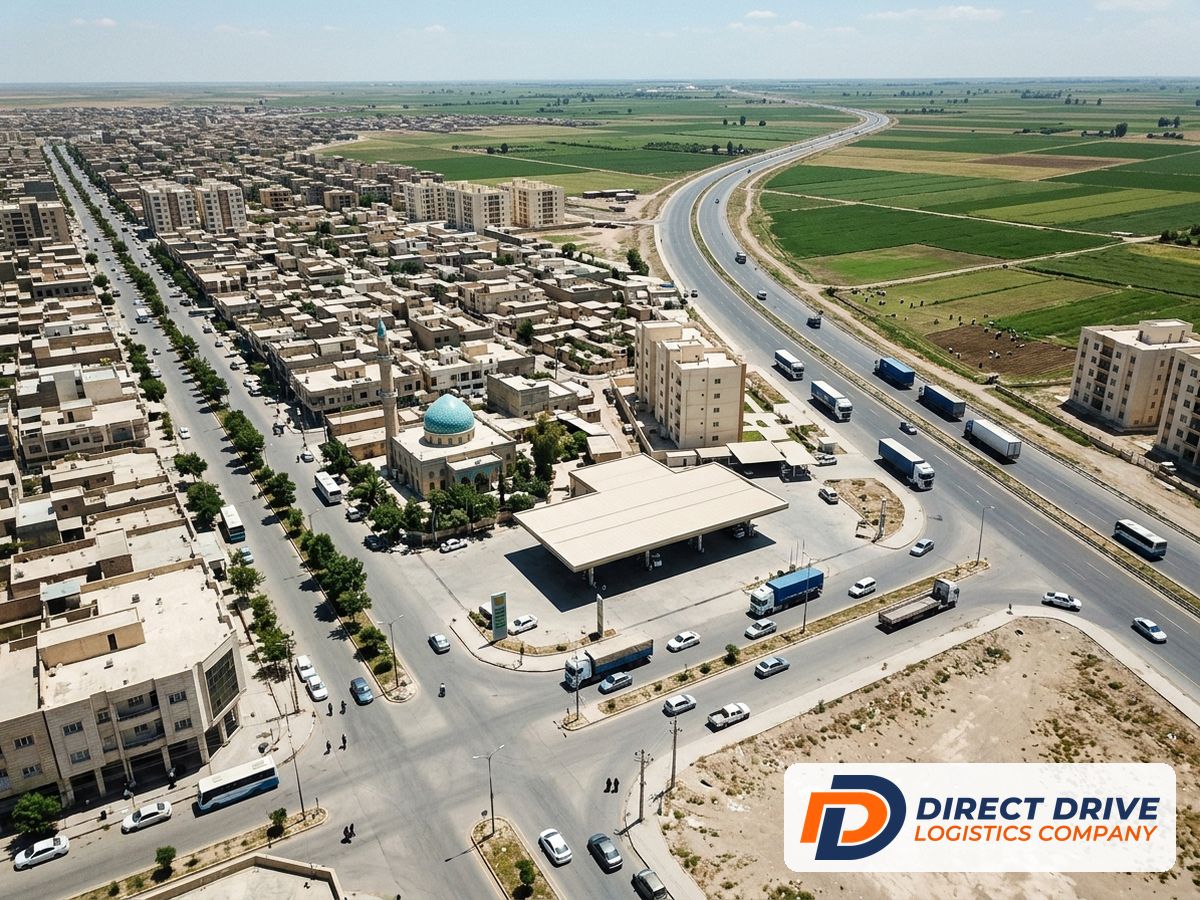
Discover how arar border crossing iraq saudi can transform your operations with treat arar as one route inside a wider network: ddl operates at 15 border crossings into iraq, including arar, trebil and safwan, and is a licensed clearing agent at umm qasr. that means a saudi shipper gets a planned sea or alternate-land contingency, plus onward delivery from ddl warehouse space in najaf, karbala and baghdad, rather than a single-gate dependency.
The Arar border crossing links Saudi Arabia’s Northern Borders Province with Iraq’s Anbar desert near An Nukhayb. Closed in 1990 and officially reopened in November 2020, the arar border crossing iraq saudi corridor carries trucks toward Baghdad, Karbala and Najaf. The Riyadh–Baghdad road baseline is 2–3 days.
Your truck reaches Arar on schedule, then waits for days because the HS code on the declaration does not match the commercial invoice. Since 2026-01-01, Iraq’s item-based customs assessment has made that mismatch costly. The assessment runs through ASYCUDA, the electronic customs system used at federal Iraqi crossings.
Clean paperwork means a commercial invoice, certificate of origin (COO) and packing list that agree line by line. This guide covers the arar border crossing iraq saudi timeline, distances and route comparisons. It then walks through clearance steps and the port and warehouse backup that a single gate cannot give you.
Where Arar Sits on the Map: Location, Distances and a 1990–2020 Timeline
Arar City and An Nukhayb: The Two Sides of the Saudi-Iraq Border Crossing
Where is Arar in Saudi Arabia? Arar city is the capital of the Northern Borders Province, on the kingdom’s frontier with Iraq. The land freight Saudi to Iraq gate, known locally as Jdeidat Arar, sits roughly 60 km north of the city by road.
On the Iraqi side, the road enters Anbar Governorate. It then runs through the open desert of the An Nukhayb area, the main settlement on this stretch of the Anbar desert. From An Nukhayb, trucks head northeast toward Karbala, Najaf and Baghdad, the three hubs most Saudi consignments target.
The Saudi Iraq border is about 810 km long. Arar is one of very few commercial gates along it, which concentrates truck traffic at this point. For a wider view of Iraq border crossings map options, compare the other gates. The approximate road distances below are useful for briefing internal teams:
- Arar city to the crossing: about 60 km.
- Rafha to Arar city: roughly 280 km west along Highway 85.
- Crossing to Baghdad: roughly 600–650 km, routed via An Nukhayb and Karbala.
Treat these as planning figures. Confirm exact routing with your carrier before you build delivery windows.
The corridor’s history explains why many teams still treat it as a newer route. Four dates matter:
- 1990: Saudi Arabia closed the crossing after Iraq’s invasion of Kuwait and cut land links.
- 2017: Both governments opened the gate to Iraqi pilgrims travelling to Mecca. They also announced plans to restore trade.
- November 2020: The crossing officially opened to commercial traffic. Regional Arar cargo reopening coverage recorded this as the first trade passage in about 30 years.
- 2026-01-01: Iraq’s ASYCUDA-based, item-level customs assessment took effect. This change made accurate documents matter more at every federal gate.
That 30-year gap shaped the corridor you use today. The Saudi-Iraq crossing at Arar has modern facilities but a short commercial track record. Its procedures changed again in 2025–2026, and shippers who briefed their teams before that transition should refresh their checklists using this Iraq border crossings guide for the item-level assessment.
Arar Border Crossing: Your Gateway for Saudi-Iraq Trade

Saudi-Iraq Bilateral Trade in 2024: The USD 1.078 Billion Corridor Through Arar
Iraq’s Ministry of Trade put Saudi Iraq bilateral trade at about USD 1.078 billion in 2024, up 35% from 2023. Saudi exports to Iraq accounted for roughly USD 1.073 billion of that total. Almost all of the trade moves one way, from Saudi producers to Iraqi buyers.
Much of that volume fits the arar border crossing iraq saudi route. The main cargo categories are construction materials, electrical goods, machinery and food. Their usual destinations are Baghdad, Najaf and Karbala, the three cities Arar approaches most directly by road.
Basra-bound cargo needs a different comparison. For southern Iraq, shippers usually weigh Arar against sea entry through Umm Qasr or road entry through Safwan.
Arar serves commercial truckers and traders, and it also handles pilgrims and individual travellers. Are Saudis allowed to go to Iraq? Saudi nationals can travel to Iraq. Both governments set the entry rules, visa requirements and the traveller groups Arar accepts, and these rules can change.
Run these 4 checks before any truck leaves:
- Driver eligibility: Confirm each driver’s nationality, passport validity and visa status with the relevant authorities.
- Arar crossing operating hours: Confirm the hours for your dispatch date with the Saudi and Iraqi border authorities. Pilgrimage seasons and public holidays can change them.
- Document match: Check that the HS codes on the declaration match the commercial invoice. Iraq’s move toward full customs automation in Iraq leaves little tolerance for mismatches.
- Consignee readiness: Confirm the receiver’s city, address and unloading window in Baghdad, Najaf or Karbala.
From my own operations, the point I make to Saudi shippers is simple. Direct Drive Logistic operates at 15 border crossings into Iraq, covering the Iran-Iraq and Turkey-Iraq corridors, including the Ibrahim Khalil border crossing, plus the Jordan, Saudi Arabia, Kuwait and Syria frontiers, and Bandar Abbas port. This network spans both the KRG and Federal Iraq customs systems, giving clients route flexibility that single-border operators cannot match.
For Arar cargo, that flexibility continues after the border. Our rentable warehouse space in Baghdad, Karbala and Najaf lets a Saudi consignment wait close to its buyer rather than at the gate. That matters when a Najaf or Karbala receiver cannot unload on the day the truck clears.
Riyadh, Dubai or Aqaba? Comparing Routes for arar border crossing iraq saudi Freight
Estimated Time of Arrival (ETA) Compared: Riyadh, Dubai, Kuwait City and Aqaba Road Corridors
Yes, Saudi Arabia shares a land border with Iraq, and Arar is its main federal gateway for trucks. For Riyadh to Baghdad trucking, the published baseline is 2–3 days door to door. That makes the arar border crossing iraq saudi corridor the shortest road option for Saudi-origin cargo headed to central Iraq.
| Corridor | Crossing | Door-to-door ETA | Federal backup |
|---|---|---|---|
| Riyadh → Baghdad | Arar | 2–3 days | Trebil or Safwan |
| Dubai → Baghdad | Arar | 4–6 days | Safwan |
| Dubai → Baghdad | Safwan | 5–7 days | Arar |
| Kuwait City → Basra | Safwan | 2–3 days | Arar |
| Aqaba → Baghdad | Trebil | 10–12 days by road from port (sea voyage excluded) | Arar |
| Baghdad → Riyadh / Dubai | Arar | No published transit time | Confirm per shipment |
The export legs out of Baghdad have no published figure. Treat any quoted return ETA as shipment-specific until a carrier confirms it in writing.
Dubai via Arar or Safwan, and Aqaba via Trebil: Weighing Longer Gulf Corridors
Dubai to Baghdad transit time runs 4–6 days via Arar and 5–7 days via Safwan. The one-day gap matters for time-sensitive stock. Safwan suits consignees in Basra, since Kuwait City to Basra takes only 2–3 days.
Aqaba to Baghdad road freight through Trebil takes 10–12 days from the port, before the sea voyage is added. It works as a western fallback when Gulf routings are disrupted, not as a speed play. Iraq’s upfront import fee system applies at every federal gate, so documents prepared for Arar transfer cleanly to Trebil or Safwan.
A common mistake is naming a Kurdistan Region crossing, such as Ibrahim Khalil, as the backup for Arar-bound cargo. KRG gates run a separate customs system from federal Iraq. A federal crossing like the arar border crossing iraq saudi gate is only realistically replaced by another federal crossing: Safwan in the south or Trebil in the west, both covered among the major trade routes in Iraq. Customs duty depends on your goods and their HS code. Estimate it with our tariff calculator, or request a quote and our team will confirm the full cost.
Navigating Arar: Key Challenges & Customs Requirements
Automated Customs Data System (ASYCUDA) and Electronic Pre-Declaration Steps at Arar
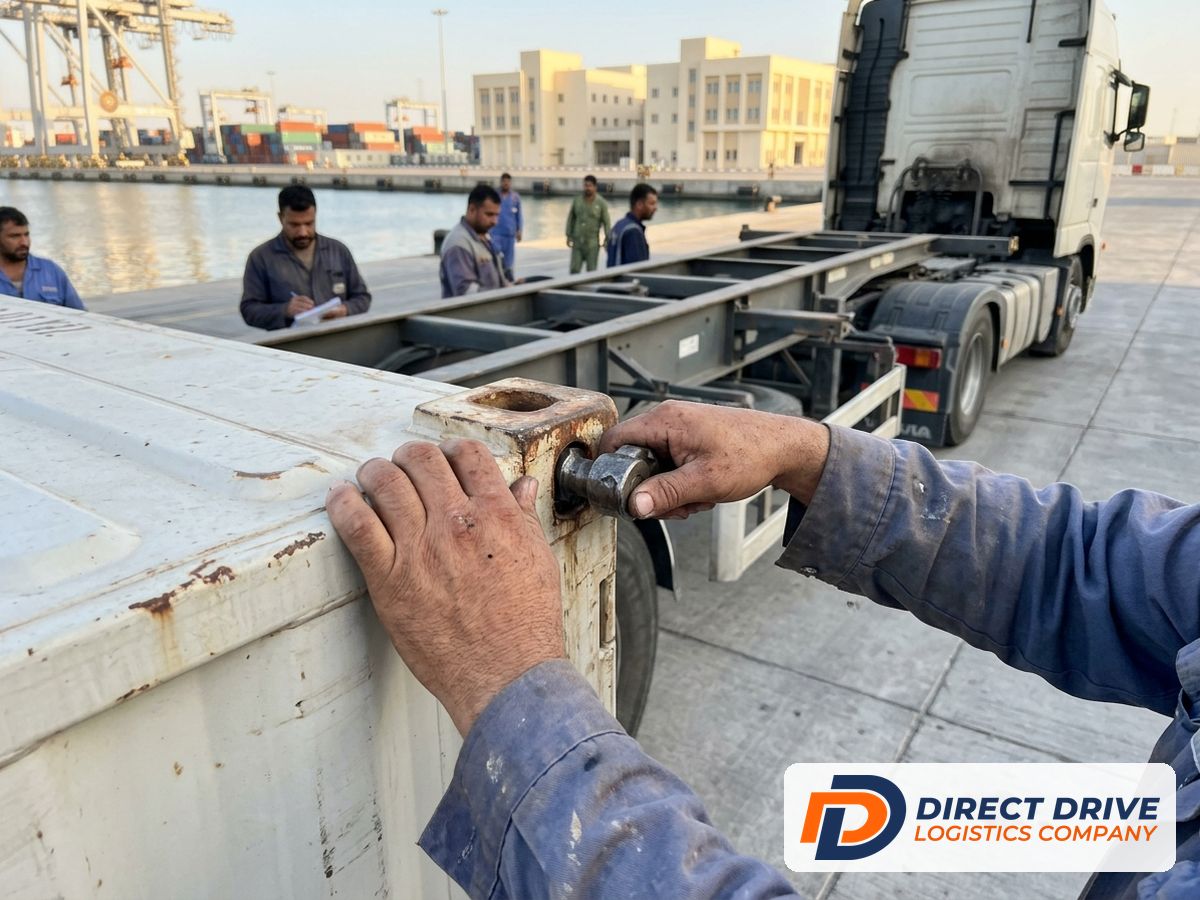
Clearance at the arar border crossing iraq saudi gate follows federal Iraqi rules. Iraq’s ASYCUDA customs system covered all 22 federal border crossings by November 2025. Electronic pre-customs declaration applied from 2025-12-01.
Since 2026-01-01, assessment has been item-based. Every declared line item now affects how fast your truck moves. Use this pre-arrival sequence:
- Step 1: Classify every line item: Assign an HS code to each product, not just the shipment. The code must match the invoice description word for word.
- Step 2: Reconcile all documents: Check that quantity, value and weight are identical on the invoice, packing list and certificate of origin.
- Step 3: Confirm conformity needs: Ask your broker whether COSQC approval or a Certificate of Conformity applies. This matters most for food, construction, electrical or technical goods.
- Step 4: Match import-license details: Make sure the license data mirrors the declared goods and consignee.
- Step 5: File the electronic pre-declaration: The importer and customs broker should validate the ASYCUDA entry before the truck leaves the Saudi side.
- Step 6: Plan for federal duty at the border: The federal tariff is applied at Arar, with no later Kurdistan Region tariff-difference settlement. Customs duty depends on your goods and their HS code. Estimate it with our tariff calculator, or request a quote and our team will confirm the full cost.
Required Documents: Commercial Invoice, Certificate of Origin (COO), Packing List and HS Codes
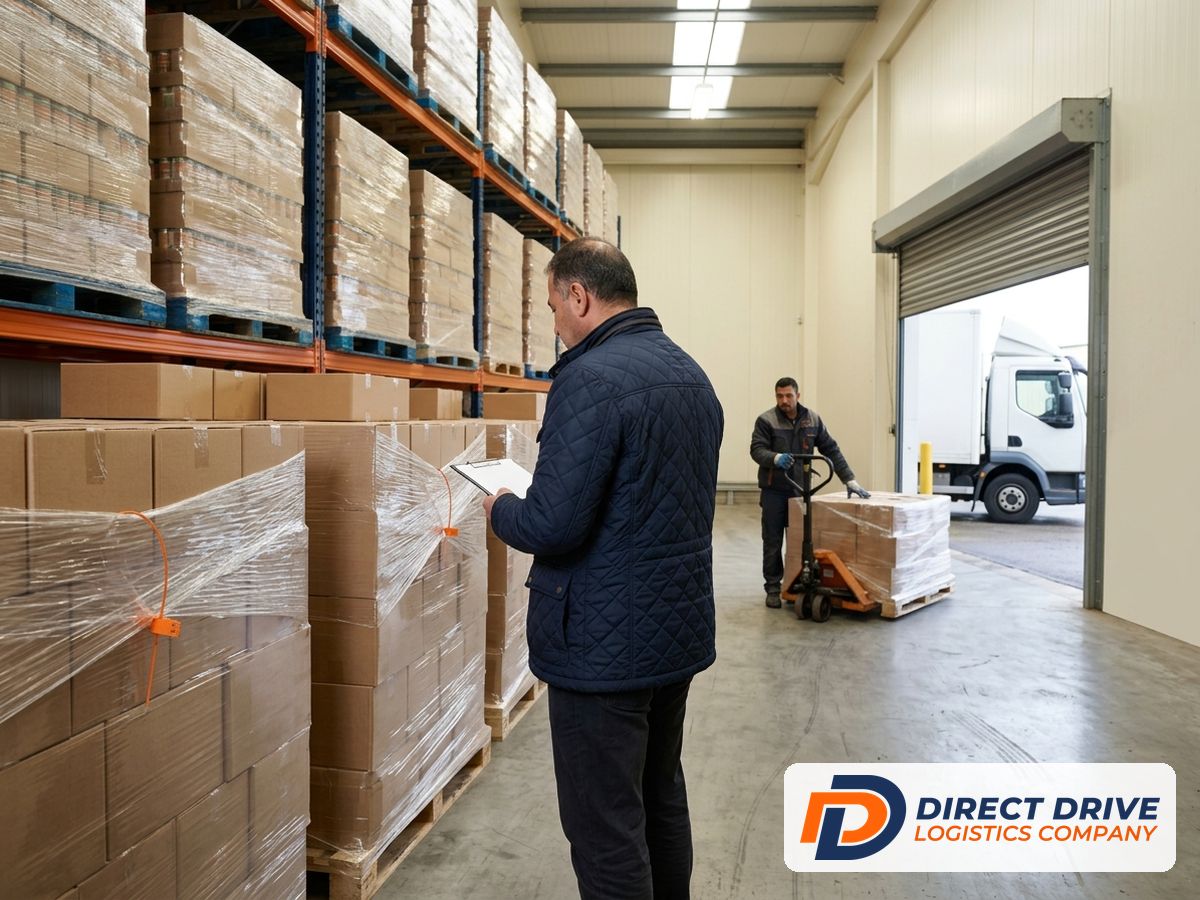
Four documents carry most of the weight at Arar: the commercial invoice, the certificate of origin, the packing list and the HS code list. Under item-level processing at the 22 federal crossings, one inconsistent line can trigger inspection or reclassification. It can also prompt a request for additional conformity evidence.
Most holds start before dispatch. A unit count that differs between the invoice and the packing list is a common cause. A generic product description that does not support the chosen code is another. General guides on Iraq customs documentation confirm the same rule: documents must agree with one another.
Contingency planning matters as much as paperwork. On our Tehran to Baghdad border congestion re-route, we recorded 0 days delay despite primary border congestion. Clean HS code classification for Iraq keeps every alternative gate usable if one crossing slows, and our guide to Iran-Iraq crossing options shows how this works on eastern routes, as shown in our Tehran to Erbil transit time guide for northern routes.
Beyond the Border: Direct Port Access & Multimodal Advantage
Multimodal Freight Options: Combining Sea Freight and Road Legs via Arar
Is Saudi Arabia friendly with Iraq? Relations between Riyadh and Baghdad are cooperative and trade-focused. The commercial reopening of the arar border crossing iraq saudi corridor is the clearest practical sign of that. For a shipper, friendly relations still do not remove the risk of relying on one gate.
A capable partner plans a sea and land transport Iraq fallback before the truck leaves Riyadh. In one Dubai to Baghdad medical equipment shipment, Direct Drive Logistic cleared the cargo at Umm Qasr within 48 hours of engagement, with no third-party broker involved. That sea option gives Saudi cargo a second entry point if the road leg is delayed.
Before you book, check that origin documents match the Iraqi declaration. Data from the Saudi national statistics authority is useful for background on the Saudi side. Your commercial invoice and HS codes decide clearance speed.
Coverage Across Federal Iraq and Kurdistan Region Crossings, Warehousing and Final-Mile Delivery
Iraq runs 2 customs systems. Federal crossings such as Arar follow Baghdad’s rules. Ibrahim Khalil and Bashmagh follow the KRG system. A freight forwarder in Iraq and Kurdistan should handle both, so rerouting does not mean changing partners.
Final-mile capacity matters just as much. In one case, a single Direct Drive Logistic truck served Baghdad, Basra and Karbala in 1-2 days on one invoice. A separate Erbil to Baghdad restock arrived door to door in 6 hours. If you also ship from Turkey, compare the Mersin to Baghdad transit time before choosing a route. For multimodal freight from Saudi Arabia to Iraq, ask any partner for this kind of domestic reach.
Your first-booking checklist covers 5 items:
- Cargo description, weight, volume and packaging.
- Agreed Incoterms (EXW, FCA, CPT or DAP).
- HS codes that match the commercial invoice.
- Pickup location in Saudi Arabia.
- Delivery city in Iraq, such as Baghdad, Najaf or Karbala.
Customs duty depends on your goods and their HS code. Estimate it with our tariff calculator, or request a quote and our team will confirm the full cost.
Next step: Send these 5 details to Direct Drive Logistic and request your Arar route quote.
Send your cargo details to Direct Drive Logistic on WhatsApp and our team will send you a route-specific checklist and quote.
Message on WhatsAppWhy Choose Direct Drive Logistic?
Offices in Erbil (HQ) + Tehran (Nasim Shahr Terminal); rentable warehouse space in Baghdad, Karbala, Najaf, Erbil, Duhok and Basra, plus a warehouse in Tehran
Government-licensed clearing agent — direct port access for sea freight into southern Iraq
2,500+ Iraq domestic deliveries, 300+ Iran-Iraq cross-border, 100+ international freight; air freight handler at Erbil, Baghdad, and Sulaymaniyah airports
Operational at 4 KRG borders (Parviz Khan, Bashmagh, Haji Omran, Ibrahim Khalil) plus the Sheikh Saleh border market, 5 federal Iran-Iraq borders (Khosravi, Sumar, Mehran, Shalamcheh, Chazzabeh) and 6 further federal crossings (Trebil, Arar, Safwan, Al-Qaim, Al-Rabia, Al-Waleed), plus Bandar Abbas port
Full operational fluency in Farsi, Arabic, Kurdish, and English — client-facing and documentation
~10 trucks/day from Erbil hub covering Baghdad, Karbala, Najaf, Basra, Kut (Wasit), Diyala, Nasiriyah, and all Iraqi governorates
Frequently Asked Questions
The Arar border crossing is the main commercial land gateway between Saudi Arabia and federal Iraq. It links Saudi Arabia’s Northern Borders Province, where the city of Arar is the provincial capital, with Iraq’s Anbar Governorate. Saudi Arabia does share a long land border with Iraq, and Arar is the crossing built for truck freight on it. Trade data shows its importance: Iraq’s Ministry of Trade reported about USD 1.078 billion in bilateral trade in 2024, up 35% from 2023, with Saudi exports accounting for roughly USD 1.073 billion. For importers, the arar border crossing iraq saudi route is a direct road link for construction materials, electrical goods, machinery and food moving toward Baghdad, Najaf and Karbala.
Under normal conditions, road freight from Riyadh to Baghdad via Arar takes 2–3 days. This is a road-service estimate, not a guaranteed border clearance time. Four factors most often extend it:
- Incomplete or mismatched documents that trigger inspection.
- Border dwell during peak periods.
- Truck-transfer or transshipment arrangements between the Saudi and Iraqi legs.
- Reefer requirements, such as plug-in power and temperature monitoring for perishables.
The same factors drive cost, along with origin city, full-truckload versus partial-load service, cargo type and any delivery beyond Baghdad. Request an itemised quote that shows brokerage, storage, demurrage and onward delivery, so hidden charges are visible before dispatch.
Shipments through the arar border crossing iraq saudi must follow Iraq’s electronic customs process. The General Commission of Customs reported that ASYCUDA covered all 22 federal border crossings by November 2025, and electronic pre-customs declaration began on 1 December 2025. Under Cabinet Resolution No. 957 of 2025, assessment moved to item level from 1 January 2026. Four documents must match line by line: the commercial invoice, packing list, certificate of origin and HS classification, including quantities and declared values. Mismatches can trigger reclassification or inspection. Arar uses the federal system, not the separate KRG customs process used at Ibrahim Khalil or Bashmagh. Customs duty depends on your goods and their HS code — estimate it with our tariff calculator, or request a quote and our team will confirm the full cost.
Choose a partner that can demonstrate three things: competence with federal Iraqi customs, coordination of the Saudi and Iraqi truck legs, and distribution beyond the border. Ask whether they file ASYCUDA pre-arrival declarations, how they manage the transfer between Saudi and Iraqi trucks, and whether they deliver to Najaf, Karbala or Basra under one invoice. Ask how they check documents before dispatch, because item-level assessment since 1 January 2026 penalises errors. Direct Drive Logistic, for example, works at Arar and has run multi-drop distribution with one truck covering Baghdad, Basra and Karbala in 1–2 days, with one driver and one invoice. That arrangement removes the need for several carrier contracts once cargo clears.
The biggest risk reducers are document auditing before dispatch, contingency routing and single-operator control from origin to the final city. – Document auditing: A forwarder that checks invoice, packing list and HS codes against each other before the truck leaves Saudi Arabia prevents most reclassification problems. – Contingency routing: When one Iraq-bound border becomes congested, an operator with alternative crossings can re-route. In one Tehran–Baghdad shipment of 3 × 40ft containers of FMCG goods, cargo was moved to the Mehran crossing and still delivered within the original 4–5 day timeline. – Local support: Arabic-speaking staff who can resolve customs queries on the spot, plus staging warehouses near Baghdad, add resilience for time-sensitive goods.
Start with five steps:
- Share the origin city, cargo type, HS codes, weight and destination.
- Receive a quote covering Saudi export formalities, border handling and Iraqi delivery.
- Finalise the commercial invoice, packing list and certificate of origin.
- Have your forwarder lodge the electronic pre-declaration before the truck arrives.
- Track the truck through clearance to the consignee’s door.
You do not need to travel to manage the arar border crossing iraq saudi process. Saudi business travellers who plan to visit Iraqi customers should confirm current visa and entry rules with the Iraqi embassy before booking. Direct Drive Logistic can coordinate all five steps under one contract.
Conclusion
Successful freight through the arar border crossing iraq saudi depends less on the road itself and more on what happens before the truck leaves the warehouse. Saudi-Iraq bilateral trade reached USD 1.078 billion in 2024, and construction and electrical goods alone exceeded USD 838 million in Iraqi imports from Saudi Arabia. The corridor is proven, but only clean, consistent documentation moves cargo through it without delays.
Before your next shipment, check every invoice line against its HS code, origin data and importer licence, because Automated Customs Data System (ASYCUDA) pre-declaration flags any mismatch at the border. Then ask your forwarder or supplier two questions. Does this cargo need COSQC approval or a Certificate of Conformity? Can they provide a current route quotation and distance matrix covering Judaydat Arar, An Nukhayb and your final destination, whether Baghdad, Najaf or Karbala? Direct Drive Logistic can pre-check that file for you before dispatch.
Direct Drive Logistic works on the ground in Iraq, with its head office in Erbil and warehousing in Baghdad, Karbala, Najaf and Basra. When your Saudi cargo needs to shift from Arar to Trebil, Safwan or Umm Qasr, the same team handles the change, and one partner stays accountable from origin to door. Send your commercial invoice and packing list for a pre-dispatch document review: (+964) 750 637 9296.
Need Logistics Consultation?
The Direct Drive team is ready to assist. Message us now.
Move your cargo through the Arar border crossing between Iraq and Saudi Arabia without costly delays. Direct Drive Logistic handles your customs documentation, clearance, and cross-border trucking so your shipment keeps moving. Call us today at (+964) 750 637 9296 for a fast, no-obligation quote.
Get Your Free Quote NowContact Us for a Consultation
Location
Direct Drive Logistic
Gulan Street, MRF Quattro Block A 13-9
Erbil, Kurdistan Region