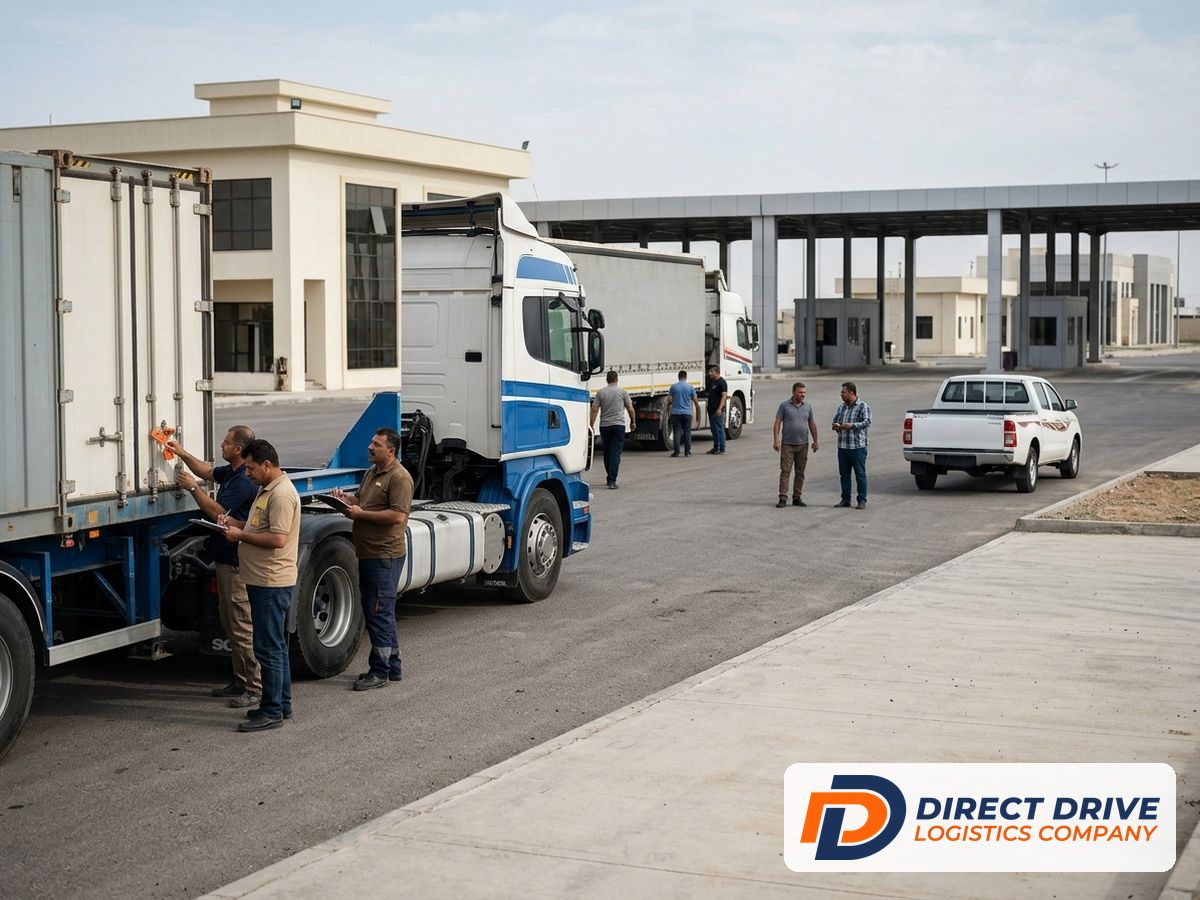
Discover how iran iraq border crossings freight can transform your operations with explain iran-iraq border crossings from the perspective of an operator with permanent offices in erbil and tehran and warehouses on both sides of the border, showing readers how two-country presence and an official umm qasr clearing license affect route choice, customs clearance and handover risk.
Iran iraq border crossings freight moves through two customs systems: Federal Iraq crossings such as Khosravi, Mehran, Shalamcheh and Chazzabeh, and Kurdistan Region (KRG) crossings such as Parviz Khan, Bashmagh and Haji Omran. Standard road transit from Tehran runs 3-5 days to Baghdad or Erbil. Crossing choice and document accuracy decide whether cargo clears or stalls.
Your truck enters at Haji Omran bound for Baghdad, then stalls at an internal checkpoint because the KRG paperwork does not match Federal requirements. Re-documentation means re-filing declarations when cargo moves between the KRG and Federal customs zones. It can stretch a planned 3-5 day trip into a week of storage and demurrage charges.
This guide compares each crossing for iran iraq border crossings freight. It explains ASYCUDA, the electronic customs-declaration system Iraq expanded from 2025-01-01. It then covers documents, inspection steps, rerouting and handover risk, and what changes when a forwarder works on both sides of the border.
Understanding the Iran-Iraq Freight Corridor: Challenges & Opportunities
Why the Iran-Iraq Corridor Matters: Non-Oil Export Volumes Driving Cross-Border Freight Demand
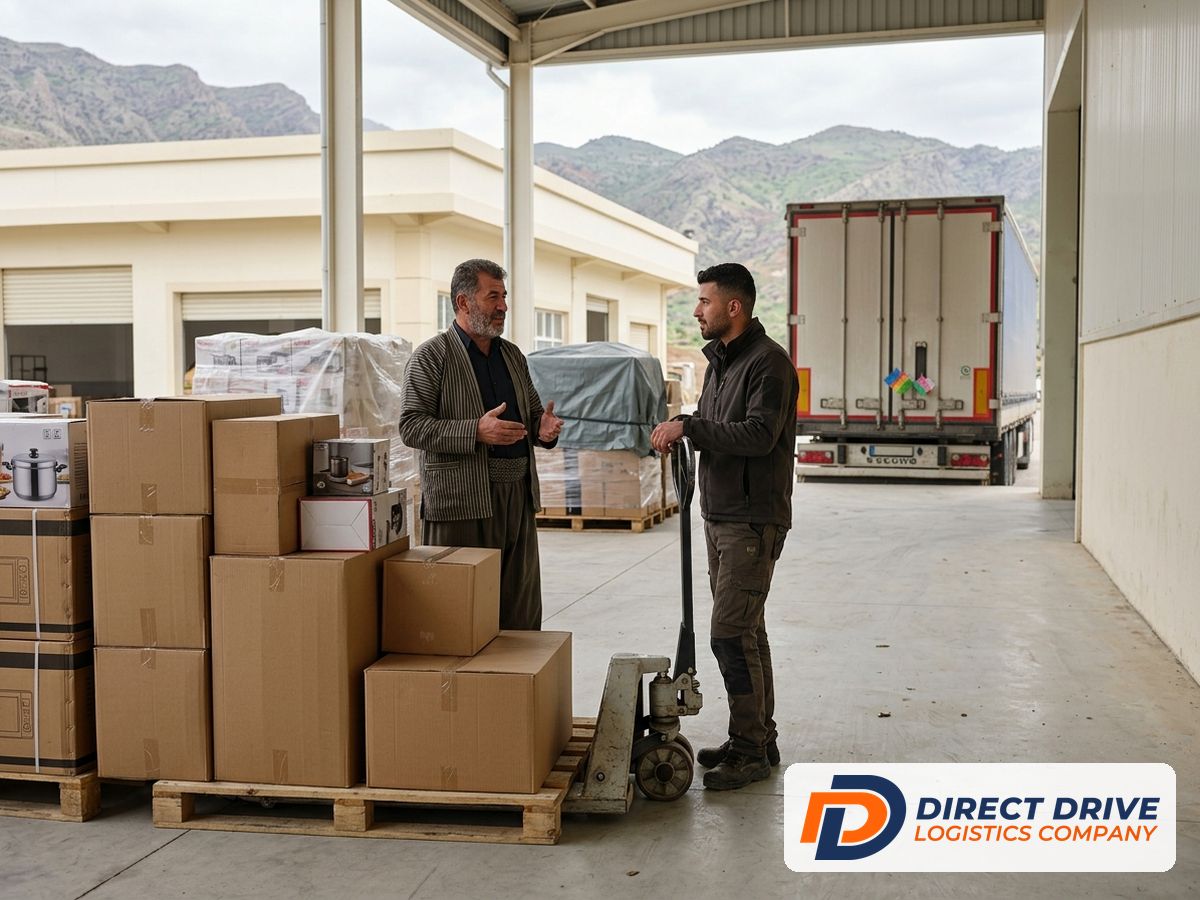
Demand for KRG customs rests on hard trade numbers. Iran shipped USD 1.905 billion in non-oil exports to Iraq in Q1 of Iranian year 1404 (2025-03-21 to 2025-06-21). That came after roughly USD 58 billion in total Iranian non-oil exports in year 1403, according to Iran non-oil trade data.
Who is Iraq’s biggest trading partner? Rankings vary by year and by whether oil is counted. The Q1 1404 figure shows that Iran is a major supplier of non-oil goods to Iraq, including construction materials and FMCG, and much of that Iran Iraq trade volume moves by road.
Volume does not make the route simple. Four friction points set this corridor apart from other regional lanes, and each one can stall a first shipment.
- Two Iraqi customs systems. Cargo clears through either Federal Iraq Customs or Kurdistan Region (KRG) customs. Under Kurdistan Region customs rules, goods moving from KRG territory toward Federal Iraq can face re-documentation, transit permits and internal checkpoint processing.
- Electronic declarations. Iraq moved to ASYCUDA electronic declarations from 2025-01-01, and item-based processing expanded through 2025-2026. Reported clearance at Federal Umm Qasr averaged 5-7 days in 2025, compared with 3-5 days at Ibrahim Khalil under KRG procedures.
- Payment and compliance hurdles. Sanctions-related banking friction can hold up supplier payments. Construction materials also need precise HS-code classification to avoid inspection holds.
- Border disruptions. Iraqi crossings can close and reopen at short notice, so check the interactive Iraq border crossings map before dispatch. Reuters’ Rabia crossing report from 2026-04-20 is one example of how quickly border access can change.
These risks carry hidden costs, including storage, demurrage, cargo inspection, and driver and vehicle documentation checks. Border dwell and truck transshipment add days that a standard transit baseline does not show. Iran’s non-oil exports to Iraq sustain demand year-round, so shippers should treat these four risks as permanent features of the corridor rather than temporary setbacks.
Key Iran-Iraq Border Crossings for Commercial Freight
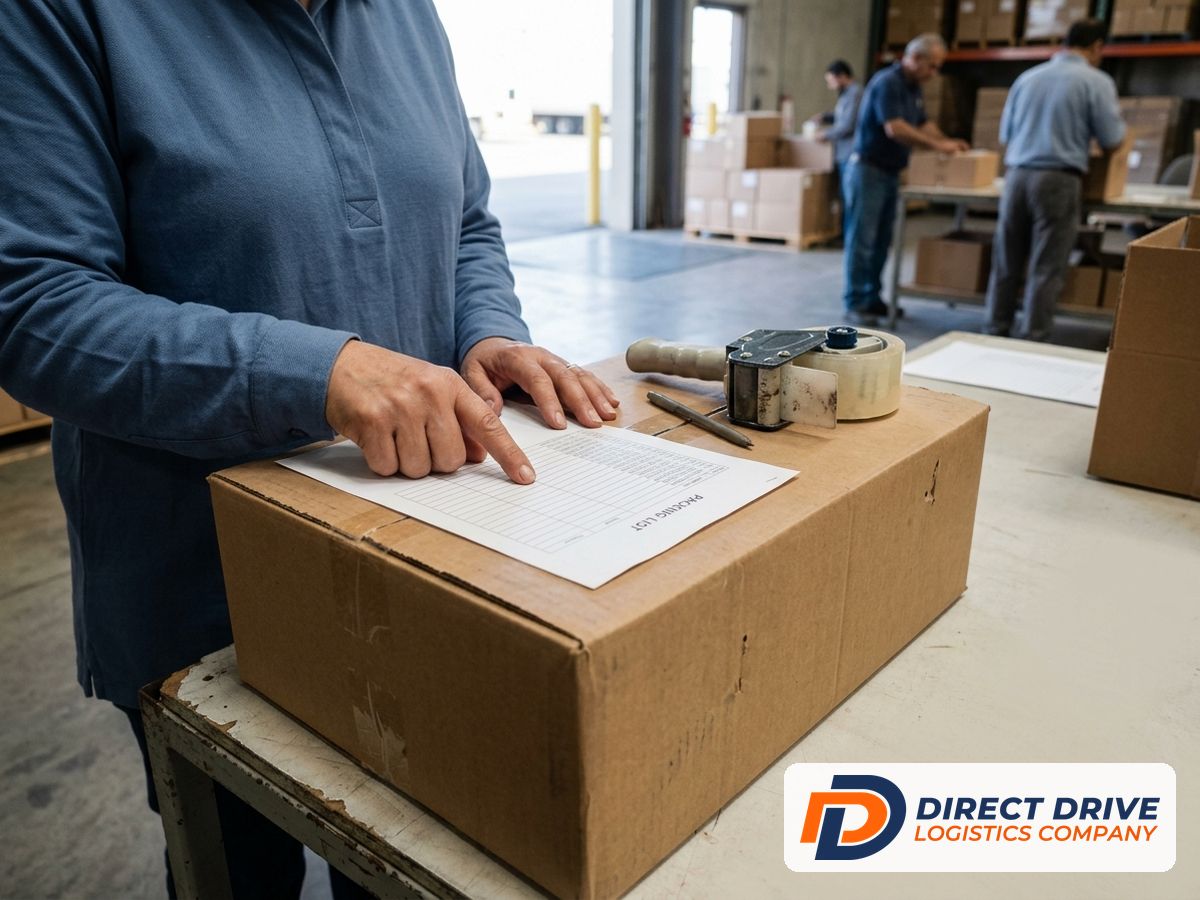
Iraq has 9 Iranian-facing crossings, split into 4 Kurdistan Region (KRG) points and 5 Federal points. The customs system at your entry point decides where your cargo clears. The table matches each crossing to its usual destination and the published door-to-door full-truck-load transit time.
| Crossing | Customs system | Typical Iraqi destination | Published FTL transit from Tehran |
|---|---|---|---|
| Bashmagh | KRG | Sulaymaniyah | 2-3 days (express) |
| Parviz Khan | KRG | Garmiyan and southern Sulaymaniyah governorate | Confirm per lane |
| Haji Omran | KRG | Erbil | Confirm per lane |
| Sheikh Saleh | KRG (border market) | Halabja and Sulaymaniyah governorate | Confirm per lane |
| Mehran | Federal | Baghdad, Karbala, Najaf | 4-5 days to Baghdad |
| Shalamcheh | Federal | Basra | 4-5 days |
| Khosravi and Sumar | Federal | Diyala and Baghdad | Confirm per lane |
| Chazzabeh | Federal | Maysan | Confirm per lane |
The Shalamcheh border crossing serves the south, with a 4-5 day run from Tehran to Basra. Mehran carries most Baghdad and shrine-city freight. Its 4-5 day door-to-door window to Baghdad holds when documents are matched to Federal requirements before loading.
Kurdistan Region (KRG) Crossings: Parviz Khan, Bashmagh, Haji Omran and Sheikh Saleh
The Bashmagh border into Sulaymaniyah offers the fastest published lane, at 2-3 days express from Tehran. The Parviz Khan border crossing suits Garmiyan-bound loads. Haji Omran is the natural gate for Erbil, while Sheikh Saleh operates as a border market for Halabja-area trade.
KRG clearance does not equal Federal clearance. Border Procedures Iraq bound for Baghdad should enter through a Federal point unless the paperwork is built for both systems. Market reports such as this Iran-Iraq trade coverage treat the corridor as one market, yet the 2 customs regimes stay separate.
From our experience, we operate at 15 border crossings into Iraq, across both KRG and Federal Iraq customs systems. That reach lets us switch entry points when one gate slows, and it extends to Iraq Syria commercial border crossings for western routings. Direct Drive Logistic runs offices in Erbil and Tehran, so the same team manages loading on the Iranian side and the handover in Iraq.
Clearing Customs on Iran Iraq Border Crossings Freight: Documents and Inspection Steps
Core Trade Documents: Commercial Invoice, Packing List, Certificate of Origin (COO) and HS Code
For iran iraq border crossings freight, the document set is built in Iran before the truck is loaded. The 4 core documents must match line by line, because officers at both Federal and KRG posts compare them against each other and against the load.
- Step 1: Issue the commercial invoice: List the seller, buyer, Incoterms, unit values and one HS code per line item.
- Step 2: Match the packing list: Gross and net weights, carton counts and shipping marks must equal the invoice and the physical load.
- Step 3: Obtain the Certificate of Origin (COO): Have it issued for exactly the goods and quantities on the invoice.
- Step 4: Confirm HS classification and product rules: Customs duty depends on the goods and their HS code. Some products also need import permits or standards checks, so confirm any product-specific rule before shipping. Customs duty depends on your goods and their HS code — estimate it with our tariff calculator, or request a quote and our team will confirm the full cost.
Transit Permits, TIR Carnet, Driver Visas and ASYCUDA Electronic Declarations Before Physical Inspection
Iraq customs clearance documents only work if the truck and driver are cleared as well. The next 5 steps cover the handover from Iran into federal or KRG customs.
- Step 5: Secure transit permits or a TIR carnet: For TIR carnet Iraq transit, the carnet and seals must match the invoice. Without a carnet, national transit permits apply.
- Step 6: Arrange driver visas and truck permits: The driver’s Iraqi entry visa and the vehicle permit must be valid before departure.
- Step 7: File the ASYCUDA electronic declaration Iraq requires: Federal crossings such as Mehran or Shalamcheh take the declaration electronically. Reports in 2026 pointed to a joint Baghdad-KRG ASYCUDA framework, with no verified completion date.
- Step 8: Present the truck for physical inspection: Officers check seals, counts and marks against the packing list.
- Step 9: Settle the KRG tariff difference: Cargo cleared at Parviz Khan, Bashmagh or Haji Omran and bound for federal Iraq pays the difference at Al-Sad, Dareman, Chiman or Bawa Mahmoud. This is a settlement, not a second clearance, and takes 1-2 days.
The most common mistake is treating the KRG customs receipt as final clearance for Baghdad. Without the tariff-difference receipt, the truck is held at the internal checkpoint, a gap rooted in the unresolved Baghdad-KRG customs dispute.
Mismatched paperwork also draws extra scrutiny on 1 frontier long studied for Iraq-Iran border smuggling. Keeping every document in line with Iran Trade Compliance rules across all 9 steps keeps inspections short.
Offices, Warehouses & Licenses in Iran & Iraq: What Dual-Country Presence Changes
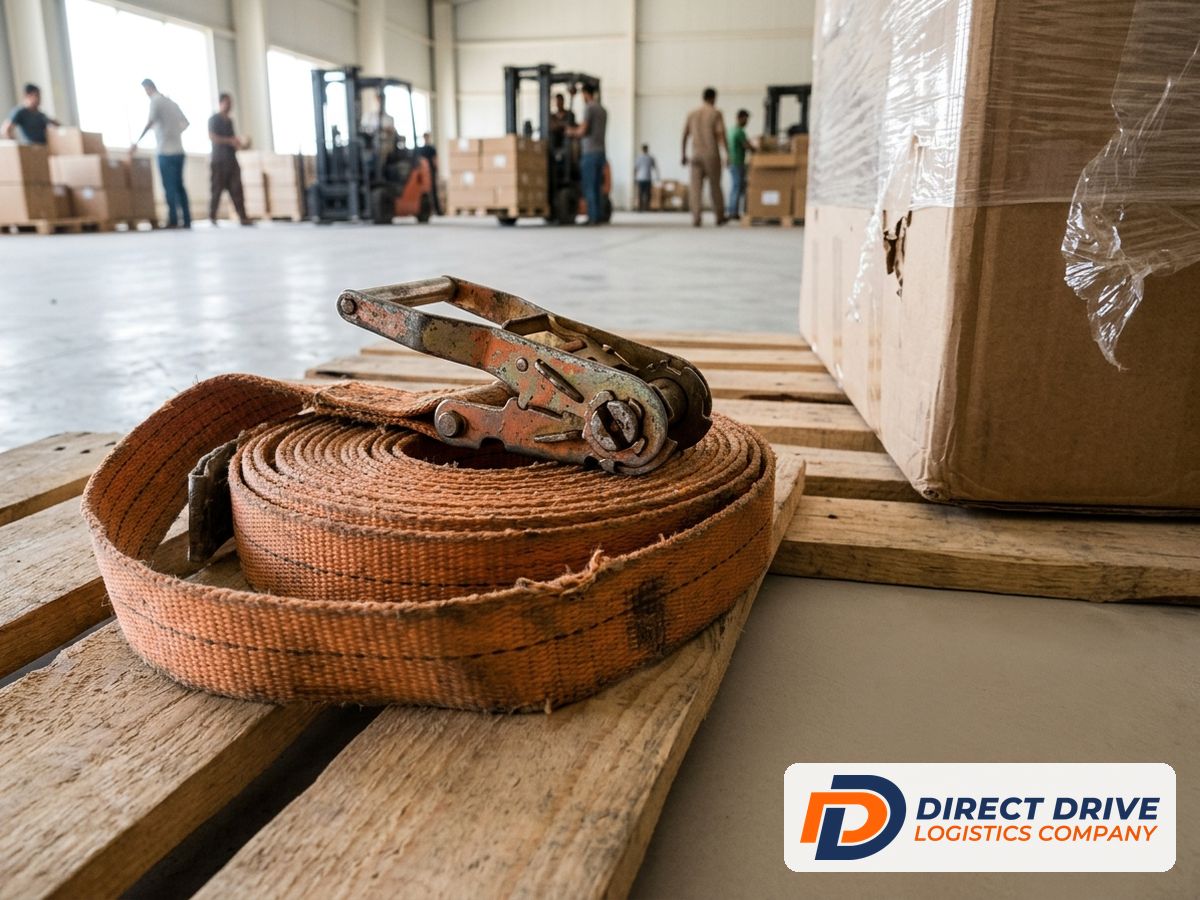
Why Single-Country Forwarders Struggle With Agent Handovers and Language Gaps at the Border
A forwarder based on one side of the border hands your cargo to a stranger at the line. Iraq alone runs 2 customs systems, Federal Iraq and KRG, with separate authorities and procedures. A Tehran-only agent rarely knows which system will inspect the truck.
Every handover means a document check in a new language. Persian invoices meet Arabic or Kurdish officials, and HS codes get re-read. One operator reported that a single missing customs document added 3-5 days to clearance for shipments under enhanced scrutiny in 2025.
The trade behind iran iraq border crossings freight is large, as Iran non-oil export data shows. When the far-side agent works for a different company, nobody owns the delay. Your cargo waits while 2 firms argue about whose paperwork failed.
Offices, Warehouses and an Umm Qasr Customs Clearing License: What Changes in Practice
Staff and storage on both sides let one team prepare documents before the truck leaves. They can hold goods in a bonded warehouse in Iraq if a checkpoint flags a mismatch. A licensed customs broker in Iraq then clears the file without a third party.
Control on both sides also makes re-routing possible. In our Tehran to Baghdad border congestion re-route, the result was 0 days delay despite primary border congestion. That outcome depends on one operator seeing both ends of the route, whereas the Trebil border crossing Iraq Jordan shows how a different corridor brings its own rules.
Before signing for iran iraq border crossings freight, put these 5 questions to any forwarder:
- Where are your own offices in Iran and Iraq, by city?
- Which warehouses do you operate, and which side of the border are they on?
- Do you hold your own license as an Umm Qasr clearing agent, or do you subcontract it?
- Which staff handle documents in Persian, Arabic, Kurdish and English?
- Do you clear under both Federal Iraq and KRG customs, and who owns the file at handover?
Comprehensive Coverage: 15 Border Crossings & Multimodal Solutions
Backup Rule for Kurdistan Regional Government (KRG) and Federal Crossings: Parviz Khan and Mehran Pairings
Every contingency plan for iran iraq border crossings freight starts with one rule. Back up each crossing with another crossing in the same customs system. Cargo cleared on KRG documents cannot switch to a federal lane mid-route without new paperwork. This analysis of KRG trade from 2017 traces the roots of the split between Erbil and Baghdad.
For Kurdistan-bound loads, Parviz Khan pairs with Bashmagh or Haji Omran. On the federal side, Mehran pairs with Khosravi or Sumar. Name both crossings in your booking so the backup is already documented and does not have to be improvised at the border.
A Tehran to Baghdad shipment of 3 × 40ft containers of FMCG goods shows how the pairing works. Direct Drive Logistic re-routed the containers through Mehran without changing the ETA. The cargo arrived within its original 4-5 days door-to-door.
Multimodal Alternative Routes into Iraq via Ibrahim Khalil from Mersin and Trebil from Aqaba
Sometimes a whole Iran corridor slows, not only a single crossing. In that case, alternative freight routes to Iraq come from the north and west. Ibrahim Khalil border trucking links Istanbul and Mersin to Erbil, and one Mersin to Erbil electronics shipment ran 5-7 days door-to-door.
From Jordan, cargo that originates in Aqaba enters federal Iraq through Trebil. Iraq border closure rerouting gains weight as Iranian volumes grow. On 2026-10-19, Iran’s trade chief reported a daily export target of USD 1 billion in non-oil exports, which means queues build quickly when one crossing stops.
Several factors drive pricing for iran iraq border crossings freight, and our guide to Iraq cross-border logistics explains how routes and customs systems affect cost:
- Origin city and destination governorate.
- Cargo type and weight.
- Truck or container size.
- The crossing and customs system you use.
- Whether the route needs transit permits or a sea leg. Estimate it with our tariff calculator or request a quote.
Next step: Prepare a one-page lane sheet with the following details:
- Origin city and destination city.
- Cargo type, weight and volume.
- One primary crossing and one backup crossing, both within the same customs system.
Send your cargo details to Direct Drive Logistic on WhatsApp and our team will send you a route-specific checklist and quote.
Message on WhatsAppWhy Choose Direct Drive Logistic?
Offices in Erbil (HQ) + Tehran (Nasim Shahr Terminal); rentable warehouse space in Baghdad, Karbala, Najaf, Erbil, Duhok and Basra, plus a warehouse in Tehran
Government-licensed clearing agent — direct port access for sea freight into southern Iraq
2,500+ Iraq domestic deliveries, 300+ Iran-Iraq cross-border, 100+ international freight; air freight handler at Erbil, Baghdad, and Sulaymaniyah airports
Operational at 4 KRG borders (Parviz Khan, Bashmagh, Haji Omran, Ibrahim Khalil) plus the Sheikh Saleh border market, 5 federal Iran-Iraq borders (Khosravi, Sumar, Mehran, Shalamcheh, Chazzabeh) and 6 further federal crossings (Trebil, Arar, Safwan, Al-Qaim, Al-Rabia, Al-Waleed), plus Bandar Abbas port
Full operational fluency in Farsi, Arabic, Kurdish, and English — client-facing and documentation
~10 trucks/day from Erbil hub covering Baghdad, Karbala, Najaf, Basra, Kut (Wasit), Diyala, Nasiriyah, and all Iraqi governorates
Frequently Asked Questions
Each crossing determines which customs authority clears your cargo and how long it takes to arrive. The main Federal crossings are Khosravi, Mehran, Shalamcheh and Chazzabeh. The main KRG crossings are Parviz Khan, Bashmagh and Haji Omran. Standard route baselines are: – Tehran–Baghdad via Khosravi: 3-4 days door to door – Tehran–Erbil via Haji Omran: 3-5 days – Tehran–Basra via Shalamcheh: 4-5 days – Tehran–Sulaymaniyah via Bashmagh: 4-5 days standard, or 2-3 days express Choose the crossing based on your final destination. Cargo that enters through a KRG crossing and then continues into Federal Iraq usually needs re-documentation, which adds checkpoint time. That is a common hidden delay in Iran–Iraq border crossings freight.
The biggest challenges are border dwell time, inspection intensity, truck transshipment, HS-code classification and sanctions-related banking friction. Since 2025-01-01, Iraq has moved from paper declarations to electronic processing through ASYCUDA (Automated System for Customs Data). As a result, mismatched paperwork is now flagged faster. Prepare four documents that match your cargo exactly:
- Commercial invoice
- Packing list
- Certificate of Origin
- Correct HS classification Construction materials need particular care with classification.
Clearance speed also depends on the authority. Reported 2025 averages were 5-7 days at Federal Umm Qasr and 3-5 days at Ibrahim Khalil under KRG procedures. Hidden costs include storage, demurrage, transit permits and re-documentation.
A capable partner should manage the whole corridor under one contract, with these four capabilities: – Ocean freight to Bandar Abbas port – Iranian transit permits and CMR consignment notes – Iraqi import clearance, both Federal and KRG – Real-time rerouting when a border is congested In one shipment, Direct Drive Logistic moved bulk electronics from China through Bandar Abbas to Erbil. One operator handled it with a single CMR note and a single invoice, which removed the need to coordinate three separate parties. In another case, 3 × 40ft containers of FMCG goods moving from Tehran to Baghdad were rerouted through Mehran when the primary crossing was congested. The cargo still arrived on the original 4-5 day timeline. When vetting partners for Iran–Iraq border crossings freight, ask for this kind of documented route evidence.
Iran has the larger and more diversified economy, while Iraq relies far more heavily on oil revenue. This difference drives the direction of trade between the two countries. Iran’s non-oil exports reached approximately USD 58 billion in Iranian year 1403, which ended on 2025-03-20. In the first quarter of 1404 (2025-03-21 to 2025-06-21), Iran exported USD 1.905 billion in non-oil goods to Iraq alone. Those goods included food, construction materials, fuel and industrial products. For Iraqi importers, the takeaway is that Iran is a high-volume, nearby supply market. Long-term contracts on routes such as Khosravi to Baghdad, or Shalamcheh to Basra, benefit from steady and predictable demand for trucking capacity.
Iraq does not officially name any country as its enemy. Its most serious security threat has been non-state militant groups, especially remnants of ISIS. Iran and Iraq fought a war from 1980 to 1988. Today they are major trading partners, connected by numerous commercial crossings. For businesses, the practical political risks are mostly administrative rather than military: – Sanctions-related banking delays on Iranian transactions – Internal checkpoint processing – Differences between Federal and KRG customs procedures To reduce exposure, confirm your payment channels before dispatch, keep documents consistent across both customs regimes, and work with a forwarder that has teams on both sides of the border. That way, a policy change does not leave cargo stranded.
US citizens can legally travel to Iraq with a valid passport and an Iraqi visa. However, the US State Department has for many years placed Iraq under its highest travel advisory levels, so check the latest advisory before any trip. Entry rules for the Kurdistan Region can differ from those of Federal Iraq. Shipping is a separate issue. US persons are generally restricted from dealings with Iran under the Office of Foreign Assets Control (OFAC) Iranian Transactions and Sanctions Regulations. A US company should obtain sanctions counsel before using routes through Iran or Bandar Abbas. Routes via Turkey, Jordan or the Gulf may be more suitable alternatives. Confirm your compliance position in writing before you book any Iran–Iraq border crossings freight.
Conclusion
Successful iran iraq border crossings freight depends less on finding a route and more on matching each shipment to the right crossing and the right paperwork. Iraq has 9 Iranian-facing crossings, split between 4 Kurdistan Region points and 5 Federal points. Baghdad and Erbil were reported in 2026 to be working toward a joint ASYCUDA framework, but no completion date was verified, so shippers should still plan for document duplication between the two customs systems.
Before your next shipment, take three steps. First, check this week that your commercial invoice, packing list, Certificate of Origin and HS codes match line by line, and confirm whether a Certificate of Conformity applies. Second, ask your forwarder which crossing they plan to use, whether entry falls under KRG or Federal customs, and which backup crossing they will switch to if delays build. Third, put both sides of the border under one accountable team.
When your cargo enters through Parviz Khan, Bashmagh or Mehran and must continue to Erbil, Baghdad or Basra, Direct Drive Logistic’s offices in both Iraq and Iran keep the handover inside one team instead of passing between unconnected agents. Send us your document set and final destination for a crossing and compliance review before dispatch. Call our Erbil operations team on (+964) 750 637 9296.
Need Logistics Consultation?
The Direct Drive team is ready to assist. Message us now.
Move your freight across the Iran–Iraq border without costly delays. Direct Drive Logistic handles customs documentation and clearance at key crossings so your shipments keep moving. Call us today at (+964) 750 637 9296 for a fast, tailored cross-border quote.
Get Your Free Quote NowContact Us for a Consultation
Location
Direct Drive Logistic
Gulan Street, MRF Quattro Block A 13-9
Erbil, Kurdistan Region