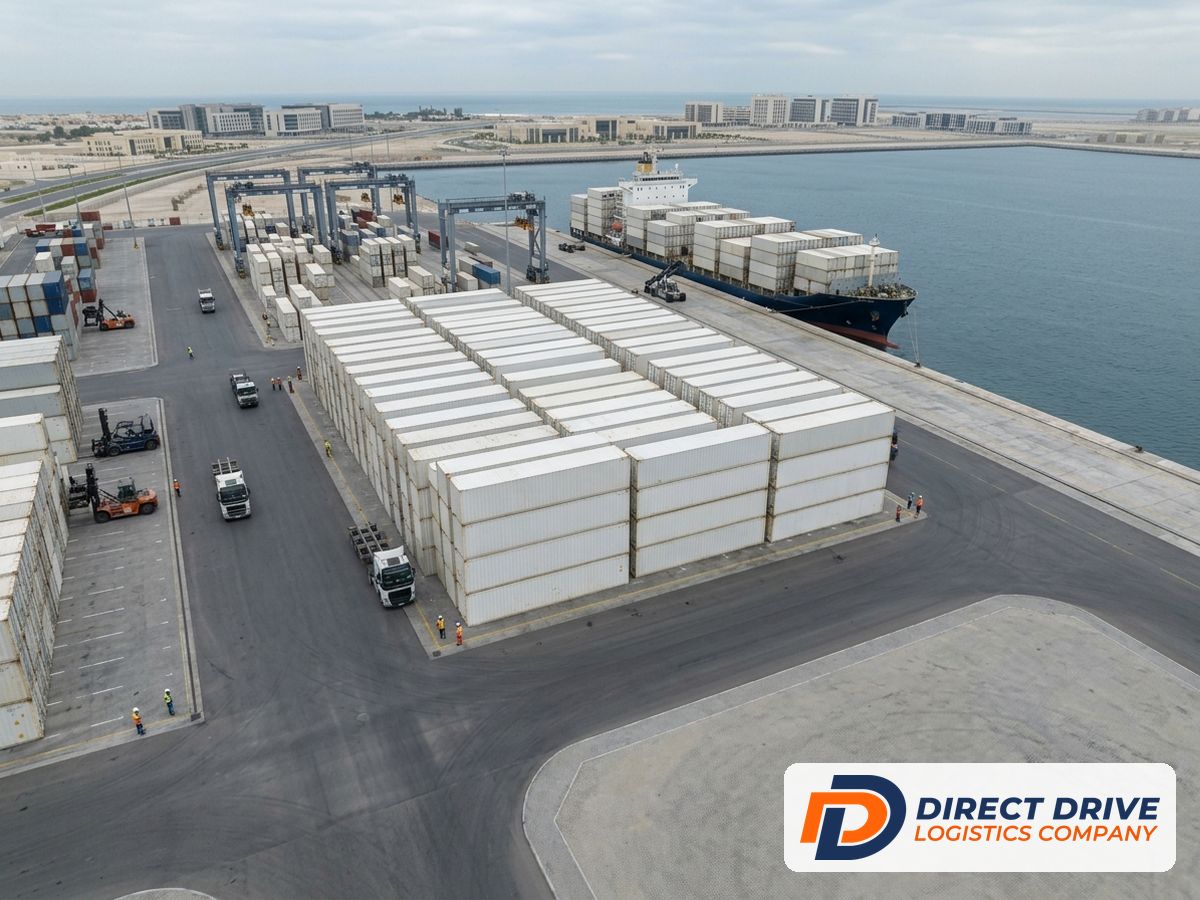
Discover how umm qasr port demurrage charges can transform your operations with written from the perspective of a government-licensed clearing agent at the port of umm qasr, the article shows exactly where the demurrage clock starts and stops at iraq’s main sea freight port, and how direct port access combined with scheduled inland trucking from the port to every governorate prevents the documentation and pickup gaps that cause most charges.
Every day a loaded container stays at Umm Qasr beyond its free time adds umm qasr port demurrage charges. The shipping line bills them per container per day. Port storage from the General Company for Ports of Iraq (GCPI) and detention on late empty returns are billed separately. Rates depend on carrier, container size and dwell days.
A 2026 logistics report put average container dwell at Umm Qasr at 7–10 days during H1 2026. Carrier free time, the days allowed before charges start, can run out before customs release. A single HS-code mismatch in ASYCUDA, Iraq’s electronic customs system, can trigger that hold.
This guide shows where the demurrage clock starts and stops. It estimates umm qasr port demurrage charges with a worked 40ft example and explains how to dispute an invoice. First, identify which charge you are actually paying.
Demurrage, detention and port storage at Umm Qasr: the difference
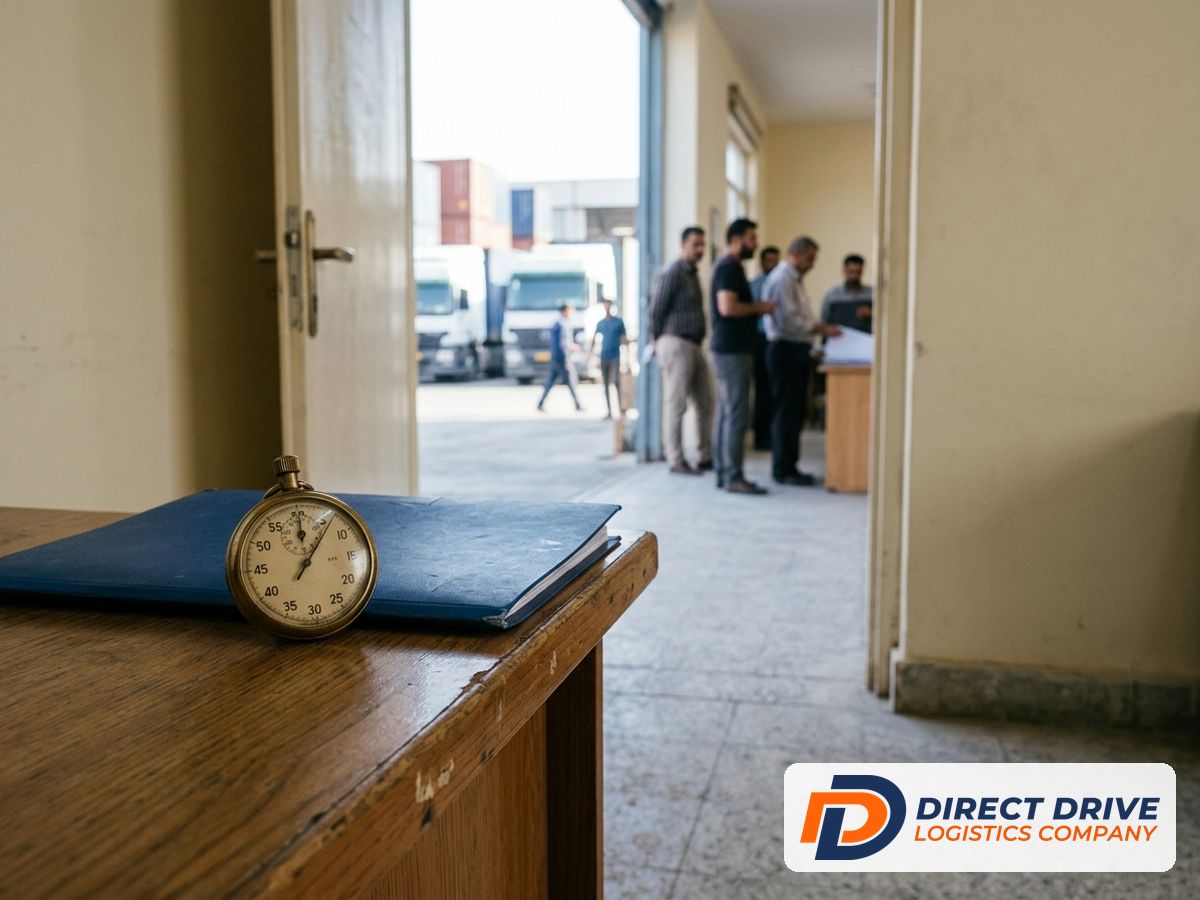
Umm Qasr Port is Iraq’s main sea freight gateway, located in Basra governorate at the head of the Gulf. The General Company for Ports of Iraq (GCPI) runs the port, but shipping lines own most of the containers. Because two parties control the same box, one container can produce separate invoices for the same days.
Customs timing adds pressure to both clocks. The port brought new customs rules into force in January 2026. A 2026 logistics source reported 3–7 days for typical clearance at the North Gate, and that figure assumes complete documentation.
Carrier Demurrage vs Detention vs Port Storage: Side-by-Side Comparison Table for Umm Qasr
| Feature | Carrier demurrage | Carrier detention | Port / terminal storage |
|---|---|---|---|
| Who issues the invoice | Shipping line | Shipping line | GCPI or terminal operator |
| Where the container is | Full, inside the terminal | Outside the terminal, after gate-out | In the terminal yard |
| Clock starts | When carrier free time after discharge ends | When free time after gate-out ends | When the terminal’s free storage period ends |
| Clock stops | Full container gates out | Empty container is returned to the designated depot | Container or cargo leaves the yard |
| Document or event that ends it | Customs release, delivery order and gate-out | Empty-return receipt (equipment interchange) | Paid port dues and gate pass |
Demurrage and storage can both apply to the same days inside the terminal. They are not duplicates, because the carrier bills for its equipment while the terminal bills for yard space. Detention only begins after the box leaves the gate, so 1 container can generate all 3 charges across one import cycle.
Some lines on an Umm Qasr invoice are not time charges. THC covers handling and works differently from demurrage and storage. Inspection, scanning, documentation correction, reefer monitoring, container cleaning, agency and empty-repositioning fees are billed separately.
Umm Qasr port demurrage charges follow each carrier’s own tariff. As of H1 2026, no authoritative GCPI schedule or carrier-specific rate table was verified in available sources. Confirm free days on your carrier’s delivery order, as terminal storage fees at Umm Qasr follow separate GCPI rules. For wider context on Umm Qasr port charges congestion and how delays inflate costs, see the full guide.
How free time works and when the demurrage clock starts
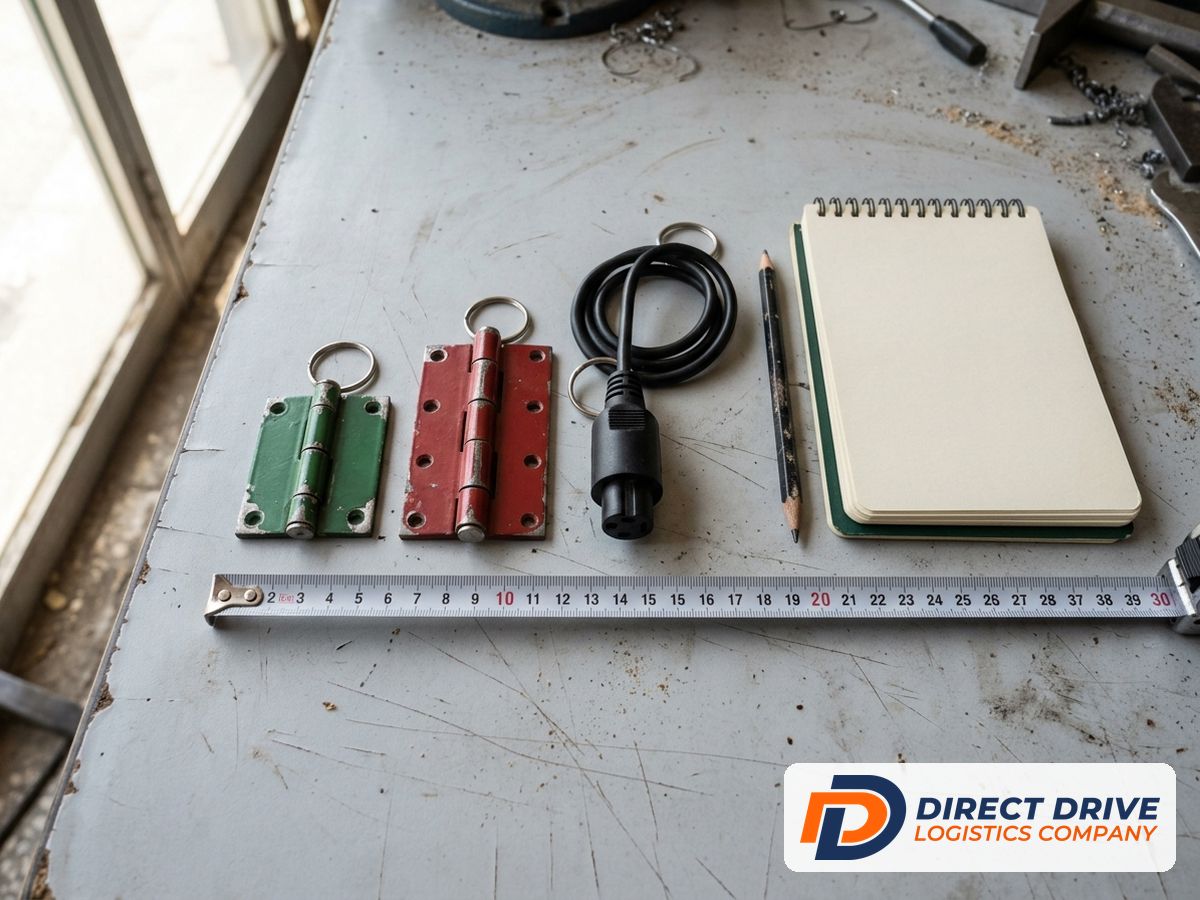
Carrier Free Time (Combined Free Days) Versus Terminal Free Storage Days at Umm Qasr
Every import box at Umm Qasr runs on two separate allowances. Carrier free time comes from the shipping line, varies by container type, and is often negotiable in your contract. Terminal free storage days come from the port operator and follow their own rules, which can also differ depending on Umm Qasr north port vs south port handling.
The two clocks often start at different moments. Carrier demurrage usually starts at vessel discharge or on the availability notice date, depending on the line’s wording. Lines publish their Iraq import conditions, so check which trigger applies to your bill of lading.
Customs release alone does not stop either clock. Carrier demurrage stops at gate-out of the full container. Detention then runs until the empty box is returned to the line’s depot. Port storage ends at gate-out after release.
To find your real chargeable start date, take the trigger date and add your free days. If a line grants 7 combined free days and counts a 2026-09-01 discharge as day 1, the first chargeable day is 2026-09-08. “Combined” means demurrage and detention share one allowance. Weekends and Iraqi public holidays may or may not count, so confirm this in writing.
Dwell times show why this matters. A September 2026 logistics report put container dwell at Umm Qasr at 7–10 days in H1 2026, so short allowances can run out before release. Since January 2026, Decision No. 957/2025 has required item-level HS code classification through ASYCUDA. Any mismatch between the invoice and the packing list keeps the box on the quay while it is corrected.
The MSC detention and demurrage fees at Umm Qasr come from MSC’s published tariff for IQUQR, which varies by container size, tier and contract. Your booking terms set the final figure. Billing disputes can escalate, as shown by Samsung’s $186m D&D claim against CMA CGM at the FMC.
Ask for extended free time at booking, and make sure it appears on the booking confirmation or in the contract. Verbal promises rarely survive invoicing of umm qasr port demurrage charges. Direct Drive Logistic holds a government clearing agent license at Umm Qasr, which gives it direct port access to file declarations and move boxes to gate-out without a third-party broker.
Estimating Umm Qasr port demurrage charges: tariff structure and a worked 40ft example
Umm Qasr Demurrage Tariff Table: Charge Types, Rate Setters and Tier Escalation
No single public schedule covers umm qasr port demurrage charges. Each carrier publishes its own demurrage tariff per day, and port storage is billed separately. The template below lets you record the rates for your booking without relying on figures that may already be out of date.
| Cost Component | Range | Notes |
|---|---|---|
| Carrier free time | F days (contract-specific) | Set by the shipping line. Counts from discharge, not from vessel ETA. |
| Demurrage tier 1 | Days F+1 to F+n1 × R1 | Lowest daily rate, per container. |
| Demurrage tier 2 | Next n2 days × R2 | R2 is higher than R1. |
| Demurrage tier 3 | Remaining days × R3 | Highest rate. It applies until gate-out. |
| Port storage | Days beyond S × daily storage rate | Billed by the port operator and runs alongside demurrage. |
The demurrage calculation formula works like this: (tier 1 days × R1) + (tier 2 days × R2) + (tier 3 days × R3) + storage days × storage rate. Take a 40ft container released 10 days after free time with tiers of 5 days each. Its exposure is 5 × R1 + 5 × R2, plus any storage days that have passed the port’s own free period S.
One mistake comes up often. Importers assume carrier free time also covers port storage. The two clocks are separate, so storage can start even while carrier free days remain. For practical steps on cutting exposure, see this guide to demurrage charges Iraq importers face at port.
How 20ft, 40ft and Reefer Container Rates Differ and Where to Verify Them
The 40ft container demurrage cost per day is normally set above the 20ft rate on each tier. Reefers sit higher again and often add plug-in and monitoring charges. Carrier portals such as the Iraq import charges page list current free time and tiers. Filter them by the IQUQR port code.
Disputed billing can be costly. Samsung sought a record $186m from CMA CGM over detention and demurrage practices. Ask for a tariff confirmation in writing for your contract and booking. Rates change often, and Direct Drive Logistic can confirm the exact carrier figures when quoting.
Clearance speed decides how many tier days you pay. Iraq’s move to ASYCUDA under Council of Ministers Decision No. 957/2025 rewards complete pre-arrival files. One 2026 provider claimed that pre-cleared shipments moved from 5–7 days of processing to 24–48 hours. Iraqi customs has not independently verified that figure.
The most common causes of demurrage at Umm Qasr
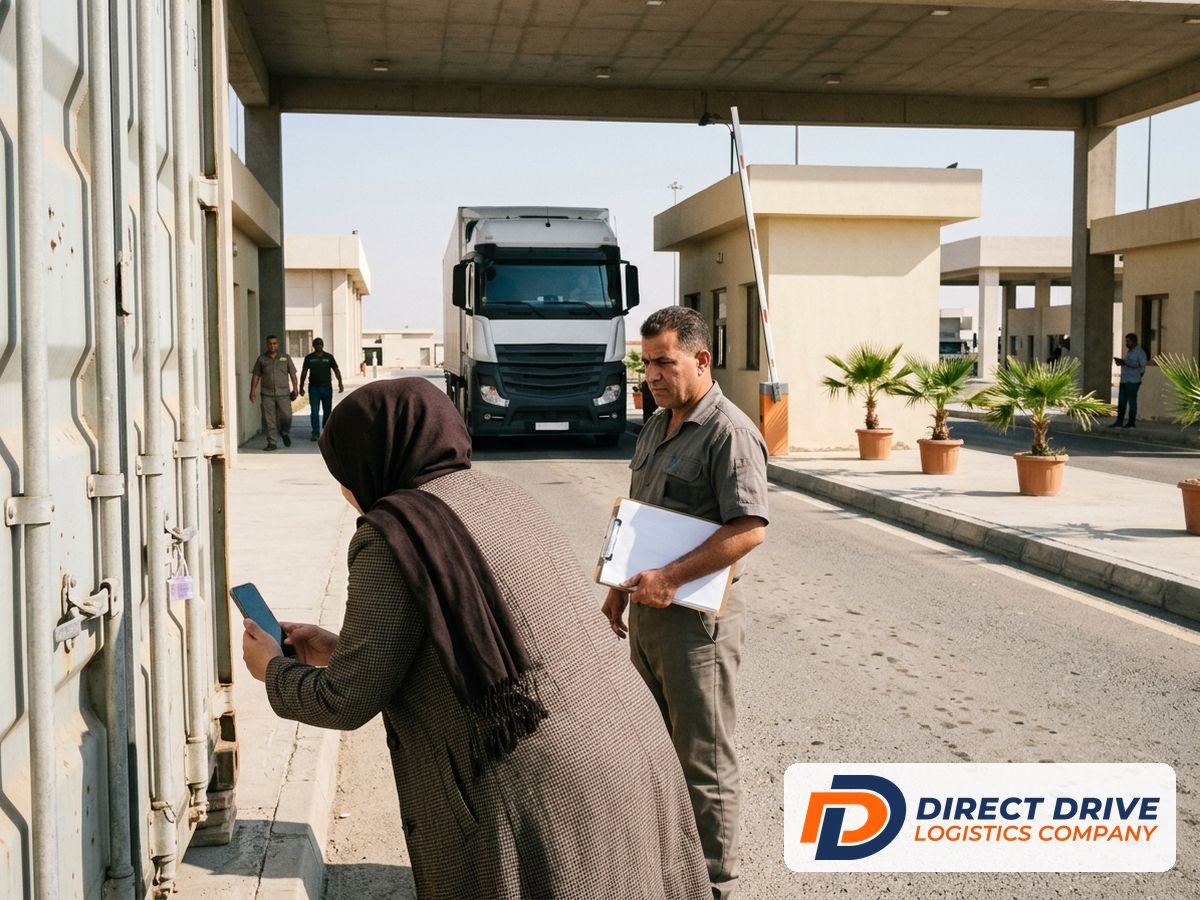
Documentation errors: HS Code mistakes, Bill of Lading (B/L) mismatches and missing Certificate of Conformity
Most Umm Qasr customs delays start with the paperwork, not at the quay. Council of Ministers Decision No. 957/2025 introduced item-based customs assessment, so every line on the ASYCUDA declaration is checked against its own HS code. One wrong line can hold the whole container while umm qasr port demurrage charges keep building.
- Step 1: Lock the HS code for every item: Confirm the classification for each invoice line with your clearing agent before loading. Most ASYCUDA declaration errors in Iraq come from a code that fits the product family but not the specific item. Customs duty depends on your goods and their HS code. Estimate it with our tariff calculator, or request a quote and our team will confirm the full cost.
- Step 2: Match the B/L, invoice and packing list: Consignee names, weights, piece counts and descriptions must agree across all 3 documents and the Certificate of Origin (COO).
- Step 3: Secure the Iraq Certificate of Conformity early: A missing or late COC, or incomplete pre-shipment verification, blocks release even when every other document is correct.
Port-side and inland delays: inspection holds, berth waiting, truck bookings and Kurdistan Region routing
A vessel can wait 3–5 days for a berth. Free time does not start until discharge, but customs queries, inspection and pickup must all fit into the days that follow.
- Step 4: Prepare for inspection holds: Keep electronic submission evidence and the full correction history so inspection queries can be answered on the spot.
- Step 5: File before the vessel berths: Use berth waiting time to clear document queries, not to start them.
- Step 6: Book inland trucks before release: An unbooked pickup leaves a cleared container sitting in the terminal.
- Step 7: Route Kurdistan cargo correctly: Goods cleared under federal customs at the port do not switch to the Kurdistan Region system mid-route without new documents. Choose the customs system when you book, because cargo entering the Region can also be subject to the Kurdistan cancer fund surcharge.
In our work, we operate “across BOTH KRG and Federal Iraq customs systems,” and we see Step 7 decided too late more often than any other.
Pre-arrival readiness checklist: commercial invoice, packing list, B/L, COO, COC, import licence and confirmed HS classification. All 7 should be with your licensed clearing agent before the vessel berths, along with a confirmed truck booking.
Disputing or reducing a demurrage invoice
Valid grounds for disputing Demurrage and Detention charges on Umm Qasr invoices
A demurrage invoice can be challenged when the delay was not caused by you. Valid grounds include carrier or terminal fault, port congestion that blocked pickup, and customs system outages. Under Council of Ministers Decision No. 957/2025, declarations at Umm Qasr run through ASYCUDA, so a logged system failure is a documented cause rather than an excuse.
Check the arithmetic as well. Umm Qasr port demurrage charges are most often wrong in two places: the date the clock started and the number of free days applied. If the line began billing before discharge, or counted fewer free days than your booking contract allows, you can recover the difference.
Evidence to gather: arrival notice, B/L, customs release and gate records
Build a dated timeline file from these 5 documents:
- The arrival notice, which shows the discharge date and the stated free time.
- The bill of lading (B/L), which confirms the consignee, container numbers and agreed terms.
- The ASYCUDA customs release timestamp. Item-based assessment has applied since January 2026.
- Terminal gate-out records and empty-return receipts.
- Emails in which the line or terminal reported delays.
Send this file to the line’s local agent with a written demurrage waiver request. Ask for a full waiver on days the line or terminal caused and a reduced settlement on shared days. Get written confirmation before you pay, because payment usually ends the negotiation.
On future bookings, negotiate extra free days into the contract. Submit any free time extension request before the vessel arrives, not after the clock starts. Recurring charges stop when the HS codes, commercial invoice, packing list and B/L all match before arrival.
On a Dubai to Baghdad medical equipment shipment, Direct Drive Logistic acted as clearing agent and cleared the cargo at Umm Qasr within 48h of engagement, with no third-party broker. Choose a partner who prepares declarations before berthing and tracks free time for every container.
Next step: Send your B/L number, container size and count, vessel ETA and HS codes to Direct Drive Logistic to request a quote for clearance and free-time monitoring.
Send your cargo details to Direct Drive Logistic on WhatsApp and our team will send you a route-specific checklist and quote.
Message on WhatsAppWhy Choose Direct Drive Logistic?
Offices in Erbil (HQ) + Tehran (Nasim Shahr Terminal); rentable warehouse space in Baghdad, Karbala, Najaf, Erbil, Duhok and Basra, plus a warehouse in Tehran
Government-licensed clearing agent — direct port access for sea freight into southern Iraq
2,500+ Iraq domestic deliveries, 300+ Iran-Iraq cross-border, 100+ international freight; air freight handler at Erbil, Baghdad, and Sulaymaniyah airports
Operational at 4 KRG borders (Parviz Khan, Bashmagh, Haji Omran, Ibrahim Khalil) plus the Sheikh Saleh border market, 5 federal Iran-Iraq borders (Khosravi, Sumar, Mehran, Shalamcheh, Chazzabeh) and 6 further federal crossings (Trebil, Arar, Safwan, Al-Qaim, Al-Rabia, Al-Waleed), plus Bandar Abbas port
Full operational fluency in Farsi, Arabic, Kurdish, and English — client-facing and documentation
~10 trucks/day from Erbil hub covering Baghdad, Karbala, Najaf, Basra, Kut (Wasit), Diyala, Nasiriyah, and all Iraqi governorates
Frequently Asked Questions
Umm Qasr Port demurrage charges are fees a shipping line bills when a loaded import container stays inside the port after the free time in the bill of lading has ended. They arise when customs release, inspection or truck collection takes longer than the carrier’s free days. Importers in Iraq often face 3 separate liabilities:
- Carrier demurrage: the container stays in the terminal past free time.
- Port storage: charged under the General Company for Ports of Iraq (GCPI) schedule.
- Detention: the container leaves the port but the empty is not returned on time.
Terminal Handling Charges (THC) are a separate operational fee, not a penalty. Read each clause separately, because one “free days” figure rarely covers all 3 charges.
No single published per-day rate applies at Umm Qasr. The amount depends on 4 things: the shipping line’s tariff, the container size and type (for example, 20ft, 40ft or reefer), the discharge date, which starts the clock, the number of days counted past free time, often in escalating tiers. Commercial guidance published in 2026 gave carrier free-time examples of 3–7 days. Other Iraq booking guidance cited 7–14 days. Neither is a verified universal Umm Qasr tariff. Every port works this way, including those in Bangladesh: the port authority and each carrier publish their own schedules. Figures from one country cannot be applied to another. Before your vessel sails, get the carrier’s written free-time clause and the GCPI storage terms, and negotiate extra free days at booking.
Most demurrage at Umm Qasr comes from document errors, not port congestion. Council of Ministers Decision No. 957/2025 introduced item-level customs assessment through ASYCUDA, and the change was reported as effective in January 2026. Since then, a wrong HS code or an incomplete electronic declaration can hold a container while free time runs out. Prevention follows 5 steps:
- Verify the HS code for every line item before shipment.
- Match the commercial invoice, packing list and bill of lading exactly.
- Obtain the Certificate of Conformity (COC) before arrival.
- Lodge the ASYCUDA declaration in advance.
- Book inland trucks and confirm the empty-return depot before discharge.
These steps directly reduce your exposure to Umm Qasr Port demurrage charges.
Umm Qasr Port is Iraq’s main deep-water commercial seaport. It sits in Basra Governorate on the Khor Abdullah waterway, operates under the General Company for Ports of Iraq (GCPI), and handles most of the country’s containerized imports. Reported 2026 timelines were: Container dwell: an average of 7–10 days in H1 2026. Vessel berth waiting: 3–5 days in the same period. * Customs clearance at North Gate: 3–7 days when documentation was complete. Combined with the 3–7 day carrier free-time examples, these figures show that a container can use up most of its free days before release. Importers sending cargo on to Baghdad, Erbil or Karbala should plan clearance and trucking before the vessel arrives.
Choose a partner that clears cargo directly at Umm Qasr and controls the inland delivery, so free time is not lost while separate brokers and carriers hand off the shipment. When comparing forwarders, ask 3 questions:
- Do they clear customs themselves or subcontract a broker?
- Do they check HS codes against ASYCUDA requirements before arrival?
- Can they move containers inland right after release?
Direct Drive Logistic shows how this works in practice. On a Dubai-to-Baghdad medical equipment shipment, the team cleared the cargo at Umm Qasr within 48 hours of being engaged, with no third-party broker. This helped the client avoid port storage and demurrage fees. Domestic onward routes such as Baghdad–Basra–Karbala have run as a single-truck, multi-drop circuit in 1–2 days.
Request a quote 3 steps before your vessel arrives:
- Send your documents. Share the draft bill of lading, commercial invoice, packing list, HS codes for each item, and COC status.
- Give shipment details. State the carrier, ETA, container count and type, and the final delivery city in Iraq.
- Get a pre-check and quote. Direct Drive Logistic reviews the documents and the carrier’s free-time clause, flags ASYCUDA or classification risks, and returns a quote covering clearance, storage exposure and inland trucking.
Customs duty depends on your goods and their HS code. You can estimate it with our tariff calculator, or request a quote and our team will confirm the full cost. Sharing your documents early is the most effective way to keep Umm Qasr Port demurrage charges low.
Conclusion
Controlling umm qasr port demurrage charges starts before the vessel berths. HS-code errors and mismatches between the commercial invoice, packing list and Bill of Lading (B/L) use up free time while containers wait in Basra. One compliance provider claimed in 2026 that eligible pre-cleared shipments could move from 5–7 days of processing to 24–48 hours. The General Commission of Customs has not verified that figure, but it shows why a complete pre-arrival file matters.
Start today by checking your last Umm Qasr invoice against the discharge date, gate-out date and empty-return deadline to see exactly when free time expired. Before your next booking, ask your carrier or forwarder for their written demurrage tariff, the GCPI or terminal storage schedule, and any congestion or force-majeure clause. Then send your clearing agent the commercial invoice, packing list, B/L, COO, COC, import licence and HS classification before the vessel arrives. Direct Drive Logistic can check that file for gaps before it reaches customs.
When your cargo moves through Umm Qasr, a government-licensed clearing agent on the ground can validate HS codes, track your COC and schedule inspections before your free days run out. Direct Drive Logistic then arranges onward delivery from Basra to Baghdad, Erbil or any other governorate, so your container can leave the port without idle days. Send us the document set for your next Umm Qasr shipment this week for a pre-arrival review: call (+964) 750 637 9296.
Need Logistics Consultation?
The Direct Drive team is ready to assist. Message us now.
Stop losing money to Umm Qasr Port demurrage charges. Direct Drive Logistic handles your customs clearance and coordinates container release before your free time runs out, so your cargo keeps moving and your costs stay under control. Call us today at (+964) 750 637 9296 for a free consultation and keep demurrage fees from cutting into your profits.
Get Your Free Quote NowContact Us for a Consultation
Location
Direct Drive Logistic
Gulan Street, MRF Quattro Block A 13-9
Erbil, Kurdistan Region