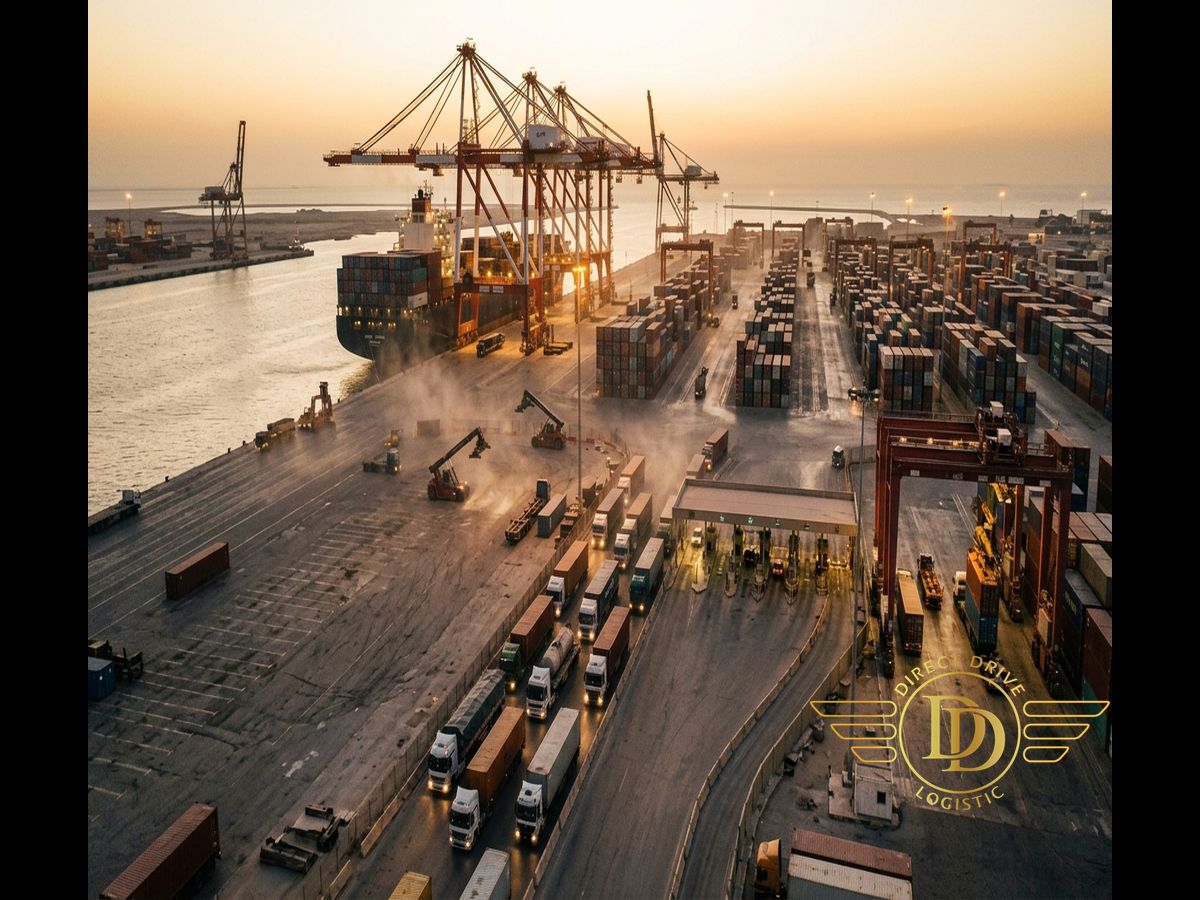
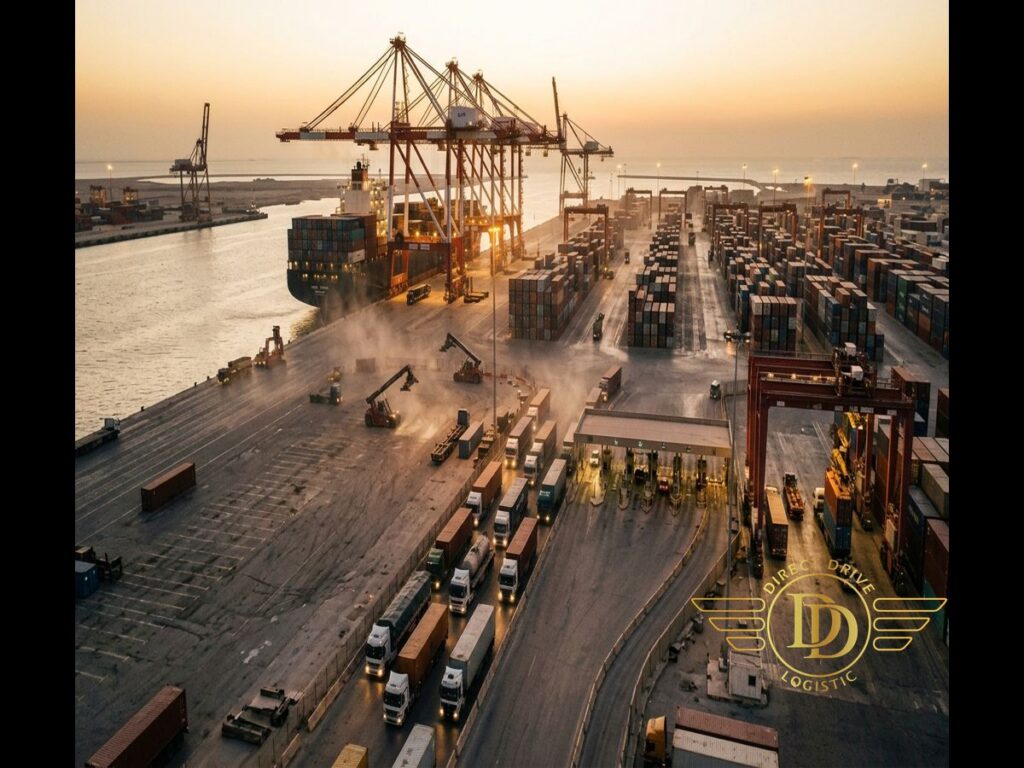
Discover how umm qasr north port vs south port can transform your operations with written from the perspective of a government-licensed clearing agent at the port of umm qasr, the guide explains north and south port differences the way they affect real clearance and inland delivery, connecting each port choice to onward trucking from basra and direct drive logistic’s daily erbil line-haul to all iraqi governorates.
In the umm qasr north port vs south port comparison, North Port is Iraq’s main container gateway. It hosts ICTSI’s Basra Gateway Terminal, where Berths 25 and 26 reach about 14 meters depth. South Port mainly handles bulk, grain, general cargo and project shipments. Choose North for FCL/LCL and South for non-containerized cargo.
Your 40ft container lands at the wrong Umm Qasr terminal, and the free-storage window closes before a single document clears. Demurrage, the shipping line’s charge for keeping its container past free time, then accrues daily while your Baghdad customer waits.
This guide is written from the perspective of a government-licensed clearing agent at Umm Qasr. It compares umm qasr north port vs south port by berths, draft, cargo type and customs documentation. It then links each choice to Basra trucking and Direct Drive Logistic’s daily Erbil line-haul to every governorate. We start with how the terminals actually differ.
Umm Qasr Ports Overview: North vs. South Terminals
What Is Umm Qasr Port and Why It Is Iraq’s Main Seaport
Umm Qasr is Iraq’s principal deep-water seaport. It sits on the Umm Qasr waterway, which opens into the Khor Abdullah channel near the Kuwaiti border. In 2025 it handled an estimated 1.8–1.95 million TEU, which made it the country’s main gateway for containerized imports.
That volume grew. One terminal operator estimated a 7% year-on-year increase from 2024 to 2025. For logistics managers, this means more vessels compete for the same berths, yards and customs inspectors. Choosing the right zone before a ship arrives can prevent yard and paperwork bottlenecks, and it helps to understand Umm Qasr port charges congestion before booking.
The port was not built all at once. South Port was developed first, in the 1960s. North Port followed with a major build-out in the 1970s, and Mid Port grew between the two. In 1989, Khor al-Zubair port was added farther up the waterway. Each zone runs along the same channel and adds berths for different cargo types.
This Umm Qasr port history explains the names. “North” and “South” describe where each zone sits along the waterway. They do not describe which part of Iraq it serves. A container bound for Erbil can land at either zone, and so can one bound for Basra. Inland delivery depends on trucking from the port, not on the terminal’s name. You can check the berth and location details for the wider Basra seaport profile.
The useful question in the Umm Qasr Port Facilities decision is cargo type. North Port specializes in containers and hosts ICTSI’s Basra Gateway Terminal. South Port handles mainly bulk, grain, general cargo and project shipments. Customs clearance at the port takes approximately 5–7 days under normal conditions. A misrouted booking can add to that window before any truck leaves the port.
Direct Drive Logistic holds a government clearing agent license at Umm Qasr. This gives it direct port access to both zones, so the terminal can match the cargo profile rather than a misleading geographic label.
Operational Differences: Navigating Umm Qasr North & South Ports
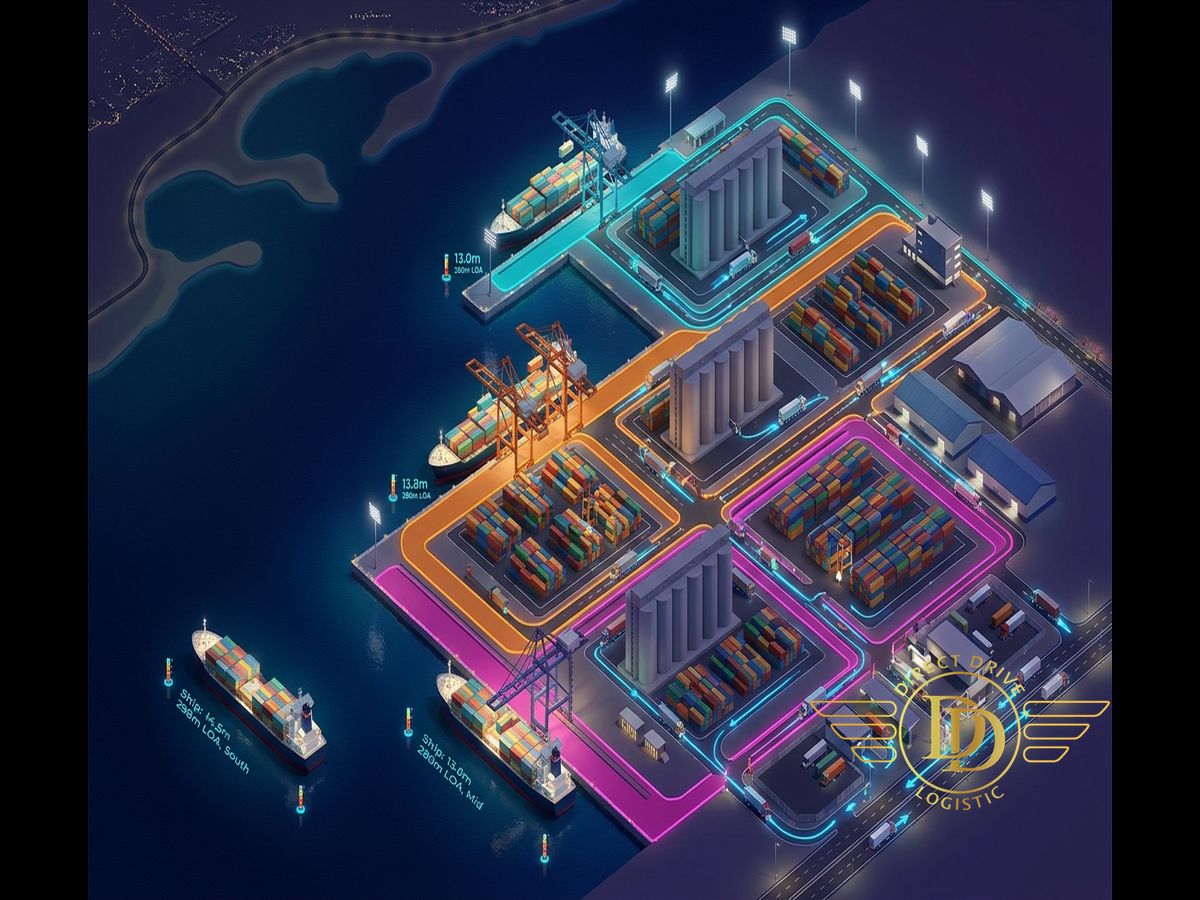
Berth Counts, Draft Limits and Maximum Vessel Size (TEU) Across Umm Qasr Terminals
How many ports are in Umm Qasr? It is one port that operates as three zones: North Port, Mid Port and South Port. In any direct port access Iraq decision, the zone you choose determines your berth, your clearance queue and where your truck collects the cargo.
| Feature | North Port | Mid Port | South Port |
|---|---|---|---|
| Primary cargo | FCL/LCL containers | Mixed general cargo | Bulk, grain, vehicles, general and project cargo |
| Key operator | ICTSI’s Basra Gateway Terminal | Port-allocated berths | Port-allocated berths |
| Reported Umm Qasr berth draft | About 14 m at Berths 25 and 26 | Confirm per berth before booking | Confirm per berth before booking |
| Maximum vessel size | Up to 14,000 TEU (reported) | Smaller general-cargo vessels | Bulk and break-bulk vessels |
| Best fit | Direct mainline container calls | Overflow and general cargo | Non-containerized shipments |
North Port carries most of the container volume. Basra Gateway Terminal opened Berths 25 and 26, reported at about 14 meters deep, as part of a USD 250 million investment program. With reported capacity for vessels up to 14,000 TEU, the terminal allows direct calls instead of relying on feeders, which helps Netherlands to Iraq shipping flows avoid extra transshipment.
Umm Qasr was reported at 1.8 to 1.95 million TEU of container throughput in 2025. Published berth counts per zone differ between sources. For that reason, we confirm the assigned berth from the vessel’s berthing schedule before filing documents.
From our licensed clearing desk at Umm Qasr, the port zone is only half of the routing decision. We operate at 15 border crossings into Iraq. These cover the Iran-Iraq and Turkey-Iraq corridors plus the Jordan, Saudi Arabia, Kuwait and Syria frontiers, along with Bandar Abbas port, across both KRG and Federal Iraq customs systems. This gives clients route flexibility that single-border operators cannot match.
Umm Qasr container terminal capacity also needs to be read against Basra’s longer-term plans. The Al Faw yard progress report from December 2025 put the container yard at 96.5% completion, with capacity for up to 3 million containers annually. The completed Al Faw–Umm Qasr highway connects the two ports by road.
Beyond the Port: Direct Access & Customs Clearance in Umm Qasr
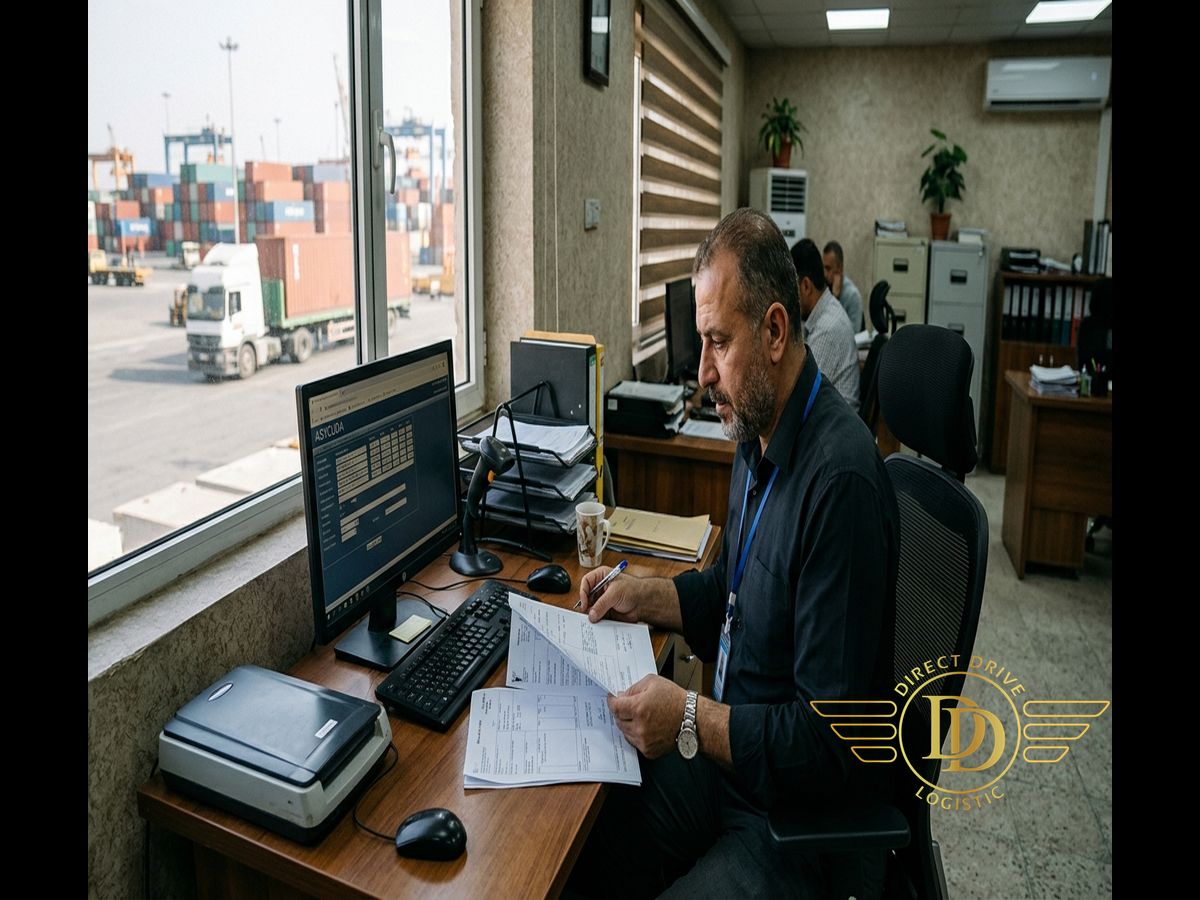
Clearing Cargo Through ASYCUDA: Bill of Lading (B/L), Invoice, and HS Code Essentials
Once a vessel berths at Basra Gateway Terminal’s Berths 25 or 26, the shipping line hands responsibility to the customs file. Federal Iraq processes import declarations through ASYCUDA (Automated System for Customs Data), so every Iraq import document must match the data entered in the system.
Umm Qasr handled a reported 1.95 million TEU in 2025. Files with conflicting details lose time at that volume. The core checklist has 5 items:
- Bill of Lading (B/L), original or telex release, with a consignee that matches the importer of record
- Commercial invoice showing unit values, quantities and HS codes
- Certificate of origin issued by the exporting country’s chamber or authority
- Packing list with gross weights and package counts that match the B/L
- A correct HS code applied consistently across every document
The most common mistake is a vague invoice description such as “spare parts” or “accessories” under a single HS code. ASYCUDA flags the mismatch, which triggers physical inspection and reclassification. Customs duty depends on your goods and their HS code — estimate it with our tariff calculator, or request a quote and our team will confirm the full cost.
How Licensed Clearing Agents Cut Dwell Time and Prevent Demurrage and Detention Charges
Demurrage builds for each day a full container stays in the terminal beyond its free time. Detention builds once the box leaves the port and is not returned on schedule. Both start when paperwork stalls, and Iraq’s ports moved roughly 2.1 million TEU in 2025, so yard space is limited.
A licensed customs broker in Iraq with direct terminal access lodges the declaration, attends inspection and secures release without a subcontracted layer. Direct Drive Logistic holds a government clearing agent license at Umm Qasr. On a Dubai to Baghdad medical equipment shipment, cargo cleared within 48 hours of engagement with no third-party broker.
When onward trucking is not ready, port-side warehousing can stop container clocks from running. For transporting goods to southern Iraq after release, trucks should be booked before the clearance file closes. Basra Gateway Terminal is reported to handle vessels up to 14,000 TEU, which makes direct China-to-Umm Qasr calls without transshipment practical. Removing a hub transfer reduces the risk of B/L amendments and rolled boxes. In the umm qasr north port vs south port decision, that benefit applies to containerized cargo, and only when the clearance file is complete before arrival.
Comprehensive Logistics from Umm Qasr: Sea, Road & Air Capabilities
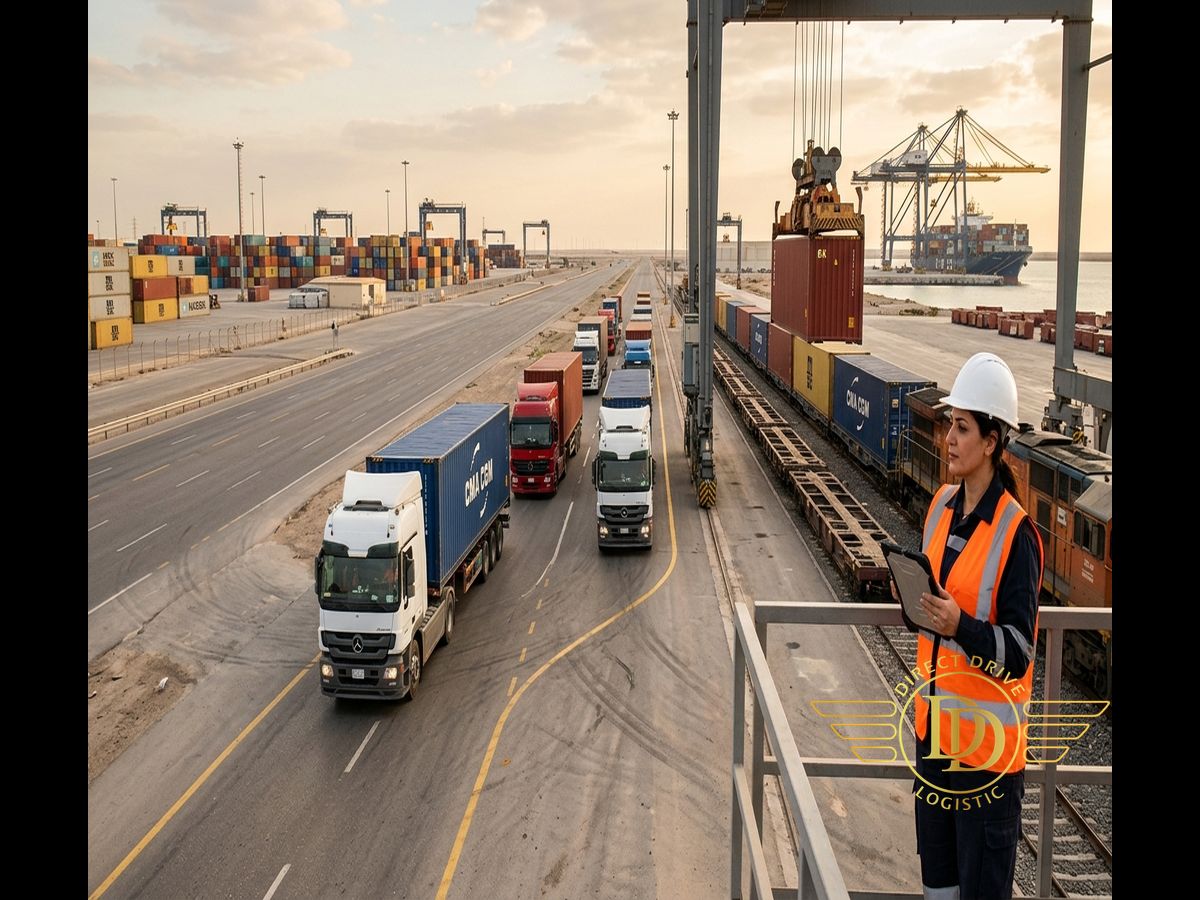
Road Haulage and Rail Links: Moving FCL Cargo from Umm Qasr Inland
Umm Qasr is Iraq’s main seaport. Throughput reached roughly 1.8 million TEU in 2025 on the lower operator estimate. Most of those containers leave by truck through Basra, so terminal choice shapes your trucking plan as much as your clearance plan.
In the umm qasr north port vs south port decision, North Port boxes move fastest on flatbeds and container chassis. South Port bulk and project cargo usually needs specialized trailers. The new Al-Faw highway link ties Umm Qasr to the future Grand Faw Port Iraq site, which may shift deep-draft container calls south over time.
The Umm Qasr rail connection toward Basra and Baghdad suits heavy, non-urgent bulk. Clearance still sets the pace. It typically took 5–7 days, and one 2026 guide cited 5–12 working days. In one documented Dubai-to-Baghdad medical equipment shipment, our licensed clearing team cleared cargo at Umm Qasr within 48 hours of engagement. After release, our Erbil hub runs about 10 trucks a day to every governorate.
Air Freight (AWB) and Alternative Entry Corridors: Safwan, Trebil and Ibrahim Khalil
Urgent spare parts rarely justify a sea leg. An Air Waybill (AWB) into Baghdad, Erbil or Sulaymaniyah airports keeps a stalled production line moving. Direct Drive Logistic handles air freight at all 3 airports.
Land corridors are your backup if the sea leg into Umm Qasr is disrupted. The Safwan border crossing links Kuwaiti ports to Basra. Trebil serves cargo landed at Aqaba, while Ibrahim Khalil carries Mersin traffic into Kurdistan. On one Mersin-to-Erbil electronics shipment, the total door-to-door transit was 5–7 days. Shipments entering Kurdistan should also account for the Kurdistan cancer fund customs surcharge when budgeting duties at KRG crossings.
From my own operations, I can state this plainly: we operate at 15 border crossings into Iraq — the Iran-Iraq and Turkey-Iraq corridors plus the Jordan, Saudi Arabia, Kuwait and Syria frontiers — and Bandar Abbas port, across BOTH KRG and Federal Iraq customs systems. That network gives clients route flexibility that single-border operators cannot match. When a Tehran-to-Baghdad FMCG load needed rerouting, we moved it through Mehran and still delivered within the original 4–5 day timeline.
Mitigating Delays: Predictable Inland Freight from Umm Qasr to All Iraq Governorates
Pre-Discharge Checklist: Confirming Terminal Zone, Pre-Lodging Documents and Booking Trucks Before ETA
Most dwell time at Umm Qasr is decided before the vessel berths. The umm qasr north port vs south port choice determines which terminal, yard and gate your trucks will queue at. That is why this checklist starts there.
- Step 1: Confirm terminal zone and cargo type: Containers normally discharge at North Port, where Berths 25 and 26 run about 14 meters deep. Bulk, grain and project cargo usually go to South Port. Match the bill of lading to the correct zone.
- Step 2: Pre-lodge documents: Send the commercial invoice, packing list, certificate of origin and bill of lading to your licensed clearing agent before ETA. Direct Drive Logistic clears as a government-licensed agent at Umm Qasr. One Dubai-to-Baghdad medical equipment shipment cleared within 48h of engagement.
- Step 3: Book Umm Qasr inland trucking before discharge: Reserve trucks against the ETA, not the release date, so cargo leaves the yard inside the free-storage window.
- Step 4: Request confirmed transit times: Ask your forwarder for route-specific times instead of relying on published estimates. Track Iraq port tender notices for planned works that can change gate routines.
Kurdistan-Routed Inland Freight: Handling KRG Tariff Differences at Al-Sad, Dareman, Chiman and Bawa Mahmoud
Basra to Erbil trucking moves cargo from the Federal Iraq customs system into the KRG system. A KRG internal customs checkpoint at Al-Sad, Dareman, Chiman or Bawa Mahmoud can assess the tariff difference between the two systems.
- Step 5: Allow 1-2 days at the checkpoint: Build this window into delivery dates for consignees in Erbil, Duhok and Sulaymaniyah.
- Step 6: Pre-calculate the difference: Customs duty depends on your goods and their HS code. Estimate it with our tariff calculator, or request a quote and our team will confirm the full cost.
- Step 7: Name a same-system backup crossing: If one checkpoint slows, reroute through another KRG point without re-filing under a different customs regime.
Direct Drive Logistic works across both KRG and Federal systems at 15 border crossings. Its Erbil hub runs about 10 trucks a day on a fixed schedule, with next-day delivery to most Iraqi cities. One Erbil-to-Baghdad retail restock was delivered door-to-door in 6 hours.
Next step: Send your bill of lading and vessel ETA to Direct Drive Logistic and request a confirmed Umm Qasr-to-destination transit plan.
Send your cargo details to Direct Drive Logistic on WhatsApp and our team will send you a route-specific checklist and quote.
Message on WhatsAppWhy Choose Direct Drive Logistic?
Offices in Erbil (HQ) + Tehran (Nasim Shahr Terminal); rentable warehouse space in Baghdad, Karbala, Najaf, Erbil, Duhok and Basra, plus a warehouse in Tehran
Government-licensed clearing agent — direct port access for sea freight into southern Iraq
2,500+ Iraq domestic deliveries, 300+ Iran-Iraq cross-border, 100+ international freight; air freight handler at Erbil, Baghdad, and Sulaymaniyah airports
Operational at 4 KRG borders (Parviz Khan, Bashmagh, Haji Omran, Ibrahim Khalil) plus the Sheikh Saleh border market, 5 federal Iran-Iraq borders (Khosravi, Sumar, Mehran, Shalamcheh, Chazzabeh) and 6 further federal crossings (Trebil, Arar, Safwan, Al-Qaim, Al-Rabia, Al-Waleed), plus Bandar Abbas port
Full operational fluency in Farsi, Arabic, Kurdish, and English — client-facing and documentation
~10 trucks/day from Erbil hub covering Baghdad, Karbala, Najaf, Basra, Kut (Wasit), Diyala, Nasiriyah, and all Iraqi governorates
Frequently Asked Questions
Umm Qasr Port is Iraq’s main commercial seaport near Basra, operated under the General Company for Ports of Iraq (GCPI). It is divided into 2 facilities, North Port and South Port, and each handles different cargo. North Port hosts ICTSI’s Basra Gateway Terminal (BGT), the main container gateway for FCL (Full Container Load) and LCL (Less than Container Load) shipments. South Port focuses on bulk, grain, general cargo and project shipments. Understanding umm qasr north port vs south port before you book lets you match your bill of lading, terminal handling and inland trucking plan to where your cargo will actually berth. This avoids re-handling and unplanned storage days.
Umm Qasr is the biggest and busiest operating port in Iraq. It handled a reported 1.8–1.95 million TEU in 2025, out of roughly 2.1 million TEU across all Iraqi ports. Much of that container volume moves through North Port, where Basra Gateway Terminal has a reported annual capacity of about 0.9–1.0 million TEU across 6 berths. Al Faw Grand Port, south of Umm Qasr, is designed to add deep-water scale. Its container yard was reported at 96.5% completion in December 2025. Phase one includes 5 container berths and a design capacity of roughly 3–4 million TEU. Treat these port-by-port splits as reported estimates until GCPI publishes reconciled statistics. Always confirm your carrier’s port of call at booking.
In the umm qasr north port vs south port comparison, North Port suits containerized cargo and South Port suits bulk, breakbulk and project cargo. North Port – Advantages: ICTSI’s reported USD 250 million upgrade added Berths 25 and 26, each about 14 meters deep. The terminal can receive vessels up to 14,000 TEU and offers scheduled liner services. – Disadvantage: Yard dwell time can build during peak vessel arrivals. South Port – Advantages: Suits grain, bulk commodities, steel and oversized machinery discharged without containers. – Disadvantages: Liner frequency is lower, and operations depend more on berth allocation and specialized lifting equipment. Before your cargo sails, confirm with your shipping line which terminal will appear on the arrival notice.
In umm qasr north port vs south port planning, your terminal choice affects clearance speed, storage exposure and inland costs, even though customs rules are the same at both. Clearance runs through Iraq’s General Commission of Customs. It typically requires 4 core documents:
- Commercial invoice
- Packing list
- Bill of lading
- Certificate of origin A conformity certificate is also needed where your product category requires one.
Costs accumulate from terminal handling, port storage after a short free period, shipping-line demurrage, inspection and trucking, so every day of delay counts. On one Dubai–Baghdad medical equipment shipment, Direct Drive Logistic acted as licensed clearing agent and cleared the cargo at Umm Qasr within 48 hours. This avoided the storage and demurrage charges that would otherwise have built up.
Choose a forwarder that is a government-licensed clearing agent at Umm Qasr, controls inland transport and can switch routes when needed. Check for 5 capabilities:
- Direct customs licensing, so no third-party broker is involved
- Working knowledge of both North Port container procedures and South Port bulk and project handling
- Warehousing in Basra
- Scheduled trucking to Baghdad, Erbil, Karbala, Najaf and other governorates
- Documentation support in Arabic, Kurdish, Farsi and English Direct Drive Logistic combines these capabilities.
It offers licensed clearing at Umm Qasr, rentable warehouse space in Basra, and about 10 scheduled daily truck departures from its Erbil hub to every Iraqi governorate. Its 15-border land network also serves as a fallback when sea routing is not the right fit.
For a 40ft FCL heading to Baghdad, Erbil or Sulaymaniyah, request North Port routing through Basra Gateway Terminal. The exception is when your shipping line, cargo type or berth allocation specifies otherwise. Follow 4 steps:
- Book with a line that calls at BGT.
- Confirm the terminal on the arrival notice.
- Lodge customs documents before the vessel arrives so clearance starts at discharge.
- Pre-arrange inland trucking to minimize storage days.
For Kurdistan Region destinations, plan for KRG import requirements, which can add a separate documentation step. It is also worth comparing land alternatives. The Mersin, Turkey to Erbil route has run 5-7 days door-to-door in practice. Corridors through Iran’s Bandar Abbas port may also suit some cargo better than sea routing via Basra.
Conclusion
The key to the umm qasr north port vs south port decision is matching your vessel size, cargo type and inland destination to the right terminal. Neither terminal suits every shipment. Terminal choice shapes everything after discharge: berth availability, draft limits, ASYCUDA customs clearance and how quickly trucks clear the gate. Getting it right at booking prevents costly delays on Iraq’s principal deep-water seaport.
Take three steps before your next shipment. First, check your booking confirmation or Bill of Lading (B/L) this week to confirm which terminal zone your carrier has assigned, and verify that your Incoterms state clearly who covers terminal handling (THC). Second, ask your freight forwarder whether they pre-lodge the 3 documents ASYCUDA clearance depends on (your B/L, commercial invoice and HS codes) before the vessel berths, and whether inland trucks are booked before discharge. Third, send your shipment details to Direct Drive Logistic for a terminal and clearance review. Customs duty depends on your goods and their HS code. Estimate it with our tariff calculator, or request a quote and our team will confirm the full cost.
When your cargo needs clearing at Umm Qasr, a government-licensed clearing agent with direct port access removes the handoff between port, customs and trucking where most delays begin. Direct Drive Logistic handles that link directly, backed by 2,900+ completed shipments and warehouse space in Basra for cargo that needs staging before moving inland. Call our team at (+964) 750 637 9296
Need Logistics Consultation?
The Direct Drive team is ready to assist. Message us now.
Not sure whether your cargo should move through Umm Qasr North Port or South Port? Direct Drive Logistic will match your shipment to the right terminal based on cargo type, berth availability, and customs requirements, helping you avoid costly delays and demurrage charges. Call us today at (+964) 750 637 9296 to get expert port guidance and a tailored shipping quote.
Get Your Free Quote NowContact Us for a Consultation
Location
Direct Drive Logistic
Gulan Street, MRF Quattro Block A 13-9
Erbil, Kurdistan Region