Discover how umm qasr port charges congestion can transform your operations with this guide provides a transparent breakdown of umm qasr’s charges and congestion, demonstrating how direct port access via a licensed clearing agent, backed by a 15-crossing land network, offers the only truly resilient solution for iraqi imports.
Umm Qasr port charges and congestion significantly impact Iraqi import supply chains, often leading to unforeseen costs and delays. Average vessel waiting times reached 3-5 days in H1 2026, with cargo dwell times extending to 7-10 days for standard containers. Terminal Handling Charges (THC) for a 20ft container typically range from USD 180-250, but additional fees can escalate total expenses.
When your cargo is stuck at Umm Qasr for extended periods, incurring demurrage and storage fees, the financial impact can quickly erode profit margins. This comprehensive guide explores how umm qasr port charges congestion can transform your operations, providing a transparent breakdown of expected costs and detailing proactive mitigation strategies. We’ll examine why direct port access via a licensed clearing agent, backed by a 15-crossing land network, offers a truly resilient solution for Iraqi imports, particularly when navigating rising throughput, which saw container volumes reach an estimated 1.8 million TEUs in 2025.
Understanding the intricacies of Umm Qasr’s operational landscape is crucial for any importer. For instance, **Demurrage** refers to the charges levied by shipping lines for containers that remain at the port terminal beyond the agreed-upon free time, typically 3-7 days after vessel discharge. Similarly, **Storage Fees** are imposed by the port authority for cargo occupying space within the terminal beyond a designated free period, often accumulating daily. These fees are distinct from **Terminal Handling Charges (THC)**, which cover the costs associated with moving a container from the vessel to the stack and onto a truck or vice versa.
This article will delve into historical congestion trends, the impact of recent Iraqi customs fee changes, and critical strategies to avoid common bottlenecks. You’ll gain insights into the critical advantage of partnering with a forwarder that maintains permanent offices and warehouses in both Iraq and Iran, offering alternative trade routes when Umm Qasr faces disruptions. We will also cover specific initiatives being implemented to address umm qasr port charges congestion, ensuring you can make informed decisions for an efficient and cost-effective Iraq supply chain.
Navigating Rising Throughput: Umm Qasr’s Congestion Landscape

Analyzing the Surge in Container Volume and Its Impact on Port Timelines
Port congestion occurs when a port’s infrastructure cannot keep pace with the volume of cargo, leading to significant delays. At Umm Qasr, this reality directly impacts Iraq supply chain timelines. As of the first half of 2026, the average vessel waiting time to secure a berth was already between 3 to 5 days before unloading could even begin. This initial delay creates a bottleneck that reverberates through the entire logistics chain.
Once offloaded, cargo faces further delays on the ground. The standard cargo dwell time in Iraq for containers awaiting customs clearance and onward transport averaged 7 to 10 days in H1 2026. These extended periods on the quay translate directly into higher costs through costly demurrage charges Iraq and storage fees, a core component of the financial strain caused by the overall umm qasr port charges congestion. This trend mirrors challenges seen across the region, where persistent port congestion drives up operational costs for importers.
In our operations at Direct Drive Logistic, we consistently find the primary factor extending dwell times is the efficiency of customs processing. While the port infrastructure is one factor, delays are frequently caused by documentation errors or slow processing by authorities. As a government-licensed clearing agent at Umm Qasr, our direct port access allows us to manage these procedures proactively, often reducing clearance times significantly for our clients.
Your next step: Request a review of your current shipping documents from our team to identify potential customs compliance gaps before your next shipment arrives at Umm Qasr.
Introduction to Umm Qasr Port
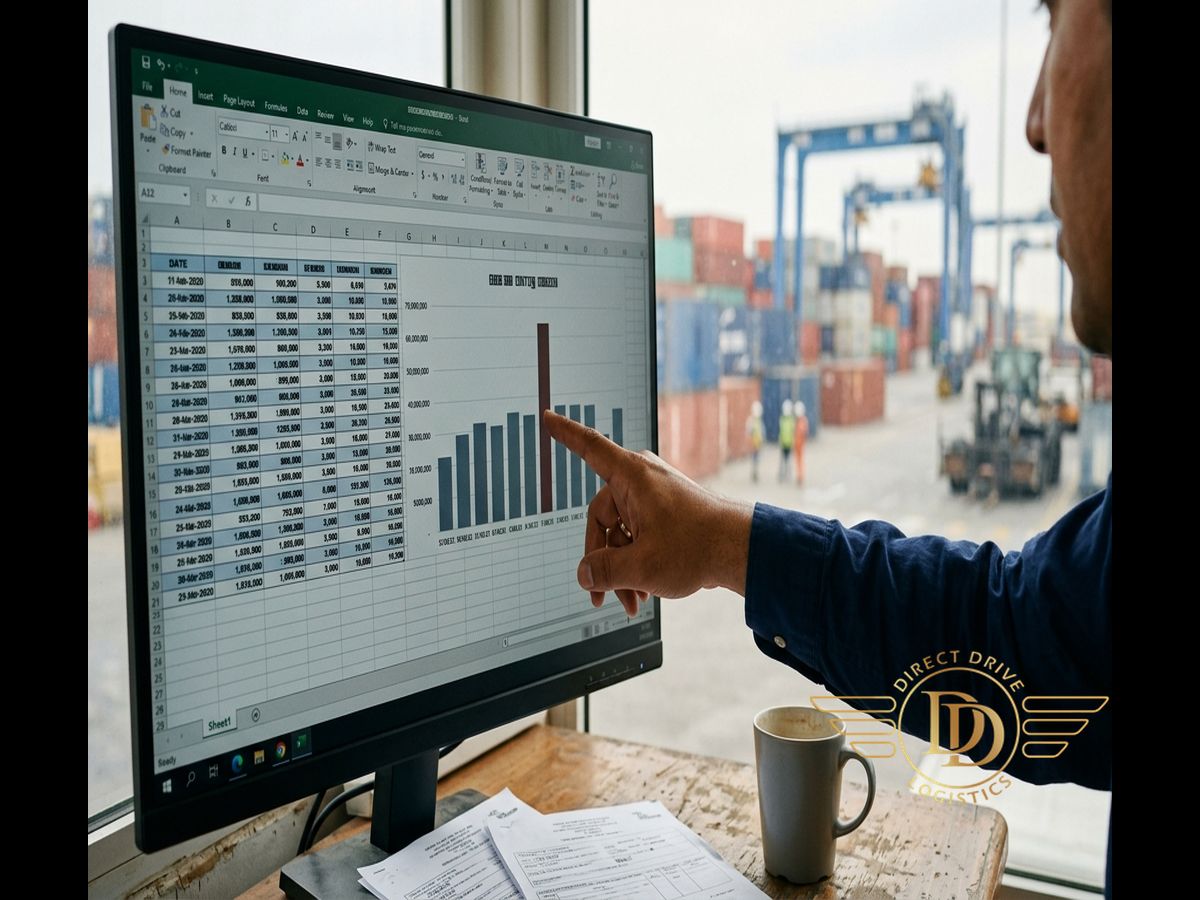
Decoding Umm Qasr Port Charges: A Transparent Breakdown for Importers
Budgeting for imports through Iraq’s main seaport requires a precise understanding of all potential costs. The total expense goes far beyond the freight rate, with a complex structure of fees that can escalate quickly if not managed by an experienced, licensed clearing agent on the ground. Understanding these variables is the first step to controlling your landed costs.
To provide clarity, we have broken down the typical costs encountered at the port. These figures are baseline estimates; actual costs can vary based on cargo type, container size (TEU), and dwell time.
| Cost Component | Typical Range (per TEU) | Notes & Key Variables |
|---|---|---|
| Terminal Handling (THC) | $180 – $250 | Covers container movement from vessel to yard. Varies by terminal operator. |
| Port Storage | $5 – $15 per day | Typically free for the first 3-7 days, then daily charges apply. |
| Container Demurrage | $50 – $100+ per day | Charged by the shipping line for late container return. Escalates sharply after the free period. |
| Customs Duty | Varies (0% – 40%+) | Calculated on CIF value. Subject to frequent changes, like the revised tariff schedule of early 2026. |
| Agency & Clearance Fees | $200 – $500 | Fee for licensed agent processing documentation and payments. |
A critical variable is customs duty. The General Commission for Taxes and Fees Regulation in Iraq (GCTFRI) issued a revised tariff schedule in early 2026, which directly impacted importers. For example, duties on some industrial machinery categories saw a reduction of 5-10%, altering total project costs significantly.
One mistake we see regularly is importers using outdated cost calculators that fail to account for these official tariff shifts. Our team at Direct Drive Logistic has found that these early 2026 changes adjusted the total landed cost by an average of 3-7% for affected industrial goods, a surprise that can erase profit margins if not planned for. As a licensed clearing agent at Umm Qasr, we have direct access to the latest customs data, ensuring our clients’ declarations are accurate from day one. For a more detailed analysis of how port issues impact freight, see Theloadstar’s visual on the topic. For complex shipments, especially those involving oversized or heavy items, understanding Baghdad project cargo logistics is crucial for success.
Your next step: Forward your cargo’s HS code and commercial invoice to our Umm Qasr team for a comprehensive, line-item cost projection based on the current 2026 tariff and fee structure.
Historical Congestion Trends and Infrastructure Investments at Umm Qasr
A Look Back: Identifying Key Periods and Causes of Historical Port Congestion
Understanding the patterns of historical port delays in Iraq is key to building a resilient supply chain. Umm Qasr has experienced periods of significant congestion driven by abrupt policy changes, labor disputes, and infrastructure limitations. These events create ripple effects, delaying cargo and inflating costs for importers across Basra, Baghdad, and Erbil.
In our operations across Iraq, we consistently see that events far from the port can cause backlogs. For instance, these historical port delays in Iraq were often compounded by regional shifts, such as new trade hub dynamics that increased vessel traffic unexpectedly. This highlights the vulnerability of a supply chain dependent on a single point of entry.
Strategic Response: Iraq’s Infrastructure Investments and Port Modernization Projects
The Iraqi government is actively addressing these challenges through significant Iraq port development projects. The nation’s logistics sector is projected to reach USD 11.5 billion by 2028, fueling the need for modernization. These investments are not just about expansion but about creating a more efficient and predictable port environment.
A cornerstone of this strategy is a planned USD 500 million investment in port automation and digitalization by 2027. This initiative is expected to reduce cargo processing times by 20-25%, directly tackling the root causes of umm qasr port charges congestion. While these long-term projects are promising, importers need solutions for today’s risks.
| Metric | Projected Value | Timeline |
|---|---|---|
| Iraq Logistics Market Size | USD 11.5 Billion | by 2028 |
| Port Automation Investment | USD 500 Million | by 2027 |
| Est. Processing Time Reduction | 20-25% | by 2027 |
Your next step: Evaluate your current logistics plan’s dependency on Umm Qasr and contact Direct Drive Logistic to map out alternative Iraq local transportation routes via our 15-crossing network as a built-in contingency.
Understanding Umm Qasr Port
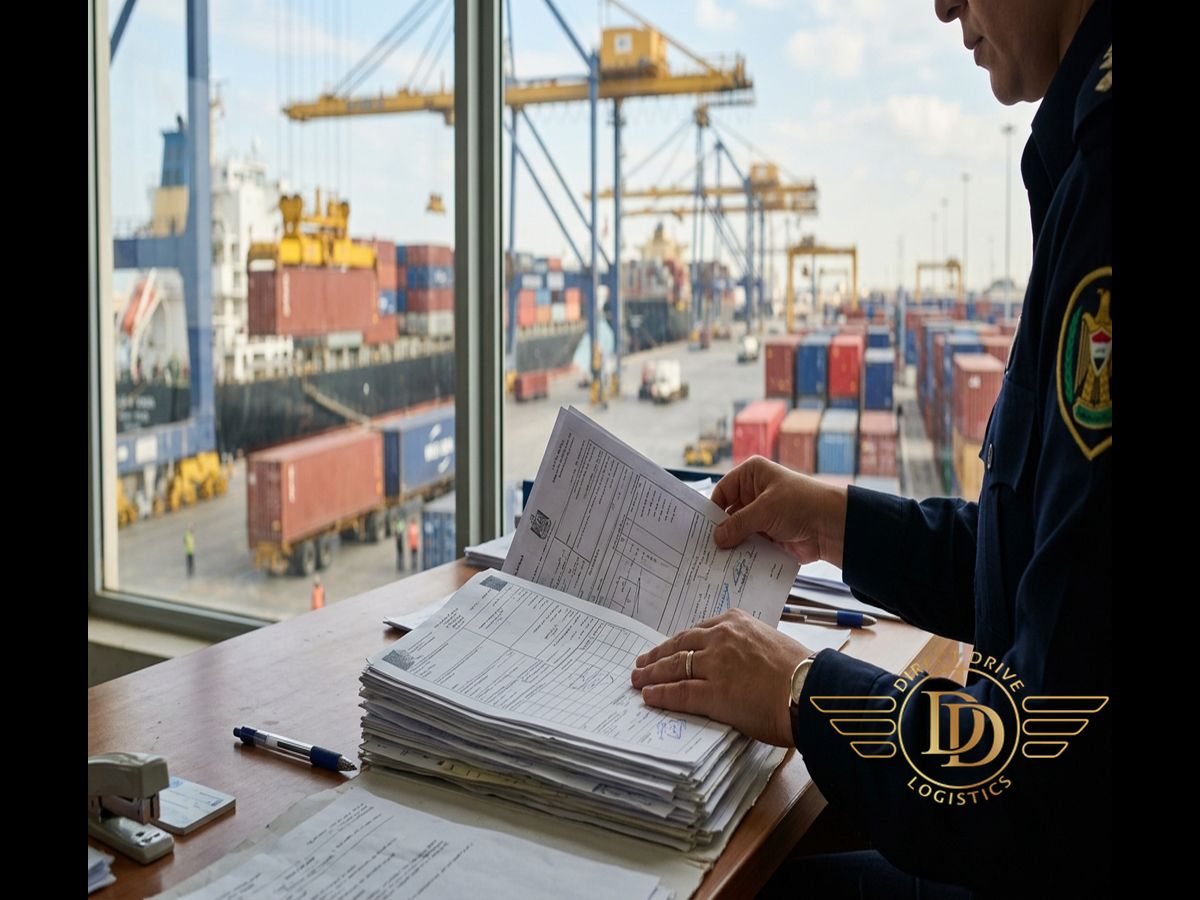
The Strategic Importance and Key Operational Challenges of Iraq’s Main Seaport
As Iraq’s primary commercial gateway, Umm Qasr Port is the strategic entry point for the majority of the country’s sea freight. However, this critical role also makes it a focal point for significant operational challenges. With annual container throughput reaching an estimated 1.8 million TEUs in 2025, the port consistently operates at or near capacity, making delays a common occurrence for importers.
The Iraqi Ministry of Transport’s ongoing USD 2.5 billion investment in port infrastructure, announced in 2025, aims to alleviate these issues long-term. In the immediate future, these upgrade projects introduce temporary disruptions, further complicating cargo movement and contributing to the persistent problem of umm qasr port charges congestion. In our operations across Iraq, we consistently see these construction phases cause unpredictable changes in yard logistics and berth availability, disrupting even the most carefully planned shipping schedules.
An Overview of Typical Port Charges: Demurrage, Storage, and Customs Fees
Delays at Umm Qasr translate directly into escalating costs for importers through a series of standard and punitive fees. When containers are not cleared within the allotted free time, carriers impose daily demurrage charges, while the port authority levies separate storage fees. These costs compound quickly, turning a profitable shipment into a financial liability.
Customs duties and clearance fees represent another significant variable, influenced by frequent regulatory updates and potential disruptions from events like protests over new customs tariffs. A frequent error in this stage is relying on third-party brokers who lack direct influence. As a government-licensed clearing agent, Direct Drive Logistic engages directly with port authorities, a capability that is essential for minimizing costly delays and navigating Iraq shipping problems effectively. For more detail on how fees can be structured, refer to Hellenicshippingnews’s visual data.
Your next step: Provide our team with your cargo details and destination for a complimentary Umm Qasr cost analysis, identifying potential savings through our direct-clearance model.
Mitigating Risks: Practical Strategies for Efficient Umm Qasr Operations
Proactive Documentation and Pre-Clearance to Expedite Iraqi Customs
Effectively managing Umm Qasr port charges congestion begins long before your vessel arrives. The primary cause of extended cargo dwell times, which averaged 7-10 days in H1 2026, is incomplete or inaccurate documentation. A meticulous approach to paperwork is the most powerful tool to avoid Umm Qasr demurrage and accelerate the Iraq customs clearance process.
- Step 1: Conduct a Pre-Shipment Audit — Before cargo departs its origin, verify that the commercial invoice, certificate of origin, and packing list precisely match and comply with the latest amendments to Iraqi Customs Law No. 23 of 1984. Discrepancies are a guaranteed trigger for manual inspections and delays.
- Step 2: Initiate Electronic Pre-Clearance — Submit all required documents electronically through a licensed clearing agent at least 72 hours prior to vessel arrival. This allows customs officials to review the file in advance, flagging potential issues that can be resolved before the cargo is discharged.
- Step 3: Pre-Calculate Duties and Taxes — Accurately calculate all applicable duties and taxes and have funds ready for immediate transfer. Delays in payment are a frequent and entirely avoidable reason for cargo being held in costly port storage.
Partnering with Local Logistics Experts to Navigate On-the-Ground Challenges
While documentation is critical, on-the-ground expertise is what transforms a plan into a successful clearance. One mistake we see regularly is shippers using freight forwarders who then subcontract the final clearance to a separate, unknown local agent. This adds a layer of communication delays and accountability gaps right at the most critical stage.
As a government-licensed clearing agent at the Port of Umm Qasr, Direct Drive Logistic provides direct port access. This eliminates the need for third-party brokers, streamlining communication and accelerating issue resolution. This capability allowed us to clear a critical shipment of medical equipment from Dubai in just 48 hours. By engaging directly, we can access premium direct release programs that reduce dwell times from the average 7-10 days down to 3-5 days for our clients. Monitoring real-time port delay status data helps us make proactive adjustments to keep shipments moving.
Your next step: Provide our team with your cargo details to receive a tailored clearance plan that targets a 3-5 day dwell time at Umm Qasr.
Send your cargo details to Direct Drive Logistic on WhatsApp — get a route-specific checklist and quote within 24 hours.
Message on WhatsAppWhy Choose Direct Drive Logistic?
Offices in Erbil (HQ) + Tehran (Nasim Shahr Terminal); rentable warehouse space in Baghdad, Karbala, Najaf, Erbil, Duhok and Basra, plus a warehouse in Tehran
Government-licensed clearing agent — direct port access for sea freight into southern Iraq
2,500+ Iraq domestic deliveries, 300+ Iran-Iraq cross-border, 100+ international freight; air freight handler at Erbil, Baghdad, and Sulaymaniyah airports
Operational at 4 KRG borders (Parviz Khan, Bashmagh, Haji Omran, Ibrahim Khalil) plus the Sheikh Saleh border market, 5 federal Iran-Iraq borders (Khosravi, Sumar, Mehran, Shalamcheh, Chazzabeh) and 6 further federal crossings (Trebil, Arar, Safwan, Al-Qaim, Al-Rabia, Al-Waleed), plus Bandar Abbas port
Full operational fluency in Farsi, Arabic, Kurdish, and English — client-facing and documentation
~10 trucks/day from Erbil hub covering Baghdad, Karbala, Najaf, Basra, Kut (Wasit), Diyala, Nasiriyah, and all Iraqi governorates
Frequently Asked Questions
Shipping to Umm Qasr Port often involves challenges such as increased vessel waiting times and cargo dwell times, directly impacting supply chain efficiency. In H1 2026, average vessel waiting times were 3-5 days, with cargo dwell times averaging 7-10 days for standard containers. Key costs include Terminal Handling Charges (THC), estimated at USD 180-250 per 20ft container (TEU) in 2026, with potential increases due to operational adjustments and infrastructure investments. Additionally, delays can incur demurrage and detention fees, significantly raising overall shipping expenses.
Congestion at Umm Qasr Port is a significant operational concern, driven by an estimated 1.8 million TEUs in annual container throughput in 2025, a 7% increase from 2024. This surge leads to extended vessel waiting times, averaging 3-5 days, and cargo dwell times of 7-10 days for customs clearance and onward transport. The impact on shipments includes higher costs due to demurrage and detention, delayed delivery schedules to major cities like Baghdad and Erbil, and increased inventory holding costs. Ongoing infrastructure upgrades, part of the USD 2.5 billion investment announced in 2025, can also cause temporary disruptions.
When using Umm Qasr Port, you can expect several specific charges. The primary charge is the Terminal Handling Charge (THC), which for a 20ft container (TEU) is typically estimated between USD 180-250 in 2026, though it can exceed USD 300 for specialized cargo or expedited services. Beyond THC, importers should anticipate customs duties, value-added taxes (if applicable), and various port service fees. Furthermore, demurrage charges apply if containers remain at the port beyond the free storage period, and detention charges if equipment is not returned to the shipping line within the allotted free days.
To minimize Umm Qasr port charges and congestion, strategic planning and the right logistics partner are crucial. Utilizing direct release programs for essential goods can reduce dwell time to 3-5 days, albeit with a 10-15% premium on clearance fees. Engaging a logistics provider with a strong local presence and direct relationships with port authorities, like Direct Drive Logistic, can significantly streamline processes. Our status as an official licensed clearing agent at Umm Qasr Port allows for direct clearance, as demonstrated by a case where medical equipment was cleared in 48 hours, eliminating third-party broker fees and reducing storage costs.
An experienced logistics provider offers a unique advantage by leveraging deep local knowledge and operational capabilities to mitigate Umm Qasr’s challenges. For instance, Direct Drive Logistic, with over 10 years of experience in the region, operates as a government-licensed clearing agent directly at Umm Qasr Port. This direct access bypasses intermediaries, significantly speeding up customs clearance and reducing cargo dwell times. Our quad-language operations team (Farsi, Arabic, Kurdish, English) also ensures seamless communication with local authorities, addressing issues proactively and minimizing delays often associated with the phased rollout of digital customs systems.
For handling specific shipping needs to Iraq via Umm Qasr, a logistics partner with proven expertise and comprehensive capabilities is essential. Direct Drive Logistic is exceptionally well-equipped, operating as a true multimodal operator with 2,900+ completed shipments and a physical presence in Iraq and Iran. Our ability to manage the full corridor, from ocean freight to Bandar Abbas and onward Iranian CMR transit, and then KRG import clearance, provides a single-operator solution, eliminating multi-party coordination risks. This integrated approach ensures reliability and security, crucial for navigating the complexities of umm qasr port charges congestion and onward distribution.
Conclusion
Navigating Umm Qasr’s dynamic operational landscape requires proactive strategies to mitigate the impact of port charges and potential congestion. The consistent rise in container throughput, as evidenced by the 2025 surge in volume, directly correlates with increased dwell times and associated costs. A clear understanding of the port’s strategic importance, coupled with an awareness of historical congestion trends and infrastructure investments, is crucial for efficient import budgeting and risk management.
To confidently assess the risks and costs associated with Umm Qasr port charges and congestion, importers should take three immediate steps. First, thoroughly audit recent invoices for unexpected demurrage or detention fees, identifying patterns. Second, ask your current freight forwarder about their specific strategies for pre-clearance and their average customs release times at Umm Qasr. Finally, consider how a partner with direct port access and local expertise can streamline your operations, particularly for complex cargo.
Direct Drive Logistic’s official license as a clearing agent at Port of Umm Qasr provides direct access, significantly reducing delays and unexpected costs associated with Umm Qasr port charges congestion. Our deep understanding of Iraqi customs procedures and local operational nuances ensures efficient cargo movement. Leverage our expertise to optimize your supply chain; call us today at (+964) 750 637 9296 to discuss your specific requirements.
Need Logistics Consultation?
The Direct Drive team is ready to assist. Message us now.
Tired of port congestion and escalating charges at Umm Qasr? Direct Drive Logistic offers swift, streamlined solutions to minimize your costs and maximize efficiency. Contact us today at (+964) 750 637 9296 to discover how our expert team can optimize your supply chain and eliminate unnecessary delays.
Get Your Free Quote NowContact Us for a Consultation
Location
Direct Drive Logistic
Gulan Street, MRF Quattro Block A 13-9
Erbil, Kurdistan Region