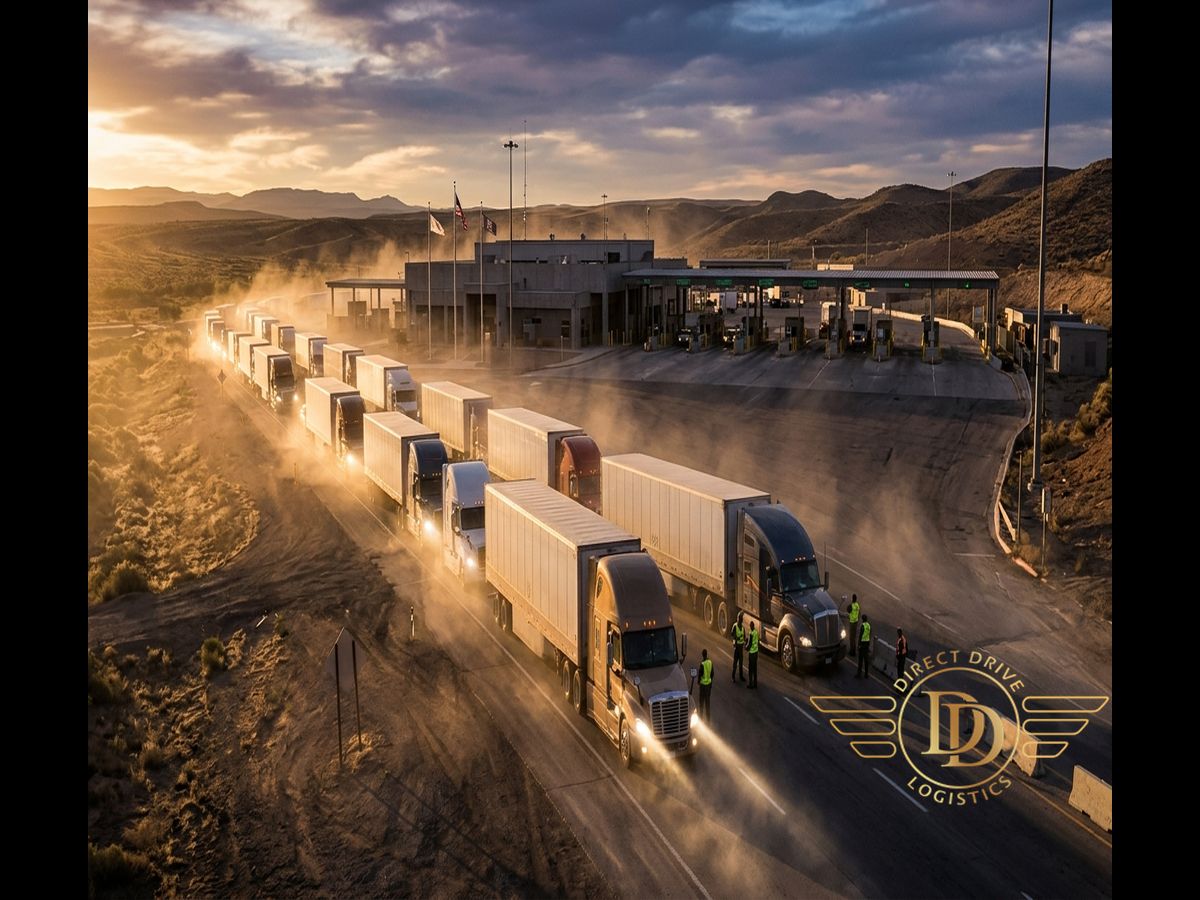
Discover how Iraq cross-border logistics can transform your operations with this article moves beyond generic advice by providing a tactical guide to iraq’s specific international trade routes and border crossings, using our verified 7-border network and quad-lingual team’s experience to benchmark what ‘fast and reliable’ cross-border logistics truly means.
Iraq cross-border logistics involves the intricate movement of goods across its international land and sea borders, encompassing customs clearance, diverse transport modes, and navigating regional regulatory frameworks. This complex process is critical for businesses importing into or transiting through Iraq, demanding precise documentation and strategic route planning to ensure efficient and compliant delivery. Mastery of these logistics is essential for timely and cost-effective trade.
When your cargo is stuck at the Ibrahim Khalil border for 3–5 days, incurring unexpected demurrage fees, it directly impacts your project timelines and budget. This common scenario highlights the critical need for a tactical approach to Iraq cross-border logistics. Missing just one customs document can delay your Iraq shipment by 3–6 weeks and cost USD 800+ in storage fees, a frustrating reality for many logistics managers.
This article moves beyond generic advice, providing a tactical guide to Iraq’s specific international trade routes and border crossings. We use our verified 7-border network and quad-lingual team’s experience to benchmark what ‘fast and reliable’ cross-border logistics truly means. A crucial element in this landscape is the **TIR system (Transports Internationaux Routiers)**, an international customs transit system that simplifies and secures the movement of goods across borders. It allows sealed road vehicles and containers to cross international borders with minimum customs intervention, significantly reducing transit times and costs for eligible cargo by up to 40-50%.
Understanding the nuances of the Turkey-Iraq and Iran-Iraq corridors, especially in light of increasing volumes, is vital. For instance, the **Ibrahim Khalil/Habur crossing** is now a dominant route for fast market access into northern Iraq, handling around 1,500 trucks entering daily. However, navigating the fragmented dual customs systems of the **Kurdistan Region of Iraq (KRG)** and Federal Iraq presents a significant challenge. This dual clearance risk means cargo often faces two distinct customs processes when moving from a KRG entry point to federal markets like Baghdad or Basra, potentially adding 1–3 days and extra documentation requirements if not meticulously planned.
This comprehensive guide explores “Iraq cross-border logistics” through multiple perspectives, addressing why freight gets stuck and how to choose optimal gateways. We’ll cover essential customs documentation and how true multimodal transport solves cross-border fragmentation, moving beyond simple brokerage. You’ll discover what constitutes a real benchmark for customs clearance speed in Iraq, often achievable within 48 hours from engagement. Whether you’re a logistics professional or business owner, you’ll gain actionable insights to enhance your operations, including strategies for specialized cargo and navigating the complexities of KRG versus federal customs. We aim to equip you with an action plan for seamless cross-border shipping to Iraq.
Optimizing Your Trade Flow: Turkey-Iraq and Iran-Iraq Land Corridors
The Turkey-Iraq Land Bridge: Leveraging the Ibrahim Khalil Gate for Northern Iraq Access
For businesses targeting Northern Iraq and the Kurdistan Region, the land bridge from Turkey is a cornerstone of effective Iraq cross-border logistics. The Ibrahim Khalil border crossing serves as the primary gateway for Turkey to Iraq truck transport, connecting major ports like Mersin directly to cities such as Erbil and Duhok. A standard Full Truck Load (FTL) from Mersin to Erbil typically ranges from USD 2,800 to USD 3,500, offering a predictable cost structure for consistent cargo flow.
Under normal conditions, door-to-terminal transit for this route is 3-4 days, but this benchmark is highly dependent on customs efficiency. Our team at Direct Drive Logistic has found that precise, pre-cleared documentation is the single biggest factor in achieving that timeline; any error can easily push delivery to 5-7 days. This is particularly true for specialized cargo requiring permits from KRG authorities, a process our Kurdish-speaking team in Erbil can resolve in as little as one day.
Recent regional instability has impacted these corridors, with some Middle East cross-border seeing freight rate increases of 15–25% year-over-year. This volatility makes expert route optimization and reliable partnerships more critical than ever for managing budgets and timelines. One mistake we see regularly is shippers treating the Ibrahim Khalil crossing as a single, uniform process, failing to prepare for the KRG’s distinct customs system, which causes significant delays. For comprehensive support, consider our Regional Logistics Iraq services.
Your next step: Provide our team with your cargo details and destination (Erbil or Baghdad). We will deliver a route-optimized quote within 24 hours that accounts for current border conditions and documentation requirements.
Streamlining Cross-Border Logistics to Iraq: The TIR System Advantage
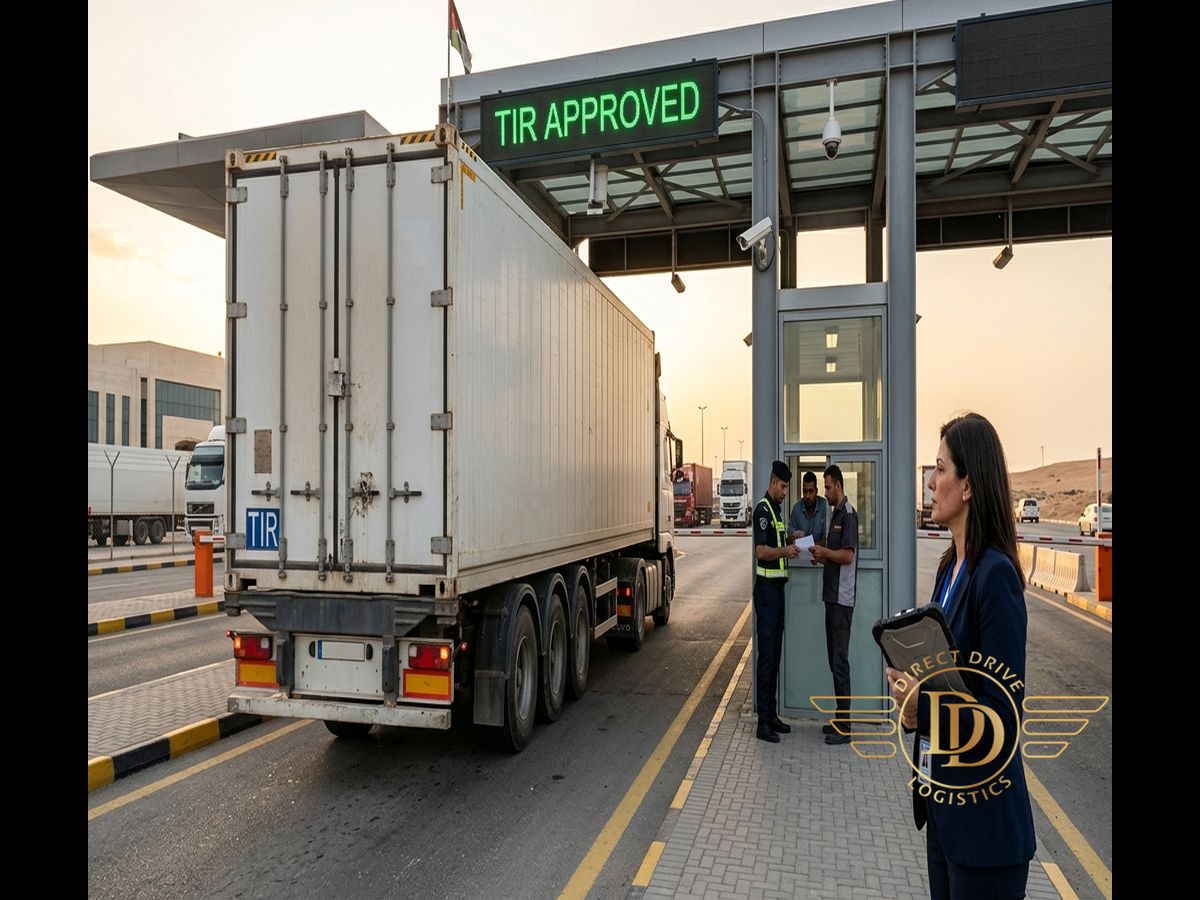
Understanding the TIR Convention: How It Simplifies Customs for Iraq-Bound Cargo
The full operationalization of the TIR system in 2025 by Iraq’s Supreme Transit Committee has fundamentally changed Iraq cross-border logistics. For qualified shipments, this international customs transit system allows goods to move in sealed compartments with minimal border intervention. The impact is significant, with recent data showing that TIR implementation has cut transit times on key multimodal routes by a remarkable 40–50%.
The core of the TIR advantage is security and efficiency. Once a container is sealed at the origin under a TIR carnet, it typically bypasses routine physical customs inspections at transit borders. This streamlined process has contributed to a 60% increase in transit via the Türkiye corridor, as shippers capitalize on the faster, more predictable Iraq customs transit system. Goods move from origin to destination without costly delays and handling.
In our operations across the 7 major border crossings we manage, we’ve seen this system turn a 10-day journey into a 5-day delivery. One mistake we see regularly is the improper completion of the TIR carnet for Iraq. A single discrepancy between the manifest and the cargo can lead to the customs seal being broken, immediately nullifying all time and cost benefits of the TIR system.
This efficiency translates into tangible results. For time-sensitive freight like pharmaceuticals or electronics moving from Mersin to Baghdad, TIR enables a 4–6 day end-to-end delivery. This is a drastic improvement over the 7–10 days previously required, a critical advantage when navigating volatile supply in the region. The system provides a secure, fast-track lane for compliant cargo. Our expertise extends to optimizing every leg of the journey, including efficient Iraq local transportation once goods clear customs.
Your next step: Contact our team with your cargo details to confirm TIR eligibility. We can review your documentation and route plan to ensure you qualify for the 40-50% reduction in transit time.
KRG vs. Federal Customs: Navigating Dual Clearance Systems at Iraqi Borders
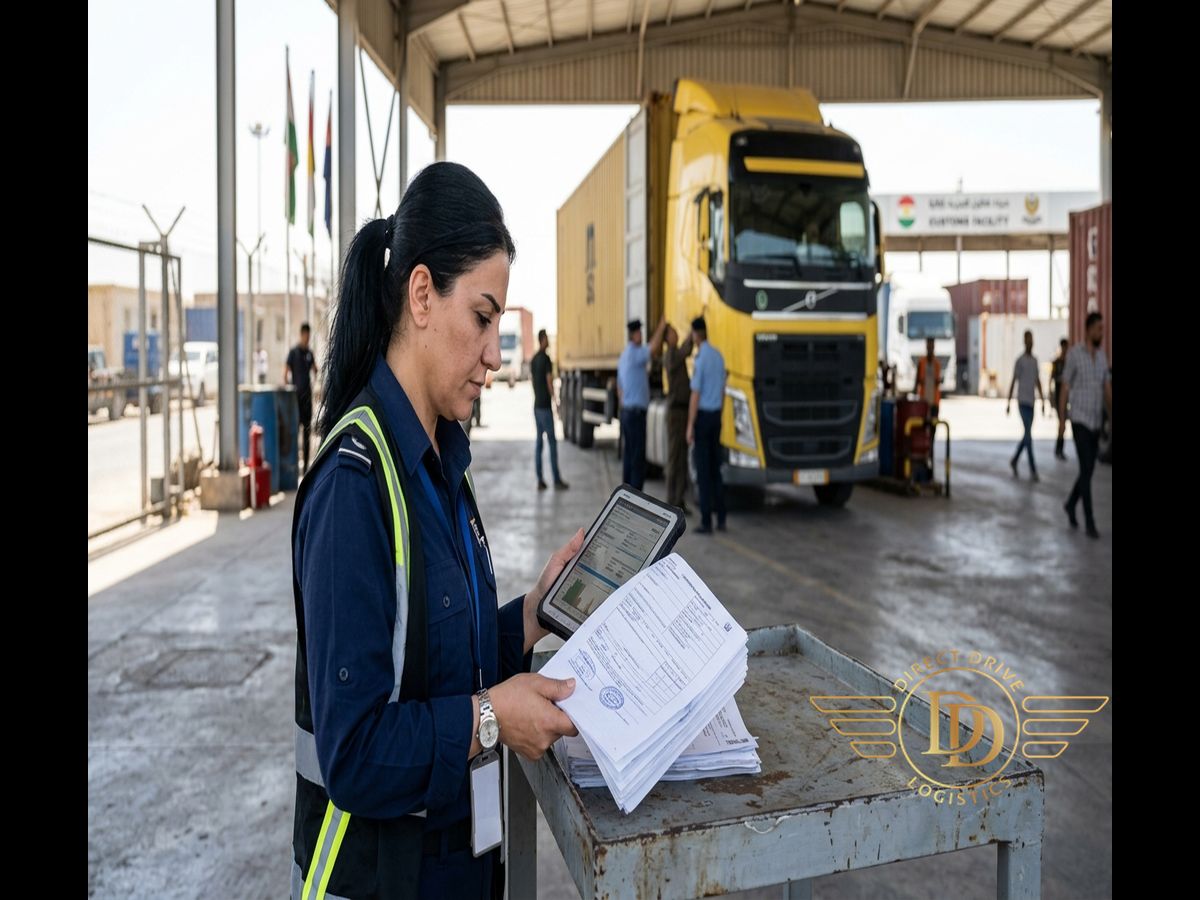
Key Procedural Differences Between KRG and Federal Customs
Successfully navigating Iraq cross-border logistics demands a precise understanding of its dual customs system. The Kurdistan Region of Iraq (KRG) and Federal Iraq operate distinct customs regimes, with variations in tariffs, prohibited items, and inspection protocols. The Ibrahim Khalil border with Turkey, for instance, now processes approximately 1,500 trucks entering Iraq daily, a key artery for European and Turkish goods. Understanding the specific Türkiye-Iraq trade relations that govern this crossing is vital.
The recent adoption of the TIR system is streamlining transit, cutting clearance times by up to 40-50% for sealed cargo moving under TIR through the federal crossings of Iraq. KRG crossings such as Ibrahim Khalil and Bashmagh work differently: they are cleared under the KRG customs system, and there is no TIR carnet entry registration at Ibrahim Khalil. However, final import clearance procedures remain distinct. In our experience handling over 300 Iran-Iraq cross-border shipments, we’ve seen how procedural nuances can cause significant delays. Our Kurdish-speaking team in Erbil once resolved a complex temporary import license issue with KRG authorities in just one day, a task that often takes competitors over a week. These issues are among the common logistics that businesses face.
Documentation Checklist for KRG vs. Federal Entry Points
While core documents are similar, specific requirements and enforcement differ significantly between KRG borders like Ibrahim Khalil and Federal ports like Umm Qasr. A frequent error in this stage is submitting documents in English only. Our quad-language team ensures all paperwork is correctly translated into Arabic or Kurdish as required by the specific border authority, preventing rejections.
- Step 1: Verify Commercial Invoice and Packing List — Both systems require these, but Federal Iraq often mandates attestation by the Iraqi commercial attaché in the country of origin, a step less frequently enforced for KRG land borders.
- Step 2: Secure Certificate of Origin (COO) — The COO must be certified by the Chamber of Commerce. KRG and Federal authorities maintain separate lists of accepted countries, impacting goods from politically sensitive regions.
- Step 3: Obtain Pre-Import Inspection Certificates — For many goods entering Federal ports like Umm Qasr, a Certificate of Conformity (CoC) from an approved body like Bureau Veritas or SGS is mandatory before shipping. This is applied more selectively at KRG land crossings.
- Step 4: Prepare Transport Documents (CMR/Bill of Lading) — Ensure the consignee details are exact and match the import license. Discrepancies are a primary cause of customs holds at both entry systems.
Your next step: Provide our team with your cargo details and intended entry point. We will return a complete, border-specific documentation checklist within 24 hours to prevent costly errors.
Specialized Cargo: Solutions for Hazardous, Oversized, and Temperature-Sensitive Shipments into Iraq
Navigating Hazardous Materials (HAZMAT) Transport: Compliance and Safety Protocols
Transporting hazardous materials into Iraq demands absolute precision in documentation and handling. The process for shipping hazardous goods to Iraq requires pre-approved permits from multiple ministries, specialized driver certifications, and often, security escorts. Any discrepancy can lead to indefinite holds at the border, pushing transit times into the 5–7 day range seen during peak congestion at crossings like Ibrahim Khalil.
One mistake we see regularly is the misclassification of dual-use chemicals, which triggers immediate security reviews and shipment seizure. Our quad-lingual team, fluent in Farsi, Arabic, Kurdish, and English, engages directly with authorities to ensure all classifications are correct before the cargo ever departs, preventing these costly delays.
Project Cargo Logistics: Managing Oversized and Heavy Haul Shipments
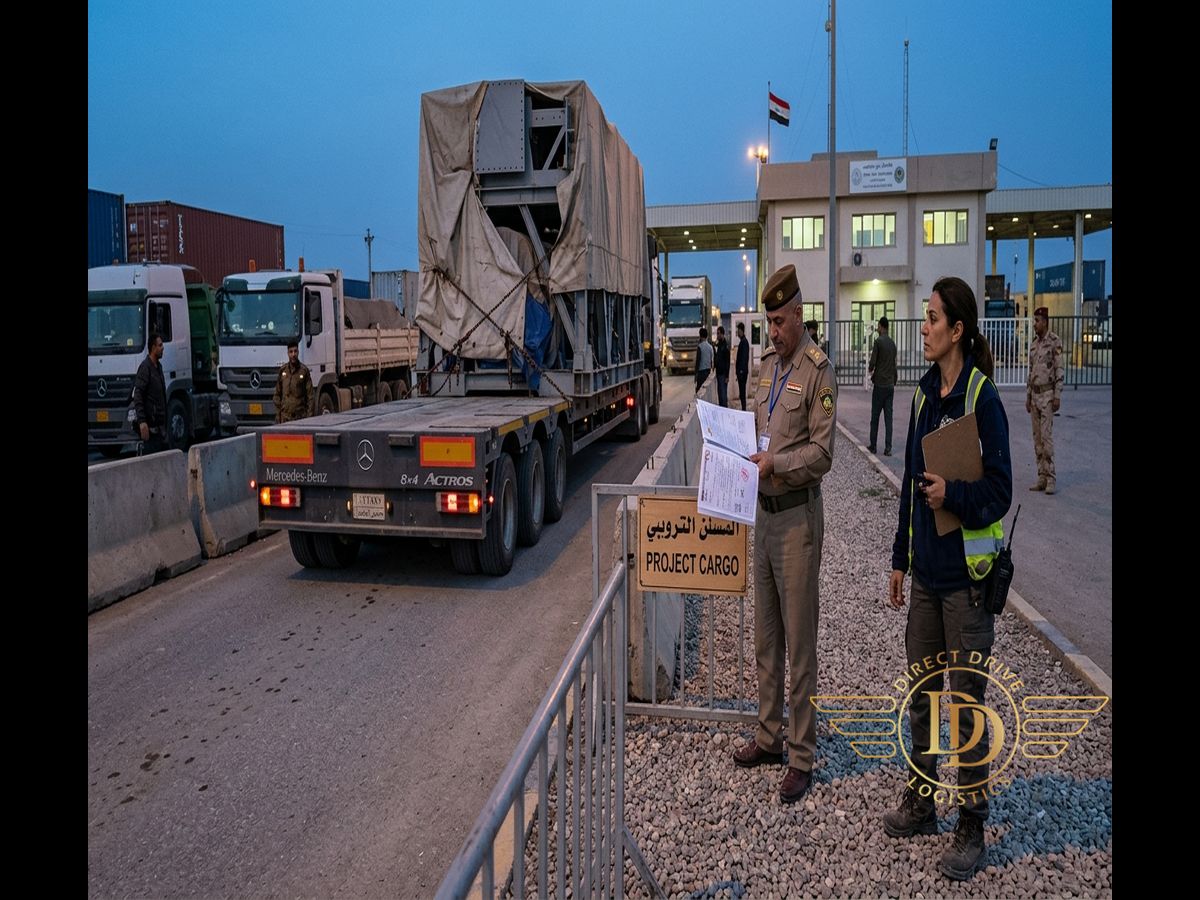
Successfully managing oversized and heavy haul shipments is a core challenge in Iraq cross-border logistics. It involves more than just transport; it requires detailed route surveys, securing oversized load permits for Iraq, and coordinating with local authorities to manage infrastructure limitations. The final domestic leg, such as an Erbil-Baghdad extension which costs a baseline of USD 700–1,000 per truck, often requires additional pilot vehicles and police escorts for Iraq project logistics.
In our experience completing over 2,500 domestic deliveries, understanding these local requirements is non-negotiable. For one client shipping sensitive medical equipment from Dubai to Baghdad, our status as a licensed clearing agent at Umm Qasr allowed us to clear the high-value cargo directly in 48 hours, bypassing third-party brokers and potential delays. This direct control is vital as evolving regional trade strategies continue to shape infrastructure access.
Your next step: Provide Direct Drive Logistic with your cargo’s Material Safety Data Sheet (MSDS) or dimensions. We will deliver a preliminary compliance and route feasibility assessment within 24 hours.
Overview of Iraq cross-border logistics
Case Study: Overcoming Dual Customs Hurdles for Project Cargo Delivery to Erbil
Theory is one thing; execution is another. For a major B2B client shipping electronics from Mersin, Turkey, to Erbil, a temporary import license issue with KRG border authorities threatened to derail the entire delivery. This is a common bottleneck where federal Iraqi and Kurdistan Regional Government regulations diverge, causing significant delays for less experienced forwarders.
Our Kurdish-speaking team in Erbil directly engaged with KRG officials at the Ibrahim Khalil crossing. The result was a complete resolution of the licensing problem in just one day. This swift action kept the door-to-door delivery within the original 5-7 day timeline. In our experience, we have completed over 300 successful Iran-Iraq cross-border shipments, and this hands-on, local expertise is what prevents minor documentation issues from becoming week-long delays.
Success Story: Expediting Time-Sensitive Medical Shipments via the Ibrahim Khalil Crossing
Successful Iraq cross-border logistics for high-value cargo demands more than just transport; it requires certified authority. When a client needed to move critical medical equipment from Dubai to Baghdad via the Port of Umm Qasr, customs clearance was the primary risk. Relying on third-party brokers often introduces delays and communication gaps.
As an officially licensed clearing agent at Umm Qasr, Direct Drive Logistic managed the process directly. We achieved full customs clearance in just 48 hours from engagement, a timeline nearly impossible with intermediary agents. This is the new benchmark of efficiency, especially as systems like TIR cut transit times on key corridors by 40-50%. Navigating Iraq’s geopolitical and strategic requires this level of direct control and speed, turning a potential 7-10 day process into a 4-6 day end-to-end delivery for time-sensitive freight. This efficiency also extends to optimizing Iraq warehouse types for various cargo needs.
Your next step: Provide us with your cargo’s origin and destination. We will deliver a detailed route plan, including customs clearance timelines at both KRG and Federal Iraqi checkpoints, within 24 hours.
Send your cargo details to Direct Drive Logistic on WhatsApp — get a route-specific checklist and quote within 24 hours.
Message on WhatsAppWhy Choose Direct Drive Logistic?
Offices in Erbil (HQ) + Tehran (Nasim Shahr Terminal); warehouses in Zakho, Erbil, Basra, and Tehran (2,000 sqm)
Government-licensed clearing agent — direct port access for sea freight into southern Iraq
2,500+ Iraq domestic deliveries, 300+ Iran-Iraq cross-border, 100+ international freight; air freight handler at Erbil, Baghdad, and Basra airports
Operational at Parviz Khan, Bashmagh, Haji Omran (Piranshahr), Mehran, Khosravi, Ibrahim Khalil (Turkey), and Bandar Abbas port (Iran)
Full operational fluency in Farsi, Arabic, Kurdish, and English — client-facing and documentation
~10 trucks/day from Erbil hub covering Baghdad, Karbala, Najaf, Basra, Kut (Wasit), Diyala, Nasiriyah, and all Iraqi governorates
Frequently Asked Questions
Regional Iraq cross-border logistics face significant complexities, primarily due to fragmented dual customs systems and geopolitical dynamics. For instance, cargo entering via Kurdistan Region of Iraq (KRG) crossings like Ibrahim Khalil often requires a second clearance when moving into federal Iraq markets like Baghdad or Basra, adding 1-3 days to transit times. This dual clearance risk, combined with potential congestion at key borders, can extend waiting times from several hours to multiple days. Furthermore, navigating diverse regulatory frameworks and ensuring reliable security for cargo on routes through regions like Sulaymaniyah, Kirkuk, and southern federal Iraq demands deep local expertise.
The primary cross-border routes for logistics into Iraq are increasingly shifting towards overland corridors via Turkey and Iran. The Ibrahim Khalil/Habur crossing from Turkey is a dominant route, handling around 1,500 trucks entering Iraq daily, especially for market access into Erbil, Dohuk, and Mosul. From Iran, Bashmagh and Parviz Khan are vital lifelines for cargo into Sulaymaniyah, Kirkuk, and southern federal Iraq, absorbing trade rerouted from disrupted maritime lanes. This scaling up of overland corridors, driven by double-digit growth in bilateral trade, means these routes are crucial for fast market access, with Ibrahim Khalil alone expected to have parking capacity for up to 3,000 trucks pre-clearance by 2026.
Iraq’s full adoption of the TIR (Transports Internationaux Routiers) system, fully rolled out in April 2025, significantly compresses clearance times for transit cargo. This system creates dedicated TIR lanes and reduces intermediate inspections for sealed trailers at Iraqi federal crossings. Cargo entering through KRG crossings such as Ibrahim Khalil, Bashmagh, and Parviz Khan is cleared under the KRG customs system instead, and completes federal clearance at an internal federal checkpoint if it continues into federal Iraq. According to the International Road Transport Union (IRU) (2025), this has cut border and inland transit times by up to 40-50% for qualifying loads. For example, a full truckload (FTL) from Mersin or Istanbul to Erbil/Baghdad, which previously took 2-3 days, can now complete the journey in approximately 1.5-2 days, providing a substantial efficiency gain for businesses.
When selecting a logistics partner for Iraq, key factors include their technical expertise in navigating dual customs systems and their operational reach across critical borders. You need a partner with a robust 7-border crossing network, covering points like Parviz Khan, Bashmagh, Mehran, Khosravi, and Ibrahim Khalil, as well as an official licensed clearing agent status at major ports like Umm Qasr. This direct access, as demonstrated by our ability to clear medical equipment in 48 hours at Umm Qasr without third-party brokers, eliminates middlemen and saves on port storage and demurrage fees. A partner with quad-language operations (Farsi, Arabic, Kurdish, English) is also crucial for seamless communication and documentation, preventing delays like the 1-day resolution of a temporary import license for electronics at the KRG border achieved by our Kurdish-speaking team.
A top-tier logistics provider simplifies Iraq-bound cargo by offering true multimodal operations and a single-operator solution across complex corridors. For instance, Direct Drive Logistic manages the full intermodal corridor from China to Erbil, including ocean freight to Bandar Abbas, Iranian CMR transit, and KRG import clearance, all under one consignment note and invoice. This eliminates the need for multiple operators and reduces cross-handoff risks. Furthermore, our daily scheduled departures from Erbil to all Iraqi governorates, with approximately 10 trucks per day covering Baghdad, Basra, Karbala, and other cities, provide predictable next-day delivery for most locations. This structured approach, unlike call-and-wait broker services, guarantees reliability and speed, as seen in our 6-hour door-to-door delivery from Erbil to Baghdad for B2B restocks.
A top-tier logistics provider for Iraq cross-border logistics offers quantifiable benefits through their extensive network and operational efficiency. Direct Drive Logistic, with over 10 years of experience, operates a 7-border crossing network, allowing for real-time re-routing to maintain ETAs, as demonstrated when FMCG goods from Tehran to Baghdad were re-routed through Mehran without delay despite primary border congestion. Our licensed clearing agent status at Umm Qasr port ensures direct port access, saving clients significant port storage and demurrage fees by clearing cargo in 48 hours. With over 2,900 completed shipments, including 300+ Iran-Iraq cross-border and 100+ international freight, we provide a single point of contact for complex routes like Dubai to Erbil via Bandar Abbas, handling all transit permits and documentation seamlessly.
Conclusion
Navigating Iraq cross-border logistics demands far more than basic freight forwarding; it requires deep operational expertise in complex systems, from the TIR Convention’s multi-modal advantages to the nuanced dual customs clearance between KRG and Federal Iraq. As highlighted by our success in overcoming dual customs hurdles for project cargo to Erbil, practical, on-the-ground knowledge is paramount to ensuring secure and timely delivery, especially when dealing with specialized or time-sensitive shipments across challenging corridors.
To optimize your next shipment, start by reviewing your current Incoterms to ensure they align with your operational capabilities and risk tolerance. Next, challenge your existing logistics provider to detail their specific experience with the KRG and Federal customs systems, asking for concrete examples of how they’ve resolved common delays. Finally, consider how a partner with proven, direct operational control can streamline your Iraq cross-border logistics.
Direct Drive Logistic stands as Iraq’s market leader, offering unparalleled reliability and security. With our official license as a clearing agent at the Port of Umm Qasr, we directly manage your sea freight into southern Iraq, eliminating intermediaries and accelerating customs processing. Leverage our deep local presence and technical know-how for guaranteed efficiency. Connect with our experts today at (+964) 750 953 9899 to transform your Iraq cross-border logistics.
Need Logistics Consultation?
The Direct Drive team is ready to assist. Message us now.
Navigate the complexities of Iraq cross-border logistics with unparalleled ease and reliability. Ensure your cargo reaches its destination efficiently and securely, minimizing delays and maximizing your operational flow. Don’t let logistical challenges hinder your success—call us today at (+964) 750 953 9899 to optimize your supply chain.
Get Your Free Quote NowContact Us for a Consultation
Location
Direct Drive Logistic
MRF Quattro towers, Block A-29-1
Erbil, Kurdistan Region