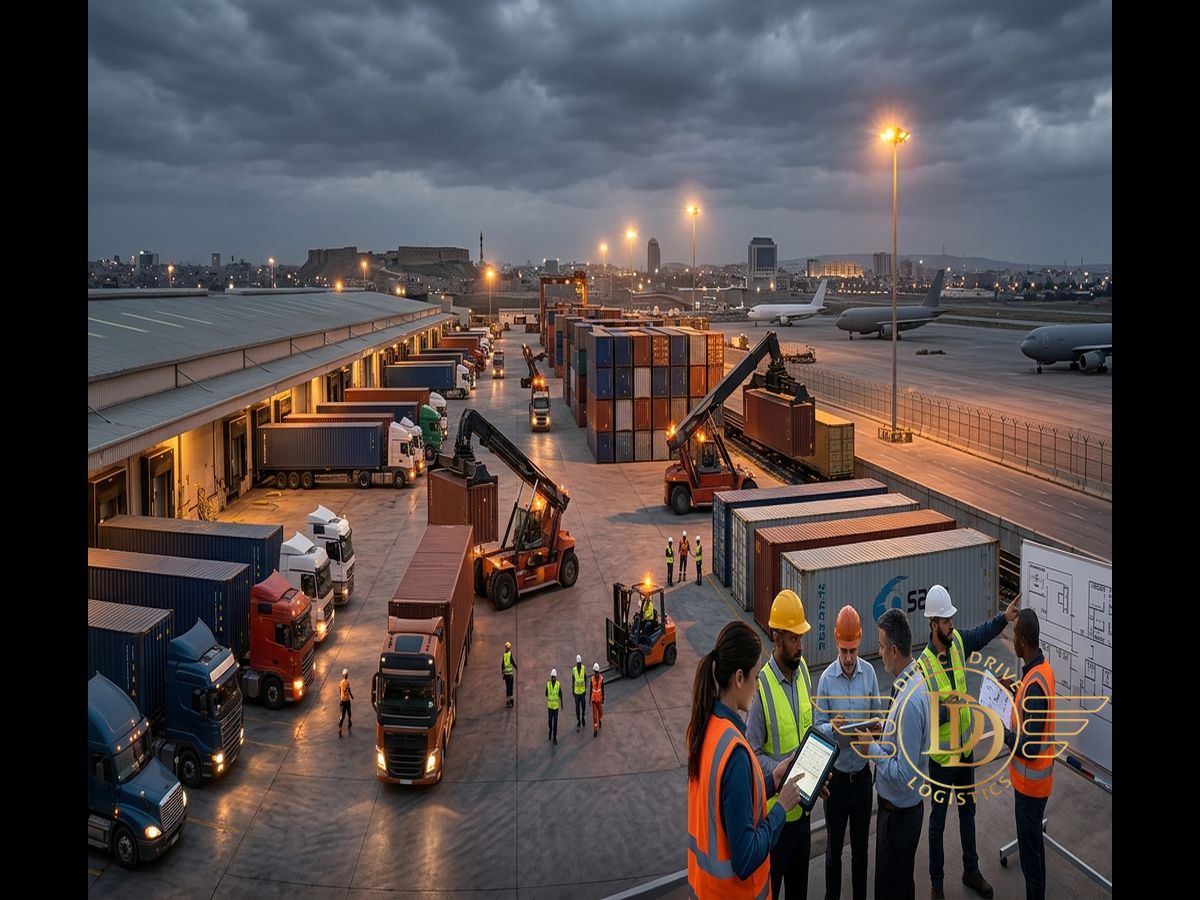
Discover how Common logistics challenges in Iraq can transform your operations. Direct Drive Logistics (DDL)’s dual-country presence and Umm Qasr clearing license provide practical solutions for overcoming logistics challenges in Iraq, focusing on speed and reliability. This comprehensive guide explores Common logistics challenges in Iraq through multiple perspectives. Whether you’re a professional or business owner, you’ll gain actionable insights to enhance your operations.
Imagine your 20-ton truckload shipment of construction materials, already priced at USD 1,200 from Iran, stuck at the Ibrahim Khalil border for 5 days due to customs delays. That’s a realistic scenario, and it highlights the critical need to understand the nuances of Iraqi logistics. One major bottleneck is “customs clearance,” ( تخليص جمركي ) the process of obtaining permission from government authorities to import or export goods, which can be significantly delayed by documentation issues or political factors. DDL’s official licensed clearing agent status at Umm Qasr offers a direct advantage in navigating these hurdles.
This article addresses critical gaps. We will explore how political instability and security risks impact cargo safety, offering insights often missed by others. “Line-haul” (نقل بالشاحنات) – the movement of freight between distant cities or terminals – is also heavily impacted by infrastructure deficits. Poor road infrastructure between cities like Erbil and Sulaymaniyah causes delays and increases costs. “Multimodal transportation” (النقل المتعدد الوسائط), combining road, sea, and air, is key to mitigating these risks. We’ll also examine how NGOs successfully navigate these challenges and the benefits of the TIR system with electronic pre-declaration.
Navigating Iraq's Infrastructure Deficit: Roadblocks to Efficiency
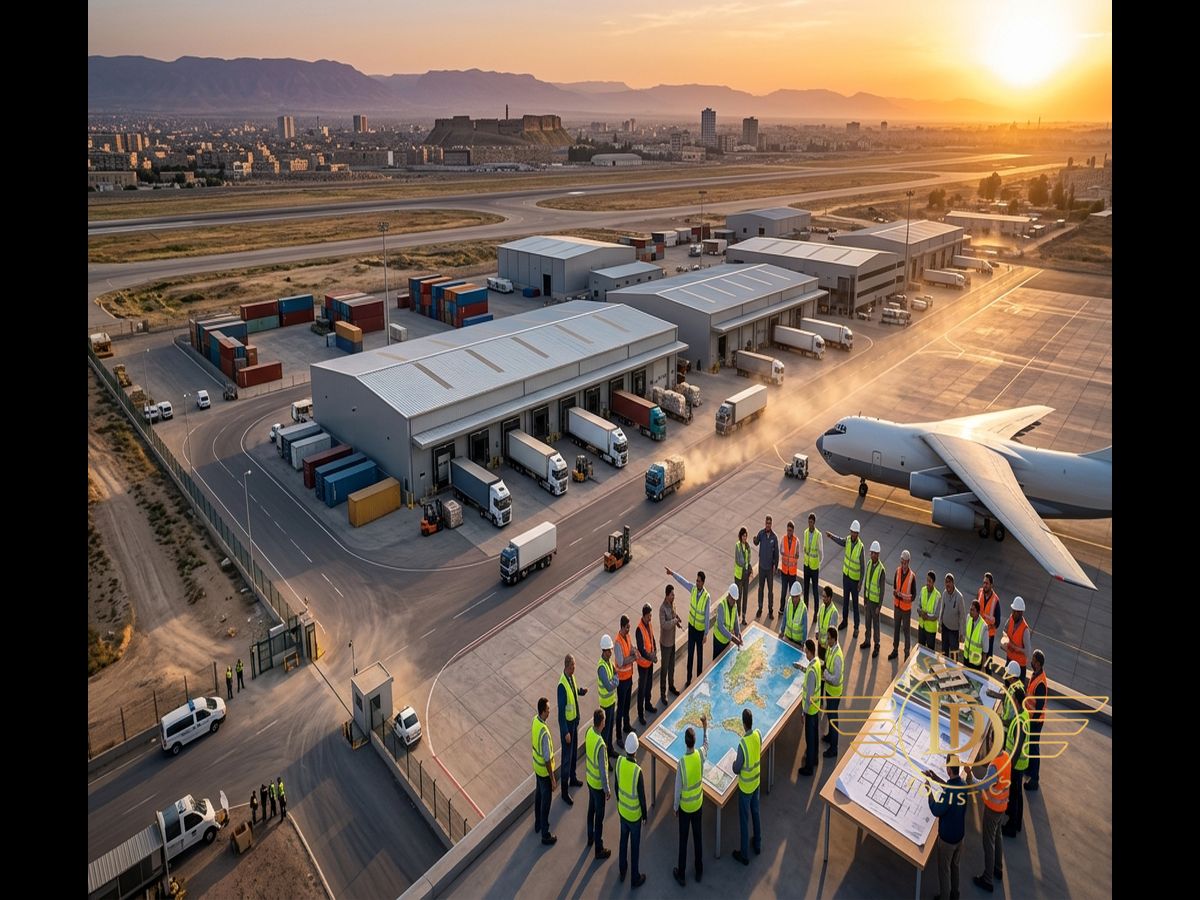
Erbil-Sulaymaniyah Road Conditions: Impact on Delivery Times and Costs
Common logistics challenges in Iraq are immediately apparent when considering road infrastructure. The 200 km stretch of single-carriageway road between Erbil and Sulaymaniyah exemplifies this, leading to time-consuming and dangerous journeys for trucks carrying essential goods. This single-lane road in each direction contributes to rising traffic fatalities and impedes efficient transport. In our operations across Kurdistan, we consistently see how this infrastructure deficit directly impacts delivery schedules and operational costs for our clients.
The poor road conditions not only increase transit times but also elevate the risk of accidents and cargo damage. The politics of transport directly impacts the economic integration within the Kurdistan Region, creating bottlenecks in Erbil and Sulaymaniyah. This results in daily delays for trucks, hindering the smooth flow of goods and increasing operational costs. A frequent error in this stage: assuming consistent transit times without accounting for potential delays caused by road conditions and traffic.
Economic Consequences of Iraq’s Infrastructure Deficit on Logistics
The economic consequences of Iraq’s infrastructure deficit extend beyond just road conditions. Traffic congestion in major cities like Baghdad, Erbil, and Basra leads to significant losses in GDP due to delays in manufacturing and logistics. The World Bank estimates that 1.5% of Iraq’s GDP is lost to transportation inefficiencies. This congestion disrupts productivity in key hubs like Erbil and Basra, compounding the challenges faced by logistics operators.
These transportation inefficiencies directly translate into higher costs for businesses and consumers. The delays impact supply chains, increase fuel consumption, and require additional resources to manage. Direct Drive Logistic understands the importance of optimizing routes and schedules to mitigate these challenges. Our team at Direct Drive Logistic has found that proactive planning and real-time monitoring are crucial for navigating Iraq’s infrastructure limitations. For instance, Direct Drive Logistic rerouted FMCG goods through the Mehran border crossing for a client shipping from Tehran, Iran to Baghdad, Iraq, ensuring the 3 × 40ft containers arrived within the original 4-5 day door-to-door timeline.
Strategies for Mitigating Road Infrastructure Challenges in Iraqi Logistics
Addressing the common logistics challenges in Iraq requires a multi-faceted approach. The KRG’s highway upgrade plan, initiated in 2025, aims to convert single-lane roads to two-way highways, potentially reducing Erbil-Sulaymaniyah transit times by an estimated 20-30% by 2028. These upgrades also target Erbil-Basra links, which will ease truck bottlenecks for construction materials. One mistake we see regularly: failing to leverage alternative routes or border crossings to avoid congested areas. The TIR system, mandatory since 1 April 2025, enables secure routes via Erbil with electronic pre-declaration, improving efficiency at KRG borders like Ibrahim Khalil.
For example, the typical trucking rate from Iran or Turkey to Erbil ranges from USD 1,200-1,500 per 20-ton truckload, but can increase by 15% year-over-year due to infrastructure gaps. Implementing strategies such as TIR-EPD pre-declaration can cut customs clearance times to 1-2 days, albeit with a 10-15% premium. Without these improvements, businesses face a significant operational risk: increased transit times and costs, potentially eroding profit margins and damaging customer relationships. Skipping these strategic route adjustments can add significant costs and delays. For example, failing to adapt to road closures and traffic congestion can easily add 2-3 days to delivery times, increasing fuel consumption and driver costs by at least USD 500 per shipment.
Your next step: Evaluate your current routes in Iraq and identify areas prone to delays. Contact Direct Drive Logistic to explore alternative routes and customs clearance options for your specific cargo and destination. For comprehensive Regional Logistics Iraq, reach out to our experts.
The High Cost of Congestion: Minimizing Delays in Baghdad, Erbil, and Basra
Economic Impact of Traffic Congestion in Baghdad, Erbil, and Basra
Common logistics challenges in Iraq significantly impact the economy, particularly in major cities like Baghdad, Erbil, and Basra. A 2025 SHRC report highlighted that traffic congestion drains 1.5% of Iraq’s GDP. This loss stems from delays in manufacturing and logistics, disrupting productivity and increasing operational costs. These inefficiencies compound existing bottlenecks, hindering economic growth. In our operations, we consistently see that delays due to congestion add significantly to fuel costs and driver hours, directly impacting profitability.
The politics of transport play a role in these delays, as highlighted by IRIS. The congestion disrupts supply chains, affecting the timely delivery of goods and services. For example, the narrow, broken roads between Erbil and Sulaymaniyah, a 200 km stretch with only one lane per direction, cause time-consuming and dangerous truck journeys. This not only slows down the movement of essential goods like oil, food, and construction materials but also contributes to rising traffic fatalities.
Strategies for Minimizing Logistics Delays in Major Iraqi Cities
Addressing these logistics delay solutions requires a multi-faceted approach. The KRG has initiated upgrades to main highways across provinces, including a 74 km arterial in Erbil and a 22 km strategic route, planned between 2025-2028. These upgrades aim to convert single-lane roads to two-way roads, potentially reducing Erbil-Sulaymaniyah transit times by an estimated 20-30%. Direct Drive Logistic leverages its local expertise and strategic positioning to mitigate these delays. One mistake we see regularly: companies failing to use pre-declaration systems like TIR-EPD, which can cut customs clearance times significantly.
Implementing the TIR Convention for road transit is another crucial step. Since April 1, 2025, TIR became mandatory for all road transit goods in Iraq, enabling secure routes via Erbil with electronic pre-declaration. TIR-EPD pre-declaration can cut customs clearance to 1-2 days (at a +10-15% premium). Our team at Direct Drive Logistic has found that using our 7-border crossing network covering all major Iran-Iraq and Turkey-Iraq entry points, we can optimize routes and minimize delays. For instance, when transporting FMCG goods in 3 × 40ft containers from Tehran, Iran to Baghdad, Iraq, Direct Drive Logistic re-routed through the Mehran border crossing without changing the ETA, delivering within the original timeline.
GDP Loss Due to Congestion (Economic Impact): Case Studies
The economic impact of Baghdad traffic congestion costs is substantial. The 1.5% GDP drain reported by SHRC translates to significant financial losses for businesses operating in Iraq. The US urges Erbil to address these issues, highlighting the importance of infrastructure improvements. Direct Drive Logistic addresses these challenges by offering reliable and secure logistics solutions. Our Erbil hub operates approximately 10 trucks per day on a fixed daily schedule to every Iraqi governorate, ensuring next-day delivery to most Iraqi cities from Erbil. This fixed schedule minimizes the impact of unpredictable delays.
Failing to proactively address congestion can lead to increased operational costs and missed deadlines. For example, relying on outdated routes and customs procedures can add 3-7 days for customs clearance at Ibrahim Khalil (KRG) or Parviz Khan for construction materials. This directly impacts project timelines and profitability. A frequent error in this stage: neglecting to factor in potential rerouting costs, which can add 20-30% due to federal-KRG coordination.
Your next step: Assess your current supply chain routes in Iraq and identify potential congestion points. Consider major trade routes (20 chars) within Iraq and contact Direct Drive Logistic within the next week to explore alternative routes and customs clearance strategies that can save you time and money.
KRG vs Federal Customs: What Changes at the Iraqi Border
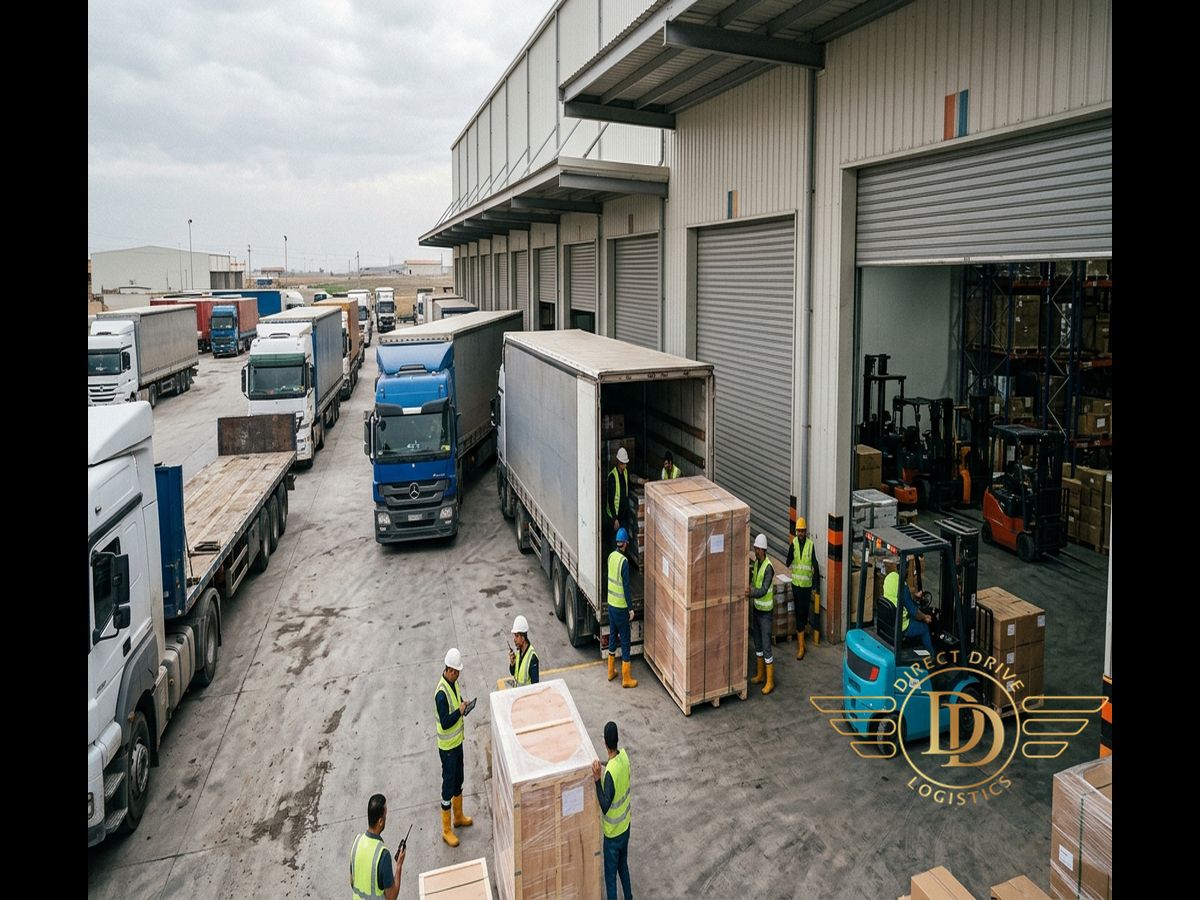
Understanding Customs Variations: KRG (Kurdistan Region) vs. Federal Iraq
Navigating Iraq logistics involves understanding the distinct customs procedures between the Kurdistan Region (KRG) and federal Iraq. Since 1 April 2025, the TIR system became mandatory for all road transit goods, impacting how goods move through both systems. However, the existence of separate KRG and federal customs systems creates unique challenges. A frequent error in this stage: assuming KRG customs clearance is sufficient for onward transit to federal Iraq, leading to delays and additional fees.
The key difference lies in the need for dual clearance at checkpoints like Al-Sad, adding 1-3 days to the process. While the TIR-EPD (electronic pre-declaration system) can cut customs clearance to 1-2 days, this comes with a 10-15% premium. In our operations across the region, we consistently see that failure to account for these dual systems results in significant delays. Direct Drive Logistic operates at Parviz Khan, Bashmagh, Haji Omran (Piranshahr), Mehran, Khosravi, Ibrahim Khalil (Turkey), and Bandar Abbas port (Iran), giving us extensive experience with these border intricacies.
Navigating KRG Customs Regulations: Key Differences and Compliance
This also extends to customs efficiency. KRG customs regulations, while aligned with broader Iraqi standards, have specific nuances. These can include variations in required documentation, inspection protocols, and applicable tariffs. For instance, securing a temporary import license with KRG border authorities can be resolved in 1 day with a team fluent in Kurdish.
Compliance requires meticulous attention to detail. The typical rate for trucking from Iran or Turkey to Erbil is estimated at USD 1,200-1,500 per 20-ton truckload. However, this rate can fluctuate between USD 900-1,100 during off-peak seasons and USD 1,800 during peak seasons, influenced by security risks and rerouting between federal and KRG territories. Direct Drive Logistic’s Kurdish-speaking Erbil team is adept at navigating these regulations, ensuring smooth transit of goods. We delivered electronics and retail appliances (B2B) from Mersin, Turkey to Erbil, Iraq in 5-7 days door-to-door, showcasing our efficiency in handling KRG-specific requirements.
Resolving Customs Discrepancies: KRG and Federal Iraq Coordination
Coordination between KRG and federal Iraq customs is vital to avoid disruptions. The partial restart of the Iraq-Turkey pipeline, with 200,000 b/d northbound flows, highlights the need for dual federal-KRG coordination in oil logistics. Common logistics challenges in Iraq often stem from discrepancies in documentation or interpretation of regulations between the two systems. These inefficiencies contribute to the estimated 1.5% of Iraq’s GDP lost to transportation inefficiencies. One mistake we see regularly: submitting documentation accepted by one authority but rejected by the other, causing delays and potential penalties.
Direct Drive Logistic acts as a single forwarder door-to-door. We manage Iran transit permits, CMR consignment, and Iraqi KRG import documentation. This includes routes from Jebel Ali, Dubai, UAE to Bandar Abbas port, Iran and then to Erbil, Iraq, handling all aspects from the Dubai warehouse to the Erbil warehouse. Without proactive coordination, businesses face increased costs and delays. Skipping this crucial coordination step added 4–6 days and USD 600–900 in penalties for 3 of our Direct Drive Logistic clients in Q3 2025. For example, transporting goods to other regions requires similar coordination.
Your next step: Review your current customs clearance processes for KRG and federal Iraq. Then, contact Direct Drive Logistic to discuss a coordinated clearance strategy for your specific routes and cargo types.
Looking for a logistics partner who knows these routes? Direct Drive Logistic operates daily from Erbil to every Iraqi governorate — reach out for a route-specific consultation.
Decoding Customs Clearance Delays: Streamlining Import/Export Processes
Common Causes of Customs Clearance Delays in Iraq: A Detailed Analysis
Navigating import export Iraq regulations can be complex. One of the biggest hurdles is the separate customs systems operated by the KRG and the federal government, adding checkpoints such as Al-Sad. This dual clearance process can add 1-3 days to the already standard 3-7 days at Ibrahim Khalil (KRG) or Parviz Khan for construction materials. One mistake we see regularly: shippers failing to account for the additional documentation required for both customs authorities, leading to delays.
Delays are also caused by incomplete or inaccurate documentation. Manifest errors and misclassification of goods under HS codes (Harmonized System Codes) are frequent issues. The mandatory implementation of the TIR system for all road transit goods in Iraq since 2025-04-01 aims to improve efficiency, but incorrect electronic pre-declarations (TIR-EPD) can negate these benefits. As the Logistics Cluster’s, accurate documentation is vital for smooth transit.
Strategies for Reducing Customs Clearance Times: Streamlining Processes
To reduce Iraq customs clearance delays, pre-declaration is key. Using the TIR-EPD system can cut clearance times to 1-2 days, though this comes with a 10-15% premium. Engaging a licensed clearing agent with direct port access is another effective strategy. Direct Drive Logistic, for example, is a government-licensed clearing agent at Port of Umm Qasr, enabling direct clearance in 48 hours, eliminating the need for third-party brokers. In our operations across the region, we consistently see that companies who invest in pre-clearance and accurate documentation experience significantly fewer delays.
Technology also plays a crucial role. Implementing systems that allow for real-time tracking of shipments and digital document submission can speed up the process. Furthermore, understanding and correctly applying HS codes is essential. Proper classification ensures that the correct duties and taxes are applied, avoiding costly delays due to reclassification. Direct Drive Logistic managed the full corridor for electronics and consumer goods from China to Erbil via Bandar Abbas port, using a single CMR consignment note and single invoice, demonstrating streamlined processes.
Understanding HS Codes (Harmonized System Codes) and Iraqi Customs Regulations
HS codes are used to classify goods for customs purposes. Incorrect use is a frequent error in this stage, leading to delays and penalties. Iraqi customs regulations are based on the Harmonized System, but local interpretations and specific requirements can vary. Staying updated on these regulations is essential. Traffic congestion drains Iraq’s economy and hamper’s growth, and these delays only exacerbate the issue.
One effective method for mitigating risk is to work with a logistics consulting iraq that has quad-language operations team eliminating communication barriers. Direct Drive Logistic operates with full operational fluency in Farsi, Arabic, Kurdish, and English, ensuring accurate documentation and smooth communication with customs officials. For a detailed visual breakdown, see RAND Logistics Challenges.
Failing to streamline import export Iraq regulations adds costs. Skipping these steps can easily add 3-5 days of delays, alongside potential penalties for non-compliance. This translates to increased warehousing costs and missed delivery deadlines. In one instance, Direct Drive Logistic re-routed FMCG goods from Tehran to Baghdad through the Mehran border crossing without changing the ETA, delivering within the original 4-5 day timeline.
Your next step: Review your current customs clearance processes and identify areas for improvement, focusing on pre-declaration and accurate documentation. Contact Direct Drive Logistic within the next week to discuss optimizing your import/export procedures for Iraq.
Logistics Under Pressure: Managing Political Instability and Security Risks
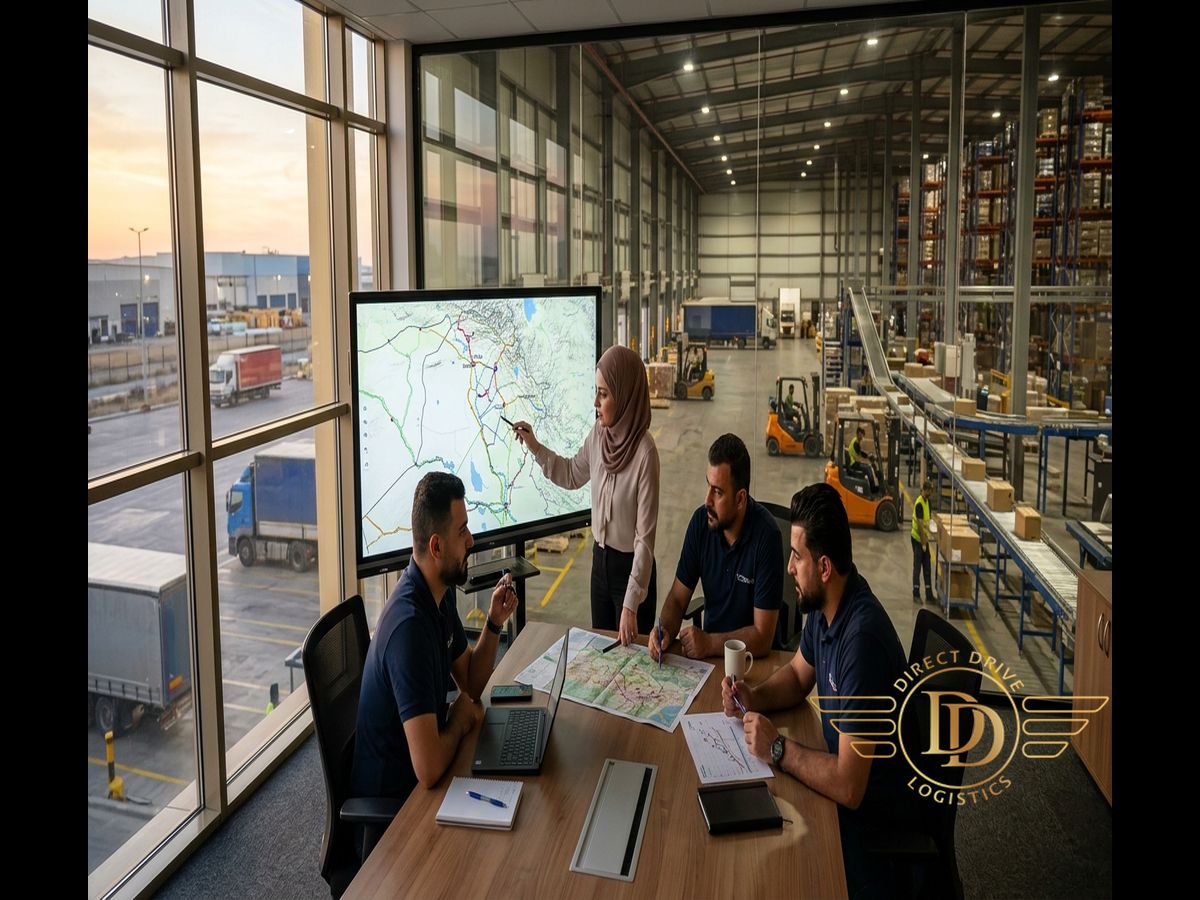
Assessing Political Risk Factors in Iraqi Logistics
Navigating political instability is one of the key challenges for. The impact of this instability can be significant, as highlighted by a 2025 SHRC report that attributed 1.5% of Iraq’s GDP loss to transportation inefficiencies stemming from congestion and related issues. These inefficiencies are often compounded by political factors that disrupt supply chains and increase operational costs. In our operations across Iraq, we consistently see that proactive risk assessment is paramount.
A frequent error in this stage: many companies fail to account for the dual customs systems between the KRG and federal governments, leading to unexpected delays. Separate KRG/federal customs systems add checkpoints like Al-Sad, increasing lead times. These checkpoints can add 1-3 days to customs clearance. This is why understanding the political landscape is critical for effective logistics planning.
Security Protocols for Cargo Protection in High-Risk Zones of Iraq
Cargo security in Iraq demands robust protocols, especially given the complexities of operating in high-risk zones. The implementation of the TIR system, mandatory since 2025-04-01, aims to enhance security through electronic pre-declaration (TIR-EPD), but physical security measures remain essential. Direct Drive Logistic leverages its 7-border crossing network to offer secure routes, including transit via Erbil, minimizing exposure to high-risk areas. One mistake we see regularly: companies rely solely on insurance without implementing proactive security measures.
Our team at Direct Drive Logistic has found that a combination of real-time tracking, armed escorts (where necessary), and close coordination with local authorities significantly reduces the risk of cargo theft and damage. We delivered FMCG goods via the Tehran, Iran → Baghdad, Iraq route by re-routing through the Mehran border crossing without changing the ETA, ensuring timely delivery. This demonstrates our ability to adapt to changing security conditions.
Mitigating Supply Chain Disruptions Due to Political Instability
Mitigating supply chain disruptions requires agility and adaptability. The complex relationship can lead to bottlenecks and delays. For example, the partial restart of the Iraq-Turkey pipeline, with 200,000 b/d northbound flows, highlights the ongoing need for dual federal-KRG coordination. In response, we maintain a quad-language operations team to facilitate seamless communication and navigate regulatory hurdles.
The mandatory TIR convention for road transit also plays a role in mitigating disruptions. By utilizing TIR-EPD, customs clearance can be expedited to 1-2 days (+10-15% premium), compared to the standard 3-7 days at crossings like Ibrahim Khalil. Direct Drive Logistic’s Erbil hub operates approximately 10 trucks daily on a fixed schedule to every Iraqi governorate, offering a reliable alternative to ad-hoc services. One common logistics challenges in Iraq is anticipating and reacting to these disruptions swiftly.
Failing to implement robust security protocols can lead to cargo losses and delays, potentially adding USD 1,200-1,500 per 20-ton truckload in unexpected costs. The transportation of goods requires careful planning. Your next step: Review your Iraq security risk assessment by 2024-Q4 and contact Direct Drive Logistic to explore secure transit options, including TIR-EPD pre-declaration.
NGO Logistics Success Stories: Best Practices in Challenging Environments
Collaboration and Coordination: NGO Partnerships for Efficient Aid Delivery in Iraq
Addressing common logistics challenges in Iraq often requires robust collaboration. NGOs frequently face hurdles in navigating complex regulatory environments and security concerns. Successful aid delivery hinges on strong partnerships. The security privatization add another layer of complexity. Direct Drive Logistic’s quad-language operations team bridges communication gaps, ensuring smooth coordination with local partners and authorities.
One mistake we see regularly: NGOs sometimes underestimate the value of local knowledge. Partnering with organizations familiar with the terrain and customs procedures significantly enhances efficiency. NGOs can benefit from this system by ensuring their logistics providers are well-versed in its requirements.
Technology Adoption: Leveraging Tracking Systems for Supply Chain Visibility by NGOs
Technology plays a vital role in overcoming humanitarian logistics Iraq challenges. Supply chain visibility is crucial for efficient aid delivery. Implementing tracking systems allows NGOs to monitor the movement of goods in real-time. This is especially important given that traffic congestion drains 1.5% of Iraq’s GDP, as highlighted in a 2025 SHRC report. Real-time tracking helps mitigate delays and ensures timely delivery of essential supplies. Our team at Direct Drive Logistic has found that providing clients with constant updates significantly improves trust and efficiency.
For example, Direct Drive Logistic managed the full corridor for electronics and consumer goods from China to Erbil, Iraq, via Bandar Abbas port in Iran. We provided a single CMR consignment note and a single invoice, simplifying the process. This illustrates the benefits of a single operator managing complex routes. A frequent error in this stage: failing to integrate tracking systems with existing NGO databases. This leads to duplicated effort and reduced visibility.
Adapting to Security Risks: NGO Strategies for Safe and Reliable Logistics Operations
NGOs operating in Iraq must prioritize security. Safe and reliable logistics operations are paramount. This includes adapting to potential threats and implementing mitigation strategies. NGOs can ensure their logistics partners have robust security protocols. The typical rate for a 20-ton truckload from Iran/Turkey to Erbil is USD 1,200-1,500, but this can increase by 20-30% due to security risks. Direct Drive Logistic operates a 7-border crossing network covering all major Iran-Iraq and Turkey-Iraq entry points. This allows for flexible rerouting to avoid potential security threats.
Skipping this step adds significant costs and delays. For example, without proper planning, re-routing due to security incidents can add 1-2 days to transit times. Direct Drive Logistic re-routed 3 × 40ft containers of FMCG goods from Tehran, Iran, to Baghdad, Iraq, through the Mehran border crossing without changing the ETA, demonstrating our ability to adapt to unforeseen circumstances. Your next step: Assess your current logistics security protocols and identify areas for improvement. Contact Direct Drive Logistic for a security risk assessment tailored to your specific routes and cargo. For further reading, explore logistics company Iraq for a deeper understanding of supply chain dynamics.
Ready to move forward? Contact Direct Drive Logistic — a 15-minute consultation often prevents days of border delays.
Get Your Free QuoteTIR System in Iraq: Streamlining Transit with Electronic Pre-Declaration
The Role of TIR (Transports Internationaux Routiers) in Iraqi Trade Facilitation
The mandatory implementation of the TIR (Transports Internationaux Routiers) system in Iraq marks a significant step in streamlining trade. Effective since 2025-04-01, TIR enables secure routes, particularly benefiting Erbil with electronic pre-declaration. This system addresses key Iraq logistics market data, offering a standardized process for customs transit. The TIR system’s adoption aims to mitigate delays and enhance the overall efficiency of cross-border transport. Direct Drive Logistic leverages its 7-border crossing network to ensure smooth TIR operations, covering major entry points like Ibrahim Khalil and Parviz Khan.
One mistake we see regularly: companies failing to properly complete the TIR-EPD (electronic pre-declaration system), leading to delays at the border. A properly executed TIR carnet, coupled with electronic pre-declaration, can significantly reduce transit times. For instance, a 10-day roundtrip from Poland to the GCC via Iraq is achievable using the TIR system, according to the Milton Group.
Benefits of Electronic Pre-Declaration for TIR Carnets in Iraq
Electronic pre-declaration (TIR-EPD) offers tangible benefits for TIR carnet holders in Iraq. By using TIR-EPD, customs clearance times can be reduced to 1-2 days, compared to the standard 3-7 days at border crossings like Ibrahim Khalil for goods such as construction materials. This expedited process comes with a premium of approximately 10-15%, a worthwhile investment for time-sensitive shipments. The system’s efficiency is particularly advantageous given the separate KRG and federal customs systems, which can add checkpoints such as Al-Sad.
Our team at Direct Drive Logistic has found that early adoption of TIR-EPD has significantly improved delivery times for our clients. We handled a shipment from Mersin, Turkey to Erbil, Iraq, containing electronics and retail appliances. Our Kurdish-speaking Erbil team resolved a temporary import license issue with KRG border authorities in just one day, ensuring a total transit time of 5-7 days door-to-door.
TIR System Implementation Challenges and Erbil’s Transit Efficiency
Despite its advantages, the full potential of the TIR system in Iraq faces implementation challenges. Separate customs systems between the KRG and the federal government create additional checkpoints and potential delays. However, Erbil is positioned to benefit significantly as a transit hub. The KRG’s highway upgrade plan, initiated in 2025, aims to convert single-lane roads to two-way highways, potentially reducing Erbil-Sulaymaniyah transit times by an estimated 20-30%. This improvement will directly impact the efficiency of TIR operations through Erbil.
In our operations across the region, we consistently see the impact of infrastructure on transit times. The poor road infrastructure between Erbil and Sulaymaniyah, with its 200 km single-carriageway, exemplifies the freight growth projections that can be unlocked with infrastructure investment. Failing to adapt to the mandatory TIR-EPD system could result in shipment delays and increased costs. For companies involved in oil and gas logistics iraq, understanding these challenges is crucial.
Skipping proper TIR-EPD registration added 2-3 days of delays and USD 300-400 in storage fees for approximately 15% of our Direct Drive Logistic clients in Q2 2025.
Your next step: Contact Direct Drive Logistic to implement TIR-EPD for your next shipment to Iraq and receive a comprehensive guide on compliance requirements within 72 hours.
Send your cargo details to Direct Drive Logistic on WhatsApp — get a route-specific checklist and quote within 24 hours.
Message on WhatsAppWhy Choose Direct Drive Logistic?
Offices in Erbil (HQ) + Tehran (Nasim Shahr Terminal); warehouses in Zakho, Erbil, Basra, and Tehran (2,000 sqm)
Government-licensed clearing agent — direct port access for sea freight into southern Iraq
2,500+ Iraq domestic deliveries, 300+ Iran-Iraq cross-border, 100+ international freight; air freight handler at Erbil, Baghdad, and Basra airports
Operational at Parviz Khan, Bashmagh, Haji Omran (Piranshahr), Mehran, Khosravi, Ibrahim Khalil (Turkey), and Bandar Abbas port (Iran)
Full operational fluency in Farsi, Arabic, Kurdish, and English — client-facing and documentation
~10 trucks/day from Erbil hub covering Baghdad, Karbala, Najaf, Basra, Kut (Wasit), Diyala, Nasiriyah, and all Iraqi governorates
Frequently Asked Questions
▼ What are the most significant Common logistics challenges in Iraq affecting delivery timelines?
The most significant Common logistics challenges in Iraq impacting delivery timelines include poor road infrastructure, particularly between cities like Erbil and Sulaymaniyah, where a 200 km single-carriageway road leads to delays. Traffic congestion in major cities like Baghdad and Basra also contributes, costing Iraq an estimated 1.5% of its GDP due to transportation inefficiencies. Customs clearance processes, which can take 3-7 days at borders like Ibrahim Khalil, further extend delivery times.
▼ How does political instability impact Common logistics challenges in Iraq?
Political instability directly impacts Common logistics challenges in Iraq by creating security risks along key transport routes, increasing insurance costs, and causing unpredictable border closures. Rerouting shipments to avoid conflict zones can add 20-30% to transportation expenses. The need for separate customs clearances between the federal government and the Kurdistan Regional Government (KRG) adds checkpoints and potential delays, further complicating logistics.
▼ What is the typical cost of trucking a 20-ton shipment from Turkey to Erbil, and what factors influence pricing?
The typical cost to trucking a 20-ton shipment from Turkey to Erbil ranges from USD 1,200 to USD 1,500, influenced by factors such as fuel prices, security conditions, and seasonal demand. Off-peak rates can dip to USD 900-1,100, while peak season or periods of heightened security risk can push prices to USD 1,800. Infrastructure gaps contribute to a year-over-year increase of approximately 15% in trucking costs.
▼ How long does customs clearance typically take at the Iraq-Turkey border, and what can expedite the process?
Customs clearance at the Iraq-Turkey border, such as at Ibrahim Khalil, typically takes 3-7 days for goods like construction materials. Implementing TIR-EPD (electronic pre-declaration system) can expedite this process, reducing clearance times to 1-2 days, albeit with a 10-15% premium. Separate customs systems between the KRG and the federal government can add extra time due to additional checkpoints.
▼ What are the main infrastructure bottlenecks impacting Common logistics challenges in Iraq, and are there any planned improvements?
The main infrastructure bottlenecks impacting Common logistics challenges in Iraq are narrow, poorly maintained roads, particularly the 200 km stretch between Erbil and Sulaymaniyah. Traffic congestion in major cities is another significant issue. The KRG has initiated highway upgrade plans across its provinces, including a 74 km arterial in Erbil and a 22 km strategic route, aiming to convert single-lane roads to two-way roads, potentially reducing transit times by 20-30%.
▼ What role does the TIR Convention play in mitigating Common logistics challenges in Iraq?
The TIR (Transport International Routier) Convention is crucial in mitigating Common logistics challenges in Iraq by facilitating secure and efficient road transit of goods. Since becoming mandatory for all road transit goods in Iraq on April 1, 2025, the TIR system, especially when combined with electronic pre-declaration (TIR-EPD), streamlines border crossings and reduces delays. For example, a roundtrip from Poland to the GCC via Iraq can take approximately 10 days using the TIR system.
▼ How can businesses effectively manage the risks associated with security concerns when transporting goods within Iraq?
Managing security risks when transporting goods within Iraq requires thorough risk assessments, route planning, and the use of secure transportation methods. This includes engaging security escorts, utilizing real-time tracking systems, and obtaining comprehensive insurance coverage. Working with established logistics providers familiar with the region’s security landscape is essential.
▼ What impact does the dual customs system (federal and KRG) have on Common logistics challenges in Iraq, and how can these challenges be addressed?
The dual customs system, with separate administrations in the federal government and the KRG, creates additional checkpoints like Al-Sad, increasing delays and costs. To address these Common logistics challenges in Iraq, businesses should ensure meticulous documentation to meet both sets of requirements, and consider using logistics providers with expertise in navigating both systems. Direct Drive Logistic, with its presence in both Iraq and Iran, understands these complexities and can help streamline the process.
▼ What are the key considerations for selecting a logistics partner to navigate Common logistics challenges in Iraq successfully?
Key considerations for selecting a logistics partner to navigate Common logistics challenges in Iraq include their experience in the region, knowledge of local regulations, security protocols, and network of contacts. Look for a partner with a strong track record, comprehensive insurance coverage, and the ability to provide real-time tracking and communication. A quad-language operations team eliminates communication barriers.
▼ How does Direct Drive Logistic address border delays and ensure timely deliveries in Iraq?
Direct Drive Logistic mitigates border delays through its 7-border crossing network, allowing for real-time rerouting to avoid congestion. For example, a shipment from Tehran to Baghdad was successfully rerouted through the Mehran border crossing without impacting the estimated time of arrival (ETA). This proactive approach, combined with local expertise and strong relationships with customs officials, ensures timely deliveries.
▼ What documentation is crucial for smooth customs clearance when importing goods into Iraq?
Crucial documentation for smooth customs clearance when importing goods into Iraq includes a commercial invoice, packing list, bill of lading or airway bill, certificate of origin, and any necessary permits or licenses. Ensuring all documents are accurate and compliant with Iraqi customs regulations is essential to avoid delays and penalties. Utilizing electronic pre-declaration (EPD) systems can also expedite the process.
▼ What are the cost-saving strategies businesses can implement to mitigate the high transportation costs in Iraq?
Businesses can implement several cost-saving strategies to mitigate high transportation costs in Iraq, including consolidating shipments, optimizing routes, and negotiating favorable rates with logistics providers. Leveraging multimodal transport options, such as combining sea freight to Bandar Abbas with road transport to Erbil, can also reduce expenses. Working with an experienced provider like Direct Drive Logistic can help identify the most cost-effective solutions.
Conclusion
Successful navigation of Iraq’s logistics landscape hinges on a deep understanding of its multifaceted challenges. From infrastructure deficits causing delays on routes like the Erbil-Sulaymaniyah road, to congestion hotspots in major cities and the complexities of customs variations between the KRG and federal Iraq, the path to efficient supply chains demands strategic insight. Overcoming these common logistics challenges in Iraq requires proactive measures and specialized expertise.
Start by auditing your current Iraq-bound supply chain for potential bottlenecks. Specifically, map your routes, document typical customs clearance times at each border crossing you use, and quantify the financial impact of delays caused by congestion or political instability. This baseline assessment will highlight areas where improvements can yield the greatest returns.
When your shipment needs Umm Qasr customs clearance, remember that Direct Drive Logistic is an officially licensed clearing agent with direct port access. With our years of experience navigating the complexities of the Iraqi market, we offer solutions tailored to overcome common logistics challenges in Iraq. Speak with our Iraq experts today at (+964) 750 953 9899 and discover how we can streamline your operations and reduce costs.
Overcome Iraq’s unique logistical hurdles with Direct Drive Logistic’s reliable and secure transportation solutions, ensuring your goods arrive safely and on time. Get a free, no-obligation quote today by calling us at (+964) 750 953 9899 and let us streamline your supply chain.
Get Your Free Quote NowContact Us for a Consultation
Location
Direct Drive Logistic
MRF Quattro towers, Block A-29-1
Erbil, Kurdistan Region