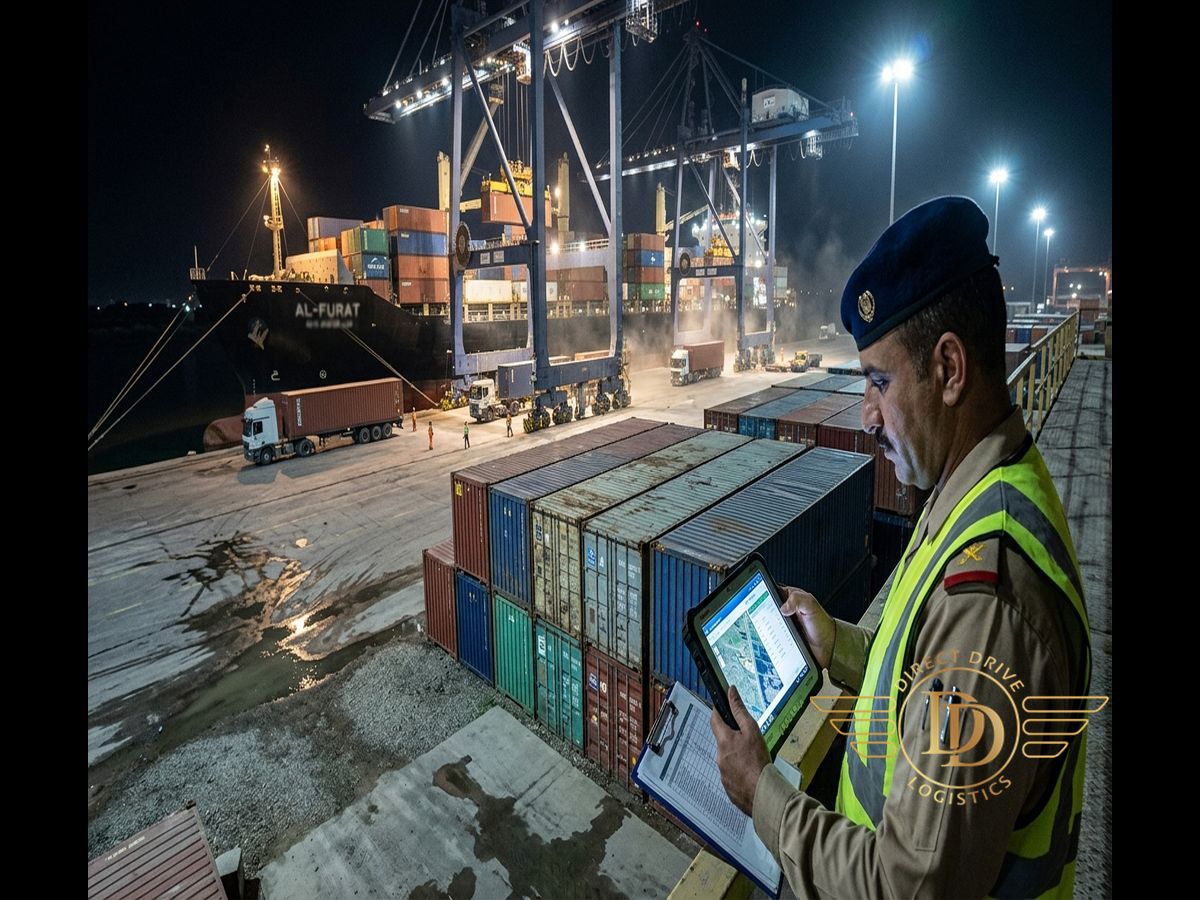
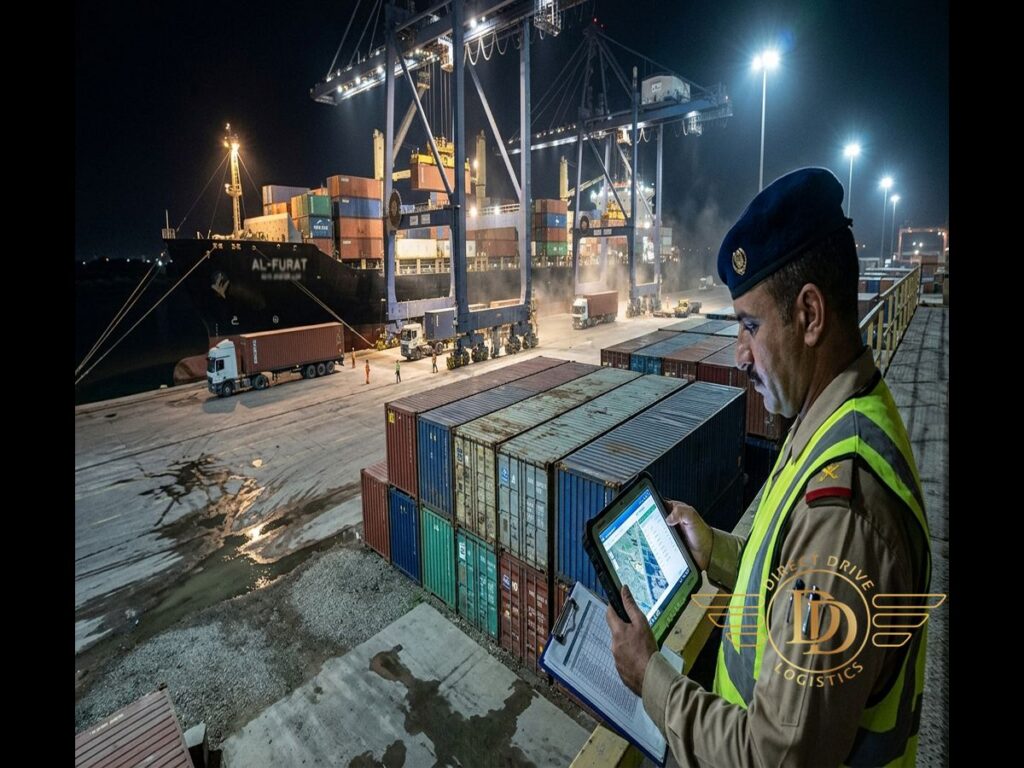
Discover how iraq customs regulations can transform your operations with this guide demystifies iraq’s dual customs systems (krg and federal) using on-the-ground experience from operating at 17 border crossings and as a licensed clearing agent at umm qasr port.
Iraq customs regulations have undergone significant changes, notably a mandatory shift to ASYCUDA World for electronic declarations and item-based duties since late 2025. This replaced fixed container fees with duties calculated per HS Code, ranging from 5% to 40% of CIF value. The Kurdistan Region (KRG) maintains separate, though often faster, customs procedures, leading to potential secondary clearance and additional fees for goods moving into Federal Iraq.
When your cargo is stuck at Umm Qasr Port for 21+ days due to incorrect HS Codes, costing you USD 800+ in storage fees, the true impact of complex Iraq customs regulations becomes clear. Many businesses struggle with the intricacies of Iraq’s dual customs systems, leading to unforeseen delays and expenses. A missing document or an improperly declared item can derail your entire supply chain, impacting delivery timelines and profitability.
This guide demystifies Iraq’s evolving customs landscape, offering actionable insights from on-the-ground experience. We will explore the critical documentation required, the differences between Federal Iraq and KRG customs, and how a licensed customs agent prevents common delays. Specifically, we’ll delve into the new ASYCUDA (Automated System for Customs Data) implementation, which is Iraq’s electronic platform for processing customs declarations, replacing manual paper-based systems to enhance efficiency and transparency.
You’ll gain a deeper understanding of specific restricted and prohibited goods, avoiding costly mistakes that often arise from a lack of detailed knowledge. We will also cover the nuances of Iraq’s tariff structure, which specifies the duties and taxes applied to imported goods based on their Harmonized System (HS) Codes—an internationally standardized numerical method of classifying traded products. This will equip you to navigate regional complexities and overcome common customs challenges, ensuring a smoother import process.
By understanding these crucial aspects of Iraq customs regulations, you can transform potential operational obstacles into opportunities for streamlined logistics. This article will provide the comprehensive, step-by-step guidance needed to confidently manage your shipments and select a reliable logistics partner. We will cover the appeals process for customs disputes, which is the formal procedure for challenging customs decisions or penalties, ensuring importers have avenues for recourse.
Iraq’s Customs Evolution: Navigating the Shift to ASYCUDA and Item-Based Tariffs
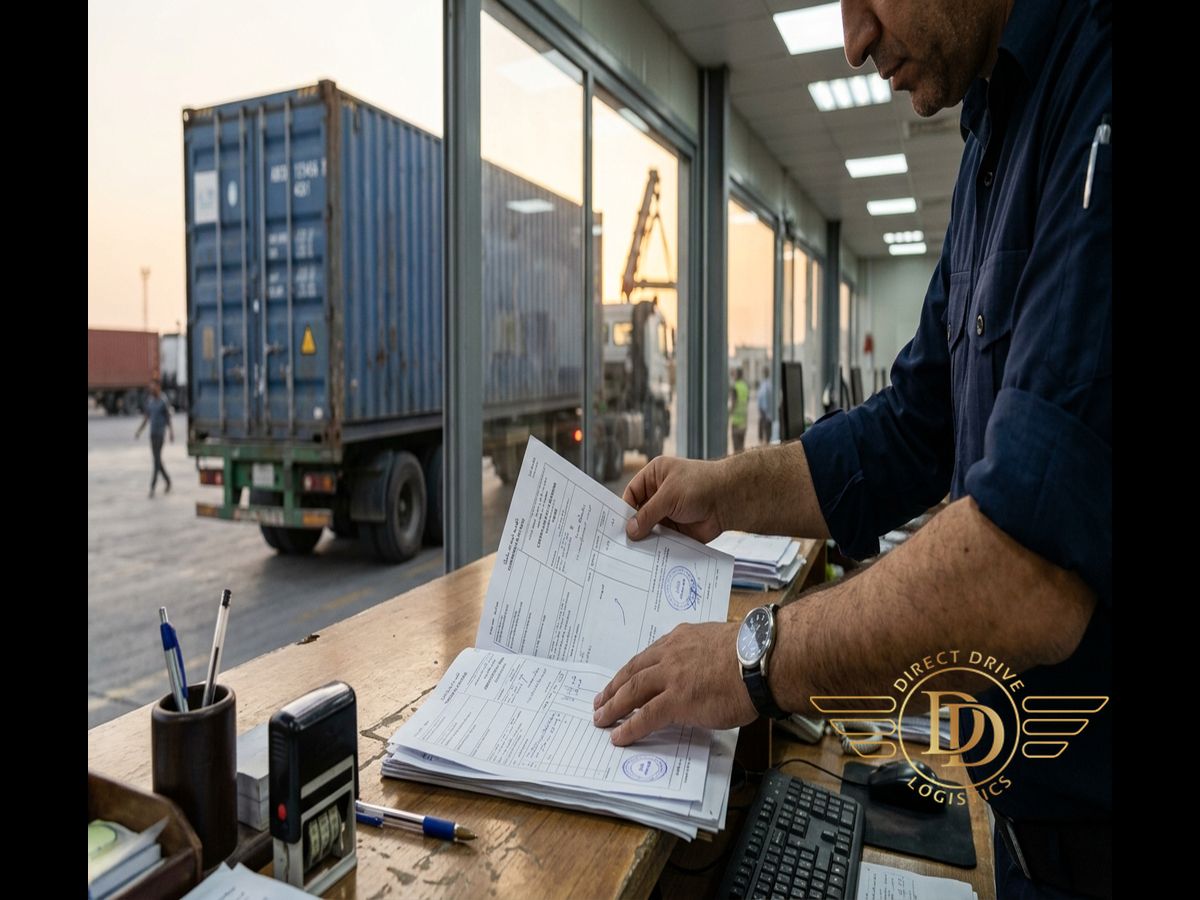
From Fixed Container Fees to Item-Based Duties: Understanding the New Tariff Structure
The landscape for importing into Federal Iraq has fundamentally changed. The previous system of fixed container fees was replaced by the mandatory implementation of ASYCUDA World, an electronic system that calculates duties based on specific HS Codes. This shift requires importers to have precise documentation, as any discrepancy can lead to significant delays and cost overruns.
Under the new item-based system, importers must now budget for a much wider range of costs. For many goods, new customs duties can reach 30–40% of the CIF value for protected items, in addition to a mandatory 3% tax deposit. This change has had a measurable impact, with Turkish exporters reporting that duty rate increases of 5% to 30% contributed to a 4.8% year-over-year decline in their exports to Iraq, which totaled USD 12.34 billion in 2025.
These new Iraq customs regulations directly affect clearance timelines, especially at the Port of Umm Qasr. While standard clearance can take 4 to 10 days, average cargo dwell time frequently extends to 8–12 days due to congestion and increased inspections. In our experience as one of the few government-licensed clearing agents at Umm Qasr, we have found that precise HS code classification is paramount. A frequent error is using outdated or generic codes, which can trigger manual reviews and extend clearance times well beyond 21 days. Efficient Iraq local transportation is crucial for minimizing overall transit times once goods clear customs.
Your next step: Provide our team with your commercial invoice and packing list for a preliminary duty and tax calculation based on the current ASYCUDA World Iraq tariff structure.
Essential Documentation and Duties for Importing Goods into Iraq
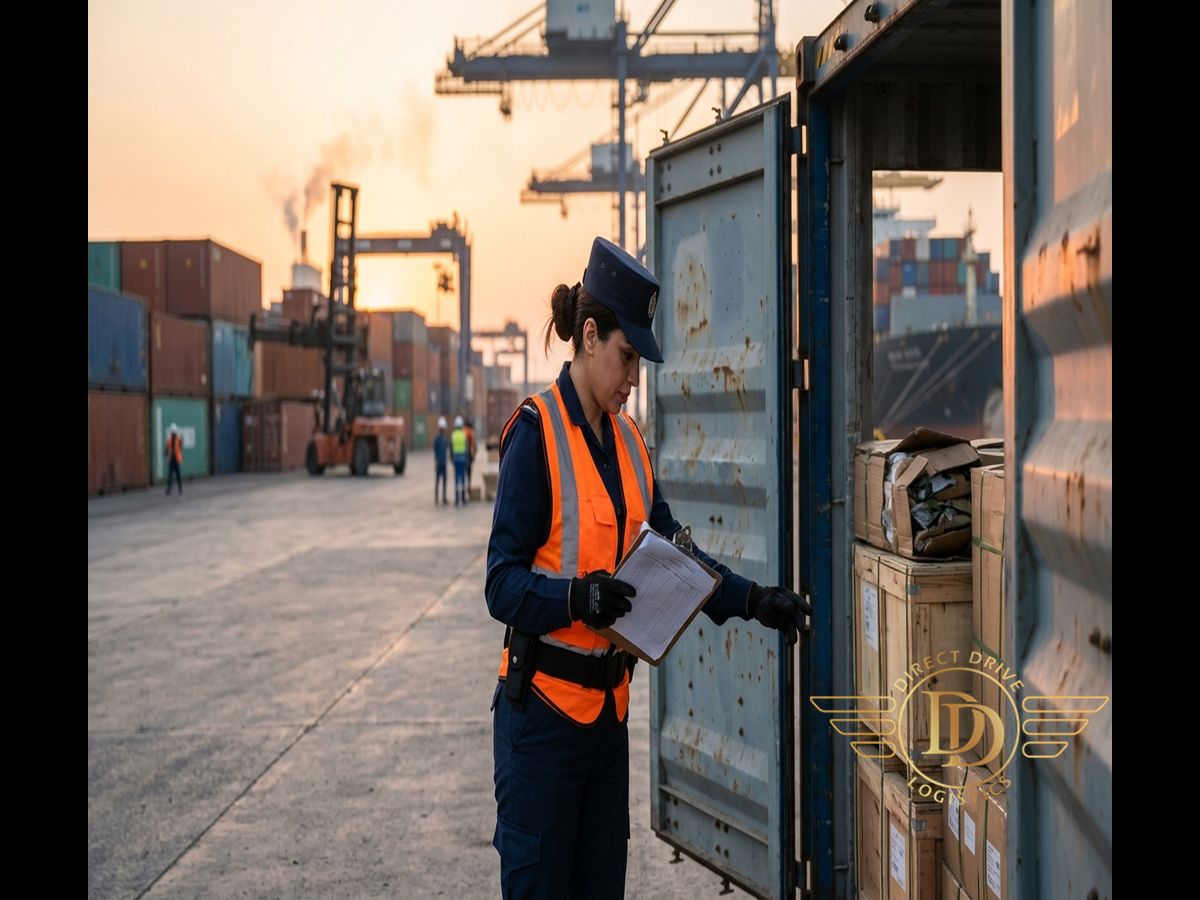
Key Documentation and Duties for a Smooth Customs Clearance in Iraq
Successfully navigating Iraq shipping regulations requires meticulous preparation, especially since the government implemented major changes. As of 1 January 2026, Cabinet Resolution No. 957/2025 replaced flat container fees with an item-based duty system, making document accuracy more critical than ever for any Iraq import tariff calculation.
The new system, managed through ASYCUDA World, mandates a 3% upfront tax deposit on the value of goods before clearance can even begin. This is in addition to customs duties that now start at 5% and can reach 30–40% for certain items. Our team at Direct Drive Logistic has found that precise documentation is the single most important factor in avoiding costly delays at ports like Umm Qasr.
- Assemble Core Shipping Documents — Prepare a complete set of documents, including a detailed Commercial Invoice listing each item with its HS code, a corresponding Packing List, the Bill of Lading (B/L) or Air Waybill (AWB), and a Certificate of Origin. Discrepancies between these documents are a primary cause of shipment holds.
- Secure Import Licenses and Permits — Ensure the importer of record holds a valid, active import license in Iraq. For regulated goods like medical equipment or electronics, specific ministry approvals are required before the shipment departs its origin country. A frequent error in this stage is assuming a general license covers specialized cargo, leading to rejection at the border.
- Prepare for Duty and Tax Payments — With the shift to item-based tariffs, the customs duty payment process is now more complex. Your clearing agent must declare each line item accurately to calculate the final duties and the mandatory 3% tax deposit. As a licensed clearing agent at Umm Qasr, we handle this directly, which recently enabled us to clear critical medical equipment from Dubai to Baghdad in just 48 hours, bypassing common third-party broker delays.
Your next step: Before your next shipment, conduct a line-by-line audit of your commercial invoice against your packing list to ensure perfect alignment. For a professional pre-clearance review, send your documents to the Direct Drive Logistic team.
Restricted and Prohibited Goods: A Detailed Guide for Iraq Customs
Absolutely Banned: A Comprehensive List of Prohibited Items for Import into Iraq
Understanding Iraq’s import restrictions list is fundamental to successful market entry. The government strictly prohibits the import of several categories of goods to protect national security, public health, and local industries. These include narcotics, weapons and ammunition, materials contradicting Islamic principles, and all goods originating from officially boycotted countries.
Since the mandatory shift to the ASYCUDA World system in 2026, electronic declarations are scrutinized with unprecedented detail. Attempting to import banned products in Iraq now results in automatic flagging within the system, leading to immediate confiscation and potential legal action. The era of manual overrides and paper-based ambiguity is over.
In our operations across Iraq, we consistently see shipments delayed for items that fall into a grey area, such as certain used electronics or refurbished auto parts, which are often prohibited to protect local industries. These items may not be on the obvious “banned” list but are rejected at the port, causing significant losses for importers.
Navigating Restricted Goods: Securing Permits for Dual-Use, Agricultural, and Cultural Imports
More complex than outright prohibitions are the regulations for restricted goods. These items can be legally imported but require pre-approval from specific Iraqi government ministries. Key categories include pharmaceuticals (Ministry of Health), agricultural products and pesticides (Ministry of Agriculture), and telecommunications equipment (Ministry of Communications). Dual-use goods regulations in Iraq, covering items with both civilian and potential military applications, demand permits from the Ministry of Defense or Interior.
Failure to secure these permits before shipment arrival is a costly error. Under the item-based tariff system, such an oversight can lead to penalties and duties reaching as high as 30–40% of the cargo’s CIF value. This documentation failure is a primary reason why clearance times at Umm Qasr can extend beyond 21 days, a sharp contrast to the 7-14 days for compliant shipments. The system of advance customs payments means these funds are tied up while compliance issues are resolved.
A frequent error in this stage: assuming a permit from the country of origin is sufficient. Iraqi authorities require approvals from their own specific ministries, and these must be secured and logged in the ASYCUDA system before the cargo’s arrival to avoid immediate holds and financial penalties. For comprehensive guidance on international shipping, consider our expertise in Iraq cross-border logistics and trade routes.
Your next step: Provide Direct Drive Logistic with your full cargo manifest and HS codes. We will conduct a pre-clearance audit within 48 hours to identify any restricted items and initiate the required Iraqi permit applications on your behalf.
Navigating Regional Complexities: KRG vs. Federal Iraq Customs Systems

Understanding the Dual Customs Framework: KRG vs. Federal Iraq Authority
The core challenge of Iraq customs regulations is that the country operates two distinct customs authorities: the Federal system governed by Baghdad and the Kurdistan Regional Government (KRG) system. As an operator at 17 border crossings, we see the daily impact of this division. A shipment entering via a KRG-controlled border like Ibrahim Khalil from Turkey may experience a rapid Ibrahim Khalil border clearance, often taking just 4–8 hours for prepared cargo.
In contrast, entry through a Federal port like Umm Qasr involves a more complex process, with typical sea freight clearance lasting 4–8 days. These parallel systems have different documentation requirements, duty calculations, and enforcement priorities, reflecting the high stakes in ongoing Turkey-Iraq trade talks and regional economic strategies. Choosing the wrong entry point based on a simple map can create significant downstream delays.
The Challenge of Double Clearance for Shipments Crossing Internal Borders
A frequent error we see is companies assuming a KRG customs stamp provides free passage into Federal Iraq. Cargo cleared in Erbil or Sulaymaniyah and destined for Baghdad or Basra faces a secondary inspection and potential re-assessment at internal checkpoints, a process often called Iraq double customs duty. This means your shipment essentially requires clearing customs twice.
This secondary clearance can add 1-3 days to your transit time for shipping goods from KRG to Baghdad and may trigger additional federal duties. For example, construction materials facing a 5–15% duty in the federal system might be re-evaluated even if cleared under KRG rules. Our team at Direct Drive Logistic has found that this step is non-negotiable and requires a separate set of documents prepared for federal authorities. For expert guidance on navigating these complexities, consider our specialized customs brokerage Iraq services.
Your next step: Before shipping, provide our team with your cargo’s final destination city. We will run a route analysis comparing direct Federal entry versus KRG entry with secondary clearance to identify the most efficient path in under 24 hours.
In the Kurdistan Region these approvals appear as eight flags on every tariff line — see what the 8 approval flags in the KRG customs tariff mean.
Beyond the Border: Overcoming Common Customs Challenges in Iraq
Tackling Documentation Errors and Harmonized System (HS Code) Discrepancies
The landscape of Iraq customs regulations shifted significantly after Cabinet Resolution No. 957/2025 became effective on 1 January 2026. This change abolished flat container fees, mandating that duties be calculated per individual item using precise HS codes. This makes accurate documentation more critical than ever to avoid financial penalties and delays.
In our operations across Iraq, we consistently see HS code mismatches become the primary trigger for customs disputes and shipment holds. A frequent error is classifying an entire mixed-goods container under a single, generic code. Since the 2026 update, Iraq’s ASYCUDA system now flags these entries for mandatory inspection, adding days or weeks to clearance times amidst a trade environment seeing Turkey’s export dominance grow.
Navigating Logistical Bottlenecks and Delays at Key Ports like Umm Qasr
Customs clearance times in Iraq vary, but Umm Qasr port delays became more common during the transition to line-item duty calculations in early 2026. While standard clearance can take 5-10 working days, incomplete paperwork or HS code disputes can easily double this timeframe. The key to expediting this process is having a direct, licensed presence at the port, though some importers avoid the congestion altogether by using the Georgia route via Batumi into the north. For efficient distribution beyond the port, consider reliable Erbil delivery services .
Most forwarders rely on third-party brokers, adding communication layers and potential delays. As a government-licensed clearing agent at the Port of Umm Qasr, Direct Drive Logistic manages the process directly. For a recent shipment of medical equipment from Dubai to Baghdad, this direct port access enabled our team to secure customs clearance in just 48 hours, bypassing common bottlenecks.
Your next step: Submit your commercial invoice and packing list to our team for a complimentary HS code pre-check before your cargo departs its port of origin.
Send your cargo details to Direct Drive Logistic on WhatsApp — get a route-specific checklist and quote within 24 hours.
Message on WhatsAppWhy Choose Direct Drive Logistic?
Offices in Erbil (HQ) + Tehran (Nasim Shahr Terminal); warehouses in Zakho, Erbil, Basra, and Tehran (2,000 sqm)
Government-licensed clearing agent — direct port access for sea freight into southern Iraq
2,500+ Iraq domestic deliveries, 300+ Iran-Iraq cross-border, 100+ international freight; air freight handler at Erbil, Baghdad, and Basra airports
Operational at 6 KRG borders (Parviz Khan, Bashmagh, Haji Omran, Ibrahim Khalil, Sheikh Saleh, Shoshmi), 5 federal Iran-Iraq borders (Khosravi, Sumar, Mehran, Shalamcheh, Chazzabeh) and 6 further federal crossings (Trebil, Arar, Safwan, Al-Qaim, Al-Rabia, Al-Waleed), plus Bandar Abbas port
Full operational fluency in Farsi, Arabic, Kurdish, and English — client-facing and documentation
~10 trucks/day from Erbil hub covering Baghdad, Karbala, Najaf, Basra, Kut (Wasit), Diyala, Nasiriyah, and all Iraqi governorates
Frequently Asked Questions
Importing into Iraq now involves item-based duties and mandatory electronic declarations via ASYCUDA World, replacing the fixed container fee system as of January 1, 2026. Duties typically range from 5% to 30-40% of the CIF (Cost, Insurance, and Freight) value, with a 3% tax deposit collected upfront. Essential documents include the commercial invoice, packing list, certificate of origin, bill of lading/airway bill, and a valid import license. Accuracy in HS Code classification is crucial, as errors can extend clearance times at major gateways like Umm Qasr Port to 21+ days.
While basic foods and medicines generally remain at 0% duty, Iraq has implemented stricter controls and higher tariffs on specific HS Codes and consumer goods since 2024-2025. For example, industrial machinery typically enters at 1-5% duty, but rebar duty increased from 20% to 30%, and some light construction materials can face up to 50%. Selected HS chapters, such as 84 (machinery) and 85 (electrical machinery), faced temporary suspensions or heightened scrutiny in 2025 due to anti-dumping and security concerns, impacting importers of construction machinery and electronics.
A significant challenge in navigating Iraq customs is the persistent dual system between Federal Iraq and the Kurdistan Region (KRG), which remained un-unified as of mid-2026. While ASYCUDA is mandatory at federal borders like Umm Qasr, KRG borders (e.g., Ibrahim Khalil, Bashmakh) operate under separate procedures. This means goods routed through KRG for faster clearance (2-4 days) often face secondary clearance and “customs complementary fees” when moving into Baghdad-controlled areas, adding 5-7 days and extra costs to door-to-door timelines. Incorrect HS coding and incomplete documentation are also major pitfalls, leading to delays.
An experienced logistics partner like Direct Drive Logistic, with over 10 years of experience in the region, can significantly streamline Iraq customs processes. By acting as a licensed clearing agent at key entry points such as Umm Qasr Port, we eliminate the need for third-party brokers, reducing port storage and demurrage fees. Our expertise in navigating the ASYCUDA system and understanding the nuances of both federal and KRG customs regulations, including the dual customs systems, minimizes delays and ensures compliance. For instance, our bilingual teams can swiftly resolve issues with KRG authorities, turning potential multi-day delays into single-day resolutions.
When selecting a freight forwarder for Iraq customs, look for a provider with a strong physical presence, direct operational licenses, and extensive regional knowledge. Key capabilities include being an official licensed clearing agent at major ports like Umm Qasr, which allows for direct and faster clearance. A comprehensive border network, such as Direct Drive Logistic’s 17-border crossing network spanning Iran, Turkey, Jordan, Saudi Arabia, Kuwait, and Syria, provides crucial flexibility for rerouting to avoid congestion. Additionally, a quad-language operations team (Farsi, Arabic, Kurdish, English) is essential for seamless communication and documentation across diverse regional authorities.
Direct Drive Logistic offers a uniquely comprehensive and reliable solution for Iraq customs and shipping. With a dual-country physical presence, including offices in Erbil (HQ) and Tehran, and warehouses in Zakho, Erbil, Basra, and Tehran, we provide unmatched regional integration. Our status as an official licensed clearing agent at Umm Qasr Port ensures direct and efficient sea freight clearance. Furthermore, our daily scheduled departures from the Erbil hub to all Iraqi governorates, operating with approximately 10 trucks per day, provide a level of reliability and scheduled service that eliminates the uncertainty of call-and-wait brokers, ensuring next-day delivery to most major cities from Erbil.
Conclusion
Successful navigation of Iraq customs regulations hinges on an in-depth understanding of its evolving frameworks, from the shift to ASYCUDA and item-based tariffs to the critical distinction between Federal and Kurdistan Region of Iraq (KRG) customs. The article highlighted the intricate requirements for documentation, the exhaustive list of restricted goods, and the persistent challenges like HS Code discrepancies. For instance, the transition from fixed container fees to item-based duties underscores the need for precise cargo declarations.
To streamline your next shipment, start by auditing your current import documentation against the updated requirements, paying close attention to accurate HS Code classification for each item. Next, ask your current freight forwarder how they manage the dual customs systems in Federal Iraq and the KRG. Finally, consider how Direct Drive Logistic, with our deep practical knowledge of Iraq customs regulations and on-the-ground presence, can provide the clarity and efficiency your operations demand.
When your shipment requires seamless processing through the critical Port of Umm Qasr, Direct Drive Logistic’s status as an officially licensed clearing agent provides direct access and expedited handling. Our expertise in Iraq customs regulations ensures that your goods move efficiently, minimizing delays and unexpected costs across all Iraqi governorates. Connect with our experts today at (+964) 750 637 9296 to optimize your logistics strategy.
Need Logistics Consultation?
The Direct Drive team is ready to assist. Message us now.
Navigating complex Iraq customs regulations can be a significant hurdle for your logistics operations. Gain peace of mind and ensure seamless, compliant shipments with Direct Drive Logistic’s expert guidance. Call us today at (+964) 750 637 9296 to streamline your customs processes and accelerate your supply chain.
Get Your Free Quote NowContact Us for a Consultation
Location
Direct Drive Logistic
Gulan Street, MRF Quattro Block A 13-9
Erbil, Kurdistan Region