
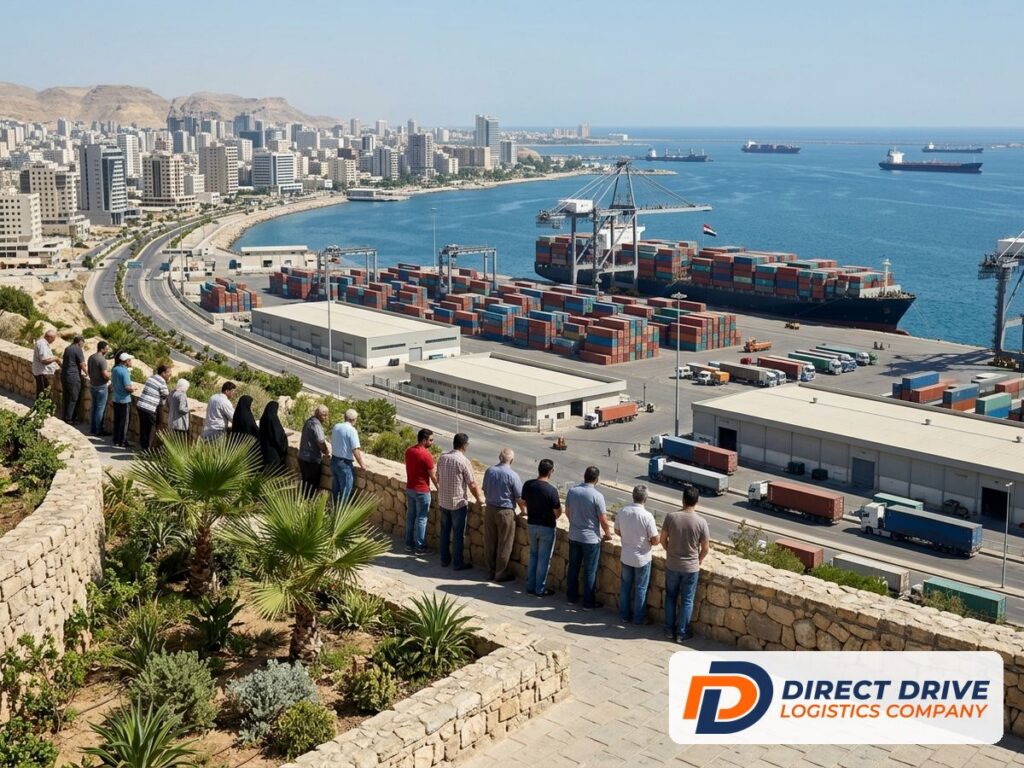
Discover how trucking from jordan to iraq aqaba to baghdad can transform your operations with explain the aqaba–trebil–baghdad road from the iraq side, as an operator present at trebil within a 15-crossing network across all six land frontiers into iraq and also licensed to clear at umm qasr. this lets the article compare gateways honestly and show, through documented outcomes such as a congested-border re-route with 0 days added delay and a 1-day import-license resolution against a 5-day competitor estimate, why single-operator accountability matters more than any one route.
Trucking from Jordan to Iraq, Aqaba to Baghdad, means discharging cargo at Aqaba port and moving it under Jordanian transit through Amman and Ruwaished. It then crosses at Karameh/Trebil and clears Iraqi customs before delivery in Baghdad. As a planning baseline, the road leg takes 10–12 days, excluding the sea voyage.
One mismatched HS code on your CMR can hold a truck at Trebil for days while container detention keeps accruing. The CMR (Convention relative au contrat de transport international de Marchandises par Route) is the international road consignment note listing shipper, consignee, goods and vehicle. The HS code (Harmonized System code) classifies your goods and determines how Iraqi customs assesses them.
This guide covers trucking from Jordan to Iraq, Aqaba to Baghdad, from the Iraqi side of the border. It compares Aqaba with Umm Qasr, lists the Trebil documents and explains what drives transit time and cost. It also shows how to judge a forwarder by who answers for the cargo from Aqaba to Baghdad.
Why importers route Iraq-bound cargo through the Port of Aqaba
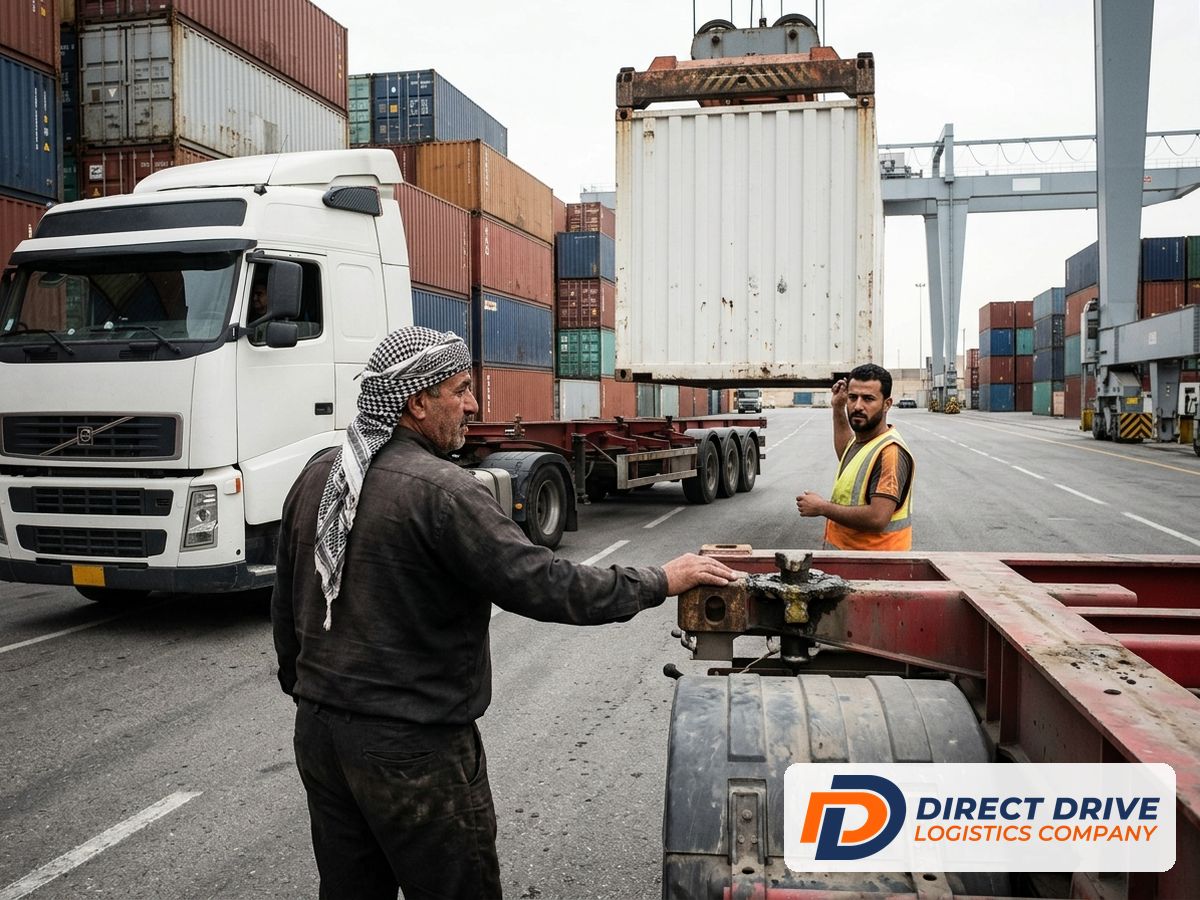
Yes, Iraq can be reached reliably through Jordan. Trucking from Jordan to Iraq, Aqaba to Baghdad, pairs a Red Sea container port with one overland frontier at Karameh/Trebil. That single corridor puts Baghdad, Ramadi and the wider Anbar plain within reach, and three measurable signals from 2024 to 2026 support it.
The trade base is already substantial. Jordanian domestic exports to Iraq rose from USD 936 million in 2023 to USD 1.344 billion in 2024. That growth means commercial truck traffic, brokers and border procedures on this frontier are well established, not experimental.
Aqaba Container Terminal’s First Million Twenty-Foot Equivalent Unit (TEU) Year in 2025
In 2025, Aqaba Container Terminal passed the 1 million TEU milestone for the first time. It received 602 vessels that year, up from 494 in 2024. More vessel calls give Iraq-bound shippers more sailing options and more flexibility when booking slots.
Transit cargo grew even faster than overall throughput. Transit containers climbed from 13,143 TEU in H1 2025 to 36,412 TEU in H1 2026, according to the Aqaba first-half results. That works out to roughly 177% growth in twelve months.
For anyone planning trucking from Jordan to Iraq, Aqaba to Baghdad, this volume cuts both ways. Higher transit activity in 2026 tends to improve empty-container availability. It can also add terminal congestion during demand peaks, so detention exposure deserves a line in every budget.
One caveat shapes how these numbers should be read. The published sources do not state what share of the 36,412 transit TEU was bound for Iraq rather than other inland markets. Treat Aqaba transit cargo growth as evidence of corridor capacity and equipment depth, not as confirmed Iraq-specific demand.
Taken together, the 2025 throughput record, the 2026 transit surge and the 2024 export figures support Aqaba as a credible gateway for central Iraq. They are a strong case for the corridor when your consignees sit in Baghdad or Anbar rather than in the south. Shippers comparing long-haul alternatives, such as shipping from Korea to Iraq, can weigh those routes against this corridor.
The road from Aqaba to Baghdad via the Trebil border crossing
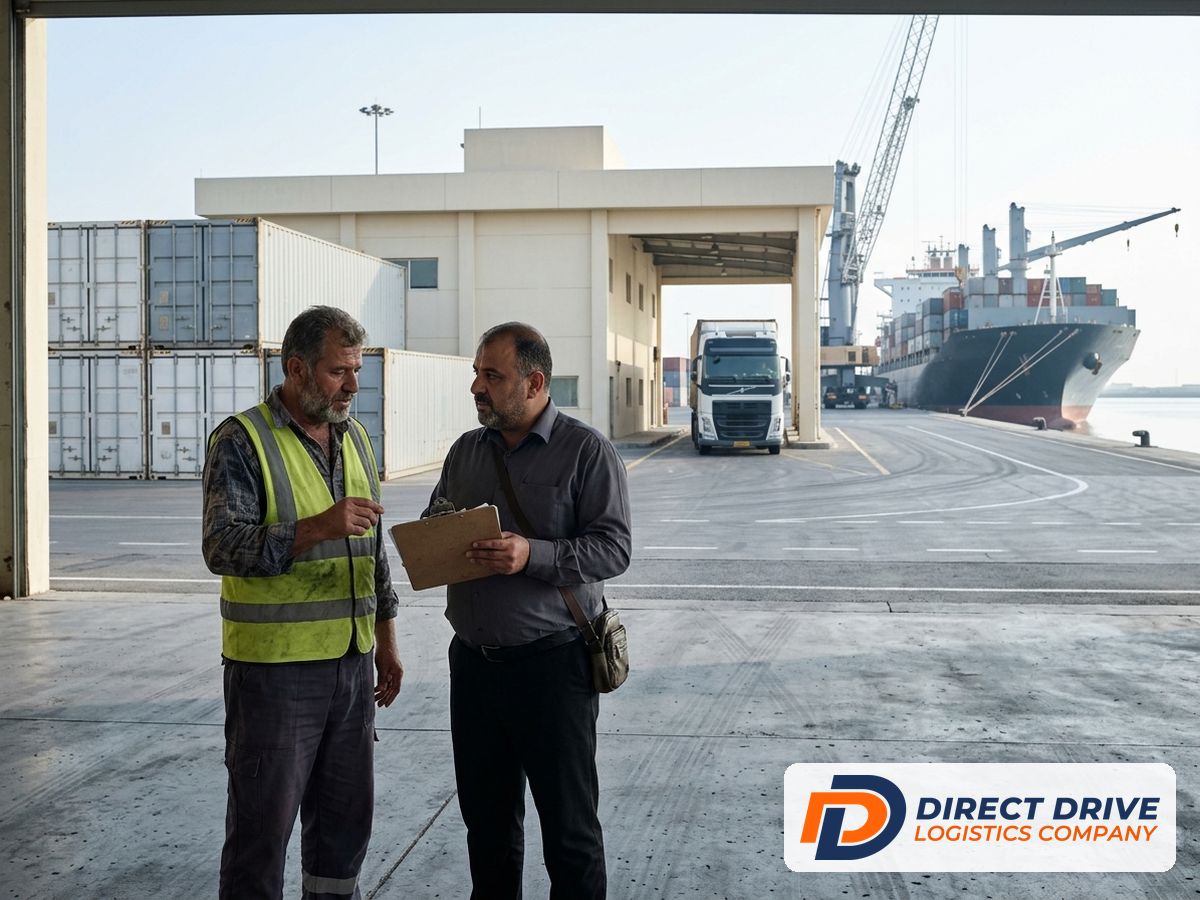
Full Container Load (FCL) discharge and release at Aqaba before the Jordanian transit declaration
Trucking from Jordan to Iraq, Aqaba to Baghdad, covers more than 1,000 km of road in 4 distinct stages. The first happens on the quay. Your FCL box is discharged and then released by the shipping line against the original bill of lading or a telex release.
Aqaba’s port digitalisation drive moves much of this paperwork online. A single missing release document still leaves the container on the terminal, and detention keeps accruing while it waits.
Stage 2 is the Jordanian transit declaration. The cargo is sealed and declared as transit, not as an import into Jordan. The CMR, the commercial invoice and the packing list must match the transit entry line for line.
Stage 3 is the inland haul north past Amman. Trucks then turn east along the Amman–Baghdad highway route through Ruwaished to the Karameh–Trebil border crossing. They exit Jordan at Karameh and enter Iraq at Trebil, where Iraqi customs checks the load against the HS codes on the CMR.
Stage 4 runs through Anbar governorate via Ramadi to Baghdad. This last leg completes the full Aqaba-to-Baghdad distance of more than 1,000 km, and it ends with delivery to the consignee’s warehouse.
For planning, the published road leg is 10–12 days from the port, excluding the sea voyage. Cargo shipping from China to Iraq routed via Trebil takes 35–45 days door to door. That total includes a sea leg of 23–30 days.
The reverse Baghdad–Amman export run takes 3–5 days. That makes the corridor useful for return loads and for regional distribution out of Iraq.
From our own operations, Trebil is one gate in a wider network: we operate at 15 border crossings into Iraq — the Iran-Iraq and Turkey-Iraq corridors plus the Jordan, Saudi Arabia, Kuwait and Syria frontiers — and Bandar Abbas port, across both KRG and Federal Iraq customs systems. That gives clients route flexibility that a single-border operator cannot offer.
Aqaba vs Umm Qasr for cargo bound for Baghdad and central Iraq
Sea Routing, Strait of Hormuz Exposure, and Road Distance to Baghdad Compared
The Aqaba vs Umm Qasr choice starts at sea. Cargo bound for Umm Qasr from Asia or the Gulf must pass the Strait of Hormuz. Aqaba-bound vessels avoid Hormuz but carry their own Red Sea exposure. Aqaba Container Terminal added 180,000 TEU of annual throughput capacity, according to its Aqaba terminal capacity announcement in 2026.
On land, the trade-off reverses. Umm Qasr to Baghdad is a shorter haul within federal Iraq. Trucking from Jordan to Iraq, Aqaba to Baghdad, crosses the western desert to reach the capital.
| Feature | Aqaba via Trebil | Umm Qasr |
|---|---|---|
| Sea routing | Red Sea; no Strait of Hormuz transit | Arabian Gulf; Strait of Hormuz transit required |
| Road distance to Baghdad | Long-haul desert road via Amman and Ruwaished | Shorter haul from the far south |
| Customs regime | Federal Iraq: ASYCUDA, federal tariff | Federal Iraq: ASYCUDA, federal tariff |
| Published transit figure | Yes, a road-leg figure from the port is published | None offered for the Baghdad run |
| Best-suited cities | Baghdad, Anbar, central Iraq | Basra and the southern governorates |
Jordan’s domestic exports to Iraq reached USD 1.449 billion in 2025, which keeps truck supply on the Aqaba corridor steady. Southern routing has a documented outcome too. A Dubai–Baghdad medical equipment shipment was cleared at Umm Qasr 48 hours after Direct Drive Logistic was engaged. For the wider route, see our guide to shipping from Dubai to Iraq for more detail.
Federal Customs at Both Gateways: Automated System for Customs Data (ASYCUDA) and Tariff
Both gateways clear under the same federal regime, using the Automated System for Customs Data (ASYCUDA). Customs duty depends on your goods and their HS code. Estimate it with our tariff calculator, or request a quote and our team will confirm the full cost.
A common mistake is assuming a congested Trebil can be bypassed through Ibrahim Khalil or another KRG crossing. A shipment cannot switch customs systems mid-route without new documents. Trebil’s fallbacks are other federal crossings, such as Al-Waleed or Al-Qaim. On the Tehran–Baghdad corridor, 3 × 40ft FMCG containers were re-routed through federal Mehran with 0 days added delay.
Documents and steps at Trebil and Iraqi customs

Pre-Shipment Paperwork: Commercial Invoice, Packing List, Certificate of Origin (COO) and HS Code
Most border holds in trucking from Jordan to Iraq, Aqaba to Baghdad, start before the container leaves the port. A first-time FCL shipment involves at least 7 core commercial and transport documents. Product-specific permits and conformity certificates come on top of those. Teams comparing the UAE sea option can review routes Khor Fakkan to Baghdad before choosing a port.
Iraq’s 2025-2026 document sequence at Trebil is not fully published, so get written pre-clearance instructions from Iraqi federal customs, COSQC, Jordan Customs and your Iraqi broker. Aqaba’s port digitalisation drive speeds up the Jordanian side, but it cannot correct Iraqi customs clearance documents that do not match.
- Step 1: Align the core set: Issue the commercial invoice, packing list, certificate of origin (COO) and bill of lading or sea waybill. Every document must carry the same HS codes, weights and consignee details.
Jordanian Transit Declaration, Cargo Sealing at Aqaba and the Road Consignment Note (CMR)
The road leg depends on truck permits, driver permissions and compatible documents on both sides of the border. Reporting from 2026 described a shortage of Iraqi trucks for Jordanian freight. A truck stopped over a paperwork error loses its place in the queue.
- Step 2: File the Jordan transit declaration: Lodge it at Aqaba and have customs seal the cargo.
- Step 3: Issue the CMR: Copy the HS codes and seal numbers exactly from the transit file onto the CMR consignment note.
- Step 4: Exit at Karameh: Jordan Customs discharges the transit declaration at the exit point.
- Step 5: Present permits at Trebil: Hand over the import permits and any required conformity certificates. Check the Iraq import permit requirements for your specific product before shipping.
- Step 6: Lodge the ASYCUDA declaration: Settle federal duties at the border. Estimate it with our tariff calculator or request a quote.
- Step 7: Release for Baghdad: Once released, the cargo continues to the consignee for delivery.
Permit gaps are fixable when the right people handle them. On our Mersin, Turkey to Erbil, Iraq route, a temporary import license file was incomplete. The cargo was held at Ibrahim Khalil, and a competitor quoted 5 days to resolve it. Our Kurdish-speaking Erbil team resolved the temporary import license with KRG border authorities in 1 day.
What drives transit time and cost on the Aqaba–Baghdad road
20ft and 40ft Containers (FCL), Full Truck Loads and Chargeable Weight Explained
The first variable in any Aqaba to Baghdad trucking cost is equipment. A 20ft container suits dense, heavy cargo. A 40ft container suits bulky goods, and a full truck load (FTL) of break-bulk avoids container detention entirely.
Chargeable weight calculation decides what you actually pay for. Carriers compare actual gross weight with volumetric weight and bill the higher figure. Light, bulky goods therefore cost more than their scale reading suggests. The same logic applies when shipping from Sweden to Iraq, so it pays to compare every route on one basis. Ask every forwarder to show this figure on the quote so you can compare 2 offers like for like.
Aqaba Port Demurrage, Trebil Queues, Anbar Escorts, Return Loads and Fuel Surcharges
Aqaba port demurrage charges start once free days lapse. Slow trucking from Jordan to Iraq, Aqaba to Baghdad, keeps that meter running. Queues at Trebil add a second risk, and a single HS code mismatch on the CMR can hold a truck there for days.
Security escorts and cargo insurance through Anbar add cost based on cargo value and route risk. Return-load availability matters too. Two-way Jordan–Iraq trade integration improves the odds of backhaul, which lowers empty-leg charges. Fuel surcharges then move with diesel prices on both sides of the border.
The biggest hidden factor is the number of agents. A Jordanian agent, a border broker and an Iraqi clearing agent mean 3 hand-offs, 3 margins and 3 invoices. One accountable operator collapses that to 1 invoice from Aqaba to Baghdad, with no gap for blame between hand-offs.
Direct Drive Logistic’s documented results show what this looks like in practice. A Tehran–Baghdad shipment of 3 × 40ft containers was re-routed through Mehran with 0 days added to its 4–5 day ETA. On Mersin–Erbil, a temporary import license was resolved in 1 day.
Next step: Send your cargo dimensions, gross weight, HS codes and Incoterms to Direct Drive Logistic and request a single-invoice quote from Aqaba to Baghdad.
Send your cargo details to Direct Drive Logistic on WhatsApp and our team will send you a route-specific checklist and quote.
Message on WhatsAppWhy Choose Direct Drive Logistic?
Offices in Erbil (HQ) + Tehran (Nasim Shahr Terminal); rentable warehouse space in Baghdad, Karbala, Najaf, Erbil, Duhok and Basra, plus a warehouse in Tehran
Government-licensed clearing agent — direct port access for sea freight into southern Iraq
2,500+ Iraq domestic deliveries, 300+ Iran-Iraq cross-border, 100+ international freight; air freight handler at Erbil, Baghdad, and Sulaymaniyah airports
Operational at 4 KRG borders (Parviz Khan, Bashmagh, Haji Omran, Ibrahim Khalil) plus the Sheikh Saleh border market, 5 federal Iran-Iraq borders (Khosravi, Sumar, Mehran, Shalamcheh, Chazzabeh) and 6 further federal crossings (Trebil, Arar, Safwan, Al-Qaim, Al-Rabia, Al-Waleed), plus Bandar Abbas port
Full operational fluency in Farsi, Arabic, Kurdish, and English — client-facing and documentation
~10 trucks/day from Erbil hub covering Baghdad, Karbala, Najaf, Basra, Kut (Wasit), Diyala, Nasiriyah, and all Iraqi governorates
Frequently Asked Questions
Yes. Cargo moves regularly from Aqaba to Iraq by road, and the cost of trucking from Jordan to Iraq Aqaba to Baghdad is built from several components rather than one flat rate. The main cost drivers are: – Container size (20ft or 40ft) – Aqaba terminal handling – Jordanian transit processing – The Karameh/Trebil border handoff – Iraqi customs processing – Cargo class (general, reefer or hazardous) – Truck availability – Final-mile delivery inside Baghdad Also budget for items that are often missed: port storage, container detention, document amendments, transloading and waiting time. To get an accurate quote quickly, share your HS code, cargo weight, container type and Incoterms (FOB or CIF).
The standard corridor for trucking from Jordan to Iraq Aqaba to Baghdad runs north from Aqaba toward Amman and east to the Karameh border post. It crosses to Trebil on the Iraqi side, then follows Highway 1 through Ramadi to Baghdad. Within that corridor you can choose between three service models:
- Through-truck: The same truck and container travel door-to-door. This means fewer handlings and lower damage risk, but it depends on permits and truck availability.
- Border transloading (back-to-back): Cargo is moved to an Iraqi truck at the border. Trucks are easier to find, but you add handling, time and cost.
- Consolidated less-than-truckload (LTL) from Amman: This suits smaller loads but is slower.
Aqaba Container Terminal handled over 1,000,000 TEU and 602 vessels in 2025, up from 494 vessels in 2024. That growth gives importers more sailing options into this corridor.
The three biggest challenges are document accuracy, the Karameh/Trebil border sequence and container time limits. Transit time: Plan on a baseline of 10–12 days from Aqaba to Baghdad by road, excluding the sea voyage. Treat this as a planning figure, not a guarantee. Border sequence: This is the largest timing variable. It covers Jordanian transit formalities with Jordan Customs, possible inspections, and Iraqi entry processing with the General Commission of Customs. Documents: Prepare at minimum: – Commercial invoice – Packing list – Certificate of origin – Bill of lading Confirm any product-specific approvals before shipping. Volume pressure: Aqaba’s transit volume reached 36,412 TEU in H1 2026, up 177% from 13,143 TEU in H1 2025. That growth improves equipment availability but can cause terminal congestion during demand peaks. Meanwhile, container detention charges keep accruing.
Delays are minimised through preparation, not luck. Follow five steps:
- Pre-clear documents before the vessel arrives in Aqaba.
- Book a dedicated truck to avoid border transloading where possible.
- Negotiate container free time with the shipping line.
- Require milestone updates at four points: Aqaba gate-out, Karameh arrival, Trebil clearance and Baghdad delivery.
- Agree on a fallback plan in advance.
No honest provider can guarantee border processing times. What a provider can offer is transparency and alternative routing. For example, on a 3 × 40ft FMCG shipment from Tehran to Baghdad, Direct Drive Logistic re-routed through the Mehran crossing when the primary border was congested. The cargo was still delivered within the original 4–5 day door-to-door timeline. Ask every provider for a documented example like this before you book.
Choose a partner that controls the whole chain under one consignment note and one invoice, from Aqaba gate-out to your Baghdad warehouse. When responsibility is split between a Jordanian forwarder, a border agent and an Iraqi trucker, delays become hard to resolve because each party blames the next. For trucking from Jordan to Iraq Aqaba to Baghdad, ask five questions:
- Who clears customs on each side?
- Who owns the truck at the border?
- How are Iraqi trucks secured during peak demand?
- Who is your single point of contact?
- How fast are issues escalated?
Truck demand on this corridor has grown: Jordanian exports to Iraq rose from USD 936 million in 2023 to USD 1.344 billion in 2024. As an example of a single-operator corridor, Direct Drive Logistic ran a China–Bandar Abbas–Erbil shipment with one CMR consignment note and one invoice.
Conclusion
Successful trucking from Jordan to Iraq, Aqaba to Baghdad, depends less on the road itself than on what happens before the container leaves the port. Transit volume through Aqaba reached 36,412 TEU in H1 2026, up 177% from H1 2025. The gateway is proving its value, but more cargo also means more competition for trucks and closer document scrutiny at Trebil.
Start today by checking that your commercial invoice, packing list, certificate of origin and HS codes match line for line. Confirm that your Incoterms clearly state who pays for and handles clearance at the border. Then ask your freight forwarder two direct questions. Does one operator control the cargo from Aqaba release to Baghdad delivery? Will they obtain written pre-clearance instructions from Jordan Customs, Iraqi customs, COSQC and your Iraqi broker before the container moves? A vague answer usually means delays at Trebil.
Because Direct Drive Logistic already operates at Trebil and across Iraq’s other land borders, your cargo stays with one accountable team from Aqaba to Baghdad, with no blind handoffs between carriers. Our Iraq-based staff resolve border queries in Arabic and English while your truck is still in line. Send us your packing list and HS codes this week for a pre-arrival document review and a tailored quote. Call (+964) 750 637 9296.
Need Logistics Consultation?
The Direct Drive team is ready to assist. Message us now.
Move your cargo from Aqaba to Baghdad with Direct Drive Logistic, where we handle trucking, border paperwork, and customs coordination so your shipment arrives on schedule. Call us today at (+964) 750 637 9296 to get your free quote and book your next Jordan-to-Iraq shipment.
Get Your Free Quote NowContact Us for a Consultation
Location
Direct Drive Logistic
Gulan Street, MRF Quattro Block A 13-9
Erbil, Kurdistan Region