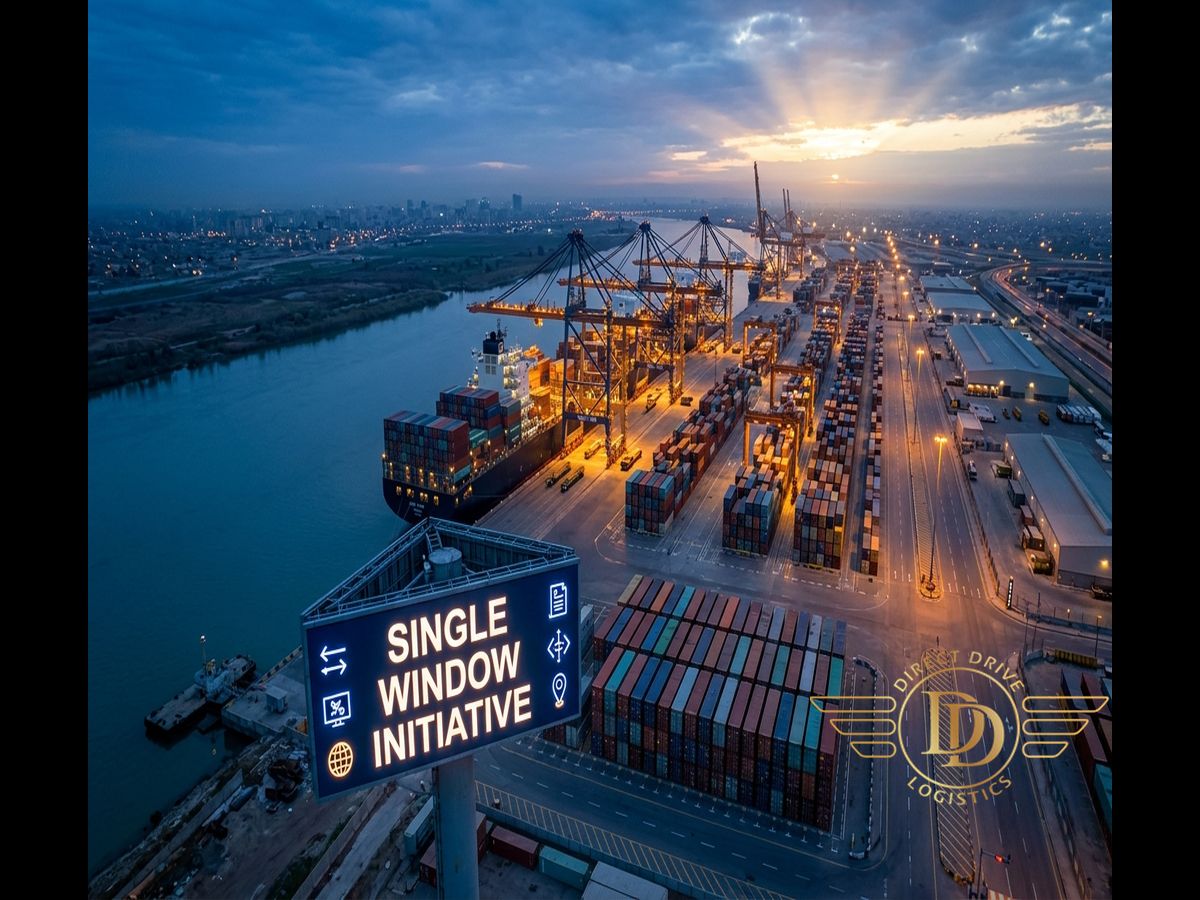
Discover how international trade compliance iraq can transform your operations with this guide moves beyond generic compliance advice by demonstrating how an integrated logistics partner with an official umm qasr clearing license and a 15-crossing border network navigates iraq’s dual customs systems to ensure seamless, end-to-end delivery.
International trade compliance in Iraq involves navigating a complex landscape of federal regulations, regional customs, and international sanctions, ensuring goods move legally and efficiently across borders. This requires meticulous documentation, adherence to specific licensing requirements, and a deep understanding of dual customs systems to avoid costly delays and penalties.
When your cargo is stuck at the Iraqi border for 7-14 days due to missing one specific document, incurring USD 800+ in demurrage and storage fees, the critical importance of robust international trade compliance Iraq becomes acutely clear. This guide moves beyond generic compliance advice by demonstrating how an integrated logistics partner with an official Umm Qasr clearing license and a 15-crossing border network navigates Iraq’s dual customs systems to ensure seamless, end-to-end delivery.
You need a partner who understands the nuances of both Federal Iraq and the Kurdistan Region’s (KRI) distinct customs procedures. For instance, a “dual-use item” refers to goods, software, and technology that can be used for both civilian and military applications, subject to strict export controls and requiring specific licenses to prevent diversion, as highlighted by over 15 enforcement actions in 2025 by the U.S. Bureau of Industry and Security (BIS). We will explore how a comprehensive understanding of these regulations, from specific import/export licensing to U.S. Export Administration Regulations (EAR) for Iraq-bound shipments, can transform your operations.
This comprehensive guide explores international trade compliance Iraq through multiple perspectives, addressing crucial gaps left by competitors. We’ll cover why this landscape is so complex, what core compliance risks exist, and how to navigate the dual customs systems, including the evolving ‘Single Window’ initiative, which aims to reduce clearance times by 20-30%. Understanding “Incoterms” (International Commercial Terms) is also vital; these globally recognized rules define the responsibilities of sellers and buyers for the delivery of goods under sales contracts, dictating who pays for and manages the shipment, insurance, and customs duties. Whether you’re a logistics professional or business owner, you’ll gain actionable insights to enhance your operations, ensuring your goods move efficiently from bonded warehousing to last-mile delivery.
Understanding Iraq’s Evolving Trade Compliance Landscape
The Impact of Digitalization on Iraqi Trade: The ‘Single Window’ Initiative
Navigating international trade logistics in Iraq requires adapting to two major forces: government-led digitalization and expanding regional commerce. As of 2026, Iraq’s customs modernization efforts, centered on the ‘Single Window’ project, aim to streamline clearance but have also introduced new layers of scrutiny. This has led to a potential 3-5% increase in clearance costs as the demand for specialized compliance expertise grows.
While the long-term goal is efficiency, the current transition phase presents challenges. The digital system requires flawless documentation from the outset, yet standard clearance times at key entry points like the Port of Umm Qasr still range from 10 to 21 days for containerized cargo. In our operations across Iraq, we consistently see that minor documentation errors, which were previously correctable on-site, now cause significant digital re-filing delays under the new system.
Successfully managing this environment means partnering with a logistics provider who has direct, licensed access and understands both the old and new processes. Holding an official government clearing license at Umm Qasr allows us to bypass common third-party broker delays. For a detailed overview of the regulations, the U.S. government provides a visual resource on Iraq’s export that outlines many of these requirements. This direct-access model is critical for maintaining project timelines amid evolving compliance standards.
Your next step: Audit your last three shipments to Iraq for documentation accuracy and total clearance time. Compare your results against the current 10-21 day average at Umm Qasr to identify potential compliance gaps.
Specific Import/Export Regulations and Licensing in Iraq

Navigating Iraq’s Official List of Prohibited and Restricted Goods for Import
Successful market entry in Iraq begins with meticulous cargo verification. Both Federal Iraq and the Kurdistan Regional Government (KRG) updated their lists of prohibited and restricted imports in early 2026, making pre-shipment checks more critical than ever for maintaining compliance.
A frequent error in this stage is assuming a single approval covers both Federal Iraq and the KRG. Our teams managing shipments across our 15-border network often see cargo delayed because shippers lack the correct region-specific permits for their goods.
- Step 1: Classify Your Goods with Precision — Every item must have an accurate Harmonized System (HS) code. The Federal Iraq list published in 2026 specifically restricts certain types of used machinery under HS Code Chapter 84, targeting older models deemed environmentally unsafe. Incorrect classification can lead to immediate seizure at the border.
- Step 2: Cross-Reference Against Both Prohibited Lists — You must check your cargo against the correct regional list. For example, specific agricultural products like poultry may be restricted by the federal government due to health concerns, while the KRG list may have different stipulations. This dual-system approach is a core challenge of Iraq import export compliance.
- Step 3: Leverage New Digital Systems for Approvals — For restricted items requiring an Iraqi Ministry of Trade approval, using the new ‘Single Window’ system is key. As of Q3 2026, this system is operational at Umm Qasr Port and has already led to an estimated 15% reduction in physical document handling. As a licensed clearing agent at Umm Qasr, we process these digital submissions directly, avoiding third-party delays. Shippers must also be aware of applicable U.S. export controls for dual-use items.
Your next step: Provide our team with your cargo’s HS code and final destination in Iraq. We will confirm its status against the latest 2026 restricted goods lists within one business day.
Navigating U.S. Export Controls for Trade with Iraq
Understanding the Export Administration Regulations (EAR) for Shipments to Iraq
Effective international trade compliance in Iraq for U.S. businesses begins with understanding that while general trade is permitted, it is not unregulated. The U.S. Department of Commerce’s Bureau of Industry and Security (BIS) governs these transactions through the Export Administration Regulations (EAR). These rules apply to U.S.-origin goods and technology, even when shipped from a third country.
While Iraq is not subject to a comprehensive U.S. embargo, specific individuals, entities, and types of goods require licensing or are prohibited. As of 2025, Iraq’s logistics market reached an estimated USD 11.29 billion, making adherence to these regulations critical for accessing this significant opportunity. In our operations, which include over 300 successful Iran-Iraq cross-border shipments, we find that proactively classifying cargo against EAR controls prevents seizures and fines at the border. For complex cross-border movements, leveraging expert international freight forwarding services can be invaluable.
Screening for Dual-Use Items and Restricted Parties on U.S. Government Lists
A core component of EAR regulations for Iraq involves screening for two key risks: the nature of the product and the identity of the recipient. Companies must determine if their product is a “dual-use” item listed on the Commerce Control List (CCL), which may require a US export license for Iraq. Simultaneously, a mandatory BIS restricted party screening must be conducted against the Consolidated Screening List.
This list consolidates names of individuals and companies barred from receiving U.S. exports. One mistake we see regularly is shippers only screening the consignee but failing to check other parties to the transaction, such as the end-user or intermediary banks. This oversight can lead to severe penalties. Diligent screening is vital, especially as many parties are not on obvious lists of embargoed and sanctioned countries but are still restricted. For those needing assistance with import compliance, our importer of record service Iraq guide provides comprehensive support.
Your next step: Provide our team with your product’s HTS code and the full details of all parties in the transaction. We can conduct a preliminary screening against U.S. government lists within 48 hours.
Key Customs Regulations and Documentation for Iraq Imports & Exports
Essential Documentation Checklist for Iraq Imports
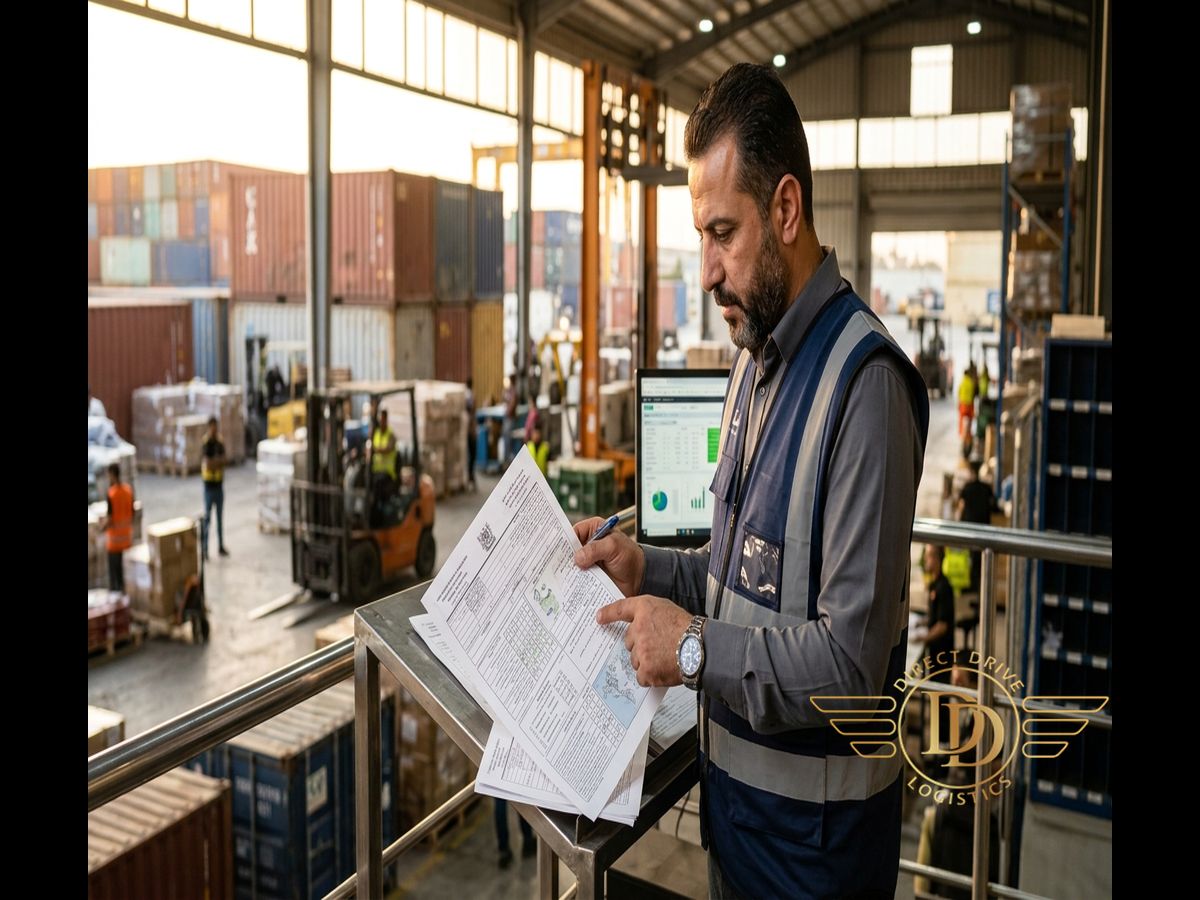
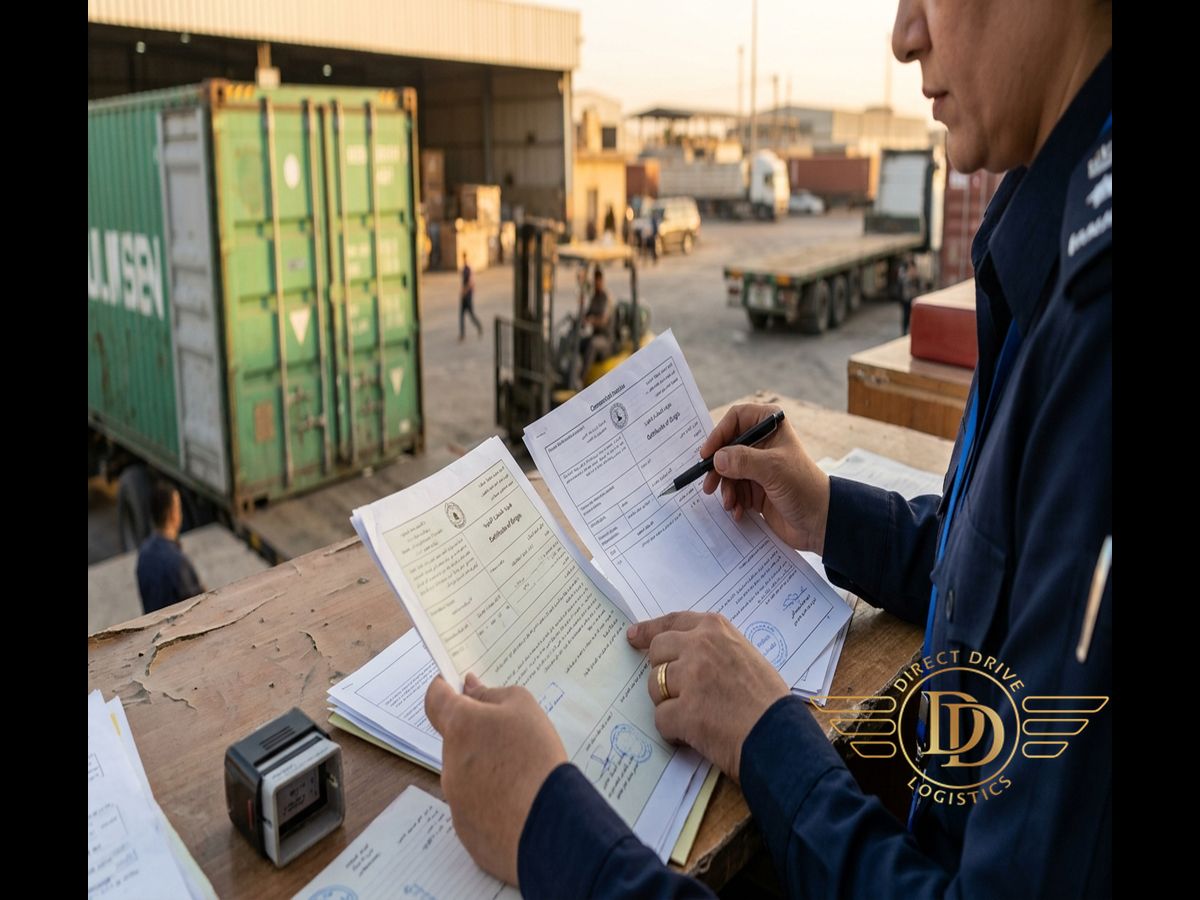
Ensuring smooth customs clearance in Iraq begins with meticulous documentation. For any shipment, whether entering Federal Iraq or the Kurdistan Region (KRI), a complete set of paperwork is non-negotiable. The core documents include a detailed commercial invoice, a comprehensive packing list, a Certificate of Origin, and the relevant transport document (Bill of Lading or Air Waybill).
With average customs clearance times ranging from 7-14 days at federal borders and 5-10 days at KRI crossings, any error can lead to significant delays. A frequent error in this stage is a mismatch between the declared value on the commercial invoice and the packing list details, which instantly triggers a customs hold and inspection. For sea freight, having a partner with a direct government clearing license, like Direct Drive Logistic at Umm Qasr, can be the difference between a 48-hour clearance and a two-week delay.
Navigating Export Paperwork and Iraqi Customs Clearance Procedures
Successfully navigating international trade compliance in Iraq requires adapting to a hybrid customs system. As of late 2026, the Iraqi Customs Authority’s ‘Single Window’ system processes approximately 40% of declarations electronically, aiming to streamline the process. However, physical documentation remains mandatory at most land borders, requiring a partner who can manage both digital submissions and on-the-ground paperwork.
In our operations across our 15-border network, we manage this dual system daily, from electronic pre-clearance for international air freight to Iraq into Baghdad to manual processing at the Turkish border. Understanding the specific Iraqi import requirements for each entry point is vital. This expertise prevents common rejections and ensures your cargo moves without interruption from the border to its final destination, whether in Basra or Erbil.
Your next step: Send our team your draft commercial invoice and packing list for a complimentary compliance review before you ship.
Ensuring Compliance: Best Practices for Iraqi and International Trade Standards
Developing a Robust Internal Compliance Program (ICP) for Iraqi Operations
Effective international trade compliance in Iraq is not a passive checklist but an active, internal system. It begins with creating a framework that anticipates regulatory demands before your cargo leaves the port of origin. With compliance-related costs projected to rise by 3-5% due to enhanced scrutiny, a proactive program is a direct investment in your bottom line.
- Step 1: Centralize Document Control — Establish a single source of truth for all shipping documents, including commercial invoices, packing lists, and certificates of origin. Ensure all goods have the correct Harmonized System (HS) codes and a valid Certificate of Conformity (CoC) before dispatch.
- Step 2: Map Dual Customs Protocols — Your ICP must differentiate between Federal Iraq and Kurdistan Region of Iraq (KRI) customs requirements. Document the specific procedures for your key entry points, whether it’s Umm Qasr under federal authority or Ibrahim Khalil under KRG rules.
- Step 3: Implement a Technology-Driven Audit Trail — Use logistics software to maintain digital records of all declarations, duty payments, and communications with customs officials. This creates an auditable trail that is invaluable during inspections.
In our operations across Iraq, we consistently see that a well-documented ICP is the single biggest factor in reducing clearance times at busy ports like Umm Qasr, where standard processing can take 10-21 days for containerized cargo.
Conducting Thorough Due Diligence on Local Partners and Supply Chains
Your compliance program is only as strong as its weakest link. Vetting every partner in your Iraqi supply chain is non-negotiable for mitigating trade risks. The right partner provides more than transport; they provide verified access and regulatory insulation.
- Step 4: Verify In-House Licensing — Confirm your logistics partner holds their own government-issued clearing licenses, not just a relationship with a third-party broker. Direct Drive Logistic, for example, is an officially licensed clearing agent at the Port of Umm Qasr, which eliminates an entire layer of third-party risk and communication delays for our clients.
- Step 5: Assess On-the-Ground Capabilities — Your due diligence for Iraqi partners should include confirming their physical presence and language capabilities. With staff fluent in Arabic, Kurdish, Farsi, and English, our teams navigate complex negotiations at all 15 Iraqi border crossings without communication breakdowns.
A frequent error in this stage is failing to verify if a partner’s license is federal or regional. This oversight can lead to cargo being stopped at the KRI-Federal Iraq internal checkpoint, adding days and unexpected costs to the delivery.
Your next step: Request a copy of the official customs clearing license from your current or potential Iraqi logistics provider. Verify its validity and scope (e.g., specific to Umm Qasr or applicable nationwide) to assess your direct-to-market access. For comprehensive assistance with your trade documentation services Iraq, consider consulting with experts.
Send your cargo details to Direct Drive Logistic on WhatsApp — get a route-specific checklist and quote within 24 hours.
Message on WhatsAppWhy Choose Direct Drive Logistic?
Offices in Erbil (HQ) + Tehran (Nasim Shahr Terminal); rentable warehouse space in Baghdad, Karbala, Najaf, Erbil and Duhok, plus a warehouse in Tehran
Government-licensed clearing agent — direct port access for sea freight into southern Iraq
2,500+ Iraq domestic deliveries, 300+ Iran-Iraq cross-border, 100+ international freight; air freight handler at Erbil, Baghdad, and Sulaymaniyah airports
Operational at 4 KRG borders (Parviz Khan, Bashmagh, Haji Omran, Ibrahim Khalil) plus the Sheikh Saleh border market, 5 federal Iran-Iraq borders (Khosravi, Sumar, Mehran, Shalamcheh, Chazzabeh) and 6 further federal crossings (Trebil, Arar, Safwan, Al-Qaim, Al-Rabia, Al-Waleed), plus Bandar Abbas port
Full operational fluency in Farsi, Arabic, Kurdish, and English — client-facing and documentation
~10 trucks/day from Erbil hub covering Baghdad, Karbala, Najaf, Basra, Kut (Wasit), Diyala, Nasiriyah, and all Iraqi governorates
Frequently Asked Questions
Businesses trading with Iraq face challenges including evolving customs regulations, the need for precise documentation, and navigating varied regional requirements. The ongoing digitalization of customs procedures, with the Single Window system partially operational and processing 40% of declarations electronically as of late 2026, aims to streamline processes, but requires adaptability. Heightened scrutiny on dual-use items and sanctions compliance, evidenced by over 15 enforcement actions related to Iraq-bound shipments in 2025 by the U.S. BIS, also poses a significant risk, demanding meticulous product classification and end-user verification to avoid penalties.
Ensuring smooth operations across Iraq requires a single, integrated logistics partner with comprehensive reach and direct capabilities. Partnering with a provider that operates its own network, rather than brokering services, is crucial. For instance, Direct Drive Logistic is a government-licensed clearing agent at Umm Qasr Port, enabling direct clearance within 48 hours for sea freight, bypassing third-party brokers and significantly reducing port storage and demurrage fees. Furthermore, our Erbil hub dispatches approximately 10 trucks daily on fixed schedules to every Iraqi governorate, ensuring reliable next-day delivery to most cities from Erbil and eliminating the need for multiple, fragmented local agents.
To guarantee international trade compliance Iraq and efficiency, look for a forwarder with a robust physical presence, direct operational control, and multilingual local expertise. Essential capabilities include being an official licensed clearing agent at key entry points like Umm Qasr, as Direct Drive Logistic is, for seamless sea freight. A critical infrastructure component is a diverse border crossing network; our 15-border network, spanning Iran, Turkey, Jordan, Saudi Arabia, and Kuwait, provides redundancy and flexibility, allowing for re-routing through alternative crossings like Mehran without ETA changes, even amidst primary border congestion. Furthermore, a quad-language operations team (Farsi, Arabic, Kurdish, and English) is vital for effective communication with all stakeholders and authorities.
While Iraq itself is not under comprehensive international sanctions, specific entities or individuals within Iraq may be subject to targeted sanctions, and heightened scrutiny exists for dual-use items. This means businesses must rigorously screen their partners and cargo to ensure compliance with existing sanctions regimes, particularly those enforced by international bodies and national governments. The U.S. Department of Commerce’s BIS reported over 15 enforcement actions in 2025 concerning Iraq-bound shipments, underscoring the strict controls on certain technologies and goods. Adhering to these regulations is a critical aspect of international trade compliance Iraq, requiring thorough due diligence on product classifications and end-user declarations to prevent diversions.
Yes, the US can trade with Iraq, and trade volume between the two countries continues, though it is subject to strict international trade compliance regulations. US businesses must be acutely aware of specific export control regulations, particularly concerning dual-use items and technologies, as outlined by the Bureau of Industry and Security (BIS). As noted, BIS reported over 15 enforcement actions related to Iraq-bound shipments in 2025, highlighting the need for meticulous adherence to licensing requirements and end-user verification. Furthermore, compliance with financial regulations and anti-money laundering (AML) protocols is essential to ensure smooth and lawful transactions.
International trade compliance refers to adhering to all national and international laws, regulations, and policies governing the import and export of goods and services across borders. For businesses operating in Iraq, this is particularly complex due to a confluence of factors: evolving local customs procedures, varying regulations between Federal Iraq and the Kurdistan Region, and the increased scrutiny on dual-use items and sanctions. For example, customs clearance at federal borders like Trebil can take 7-14 days, while KRI borders like Ibrahim Khalil typically range from 5-10 days. The ongoing implementation of the ‘Single Window’ customs system, while promising a 20-30% reduction in clearance times upon full implementation, adds another layer of dynamic compliance requirements that businesses must navigate.
Conclusion
Navigating international trade compliance in Iraq demands a proactive and informed approach, particularly with the impact of initiatives like the ‘Single Window’ on customs processes. The complexity of Iraq’s specific import/export regulations, including the official list of prohibited and restricted goods, coupled with stringent U.S. Export Administration Regulations (EAR) for dual-use items, necessitates meticulous adherence to documentation and licensing. A robust internal compliance program is not merely a recommendation but a critical safeguard against delays and penalties, ensuring seamless operations in a dynamic regulatory environment.
To immediately enhance your international trade compliance in Iraq, first, verify that all current shipping invoices accurately reflect the correct Incoterms for your shipments, aligning responsibilities for costs and risks. Next, ask your current freight forwarder how they are actively adapting their procedures to the Iraqi ‘Single Window’ initiative and what specific training their teams have received regarding the updated customs documentation requirements. Finally, consider how Direct Drive Logistic’s deep expertise in Iraqi customs and regulatory frameworks can streamline your operations and mitigate compliance risks.
When your shipment requires efficient customs clearance at Port of Umm Qasr, leveraging a government-licensed clearing agent like Direct Drive Logistic provides direct port access and eliminates intermediary delays. Our dual-country physical presence with offices in Erbil and Tehran, alongside our quad-language operations team, ensures unparalleled local knowledge and seamless communication across all stages of your supply chain. For a comprehensive review of your compliance needs and to secure reliable, secure logistics solutions, contact Direct Drive Logistic today at (+964) 750 637 9296.
Need Logistics Consultation?
The Direct Drive team is ready to assist. Message us now.
Navigate the complexities of international trade compliance in Iraq with confidence. Secure your shipments and streamline operations by contacting Direct Drive Logistic today. Call us directly at (+964) 750 637 9296 to speak with an expert and ensure seamless compliance for your next venture.
Get Your Free Quote NowContact Us for a Consultation
Location
Direct Drive Logistic
Gulan Street, MRF Quattro Block A 13-9
Erbil, Kurdistan Region