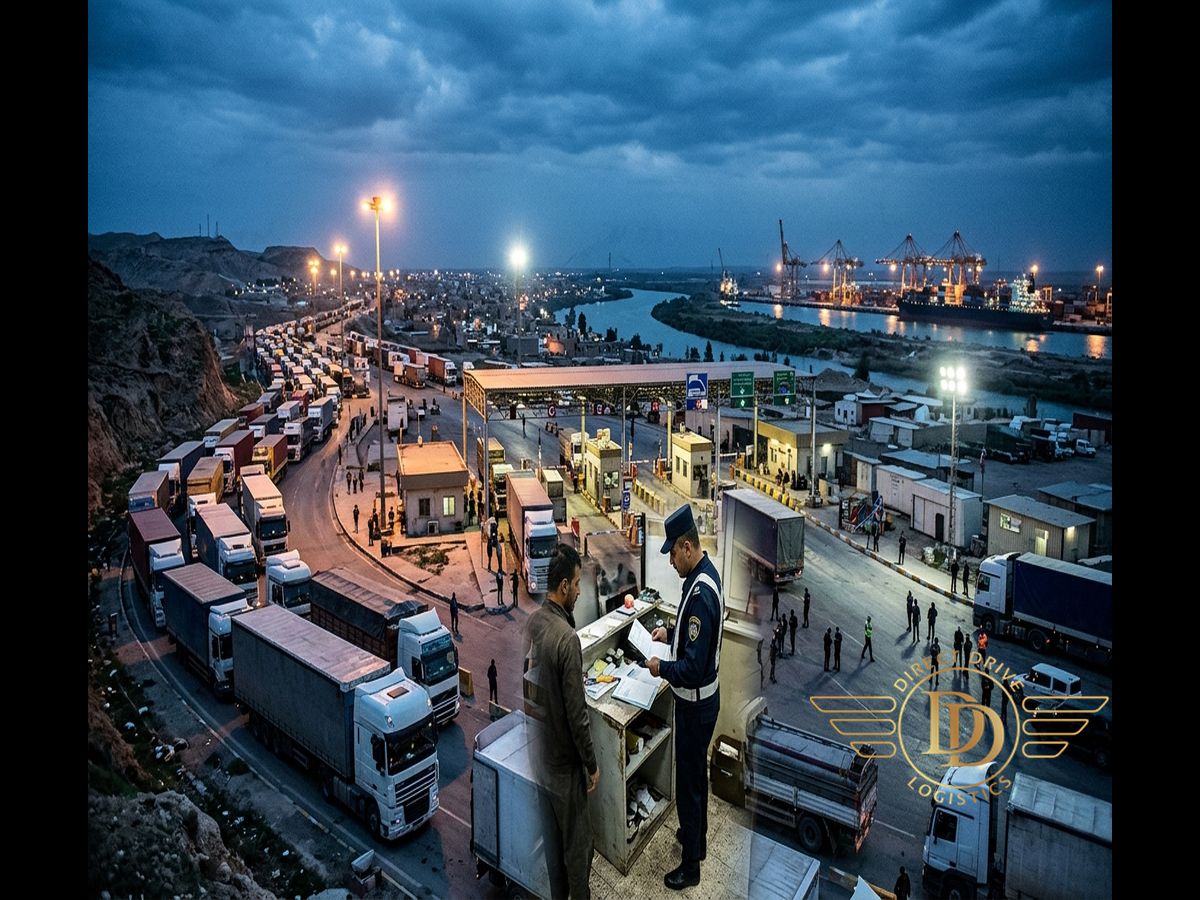
Discover how iraq customs clearance services can transform your operations with this article focuses exclusively on the strategic advantage of using a partner with direct, licensed customs clearance capabilities inside iraq, like our official license at umm qasr port, to proactively solve complex regulatory challenges that standard forwarders cannot.
When your cargo is stuck at an Iraqi border for 5 days, incurring USD 800+ in storage fees, the true cost of inadequate customs clearance becomes painfully clear. This isn’t just a delay; it’s a direct hit to your project timelines and budget. Navigating the intricate landscape of Iraq customs clearance services demands precision and deep local expertise to avoid such costly pitfalls.
You need to reliably ship goods to or from Iraq, yet finding a dependable international freight forwarder with genuine expertise in the complex Iraqi customs and logistics landscape is a constant struggle. Missing one critical customs document, for instance, can easily extend clearance times by 3-5 additional days, as seen in 2025 for shipments flagged for enhanced scrutiny. An effective customs clearance partner, particularly one with an official government clearing agent license at a key entry point like Umm Qasr Port, can directly mitigate these risks.
This article focuses exclusively on the strategic advantage of using a partner with direct, licensed customs clearance capabilities inside Iraq, like our official license at Umm Qasr Port, to proactively solve complex regulatory challenges that standard forwarders cannot. We will explore the dual customs systems, essential documentation, and how duty rates are determined. Understanding these elements is crucial for successful import/export operations, especially given the projected increase in Iran-Iraq trade volume to USD 15 billion by March 2027.
We’ll also delve into “Incoterms (International Commercial Terms),” which are globally recognized standards defining the responsibilities of buyers and sellers for the delivery of goods under sales contracts, dictating who pays for and manages the shipment, insurance, documentation, and customs clearance. Furthermore, we will clarify the distinction between “Federal Iraq Customs” and “KRG (Kurdistan Regional Government) Customs,” two separate regulatory bodies governing different geographical areas within Iraq, each with its own procedures and requirements. This guide will provide actionable insights to enhance your operations, ensuring smoother transit and compliance within Iraq’s evolving trade environment.
Navigating Iraq’s Dual Customs Systems: Federal vs. KRG Clearance
Understanding Federal vs. KRG Customs Systems
Successfully importing into Iraq requires a deep understanding of its two distinct customs jurisdictions: the Federal system governed by Baghdad and the Kurdistan Regional Government (KRG) system. Choosing the correct entry point and clearance process is fundamental for providing efficient iraq customs clearance services. As of 2025, clearance at the Federal port of Umm Qasr averaged 5-7 days, while the KRG’s Ibrahim Khalil crossing was faster at 3-5 days, highlighting critical operational differences.
One mistake we see regularly is the assumption that cargo cleared in the Kurdistan Region can move into Federal Iraq without further processing. This oversight frequently causes delays at internal customs checkpoints between the territories, disrupting supply chains. Our team at Direct Drive Logistic has found that pre-planning the entire route, including internal transit, is the only way to guarantee a seamless door-to-door delivery. For a comprehensive overview of navigating the complexities of the region, consider partnering with an experienced Iraq logistics partner.
| Feature | Federal Iraq Customs (Baghdad) | Kurdistan Region Customs (KRG) |
|---|---|---|
| Primary Entry Points | Umm Qasr Port, Shalamcheh, Trebil | Ibrahim Khalil (Turkey), Parviz Khan (Iran) |
| Avg. Clearance Time (2025) | 5-7 days for standard FCL | 3-5 days for standard FCL |
| Standard FCL Cost | USD 400 – 700 | USD 400 – 700 |
| Governing Body | General Customs Authority | KRG Ministry of Finance and Economy |
While standard clearance costs appear similar, the complexity of the shipment can cause significant divergence, with fees ranging from USD 350 to over USD 1,200 for specialized goods. As an officially licensed clearing agent at Umm Qasr Port, we provide direct port access that bypasses the need for third-party brokers, streamlining the process within the Federal system. This capability, combined with our operational presence at 17 border crossings across both jurisdictions, allows us to offer optimized routing that avoids costly cross-system delays. For complex or large-scale movements, securing an expert Iraq project logistics partner is essential.
Your next step: Identify your cargo’s final destination within Iraq. Contact our team to determine the most efficient customs entry point—Federal or KRG—to minimize transit time and cost.
Introduction to Iraq Customs Clearance
Core Iraqi Import and Export Regulations You Must Know Before Shipping
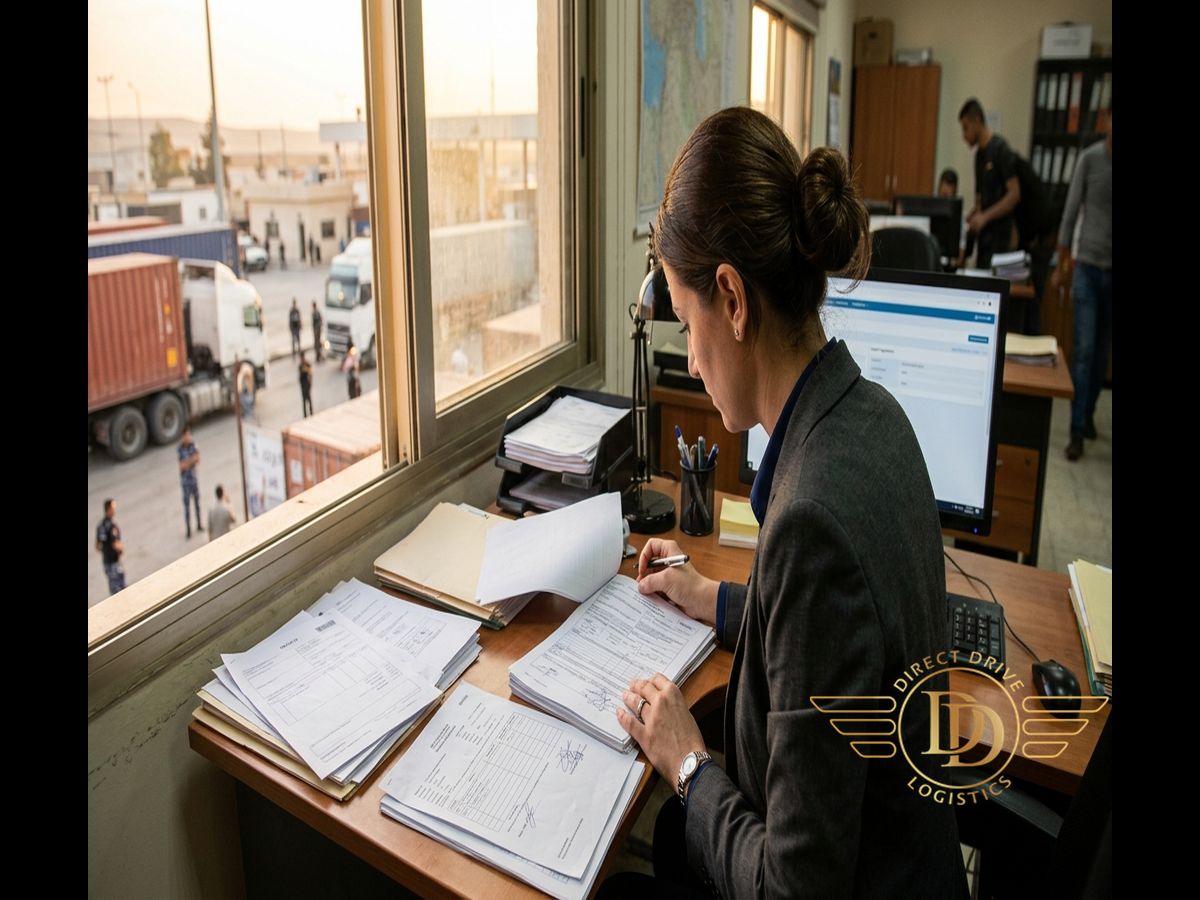
Successfully shipping goods to Iraq hinges on mastering its specific documentation and regulatory requirements from the outset. Proper preparation of customs clearance paperwork is not just a formality; it is the primary factor that determines whether your cargo moves swiftly or incurs significant delays and penalties. This process requires a deep understanding of both federal and KRG-specific rules.
A frequent error we see is the misclassification of goods on the commercial invoice. This is especially true after the KRG’s tariff adjustments in late 2025, which altered duty rates by 5-10% for approximately 50 HS codes. This single mistake can trigger a full inspection and costly delays.
- Step 1: Assemble Core Documentation — Every shipment requires a commercial invoice detailing value and HS codes, a packing list, and a Certificate of Origin. For certain goods, an import license and pre-shipment inspection certificates are mandatory. For a visual of the process, see the detailed IOM’s Iraq Customs Clearance diagram.
- Step 2: Verify Sanctions and Dual-Use Goods Compliance — All cargo is screened against international sanctions lists. Goods classified as dual-use (having both civilian and potential military applications) face extreme scrutiny and require special permits. Failure to declare these items properly is a serious violation of Iraq import regulations.
- Step 3: Prepare for Digital and Physical Submission — While Iraq is moving towards digitization, physical copies are still essential. The pilot of a single window system at Umm Qasr Port in early 2026, which reduced physical touchpoints by 20-30% for participants, shows progress. However, as of today, you must be prepared for both digital pre-clearance and physical document checks upon arrival.
In our experience managing over 300 Iran-Iraq cross-border shipments, having a licensed, in-house clearing agent is the definitive advantage. As an official licensed clearing agent at the Port of Umm Qasr, Direct Drive Logistic manages this entire process directly, bypassing the third-party brokers that other forwarders rely on. This direct control allows us to resolve documentation issues in hours, not days, and provides comprehensive logistics services Iraq needs. For specific guidance, our team offers expert customs clearance services Baghdad businesses trust.
Your next step: Send your commercial invoice and packing list to our team for a complimentary compliance review before you ship.
Streamlining Your Shipment: Step-by-Step Iraq Customs Clearance for All Modes
Air Freight Clearance: A Step-by-Step Guide for Baghdad & Erbil Airports
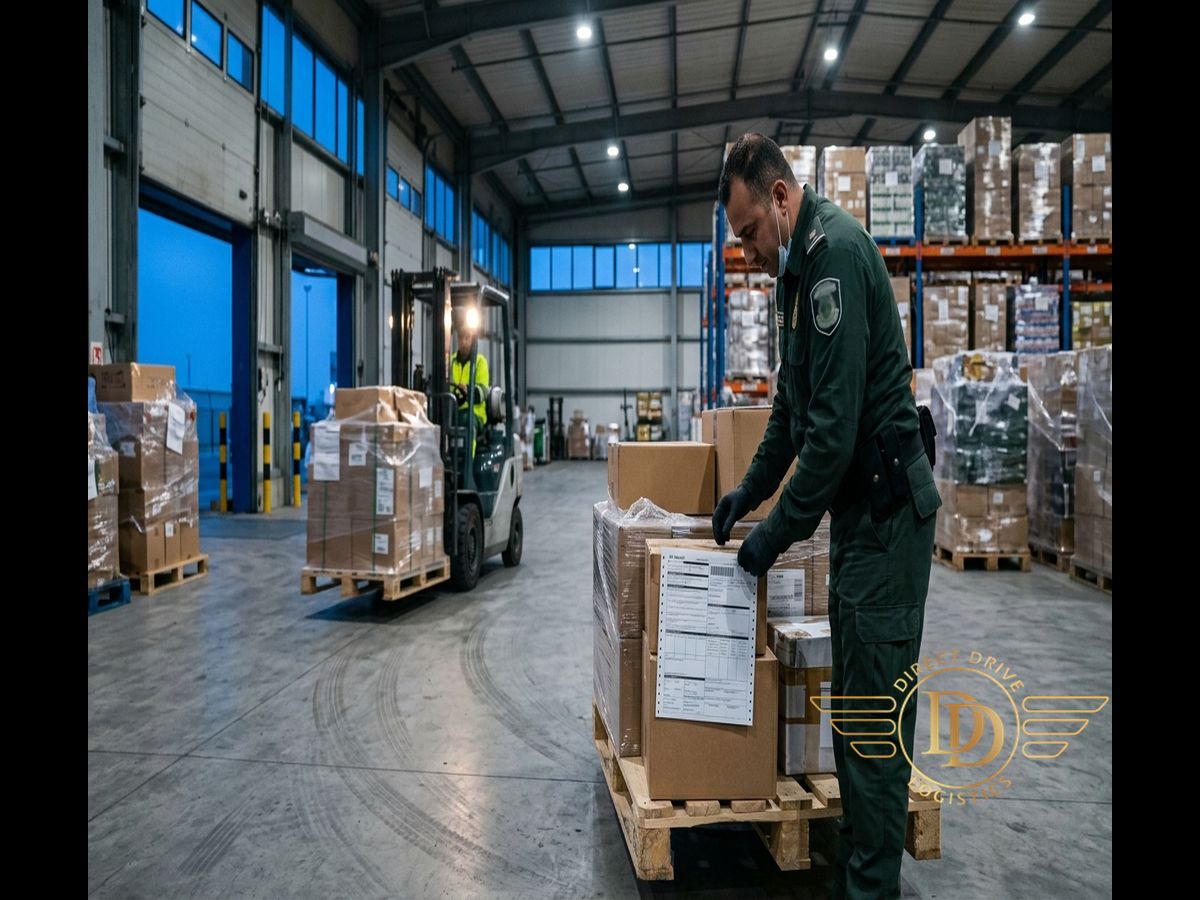
Air freight offers the fastest transit but demands the most precise documentation for a smooth customs process. The typical Baghdad airport cargo clearance begins with submitting the Air Waybill (AWB), commercial invoice, and packing list to customs authorities prior to the flight’s arrival. Upon landing, cargo is moved to a bonded warehouse for inspection.
Our team at Direct Drive Logistic, as an experienced air freight handler at Erbil, Baghdad, and Basra airports, manages this process directly. We ensure all documents, including the mandatory Certificate of Conformity (CoC), are verified and lodged electronically to accelerate the assessment of duties and taxes, typically leading to release within 24-72 hours. For comprehensive support, our Erbil logistics services provide complete supply chain solutions.
Sea Cargo Procedures: Navigating the Customs Process at Umm Qasr Port
The Umm Qasr port customs procedure handles the majority of Iraq’s inbound container volume, a figure set to grow as total imports are projected to reach USD 72 billion by 2027. The process starts with lodging the Bill of Lading (B/L) and manifest with the port authority. Unlike air freight, sea cargo often undergoes more rigorous physical inspection, making direct representation essential. For more details on how we manage complex shipments, explore our freight forwarding services Iraq guide.
As an official, government-licensed clearing agent at Umm Qasr, Direct Drive Logistic eliminates the need for third-party brokers. This direct access was critical in a recent shipment where we cleared time-sensitive medical equipment from Dubai to Baghdad in just 48 hours. One mistake we see regularly is incomplete container manifests, which can halt the entire Umm Qasr port customs procedure and incur significant demurrage fees.
| Clearance Stage | Air Freight (Baghdad/Erbil) | Sea Freight (Umm Qasr) | Road Freight (Ibrahim Khalil/Mehran) |
|---|---|---|---|
| Primary Document | Air Waybill (AWB) | Bill of Lading (B/L) | CMR Consignment Note |
| Pre-Arrival Submission | Mandatory (24h prior) | Mandatory (48-72h prior) | Recommended (24h prior) |
| Inspection Level | Typically 10-20% of cargo | Can be up to 100% of cargo | Variable; often 25-50% |
| Typical Clearance Time | 24-72 Hours | 3-7 Days | 1-3 Days |
Your next step: Provide our team with your cargo’s HS codes and origin. We will return a preliminary document checklist and duty estimate for your specific Iraq import lane within one business day.
Overcoming Common Delays in Iraqi Customs: Strategies and Mitigation
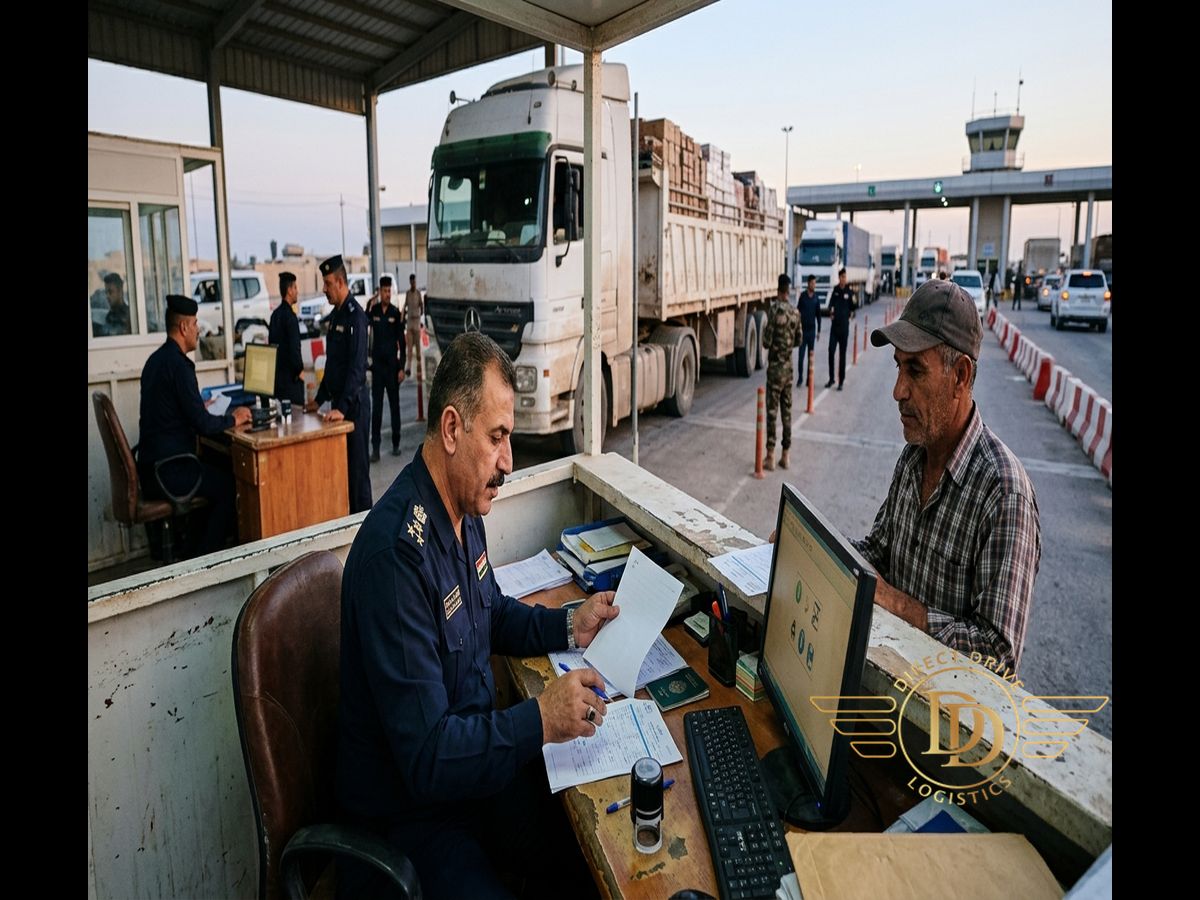
Identifying Key Bottlenecks: Common Causes of Delays at Iraqi Borders
Navigating the Iraqi supply chain means anticipating choke points before they impact your timeline. A primary driver of delays is the sheer volume of traffic at key land borders, especially those with Iran. With trade projected to reach USD 15 billion by March 2027 after an 18% year-over-year growth in 2025, crossings like Shalamcheh and Mehran face immense infrastructure pressure.
In our operations managing over 300 Iran-Iraq cross-border shipments, we consistently see that minor documentation errors are the second leading cause of delays, often leading to full cargo inspections. These issues, combined with unpredictable congestion, can easily add 3-5 days to transit times, creating significant demurrage costs for unprepared shippers and causing serious Iraq customs clearance problems.
Proactive Mitigation: Strategies for Accurate Documentation and Compliance
Effective mitigation of these delays requires a partner with direct, on-the-ground capabilities. For example, when a client’s FMCG shipment from Tehran to Baghdad faced severe congestion at the primary border, our team immediately re-routed the cargo through the Mehran crossing, delivering it within the original timeline and avoiding a potential 5-day delay. This flexibility is a core part of our Iraq customs clearance services.
A frequent error we see is submitting commercial invoices that don’t match the packing list in detail, a discrepancy that triggers immediate holds. While digitalization pilots at Umm Qasr Port showed a 15-20% reduction in document processing time as of Q2 2026, this efficiency is only accessible with flawless paperwork. Having an expert manage your customs clearance procedures ensures all documents are pre-vetted and compliant, preventing easily avoidable setbacks.
Your next step: Provide our team with your cargo details and destination. We will conduct a complimentary route analysis to identify potential bottlenecks and outline a proactive clearance strategy within 24 hours.
Beyond the Border: DDL’s Extensive Coverage Across KRG and Federal Iraq Customs Systems
Unified Operations Across KRG and Federal Iraq Customs Systems for Faster Transit
Navigating Iraq’s dual customs systems—one for the Kurdistan Region (KRG) and another for Federal Iraq—creates significant bottlenecks for standard freight forwarders. Without unified control, cargo faces delays and redundant processing. While standard clearance at Ibrahim Khalil (KRG) averaged 3-5 days in 2025, shipments destined for federal zones often required a complete second clearance process.
Direct Drive Logistic operates as a single, integrated entity across both jurisdictions. This eliminates handoffs between different agents, streamlining KRG and federal Iraq shipping into one seamless transit. In our experience with over 300 Iran-Iraq cross-border shipments, we find that a unified clearance strategy consistently prevents the 2-3 day delays common at internal checkpoints between regions.
| Feature | Direct Drive Logistic (Integrated Network) | Standard Forwarder (Subcontracted) | Local-Only Broker |
|---|---|---|---|
| Coverage | All 17 KRG & Federal borders + Umm Qasr Port | Major borders only; subcontracts for others | Single border crossing |
| Est. Transit (Turkey-Baghdad) | 5-7 days | 7-10+ days (due to handoffs) | N/A (cannot complete full route) |
| Communication | Single point of contact | Multiple agents, potential for miscommunication | Single point, limited scope |
| Risk of Delay | Low; proactive re-routing capability | Medium; dependent on subcontractor quality | High; no alternative routes |
The DDL Advantage: On-the-Ground Expertise at All 17 Border Crossings
True market coverage means having direct, operational expertise at every point of entry. Direct Drive Logistic manages a network spanning all 17 of Iraq’s land border crossings, complemented by our official government license as an Umm Qasr Port customs broker. This direct port access is a capability most forwarders lack, forcing them to rely on third-party agents for sea freight.
As regulatory complexity drives an estimated 5-8% year-over-year increase in clearance costs, our direct-control model becomes a significant financial advantage. Our pre-clearance services can reduce processing times by 1-2 days, mitigating the impact of these rising costs. One mistake we see regularly is shippers assuming a document approved at a KRG border is sufficient for Federal Iraq, a frequent error that our quad-lingual teams (Farsi, Arabic, Kurdish, English) proactively resolve before cargo is dispatched. For more insights into optimizing your supply chain, explore our comprehensive freight forwarding services Iraq.
Your next step: Request a complimentary audit of your current Iraq shipping lanes. Our team can identify potential delays and cost-saving opportunities by comparing your routes against our 17-border network within 48 hours. Discover how our expertise can enhance your Iraq freight forwarding operations.
Send your cargo details to Direct Drive Logistic on WhatsApp — get a route-specific checklist and quote within 24 hours.
Message on WhatsAppWhy Choose Direct Drive Logistic?
Offices in Erbil (HQ) + Tehran (Nasim Shahr Terminal); warehouses in Zakho, Erbil, Basra, and Tehran (2,000 sqm)
Government-licensed clearing agent — direct port access for sea freight into southern Iraq
2,500+ Iraq domestic deliveries, 300+ Iran-Iraq cross-border, 100+ international freight; air freight handler at Erbil, Baghdad, and Basra airports
Operational at 6 KRG borders (Parviz Khan, Bashmagh, Haji Omran, Ibrahim Khalil, Sheikh Saleh, Shoshmi), 5 federal Iran-Iraq borders (Khosravi, Sumar, Mehran, Shalamcheh, Chazzabeh) and 6 further federal crossings (Trebil, Arar, Safwan, Al-Qaim, Al-Rabia, Al-Waleed), plus Bandar Abbas port
Full operational fluency in Farsi, Arabic, Kurdish, and English — client-facing and documentation
~10 trucks/day from Erbil hub covering Baghdad, Karbala, Najaf, Basra, Kut (Wasit), Diyala, Nasiriyah, and all Iraqi governorates
Frequently Asked Questions
Navigating international freight forwarding to Iraq, including effective Iraq customs clearance services, demands meticulous attention to documentation, commodity classification, and adherence to evolving regulations. A key challenge is the heightened scrutiny on dual-use goods and sanctions compliance, particularly at federal checkpoints, which led to 10-15% of flagged shipments experiencing delays of 3-5 additional days in 2025. Furthermore, the increasing trade volume between Iran and Iraq, projected to reach USD 15 billion by March 2027, puts pressure on land borders like Shalamcheh and Mehran, necessitating efficient clearance processes to avoid congestion.
Businesses should seek freight forwarders with a proven track record, physical presence, and direct operational capabilities within Iraq. A reliable partner will possess official licenses, such as being a licensed clearing agent at key entry points like Umm Qasr Port, enabling direct clearance within 48 hours for standard cargo. Furthermore, look for a forwarder with an extensive border network, covering all 17 land crossings into Iraq from neighboring countries, and a quad-language operations team fluent in Farsi, Arabic, Kurdish, and English to eliminate communication barriers and ensure smooth Iraq customs clearance services.
Direct Drive Logistic offers over 10 years of experience and unique advantages in navigating Iraqi logistics. Our 17-border crossing network, spanning every land frontier into Iraq, allows for real-time re-routing to avoid congestion, as demonstrated when we re-routed FMCG goods through Mehran without changing the ETA, despite primary border congestion. As an officially licensed clearing agent at Umm Qasr Port, we provide direct Iraq customs clearance services, eliminating the need for third-party brokers and saving clients significant port storage and demurrage fees. Our bilingual Kurdish/Arabic team in Erbil can also resolve temporary import license issues with KRG authorities in as little as one day.
Specific capabilities like direct port access and comprehensive border coverage significantly enhance efficiency and reduce risk for Iraq customs clearance services. For instance, a licensed clearing agent at Umm Qasr Port can facilitate standard FCL customs clearance in an average of 5-7 days, compared to potentially longer times when relying on third-party brokers. A forwarder with an extensive network, covering all 17 land borders including Ibrahim Khalil (3-5 days clearance) and Parviz Khan (4-6 days clearance), offers flexibility to mitigate delays. Direct Drive Logistic, as a licensed clearing agent and operator across all major crossings, minimizes hand-off risks and ensures consistent service.
Evidence of a freight forwarder’s capability for urgent or complex shipments includes their operational data, successful case studies, and established infrastructure. For example, a forwarder managing the full corridor from China to Bandar Abbas port, Iran, and then to Erbil, Iraq, under a single operator, eliminates three-party coordination risks. Direct Drive Logistic demonstrates this capability by operating daily scheduled departures from Erbil to all Iraqi governorates, with approximately 10 trucks per day. This scheduled service ensures next-day delivery to most Iraqi cities from Erbil, providing reliability that a call-and-wait broker cannot match for time-sensitive cargo.
To engage with a highly capable international freight forwarder for Iraq customs clearance services, businesses should initiate contact by detailing their specific shipping needs, including cargo type, origin, destination, and urgency. Prepare essential documentation like commercial invoices, packing lists, and any required certificates to facilitate a swift assessment. Look for a forwarder that emphasizes pre-arrival documentation and digitalized processes, which, as observed at Umm Qasr Port, can reduce document processing time by 15-20%. Direct Drive Logistic, with over 10 years of experience, encourages direct consultation to tailor solutions that leverage our direct port access and extensive border network for optimal efficiency.
Conclusion
Successfully navigating Iraq’s complex dual customs systems, spanning both Federal and KRG jurisdictions, requires more than just understanding regulations; it demands a proactive approach to prevent delays and ensure compliant, efficient cargo movement. As the article detailed, avoiding common bottlenecks, such as incomplete documentation or misclassified goods, is paramount for timely delivery across all modes of transport. This comprehensive expertise is what transforms potential logistical headaches into streamlined operations.
To optimize your next shipment, start by reviewing your current import documentation against the latest Iraqi customs requirements. Specifically, verify that your Incoterms 2020 are clearly defined and understood by all parties. Then, ask your current freight forwarder how they manage the distinct Federal and KRG customs clearance processes, particularly their strategy for overcoming delays at specific border crossings. This will highlight where your current process might be vulnerable.
Direct Drive Logistic offers unparalleled expertise in Iraq customs clearance services, leveraging our official license as a clearing agent at the Port of Umm Qasr and our extensive 17-border crossing network. Our deep understanding of local nuances, coupled with a solutions-focused approach, ensures your goods move securely and efficiently. For expert guidance on your specific Iraq logistics needs, contact us directly at (+964) 750 637 9296.
Need Logistics Consultation?
The Direct Drive team is ready to assist. Message us now.
Navigate the complexities of Iraq customs with unparalleled ease and efficiency. Don’t let intricate regulations slow your shipments; empower your business with Direct Drive Logistic’s expert clearance services. Call us today at (+964) 750 637 9296 to streamline your operations and ensure swift, compliant delivery every time.
Get Your Free Quote NowContact Us for a Consultation
Location
Direct Drive Logistic
Gulan Street, MRF Quattro Block A 13-9
Erbil, Kurdistan Region