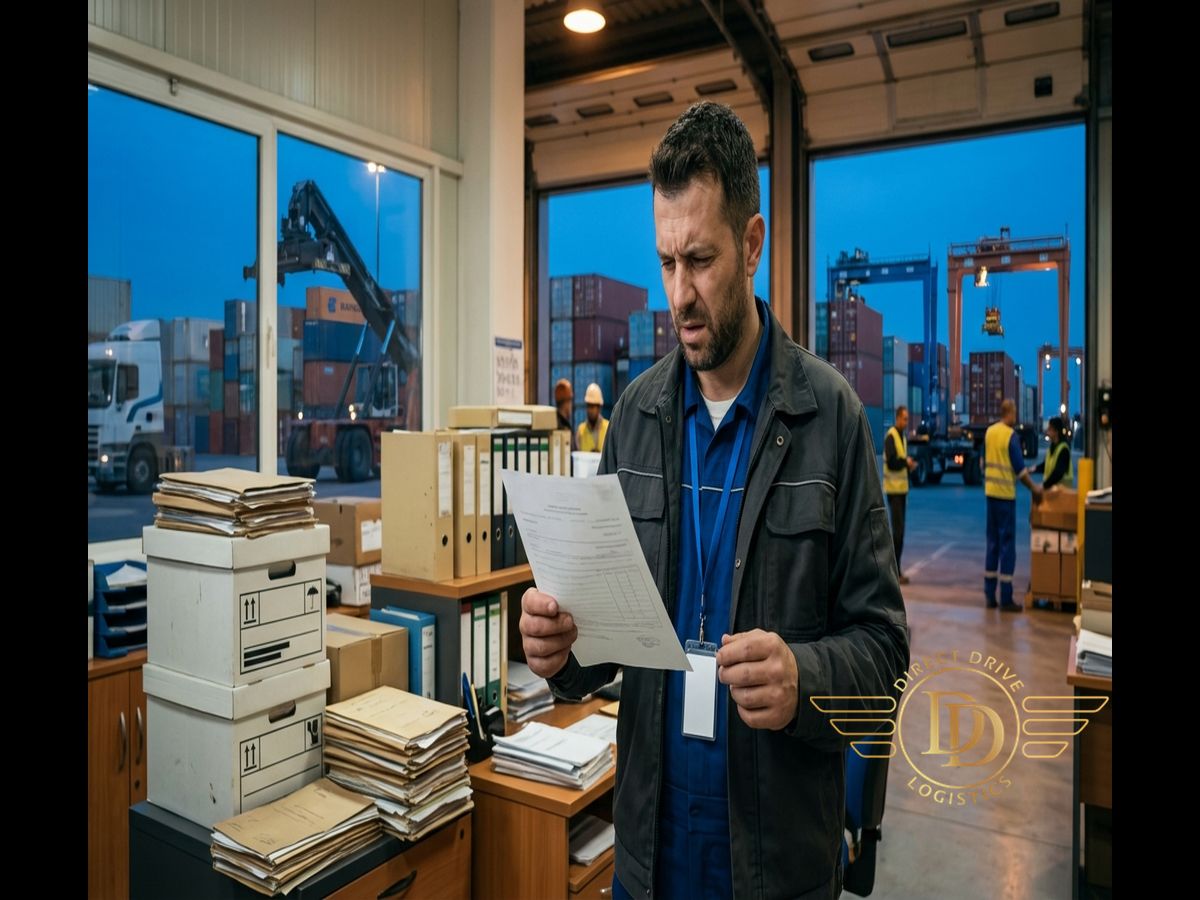
Discover how iraq export CO services can transform your operations with this plan moves beyond a simple co checklist to show exporters how to proactively mitigate border delays and customs issues by leveraging a partner with a multi-border network and on-the-ground teams in both iran and iraq, proven by our ability to reroute cargo in real-time.
Iraq export CO services encompass the crucial processes and documentation required to certify the origin of goods shipped from Iraq, ensuring compliance with international trade agreements and destination country regulations. This includes managing the Certificate of Origin (CO) issuance, customs declarations, and navigating complex border procedures. Specialized providers streamline these steps, mitigating delays and ensuring smooth cross-border movement for various cargo types.
When your cargo is stuck at the Iraqi border for 3–6 weeks due to a single missing or mismatched document, costing you an estimated USD 150–300 per day per TEU in demurrage fees, the financial impact can be devastating. This operational obstacle is precisely what robust iraq export CO services aim to prevent. Imagine a scenario where a forwarder with a multi-border network and on-the-ground teams in both Iran and Iraq can reroute your cargo in real-time, bypassing congestion and eliminating delays.
This comprehensive guide moves beyond a simple CO checklist, showing how to proactively mitigate border delays and customs issues. We’ll explore the critical role of export documentation, detailing your complete Iraq export paperwork checklist for 2024. We will also examine common delays in Iraq export compliance, highlighting pitfalls between the Kurdistan Regional Government (KRG) and federal customs systems, where parallel customs systems often require dual documentation, adding 1–3 days to clearance times.
You’ll discover how a specialized partner can transform your operations, even in challenging scenarios. For instance, we will present a case study demonstrating how a Tehran-to-Baghdad shipment bypassed border congestion, achieving 0 days delay despite primary border issues. This article also provides insights into choosing the right partner, essential services for streamlining Iraq exports, and what a seamless process looks like from pickup to final delivery, ensuring your Certificate of Origin (CO) is always in order.
This guide will also address critical content gaps often overlooked by competitors, such as specific types of iraq export CO services beyond general goods, including specialized engineering or IT services, and the regulatory frameworks for foreign companies engaging Iraqi CO services for export. Whether you’re a logistics professional or business owner, you’ll gain actionable insights to enhance your Iraq export operations and ensure compliance.
Understanding the Iraq Export Certificate of Origin: What You Need to Know
The Core Function of a Certificate of Origin in International Trade
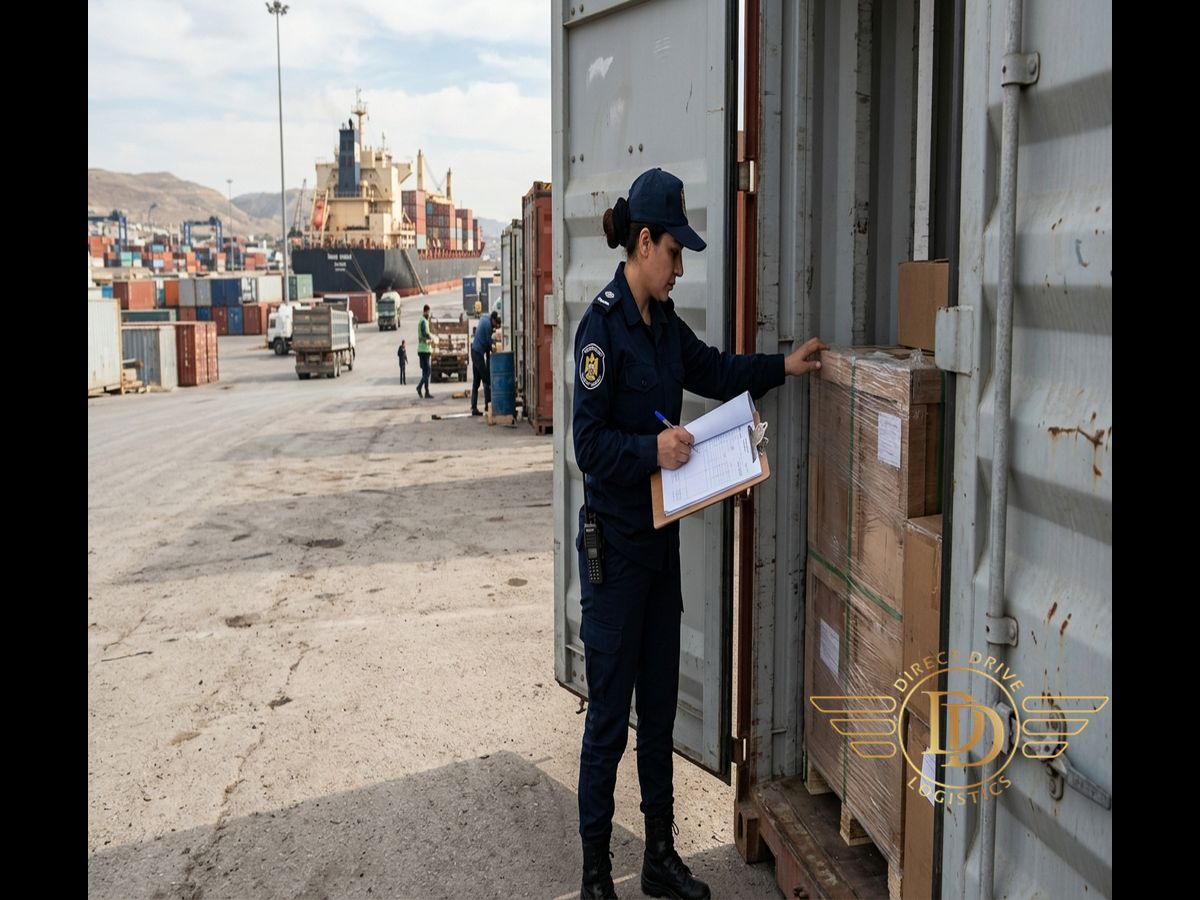
An Iraq Export Certificate of Origin (CO) is a mandatory customs document that officially declares the country where your goods were manufactured, produced, or processed. It serves as a legal declaration for Iraqi customs authorities, directly impacting tariff rates and import eligibility. This document is the foundation of your entire customs declaration package, which is why understanding Import Export Procedures Iraq is crucial.
Failure to provide a correct and validated CO is a primary driver of costly delays at Iraqi ports. Compliant cargo with accurate documentation typically clears customs within 7–14 days. However, shipments with declaration issues, including CO discrepancies, face holds extending to 21 days or more, disrupting supply chains and delivery schedules.
In our experience managing over 300 Iran-Iraq cross-border shipments, our team at Direct Drive Logistic has found that even minor CO errors can trigger these extended holds. These delays result in demurrage charges that can accumulate at a rate of USD 150–300 per day per container, turning a profitable shipment into a financial liability. Proper documentation is a key component of navigating the Iraqi trade economy successfully.
Beyond verifying country of origin, the CO is used by customs to enforce trade embargoes, apply preferential tariffs under trade agreements, and collect accurate trade statistics. For a detailed overview of Iraq’s trade figures, the World Bank provides a comprehensive visual resource on exports. Ensuring this document is flawless is the first step to predictable and secure logistics.
Your next step: Review your current CO issuance process. Identify who is responsible for verifying the HS codes and origin details before the document is submitted to the Chamber of Commerce.
Common Hurdles in Iraq Export Customs & Documentation (And How to Avoid Them)

The KRG vs. Federal Divide: Navigating Iraq’s Two Separate Customs Systems
Managing Iraq export CO services requires navigating two distinct customs regimes: one for the Kurdistan Region (KRG) and another for Federal Iraq. This fragmentation creates significant risk for exporters, as documentation cleared at a KRG border like Ibrahim Khalil may not be accepted in Baghdad without a second, full clearance. With Iraq’s exports reaching USD 109 billion in 2024, a USD 17.8 billion increase since 2019, the volume of cargo facing this dual-clearance risk is higher than ever, which is why having an importer of record service is crucial.
The core challenge stems from unresolved customs fragmentation, a situation noted in the U.S. State Department’s 2025 Iraq Investment Climate Statement. Cargo moving from Erbil or Sulaymaniyah into federal territory often requires re-declaration, leading to costly Iraq export clearance delays. In our experience managing over 300 Iran-Iraq cross-border shipments, we see that misaligned paperwork between the two systems is the primary cause of shipment holds. Current Iraq trade-compliance guidance demands precise, often bilingual, documentation to satisfy both authorities.
A frequent error is assuming clearance at one entry point guarantees passage throughout the country. This can lead to unexpected fees, cargo seizure, or forced return. Proactive route planning with a partner that operates across all major crossings is the solution. For instance, when a primary border crossing for a client’s three containers from Tehran to Baghdad became congested, we immediately rerouted the shipment through our network at the Mehran crossing. This adaptability ensured the cargo was delivered on its original timeline, with zero days of delay.
Your next step: Request a complimentary route assessment from Direct Drive Logistic to identify potential KRG-Federal customs conflicts in your supply chain before you ship.
Navigating Specific Iraq Export CO Services: Beyond General Goods
Exporting Professional Services to Iraq: Documentation for IT, Engineering, and Consulting
Specialized iraq export CO services for intangible exports like IT, engineering, or consulting focus on legalizing contracts and professional qualifications rather than physical goods. The complexity of this process is driving a projected 12–18% annual growth in demand for trade documentation through 2027. Instead of a traditional Certificate of Origin, authorities require attested service agreements, invoices, and proof of professional licensing, often translated into Arabic.
One mistake we see regularly is the submission of un-attested service contracts, which leads to immediate rejection and weeks of delay. Our quad-lingual teams in Erbil and Tehran manage this entire legalization chain, from local Chamber of Commerce stamping to final consular approval, ensuring all paperwork aligns with both federal Iraqi and KRG requirements. This is a critical step for validating the “origin” of professional services for Iraqi clients.
Securing Documentation for Intangible and Technology Exports
For high-value technology and industrial machinery, standard COs are insufficient. Iraqi customs increasingly demand pre-shipment inspection certificates, reflecting an estimated 15–25% higher use of third-party verification for these goods by 2027. This documentation must precisely match the cargo’s HS-codes and technical specifications, which require accurate Arabic descriptions to avoid customs disputes at entry points like Umm Qasr.
In our experience managing over 300 Iran-Iraq cross-border shipments, this level of detail is non-negotiable. When a client’s FMCG shipment from Tehran to Baghdad faced unexpected congestion at the primary border, we leveraged our network of seven operational crossings to reroute the cargo through the Mehran border crossing. This agility, backed by pre-vetted documentation, ensured zero delays and clearance within 48 hours, a process that requires deep familiarity with consular legalisation rules.
Your next step: Provide Direct Drive Logistic with your service agreement or machinery spec sheet for a complimentary documentation requirements check. We will identify potential compliance gaps within 48 hours.
Case Study: 0 Days Delay Despite Border Congestion – Tehran to Baghdad Re-Route
The Challenge: Facing Gridlock and Complex Paperwork at the Iran-Iraq Border
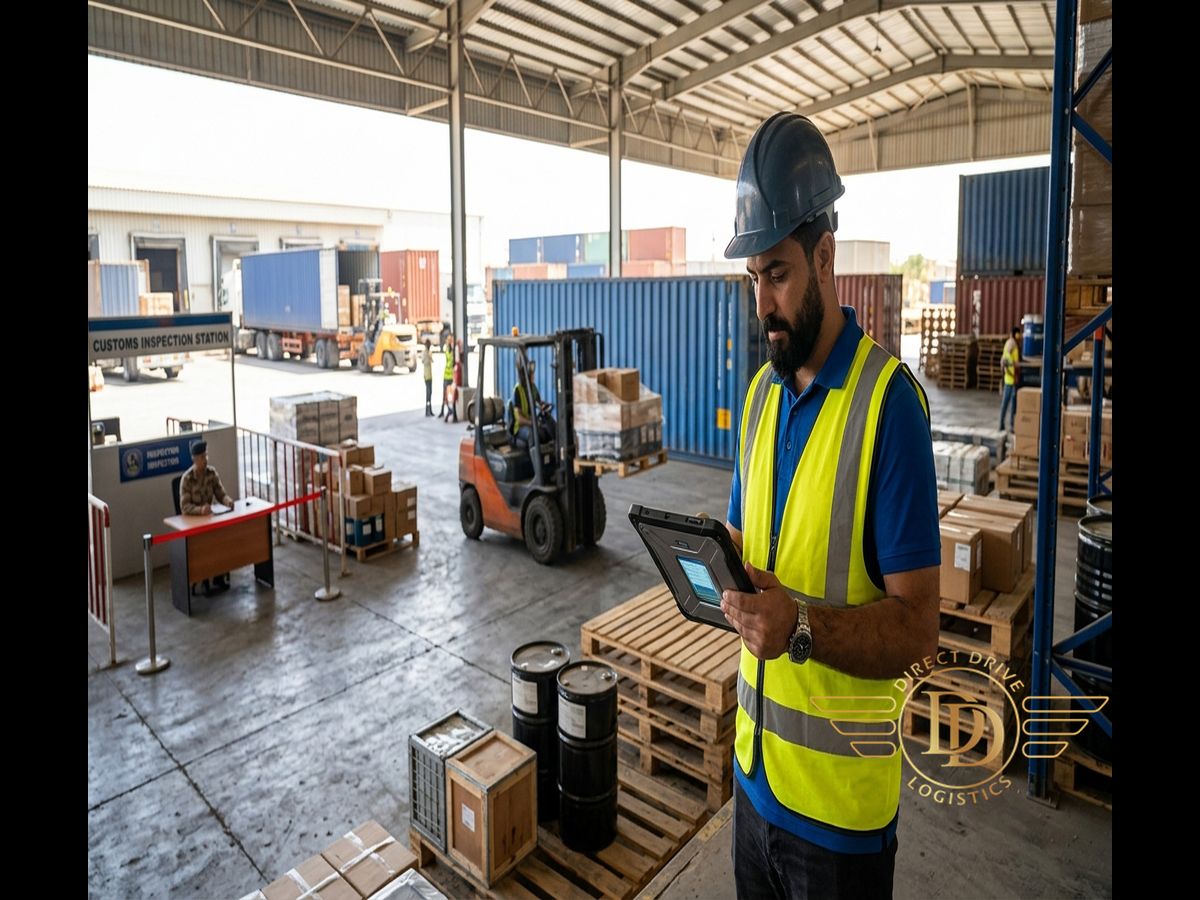
A client shipping three 40ft containers of fast-moving consumer goods (FMCG) from Tehran to Baghdad faced a critical bottleneck. The primary border crossing was gridlocked, threatening significant delays and jeopardizing their delivery schedule. This scenario is common in Iran-Iraq border freight, where logistical issues are compounded by complex documentation requirements, often requiring specialized logistics services Iraq to navigate.
The core problem extends beyond simple traffic. Shipments often face documentation discrepancies between the Kurdistan Region (KRG) and federal Iraq customs systems. In our experience managing over 300 Iran-Iraq cross-border shipments, we have seen these administrative hurdles add 1–3 extra days of delay, turning a standard 4-day transit into a week-long standstill.
The Proactive Solution: Agile Re-Routing and Synchronized Documentation Strategy
Instead of waiting, Direct Drive Logistic immediately leveraged its 7-border crossing network. We proactively re-routed the client’s cargo from the congested point to the Mehran border crossing. This decision was possible because our teams in both Iran and Iraq could instantly synchronize the necessary paperwork for the new entry point, ensuring a seamless transition, which is a key aspect of our Iraq logistics services.
Our agile Tehran to Baghdad logistics strategy eliminated the bottleneck entirely, resulting in zero days of delay and maintaining the original 4-5 day door-to-door timeline. By preparing bilingual, corridor-specific in advance, we bypassed the typical customs challenges that trap less-prepared shipments. One mistake we see regularly is shippers committing to a forwarder with capability at only one border; when that route fails, they have no pre-vetted alternative.
Your next step: Provide our team with your Iran-Iraq route and cargo details. We will map primary and secondary border options within 24 hours to build resilience into your supply chain.
DDL's Approach to Streamlining Iraq Export Certificates & Customs
Our Proactive Document Review for Flawless Export Certificates
A successful customs journey begins long before your cargo reaches the border. Our process for managing Iraq export CO services focuses on meticulous pre-validation to eliminate errors that cause costly delays. We scrutinize every document—commercial invoices, packing lists, and Certificates of Origin—against the specific requirements of both the Kurdistan Region and Federal Iraq authorities, utilizing cargo clearance services Iraq expertise.
Even a single product category can demand multiple layers of certification. For example, specific food shipments require not just a standard CO but also documents like the Certificate of Inspection. In our operations across Iraq, we consistently see that discrepancies between the invoice and the origin certificate are the primary trigger for customs holds.
Integrated Clearance Strategy for KRG and Federal Borders
Navigating Iraq’s dual customs systems is a significant operational challenge. Cargo cleared in the KRG at borders like Parviz Khan can face a second federal clearance, adding an average of 1–3 days to the transit time. Our strategy mitigates this risk by leveraging a network spanning seven key border crossings and a deep understanding of both systems, ensuring efficient cargo clearance services in Iraq.
This proactive approach provides the flexibility for streamlined customs clearance in Iraq. We demonstrated this for a client shipping FMCG goods from Tehran to Baghdad. When their designated border faced sudden congestion, we rerouted the cargo through the Mehran crossing, achieving customs clearance in 48 hours and delivering with zero days of delay.
- Step 1: Comprehensive Document Audit — Before departure, we verify every line item, HS code, and value declaration against both KRG and Federal Iraqi customs databases to ensure 100% compliance.
- Step 2: Strategic Route Selection — Based on your cargo and final destination, we select the optimal entry point from our seven-crossing network, proactively avoiding known bottlenecks and dual-clearance zones.
- Step 3: Real-Time Border Monitoring — Our on-the-ground teams in Iran and Iraq provide live updates, allowing us to reroute shipments in transit to bypass unexpected congestion or administrative delays.
- Step 4: Direct Customs Declaration & Clearance — As a licensed agent, we submit all documentation directly to customs authorities, eliminating third-party brokers and accelerating the final release of your cargo.
Your next step: Provide us with your cargo’s commercial invoice and destination city. Our team will conduct a preliminary document review and provide a route plan within 24 hours.
Send your cargo details to Direct Drive Logistic on WhatsApp — get a route-specific checklist and quote within 24 hours.
Message on WhatsAppWhy Choose Direct Drive Logistic?
Offices in Erbil (HQ) + Tehran (Nasim Shahr Terminal); warehouses in Zakho, Erbil, Basra, and Tehran (2,000 sqm)
Government-licensed clearing agent — direct port access for sea freight into southern Iraq
2,500+ Iraq domestic deliveries, 300+ Iran-Iraq cross-border, 100+ international freight; air freight handler at Erbil, Baghdad, and Basra airports
Operational at Parviz Khan, Bashmagh, Haji Omran (Piranshahr), Mehran, Khosravi, Ibrahim Khalil (Turkey), and Bandar Abbas port (Iran)
Full operational fluency in Farsi, Arabic, Kurdish, and English — client-facing and documentation
~10 trucks/day from Erbil hub covering Baghdad, Karbala, Najaf, Basra, Kut (Wasit), Diyala, Nasiriyah, and all Iraqi governorates
Frequently Asked Questions
An Iraq Export Certificate of Origin (CO) is a crucial document that verifies the country where goods were manufactured or produced, essential for customs clearance and determining applicable duties and tariffs. It’s critical because documentation discrepancies are a leading cause of customs holds, often requiring Arabic or bilingual documents. Basic requirements typically include a commercial invoice, packing list, and sometimes a Certificate of Inspection (like Canada’s CFIA/ACIA 1454 for meat exports) to ensure product compliance. For industrial machinery moving through Erbil, Sulaymaniyah, or Basra, consistent HS codes and origin details across all documents are paramount.
The primary challenges involve navigating Iraq’s dual customs routing, where cargo cleared in the Kurdistan Region (KRG) at borders like Ibrahim Khalil or Parviz Khan can face a second clearance at federal checkpoints such as Al-Sad or Chiman, adding 1–3 days and increasing documentation risk. This dual system often requires separate document sets for KRG and federal clearance. Another significant risk is documentation discrepancies, as mismatches in commercial invoices, origin papers, and supporting certificates frequently lead to rejection or delays, impacting lead times which can stretch from 7-14 days for compliant clearance to 21+ days when issues arise.
To ensure swift customs clearance and mitigate delays, especially with complex routes like those involving Iran-Iraq or KRG-to-federal transit, proactive document harmonization and expert local knowledge are key. For instance, Direct Drive Logistic leverages its 7-border crossing network, including Parviz Khan and Mehran, to re-route shipments without delay if a primary border faces congestion, as demonstrated by rerouting FMCG goods from Tehran to Baghdad within the original 4-5 day timeline. Utilizing a licensed clearing agent at key entry points like Umm Qasr can also significantly reduce clearance times, often to 48 hours for medical equipment, by eliminating third-party brokers and associated demurrage fees, which can be USD 150–300 per day per TEU.
When selecting a logistics partner for iraq export CO services and customs, look for deep technical expertise and a proven track record in the region. Key services include document harmonization, customs pre-checks, and border document review, especially for shipments through Umm Qasr or overland entries like Ibrahim Khalil. A partner with dual-country physical presence and local offices, such as Direct Drive Logistic with offices in Erbil and Tehran, and warehouses in Zakho, Erbil, Basra, and Tehran, offers direct oversight. Furthermore, a quad-language operations team fluent in Farsi, Arabic, Kurdish, and English is invaluable for navigating complex regional requirements and eliminating communication barriers, ensuring smoother processing for industrial machinery and other critical exports.
Yes, a reputable provider of iraq export CO services should demonstrate a robust track record. Direct Drive Logistic, with over 10 years of experience, has successfully managed complex scenarios, such as handling the full corridor for electronics and consumer goods from China to Erbil via Bandar Abbas, including ocean freight, Iranian CMR transit, and KRG import clearance, under a single operator. For B2B electronics from Mersin to Erbil, our Kurdish-speaking team resolved a temporary import license issue with KRG border authorities in just one day, a process competitors estimated would take five. This highlights the value of local relationships and a dedicated bilingual team in overcoming intricate regional challenges.
To streamline your Iraq export certificate and customs process, the first step is to engage with a service provider offering comprehensive iraq export CO services, ideally one with a strong regional footprint. Begin by outlining your specific export needs, cargo type (e.g., industrial machinery, FMCG), and target destinations within Iraq (e.g., Baghdad, Basra, Erbil). A professional consultation will assess your documentation, identify potential compliance gaps, and map out the most efficient route and clearance strategy, considering the nuances of both KRG and federal customs systems. This proactive approach helps avoid the 21+ day delays often associated with declaration or valuation issues, ensuring your USD 109 billion worth of goods contributes to Iraq’s growing export profile.
Conclusion
Mastering Iraq export CO services is not merely about compliance; it’s about strategic risk mitigation and operational efficiency. The complexities of navigating Iraq’s dual customs systems, as highlighted by the KRG vs. Federal divide, demand a proactive and expert-driven approach to documentation. For specialized goods or professional services, the need for precise, compliant Certificates of Origin becomes even more critical, directly impacting transit times and cost.
To confidently navigate Iraq export CO services, immediately audit your current export documentation for accuracy against Incoterms and Iraqi import regulations. Next, ask your current freight forwarder for their specific contingency plans for border congestion and unexpected documentation hurdles, similar to our case study where a re-route from Tehran to Baghdad avoided 0 days of delay. Finally, assess how Direct Drive Logistic’s proactive document review and specialized expertise can eliminate these common pain points for your next shipment.
Direct Drive Logistic offers unparalleled expertise in Iraq export CO services, ensuring your shipments move seamlessly across borders. With our government-licensed clearing agent status at the Port of Umm Qasr, we provide direct port access for sea freight into southern Iraq, eliminating middlemen and potential delays. Leverage our deep local knowledge and proven track record to transform your export challenges into competitive advantages. Reach out today at (+964) 750 953 9899.
Need Logistics Consultation?
The Direct Drive team is ready to assist. Message us now.
Streamline your Iraq export operations with Direct Drive Logistic’s comprehensive CO services. Eliminate delays and ensure compliance by calling us today to discuss your specific needs. Contact our experts at (+964) 750 953 9899 and experience seamless, reliable logistics.
Get Your Free Quote NowContact Us for a Consultation
Location
Direct Drive Logistic
MRF Quattro towers, Block A-29-1
Erbil, Kurdistan Region